

As the sun sets at Har Ki Pauri, the lamps float on the water, the bells ring and thousands of people fold their hands together. It is one of the most moving sights in India. A few hours later, in the quiet of the morning, a different scene appears: sanitation workers collecting leaf plates, plastic wrappers, wilted flowers and bottles from the steps and the water’s edge.
Both scenes are part of the same story. The Haridwar Ghats are among the most visited riverfront spaces in the country, and keeping them clean is a daily job that never really ends. This article explains why the task is so difficult, what is being done about it, and how every pilgrim and tourist can make a real difference.
Table of Contents
Why the Haridwar Ghats Matter So Much
To understand the challenge, you first need to understand why this stretch of the river is special.
The Gateway Where the Ganga Meets the Plains
Haridwar is the point where the Ganga leaves the mountains and begins its journey across the northern plains. The name itself is often understood as the “gateway to the divine”. For centuries, pilgrims have come here to bathe, offer prayers and perform rituals.
Faith and Everyday Life Together
The Haridwar Ghats are not museum pieces. They are working spaces where people bathe, pray, shop, meet and sometimes simply sit. Large gatherings during festivals, evening Ganga aarti and the Kanwar Yatra period bring heavy footfall, which makes cleanliness a constant effort.
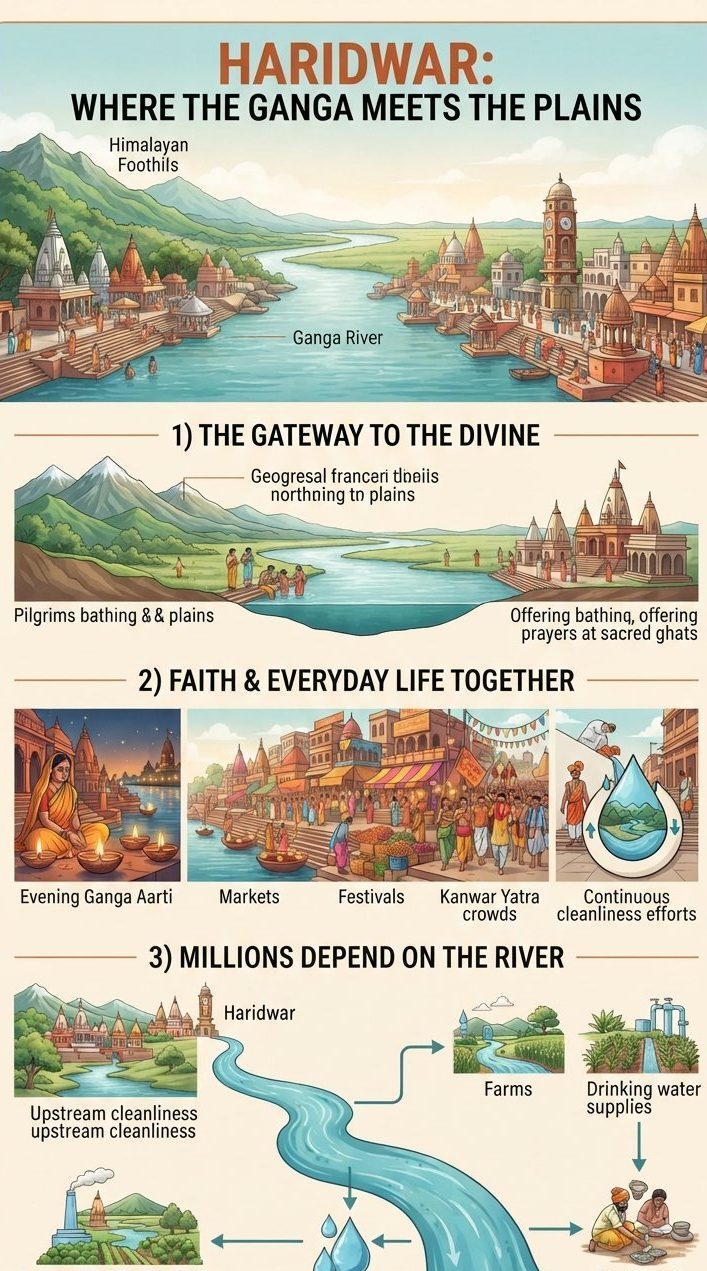
Millions Depend on the River
The Ganga supports drinking water, farming and livelihoods for many communities downstream. What happens at the Haridwar Ghats has an effect well beyond the town, which is why upstream cleanliness is so important.
5 Daily Challenges Behind Keeping the Haridwar Ghats Clean
Keeping the Haridwar Ghats clean is not a single task. It is a mix of problems that appear again and again, every day.
1. Plastic and Packaging Waste
Water bottles, snack packets, disposable cups and plastic bags are easy to carry and easy to drop. Even when people mean well, a single moment of carelessness can leave waste on the steps or in the water. Because plastic does not break down quickly, it lingers and travels downstream.
2. Flowers, Diyas and Puja Offerings
Offering flowers, lamps and other items is part of the faith of millions. The problem arises when these offerings come wrapped in plastic or are thrown directly into the river. Organic offerings may decompose, but large quantities at once, especially with plastic or synthetic dyes, can add to the burden on the water.
3. Heavy Crowds and Peak-Season Pressure
On normal days, the Haridwar Ghats are busy. On festival days, weekends and during pilgrimage seasons, they become extremely crowded. More people mean more food waste, more packaging and more strain on bins and toilets. Cleaning teams must work at a much faster pace just to keep up.
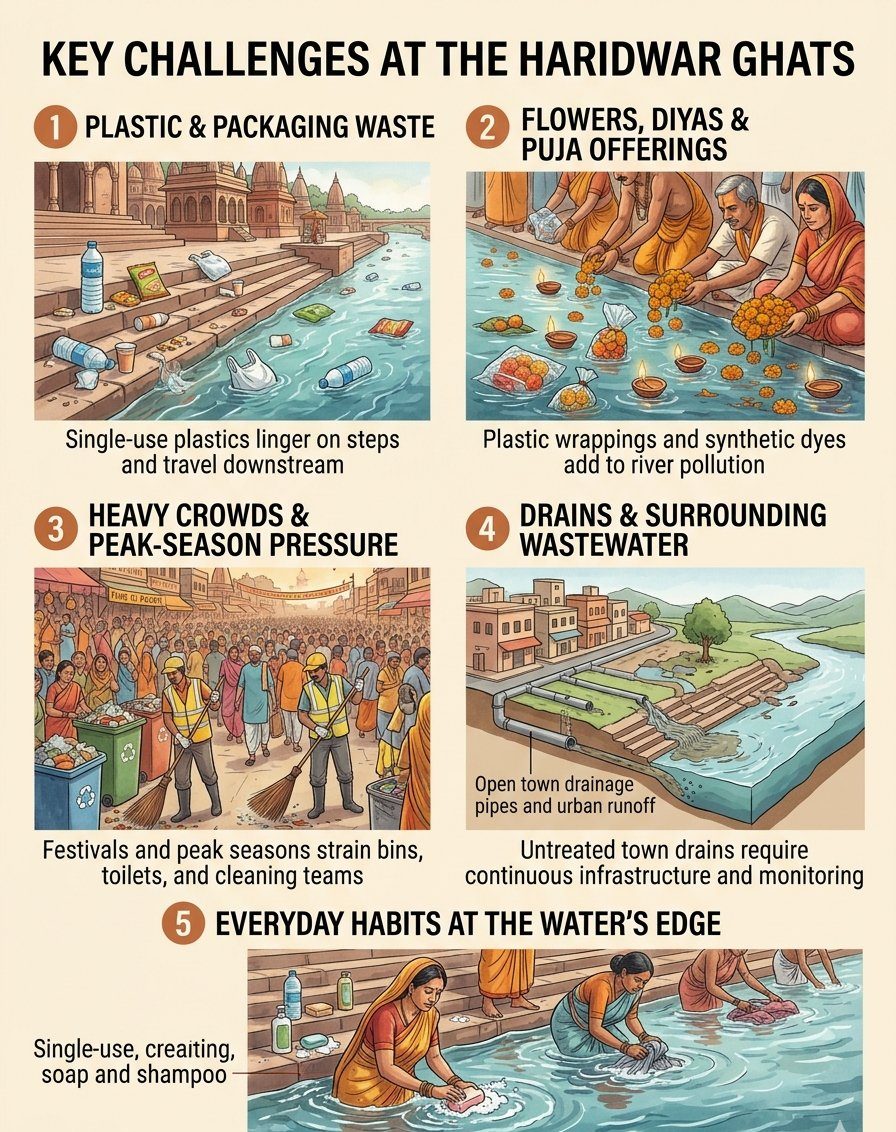
4. Drains and Wastewater From the Surrounding Area
Visitors see the ghats, but the river also receives water from town drains and surrounding areas. If wastewater is not treated properly, it can reach the river and affect its quality. This is an infrastructure problem that cannot be solved by visitors alone, and it requires continuous investment and monitoring.
5. Everyday Habits at the Water’s Edge
Using soap or shampoo while bathing, washing clothes in the river, throwing food scraps or leaving waste behind may seem small. Multiplied across thousands of people every day, they add up. Changing habits is slow work, because people need to be reminded again and again.
What Is Being Done to Clean the Haridwar Ghats?
The effort is a mix of government action, local teams and public participation.
Sanitation Teams and Local Authorities
Local authorities and sanitation workers clean the ghats regularly, collecting waste from the steps and surroundings. During peak seasons, extra teams and resources are usually needed. Clean ghats at dawn are the result of people who work when most visitors are asleep.
The Namami Gange Programme
The Government of India launched the Namami Gange programme in 2014 to clean and rejuvenate the Ganga. It is implemented by the National Mission for Clean Ganga and covers areas such as sewage treatment, riverfront development and public awareness. You can read about its goals on the National Mission for Clean Ganga website.
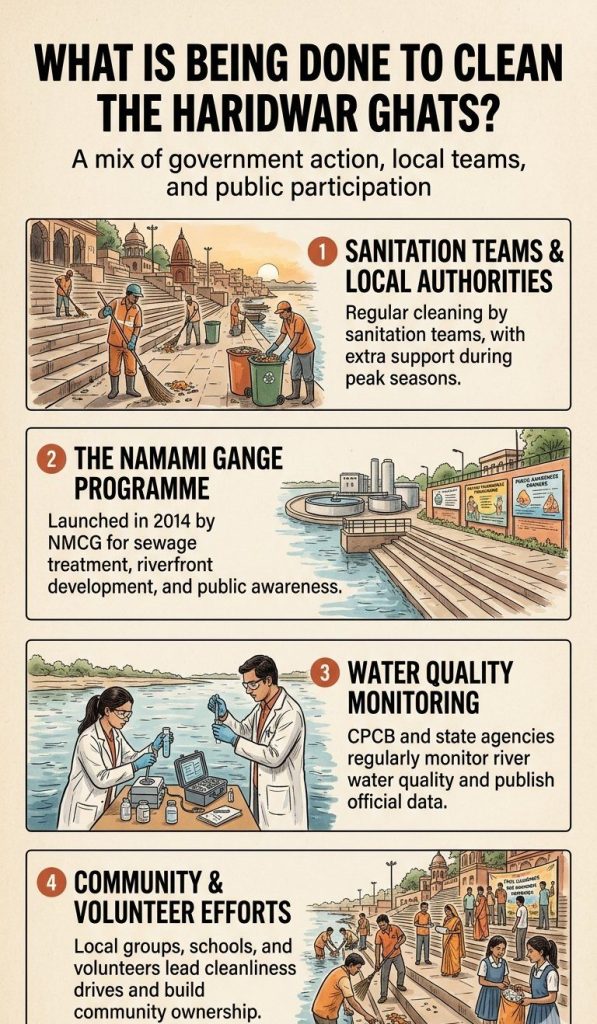
Water Quality Monitoring
The Central Pollution Control Board and state agencies monitor the quality of river water at several points. If you want official information, the CPCB website is the place to start, because it publishes data and reports.
Community and Volunteer Efforts
Local groups, schools, social organisations and volunteers often organise cleanliness drives and awareness campaigns. Their work is valuable because it builds a sense of ownership among the people who live near the river.
7 Simple Ways Visitors Can Help Keep the Haridwar Ghats Clean
Authorities can only do so much without cooperation. Here is what each visitor can do.
1. Carry Your Waste Until You Find a Bin
If bins are full or far away, hold on to your waste. Never leave it on the steps.
2. Avoid Single-Use Plastic
Carry a reusable bottle and a cloth bag. Choose leaf plates or paper alternatives over plastic when buying food.
3. Use Designated Spots for Offerings
If there are collection points or special containers for flowers and puja items, use them. Remove plastic wrapping before offering anything.
4. Do Not Use Soap or Shampoo in the River
Bathe quickly and avoid using soaps, shampoos or detergents in the water. Do your washing elsewhere.
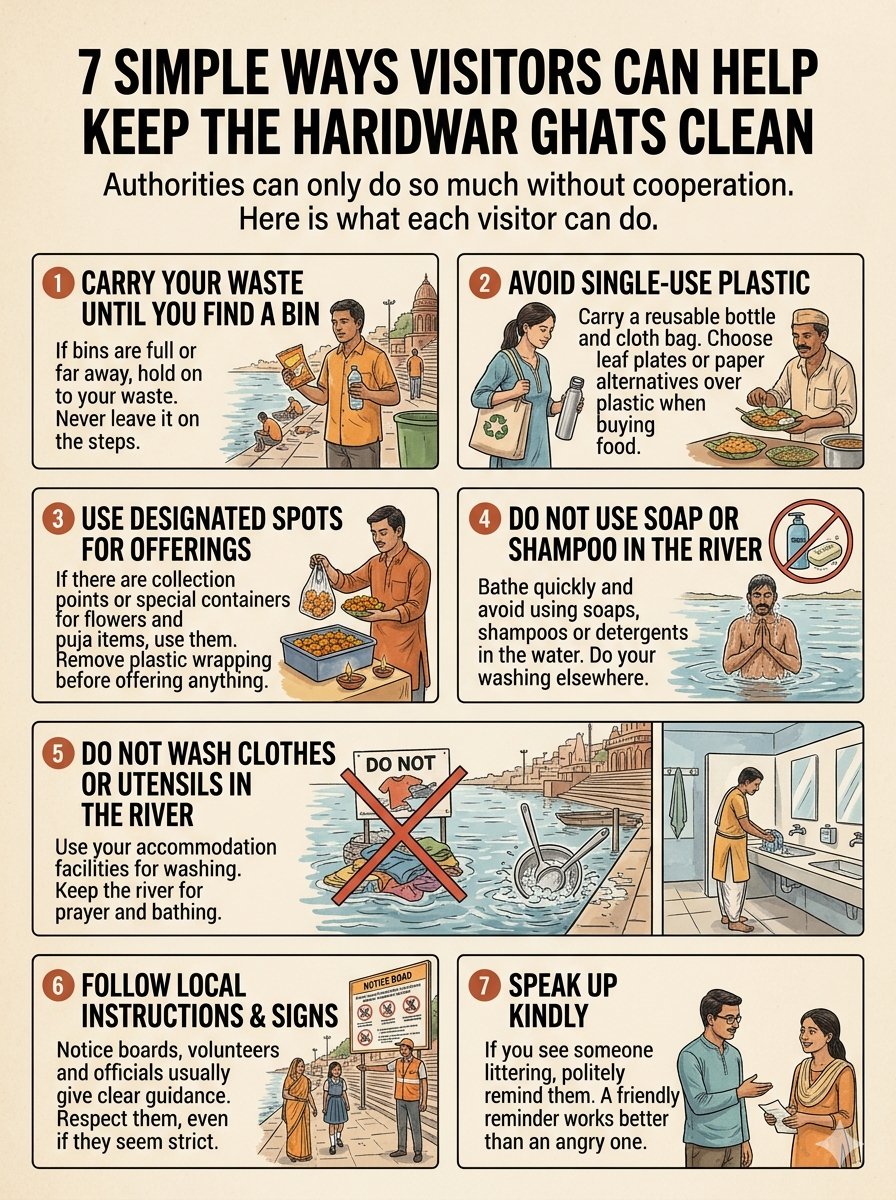
5. Do Not Wash Clothes or Utensils in the River
Use your accommodation facilities for washing. Keep the river for prayer and bathing.
6. Follow Local Instructions and Signs
Notice boards, volunteers and officials usually give clear guidance. Respect them, even if they seem strict.
7. Speak Up Kindly
If you see someone littering, politely remind them. A friendly reminder works better than an angry one.
A Simple Checklist Before You Visit the Haridwar Ghats
- Pack a reusable water bottle and a small cloth bag for waste.
- Buy offerings without plastic wrapping.
- Wear footwear that is safe on wet steps.
- Keep valuables safe and children close in crowded areas.
- Learn where bins and collection points are located.
- Plan your visit to avoid the busiest hours, if possible.
For travel planning, the official Uttarakhand Tourism website provides information about visiting Haridwar and nearby places.
Responsible Rituals: Faith and Cleanliness Together
Protecting the river and respecting faith are not opposites. Many people see cleanliness itself as a form of devotion.
Choosing Eco-Friendly Offerings
Natural flowers without plastic, simple diyas made of clay and offerings that can be composted are better choices. Some places have started collecting flower waste for recycling into compost or incense, and visitors can support these efforts where they exist.
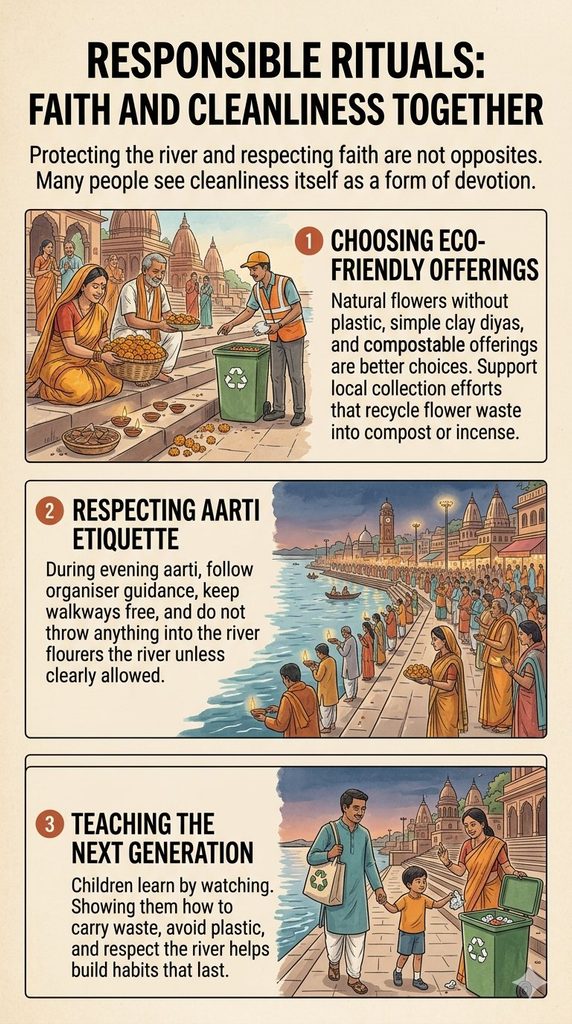
Respecting Aarti Etiquette
During the evening aarti, crowds gather in large numbers. Follow the guidance of the organisers, keep walkways free and do not throw anything into the river as a part of the ceremony unless it is clearly allowed.
Teaching the Next Generation
Children learn by watching. Showing them how to carry waste, avoid plastic and respect the river will help build habits that last.
5 Costly Mistakes Visitors Make at the Haridwar Ghats
1. Throwing Offerings in Plastic Bags
The bag itself becomes waste, and it can be carried downstream.
2. Assuming “Someone Else Will Clean It”
The cleaning teams work hard, but they cannot keep up if visitors litter freely.
3. Using Soap in the Water
Even small amounts add up when thousands of people do the same.
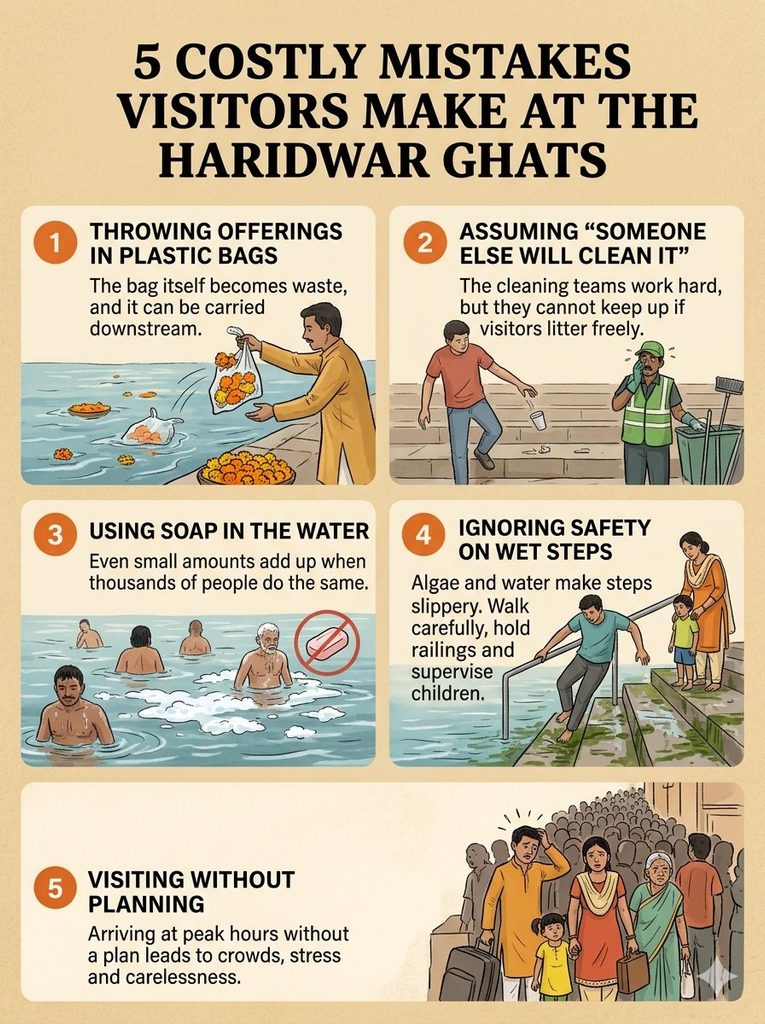
4. Ignoring Safety on Wet Steps
Algae and water make steps slippery. Walk carefully, hold railings and supervise children.
5. Visiting Without Planning
Arriving at peak hours without a plan leads to crowds, stress and carelessness.
Whose Responsibility Is It?
The honest answer is that everyone shares it. Authorities must build and manage systems such as drainage, sewage treatment and waste collection. Local businesses should reduce plastic and manage their own waste. Visitors must act responsibly. When all three work together, the Haridwar Ghats can stay both sacred and clean.
Frequently Asked Questions (FAQs) About Haridwar Ghats
What are the Haridwar Ghats?
The Haridwar Ghats are the series of stepped riverfront areas along the Ganga in Haridwar, where people bathe, pray and take part in rituals. Har Ki Pauri is the best known among them.
Why is it difficult to keep the Haridwar Ghats clean?
Heavy crowds, plastic waste, offerings, wastewater from surrounding areas and everyday habits at the water’s edge all add up, so cleaning must happen every day.
What is Har Ki Pauri?
Har Ki Pauri is the most famous ghat in Haridwar and the place where the evening Ganga aarti is held, attracting a large number of visitors.
What is the Namami Gange programme?
It is a Government of India programme launched in 2014 to clean and rejuvenate the Ganga, with work on sewage treatment, riverfront development and public awareness.
Can I use soap or shampoo while bathing at the ghats?
It is best to avoid it. Soaps and shampoos add chemicals to the water, and local guidance usually discourages their use in the river.
How can I offer flowers without harming the river?
Choose natural flowers without plastic wrapping and use designated collection points if available. Do not throw plastic bags into the water.
What is the best time to visit the Haridwar Ghats?
Early mornings and evenings are popular, but they can be crowded. Visiting on weekdays and outside festival periods is usually more peaceful. Check the weather and local events before you plan.
Are the Haridwar Ghats safe for bathing?
Steps can be slippery, and water flow can be strong at some places. Follow local instructions, use railings where provided and supervise children and elders.
Who is responsible for cleaning the Haridwar Ghats?
Local authorities and sanitation workers handle regular cleaning, supported by government programmes, volunteers and the responsible behaviour of visitors.
How can I help keep the Haridwar Ghats clean?
Carry your own waste, avoid single-use plastic, use designated spots for offerings, avoid soap in the river, follow local rules and gently encourage others to do the same.
Final Thoughts
The beauty of the Haridwar Ghats lies in the mix of faith, tradition and daily life. That same mix makes them hard to keep clean. There is no single magic solution, only many small and consistent actions by authorities, workers, businesses and visitors. If you plan a visit, carry your waste, choose better offerings and respect the river. Leaving the ghats cleaner than you found them is one of the finest ways to honour the Ganga.
Disclaimer: This article is for general awareness. For current water quality data, rules and project details, please check official sources such as the National Mission for Clean Ganga and the Central Pollution Control Board.


