

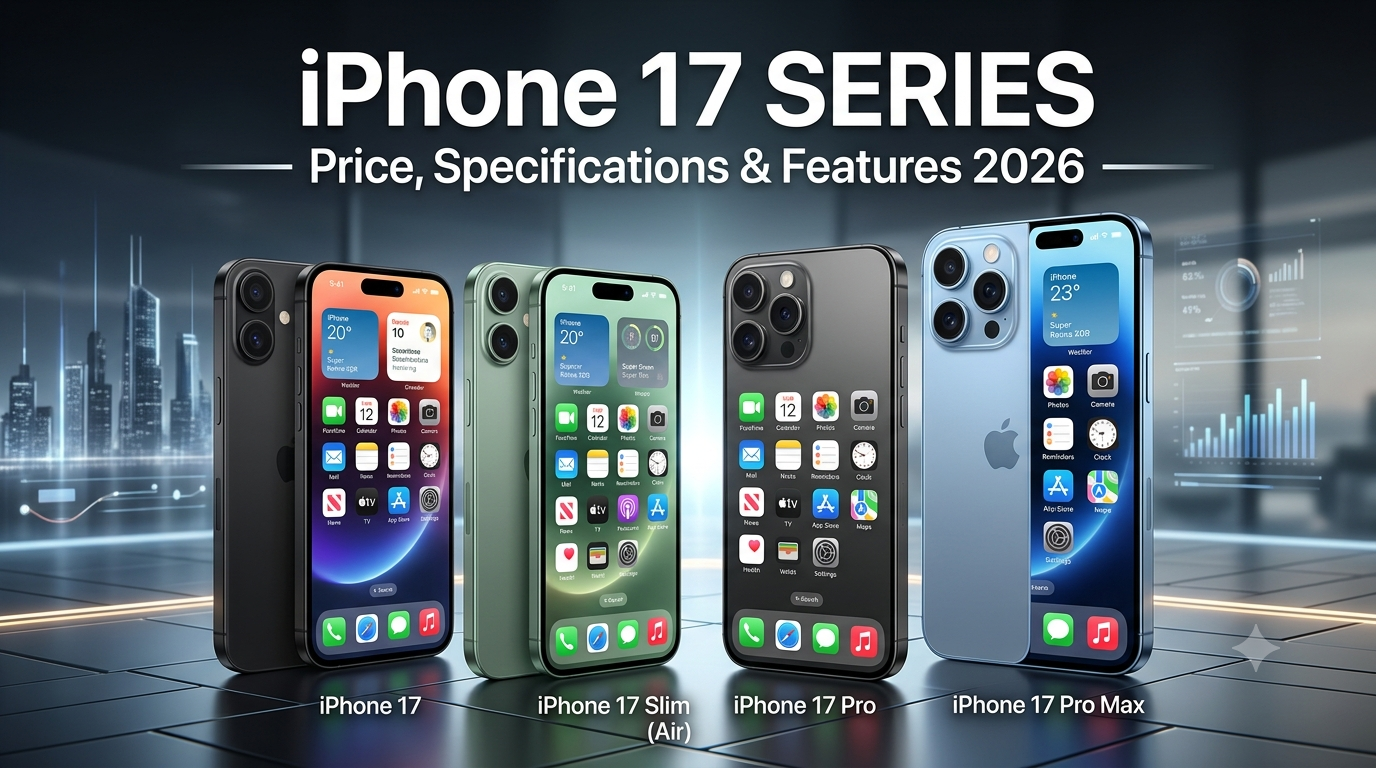
iPhone 17 series is the new addition to the iPhone kingdom. By engineering various devices for several different users, ranging from ultra-premium power users to lifestyle design lovers, there is now a very clear reason to choose each & every model. Consumer technology in 2026 has seen diverse shifts. For years, choosing a new smartphone meant navigating minor, incremental updates across a really confusingly similar family of devices. With the launch of the iPhone 17 series, Apple has introduced a revolutionary move in product segmentation.
Table of Contents
The 2025/2026 Lineup: Models, Indian & Global Pricing
The iPhone 17 series 2026 official launch prices & the current market realities may differ. Due to a unique launch schedule, the standard iPhone 17 is expected to remain active in Apple’s lineup for longer than usual. Rumors are in the market of an imminent mid-product-cycle price increase in India.
Indian and Global Pricing Breakdown:
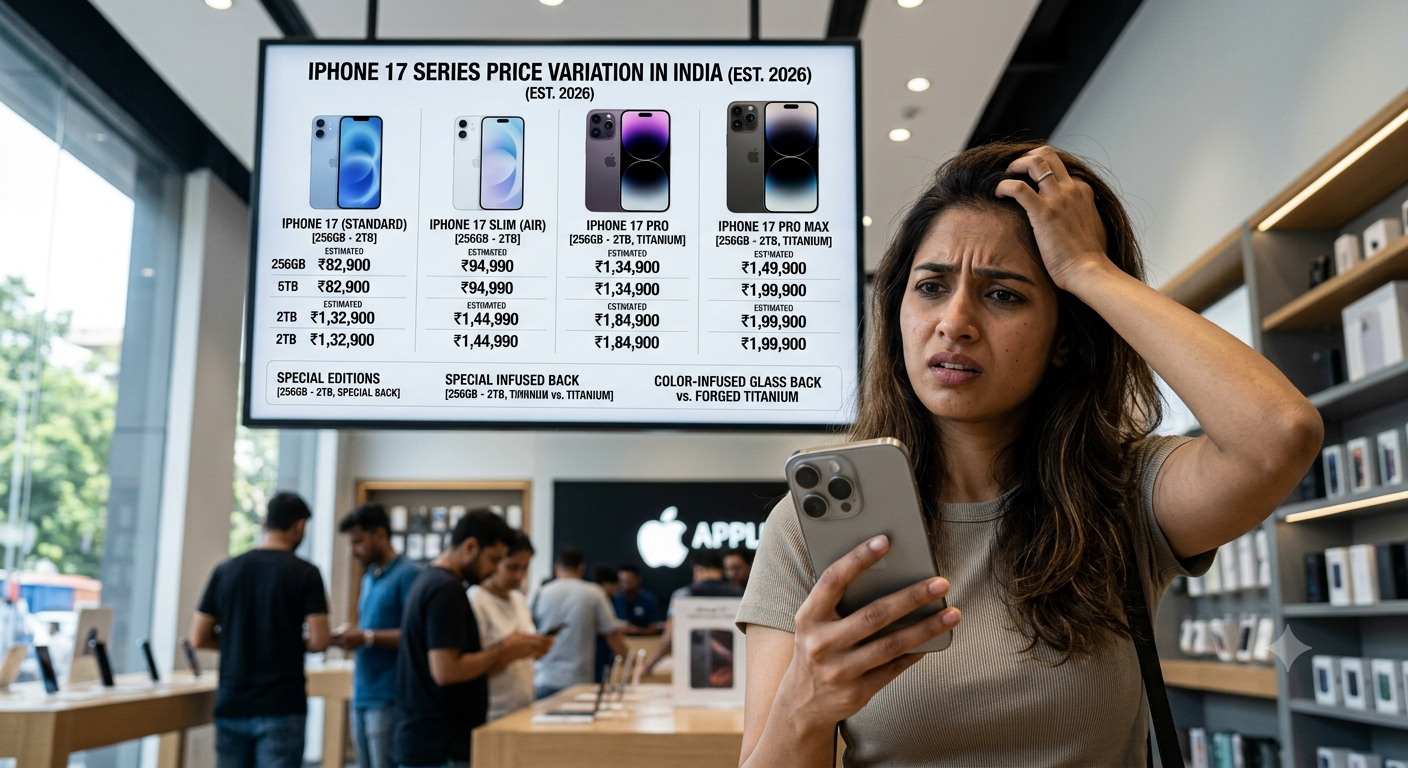
- iPhone 17e: The entry-level gateway starts at INR 62,490 (or INR 64,900 for the 256GB storage configuration via retail outlets).
- iPhone 17 (Standard): The value-focused sweet spot of the lineup starts at INR 80,900 (256GB, White), with premium colorways (Black, Sage, Mist Blue, & Lavender) positioned at INR 82,900. The 512GB phone is priced at INR 1.02 lakh.
On popular e-commerce platforms like Flipkart, the standard model is being sold at these starting prices.
- iPhone Air: Apple’s ultra thin design lifestyle design starts at $999 globally.
Indian price: INR 1.01 lakh for the base 256GB variant.
- iPhone 17 Pro: Part of the iPhone 17 series, the price starts at INR 1.29 lakh (or INR 1.34 lakh on alternative retail channels) for 256GB.
- iPhone 17 Pro Max: Part of the iPhone 17 series, the price starts at INR 1.43 lakh (or INR 1.49 lakh on alternative retail outlets).
Display Technology: ProMotion for the Masses
In a move that has democratised premium display technology, Apple has standardised its fluid Pro Motion 120 Hz, adaptive refresh rate across various models- from the standard iPhone 17 & ultra-thin Air slim phone to the Pro Max. The display sizes are carefully selected to accommodate various design specifications that are given below:
- iPhone 17 & iPhone 17 Pro: 2622 × 1206 resolution at 460 ppi (6.3-inch displays)
- iPhone Air: A middle-ground 6.5-inch Super Retina XDR OLED display (2736 × 1260 resolution at 460 ppi)
- iPhone 17 Pro Max: A massive 6.9-inch display (2868 × 1320 resolution at 460 ppi)
All the iPhone 17 Series models make use a newly launched outdoor visibility capability.
This capability is known to scale up to 3,000 nits peak outdoor brightness. The displays are protected by Ceramic Shield 2, which offers 3× better scratch resistance than previous phone models.
Notably, the iPhone Air goes a step further by using Ceramic Shield for the back of the device instead of traditional glass, achieving 4× better crack resistance. Apple has also created a 7-layer anti-reflective coating across the iPhone 17 Series to cut down on ambient glare.
Silicon Deep Dive: A19 vs. A19 Pro Microarchitecture
The heart of the iPhone 17 Series experience lies in Apple’s latest custom silicon design that is manufactured on TSMC’s advanced third-generation 3nm process, known as N3P.
Thermals & Chassis: Vapor Chamber Cooling
To prevent thermal throttling & also to sustain these massive gaming & other processing leaps, Apple has introduced a new technology which is known as vapor chamber cooling design.
This has been constructed directly into a new aerospace-grade unibody frame. The unibody frame is the same frame that is used for the Pro Max & Apple iPhone 17 Pro series.
This unibody frame is known to represent a very important design departure: Apple has dropped the titanium usage in the iPhone 15/16 Pro lines & transitioned back to aluminum. This setup yields up to 40% increased performance during heavy gaming or even 4K video rendering sessions.
Software: iOS 26 and “Liquid Glass”
There are various new features launched in the iPhone 17 Series. The iPhone 17 series ships with iOS 26, a landmark design & also a great software update.
- Apple Intelligence: Leveraging the A19’s local Neural Engine, iOS 26 delivers context-aware, conversational Siri capabilities. Apple Intelligence powers tools like Genmoji (allowing users to write in-depth descriptions to create entirely custom emojis).
- Liquid Glass UI: iPhone 17 Series new design is known to introduce real-time translucency & also refraction, causing the app icons & various menus to dynamically adapt to the colors & also depth of the background wallpaper. The designed App icons support distinct clear, tinted, light, or dark variations.
The iPhone 17 Series new feature list is endless.
Why should we choose the iPhone 17 Series this year?
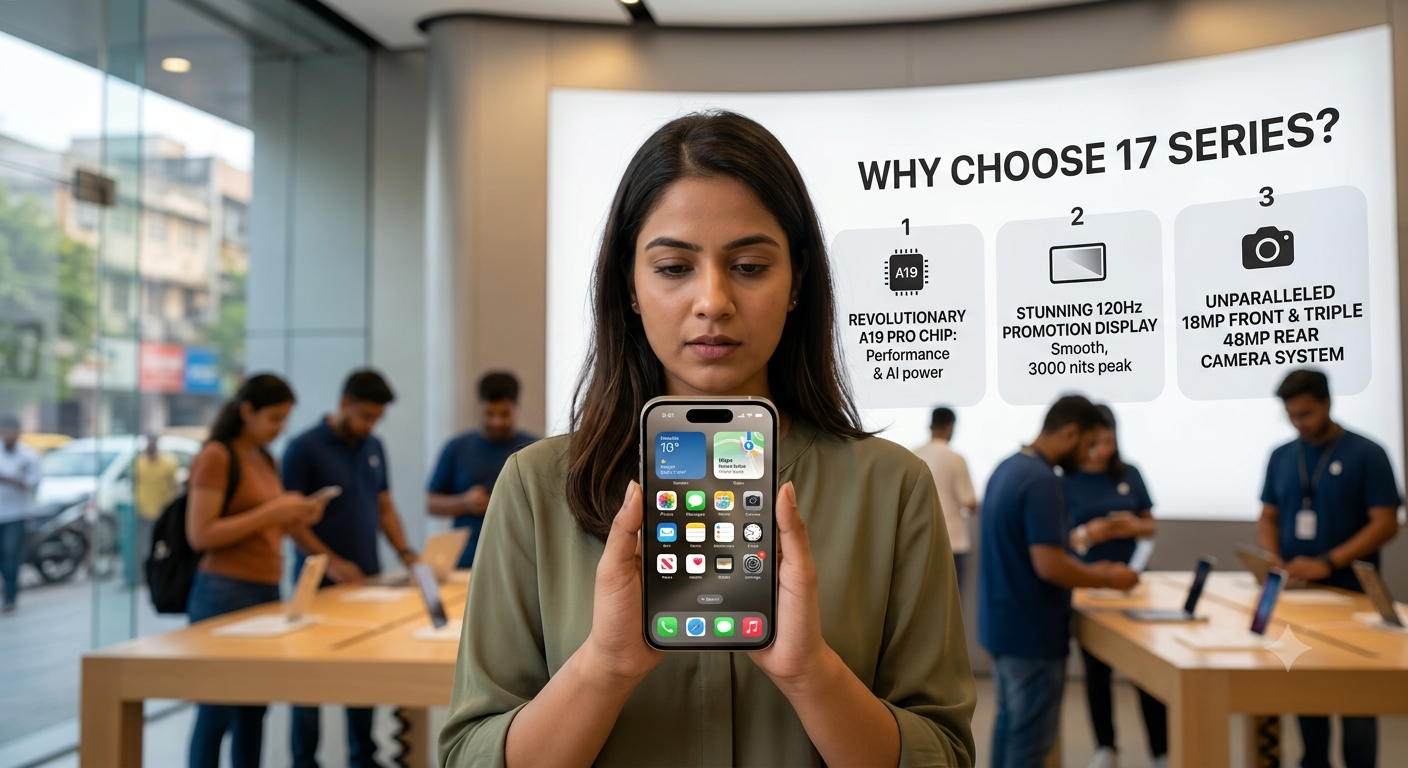
Choosing the iPhone 17 Series is a user-specific decision, but I can guide you with the parameters on which you can choose this phone now. Since we are currently in late Aug 2026, the decision of whether to buy this iPhone 17 series device depends heavily on which specific model you are going to purchase.
Here is the breakdown of whether “this phone” is worth buying in 2026:
- The Standard iPhone 17: An Absolute “Yes”
If you are looking at the standard iPhone 17, it is worth buying right now. Under Apple’s current launch strategy, the upcoming Sep 2026 event will only introduce the premium iPhone 18 Pro, Pro Max, and Fold models. The standard iPhone 18 & 18e are not expected to be launched until spring 2027. This means that the standard iPhone 17 will remain a popular choice this year for Apple and Apple users.
- iPhone 17 Series is still a popular choice because it features the democratised Pro Motion 120 Hz display, super retina, a highly efficient A19 chip, & also fantastic battery life; it is widely considered one of the most sensible, value-for-money upgrades Apple has released in recent years.
- The iPhone Air: Yes, But Know the Compromises
If you are going for the ultra-slim iPhone Air phone, it is still a great time to buy this phone because Apple is not expected to release the iPhone Air 2 until spring 2027 at the earliest. If you prioritize jaw-dropping aesthetics over camera zoom features, or even the battery endurance, it remains a highly compelling buy.
Conclusion
The iPhone 17 Series brings together a strong mix of performance, design, camera upgrades, & also useful new features in 2026. Whether you are looking for a reliable everyday phone or even a more powerful Pro model, there is always an option to suit different needs as well as different budgets.
Overall, the iPhone 17 Series is an exciting choice for anyone planning an upgrade. With its modern features and powerful performance, it offers a premium smartphone experience that should appeal to both longtime iPhone users and those considering switching to Apple.
FAQs
Below are the iPhone 17 Series: Price, Specifications, and Features 2026 FAQs:
Q. Which models are included in the iPhone 17 series?
A. The iPhone 17 series offers a total of 5distinct models that are tailored for different users: the standard iPhone 17, the budget-friendly iPhone 17e, the ultra-slim lifestyle iPhone Air, & its flagship iPhone 17 Pro & iPhone 17 Pro Max
Q. Do all iPhone 17 models feature a 120Hz ProMotion display?
A. Yes, Apple has democratised its fluid 120Hz ProMotion adaptive refresh rate for all of its iPhone 17 series phones. It is now standard across the entire iPhone 17 series family, from the base iPhone 17 to the ultra-thin iPhone Air models.
Q. What makes the iPhone 17 series front-facing camera very unique?
A. All the available models of iPhone 17 feature an upgraded 18-megapixel Center Stage front camera. It also utilizes a unique square-shaped sensor, allowing users to capture perfect landscape or even the portrait selfies without rotating the physical iPhone.
Q: What is the new N1 chip found in the iPhone 17 series?
A. The N1 is Apple’s custom, in-house wireless networking chip. It standardizes tri-band Wi-Fi 7, Bluetooth 6.0, and Thread protocol support across the entire lineup while increasing power efficiency
Q. Does the ultra-slim iPhone Air support physical SIM cards?
A. No, because of the extreme spatial limits of its 5.6mm chassis, Apple removed the physical SIM tray. The iPhone Air is strictly eSIM-only worldwide
Q. Why did the software jump straight to iOS 26?
A. Apple skipped version numbers to unify its operating systems across iPhone, iPad, and other devices under a single, synchronized numbering standard
Q. What is the benefit of the A19 Pro’s redesigned efficiency cores (E-cores)?
A. The A19 Pro’s E-cores are microarchitecturally wider (6-wide decode instead of 5-wide) and carry a larger 6MB shared L2 cache, delivering a 25% performance leap at the exact same power draw
Q. Are the Pro models still made of titanium?
A. No. Apple dropped titanium and returned to a rounded, single-piece aluminum unibody to resolve previous thermal issues. This frame houses a highly efficient vapor chamber cooling system
Q. What is Memory Integrity Enforcement (MIE)?
A. MIE is an always-on hardware-and-OS safety defense in A19/A19 Pro chips. It hardens the kernel and over 70 userland processes to make mercenary spyware exploit chains incredibly cost-prohibitive to deploy
Q. How does the iPhone Air’s battery compare to the Pro Max?
A. The slim Air carries a 3,149 mAh battery (27 hours of video playback), but can use an optional $99 MagSafe battery pack to reach 40 hours. The Pro Max natively runs up to 39 hours on its massive internal battery


