

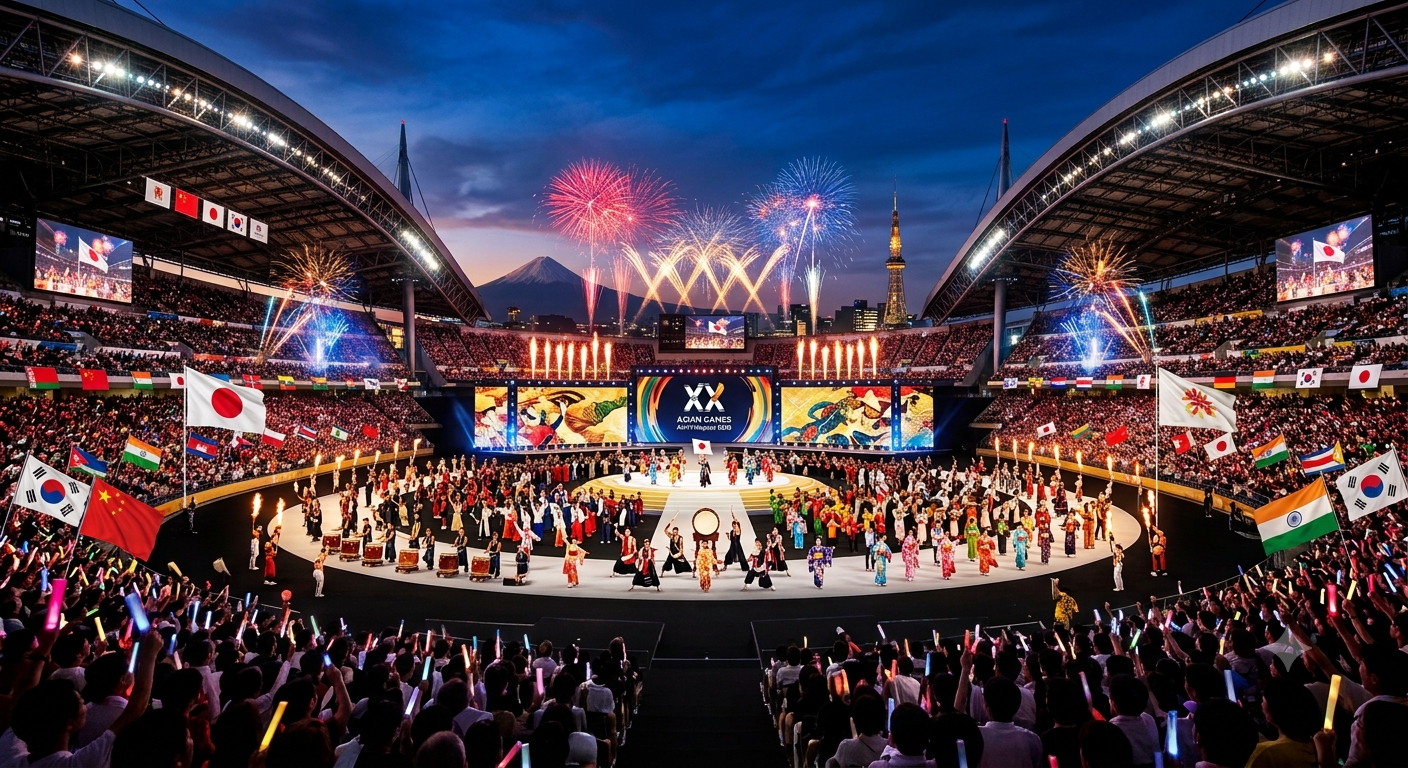
The wait is over. The Asian Games 2026 have arrived in Japan, bringing together athletes from across the continent for one of Asia’s biggest sporting celebrations.
Officially known as the 20th Asian Games Aichi-Nagoya 2026, the Games are taking place from September 19 to October 4, 2026, with competitions spread across Aichi Prefecture and other venues in Japan. The event features 43 sports and 54 venues, making it a huge celebration of athletic talent, culture and international friendship.
But before the medals, records and dramatic finishes, there was one moment everyone was waiting for: the Opening Ceremony of Asian Games 2026.
Held in Nagoya, the ceremony officially welcomed the athletes and marked the beginning of the Games. Here’s everything you need to know about the Asian Games 2026 Opening Ceremony, along with some interesting facts that make this edition special.
Table of Contents
Asian Games 2026 Opening Ceremony: When Was It Held?
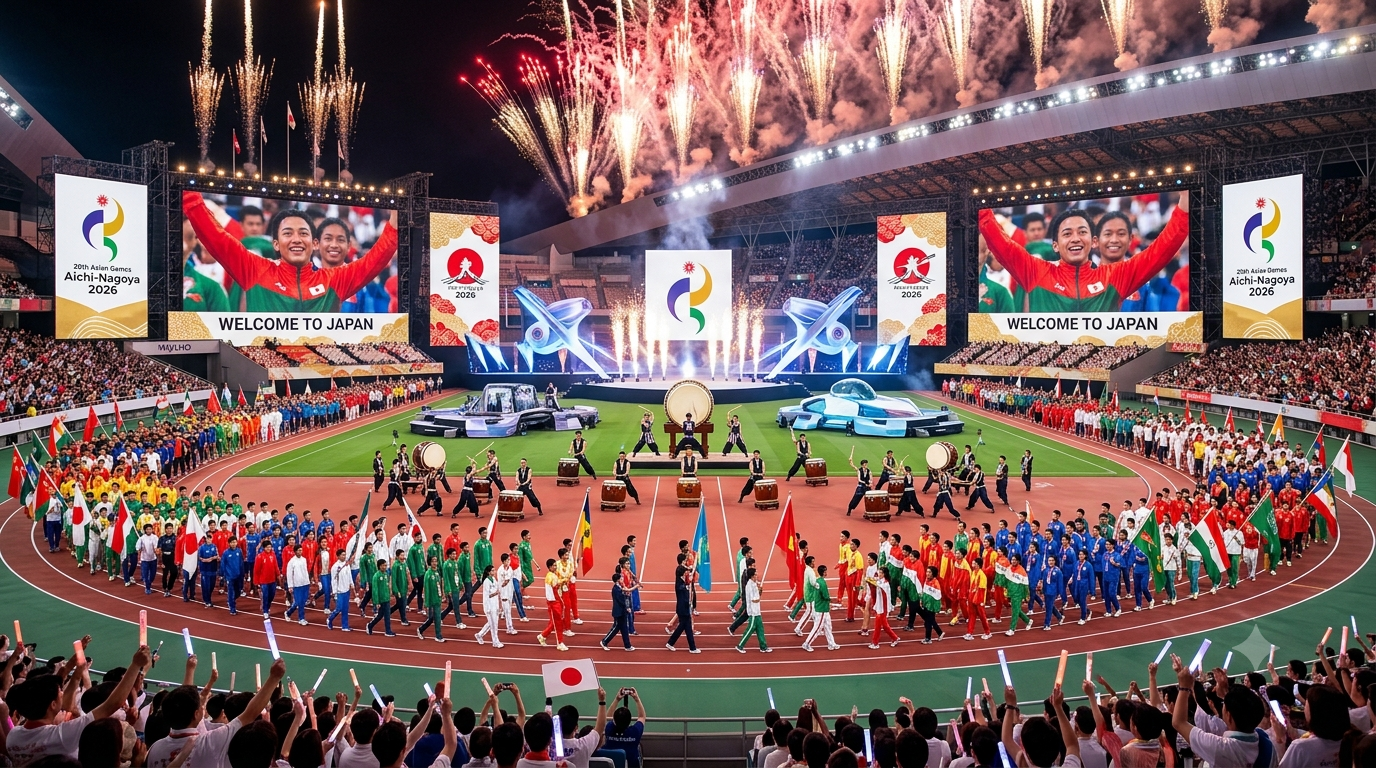
The Opening Ceremony took place on September 19, 2026, at the Nagoya City Mizuho Park Athletic Stadium.
The official ceremony began at 6:00 PM, but the experience started much earlier. Spectators could enter from 1:30 PM, while the special Warm-Up Stage began at 4:00 PM.
That schedule was important for visitors because the organisers expected significant crowds and introduced security and identity-verification procedures. Spectators were advised to arrive early, and entry restrictions were put in place once the warm-up programme began.
So, for anyone planning to attend a major event at the Games, the lesson is simple: don’t leave it until the last minute!
Where Did the Asian Games 2026 Opening Ceremony Took Place?
The ceremony was held at the Nagoya City Mizuho Park Athletic Stadium, one of the key venues in Nagoya.
The stadium is part of the wider Mizuho Park sporting complex and is also being used during the Games for athletics-related activities.
Nagoya itself is the capital of Aichi Prefecture and is one of Japan’s major cities. Hosting the Asian Games gives the city an opportunity to welcome athletes, officials and visitors from across Asia while showcasing its own culture and character.
The official Games website lists 54 venues for Aichi-Nagoya 2026, extending beyond Nagoya to locations throughout Aichi and several venues elsewhere in Japan.
What Made the Asian Games 2026 Opening Ceremony Special?
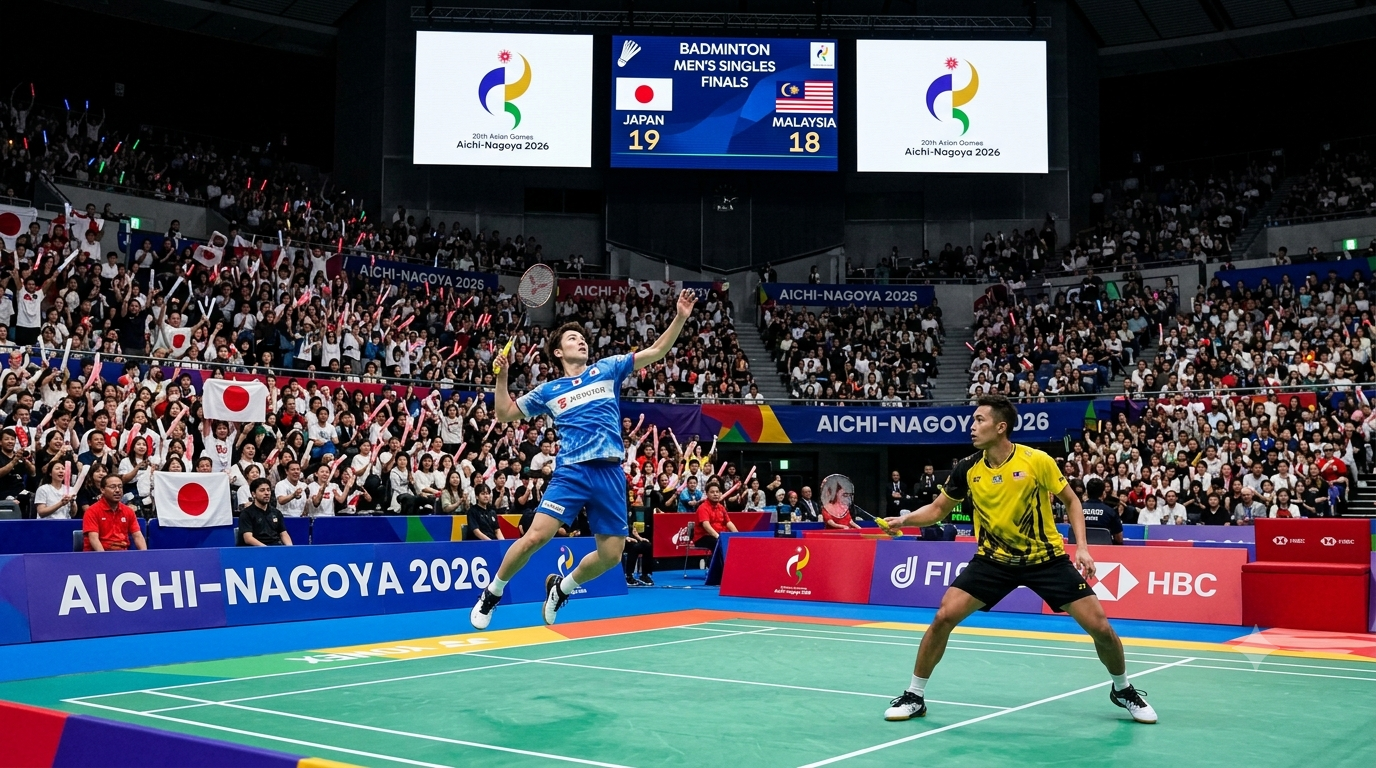
Opening ceremonies are about much more than simply declaring a tournament open.
They create the first big emotional moment of a major sporting event. Athletes enter together, flags fill the stadium, performers take the stage and the host city gets its chance to tell its story.
For Aichi-Nagoya 2026, the organisers have emphasised the connection between sport, people, culture and the region.
The result is intended to give visitors a taste of what makes Aichi and Nagoya unique while celebrating the diversity of Asia.
And that’s what makes an Asian Games ceremony so fascinating. You don’t just see one country represented. You see dozens of cultures coming together in the same stadium.
The Warm-Up Stage: The Fun Started Early
One of the interesting features of the 2026 Opening Ceremony was the Warm-Up Stage, which began at 4:00 PM.
Japanese pop group INI was among the announced performers. The programme also featured the Shigō District Bō-no-te Preservation Association, representing a traditional local performing art, with Kobayashi Takuichiro and Kato Rina serving as MCs.
This combination of contemporary entertainment and local tradition captures something particularly Japanese: the ability to place modern pop culture alongside long-standing cultural traditions.
For spectators, it also meant the atmosphere began building hours before the official ceremony.
Japan Meets Asia
One of the biggest attractions of hosting an international sporting event is the cultural exchange that happens around the competition.
Athletes arrive with different languages, traditions, foods and sporting backgrounds. Fans travel with their own customs and expectations.
The Asian Games create a shared space where all of these cultures can meet.
The Aichi-Nagoya Games are also featuring ONE ASIA WORLD, a celebration and fan-zone programme connected with Asian food, culture, entertainment and the wider Games experience. The official Games website describes it as a place where the excitement of the medal-winning competition meets the cultures and cuisines of Asia.
So even if you’re not following every sport, there are plenty of reasons to enjoy the wider festival atmosphere.
How Big Are the Asian Games 2026?
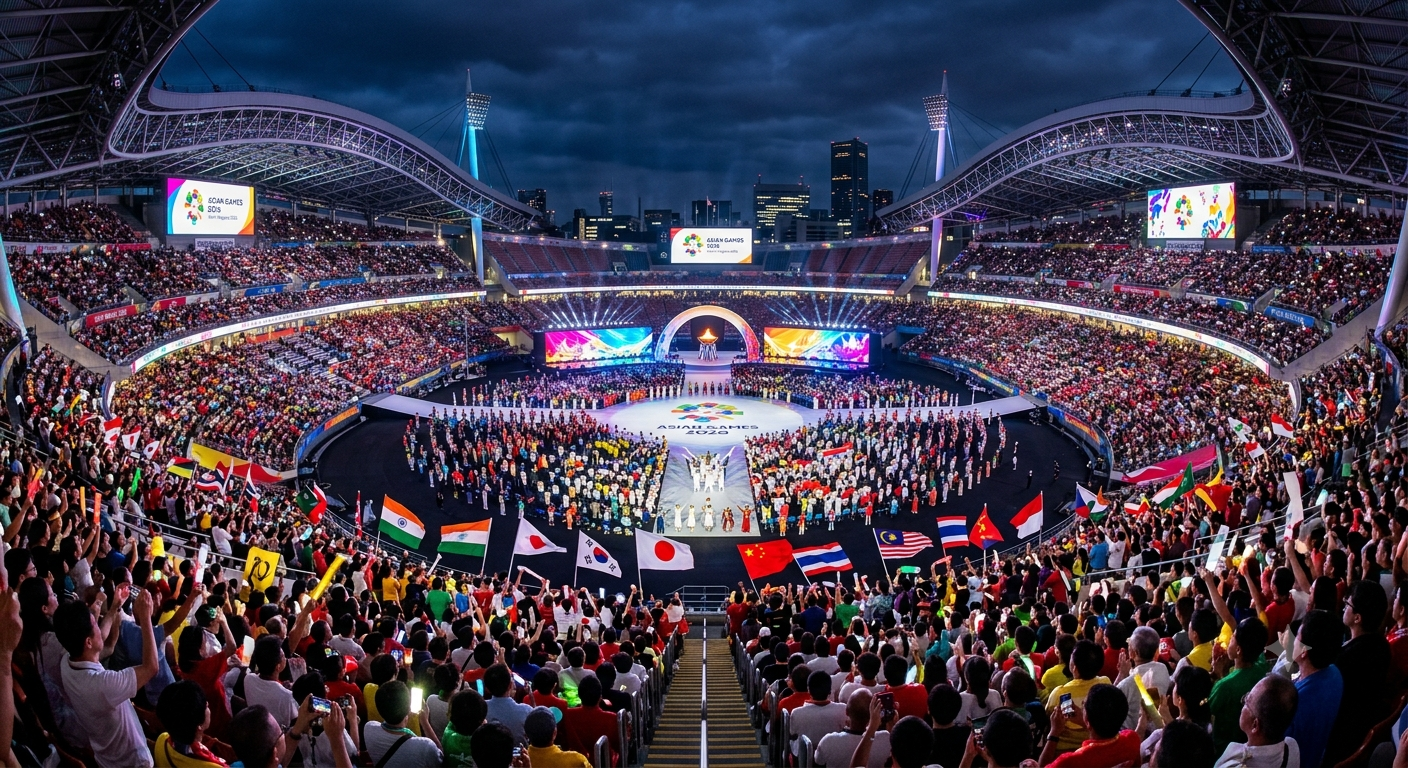
The numbers behind the event are impressive.
Quick Facts
- Event: 20th Asian Games
- Host: Aichi-Nagoya, Japan
- Dates: September 19–October 4, 2026
- Sports: 43
- Venues: 54
- Opening Ceremony: September 19
- Closing Ceremony: October 4
- Main Opening Ceremony venue: Nagoya City Mizuho Park Athletic Stadium
- Official mascot: HONOHON
The sporting programme is also remarkably varied.
The official sports list includes familiar Olympic disciplines such as athletics, swimming, badminton, boxing, cycling, football, gymnastics, judo, shooting and weightlifting.
But there are also sports that give the Asian Games their own identity, including kabaddi, sepak takraw, wushu, kurash, karate, teqball and esports, among others.
That variety is one of the reasons the Asian Games are so enjoyable to follow.
Don’t Forget Cricket
For many Indian fans and viewers across South Asia, cricket is one of the major attractions of the 2026 Games.
Cricket is being played in the T20 format, adding another major team sport to an already packed programme.
The cricket competition actually began before the official Opening Ceremony, which is possible because some sporting events at multi-sport Games start before the formal opening.
According to reporting from RevSportz, the women’s T20 competition was scheduled for September 17–22, while the men’s tournament was scheduled for September 24–October 3.
That means cricket fans didn’t have to wait for the ceremony before seeing Asian Games action.
The Asian Games Mascot: HONOHON
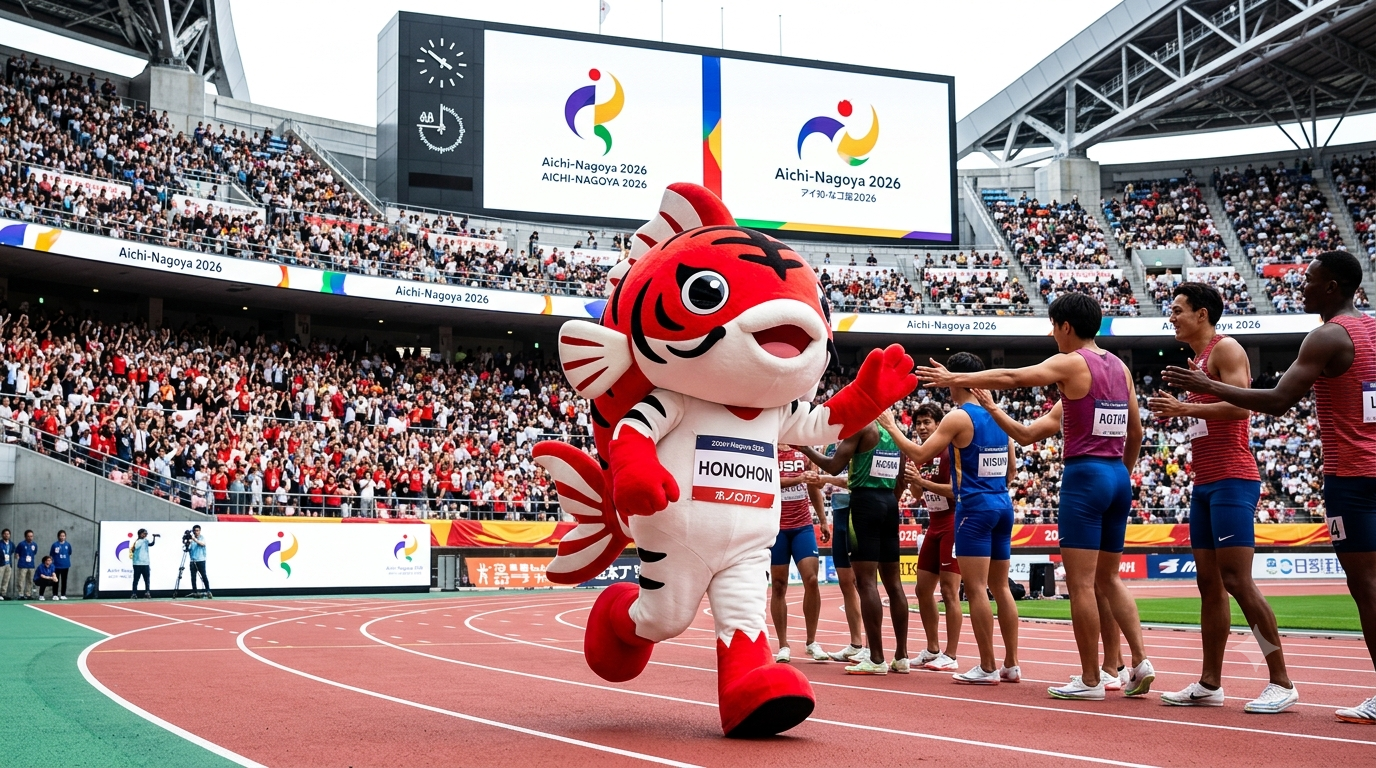
Every major sporting event needs a character that people can instantly recognise, and Aichi-Nagoya 2026 has HONOHON.
The official website describes HONOHON as the Games’ mascot and says the character was born from the fiery passion in the hearts of athletes.
Mascots may look like a small part of a sporting event, but they often become one of the most memorable symbols for fans, particularly children.
What Should Visitors Know?
If you’re attending a competition or ceremony in person, planning ahead is important.
The organisers have recommended using public transportation to reach Games venues. Temporary traffic restrictions are also being introduced around certain events, including the Opening and Closing Ceremonies and some road competitions.
Security checks are another important consideration.
For the Opening Ceremony, spectators were required to register their visitor information in advance and complete identity verification. Bag inspections and security screening were also carried out.
The official visitor guidance also warned that there would be no baggage storage, coin lockers or luggage check service at the Opening Ceremony venue.
In other words, if you’re heading to a major Games event, travel light and check the latest venue instructions before leaving.
Why the Opening Ceremony Matters
It’s easy to think of an opening ceremony as just a colourful introduction to a sporting tournament.
But for athletes, it’s much more personal.
Many competitors have spent years training for the chance to represent their country. Walking into a stadium surrounded by thousands of spectators can be a once-in-a-lifetime experience.
For the host city, meanwhile, the ceremony is a chance to say: welcome to our home.
And for viewers watching from elsewhere in Asia, it’s an opportunity to see a different side of Japan while following athletes from their own countries.
That’s what makes the Asian Games different from an ordinary sporting tournament. The competition matters, of course, but so does the sense of connection created around it.
Conclusion
The Asian Games 2026 in Japan are more than a collection of sporting competitions. They are a meeting point for athletes, fans and cultures from across Asia.
The Opening Ceremony in Nagoya provided the perfect introduction to that idea — combining sport with entertainment, local traditions and the energy of an international celebration.
With 43 sports, 54 venues and thousands of athletes and officials, Aichi-Nagoya 2026 is a huge undertaking.
And perhaps the best way to experience the Games is not to focus on just one medal table or one sport.
Watch the cricket. Cheer for the sprinters. Discover sepak takraw. Follow badminton, hockey or football. Learn about a sport you’ve never watched before. And, if you’re in Japan, take some time to experience Nagoya and Aichi beyond the stadiums.
Because at its heart, the Asian Games are about bringing people together.
Japan has opened the door, and Asia has walked in.
FAQs About Asian Games 2026 Opening Ceremony
Q. When were the Asian Games 2026 held?
A. The 20th Asian Games Aichi-Nagoya 2026 are taking place from September 19 to October 4, 2026.
Q. Where was the Asian Games 2026 Opening Ceremony held?
A. The Opening Ceremony was held at Nagoya City Mizuho Park Athletic Stadium in Nagoya, Japan.
Q. What time did the Opening Ceremony start?
A. The official Opening Ceremony started at 6:00 PM on September 19, 2026. A Warm-Up Stage began at 4:00 PM.
Q. Who performed at the Opening Ceremony Warm-Up Stage?
A. The announced Warm-Up Stage performers included Japanese pop group INI and the Shigō District Bō-no-te Preservation Association. Kobayashi Takuichiro and Kato Rina were announced as MCs.
Q. How many sports are included in Asian Games 2026?
A. The Aichi-Nagoya 2026 programme features 43 sports.
Q. How many venues are being used?
A. The Games have 54 venues, with competitions taking place across Aichi and at selected venues elsewhere in Japan.
Q. What is the mascot of the Asian Games 2026?
A. The official mascot is HONOHON. The organisers say the mascot represents the fiery passion of athletes.
Q. Is cricket included in the Asian Games 2026?
A. Yes, T20 cricket is part of the Aichi-Nagoya 2026 programme. The cricket competition began before the official Opening Ceremony.
Q. What sports can fans watch at the Asian Games?
A. Fans can follow sports ranging from athletics, swimming, badminton and football to kabaddi, sepak takraw, wushu, karate, esports, skateboarding, surfing, climbing and many others.
Q. What should spectators know before attending an event?
A. Visitors should check the latest official venue instructions, allow extra time for security checks and consider public transportation. For the Opening Ceremony specifically, advance visitor-information registration and identity verification were required.


