

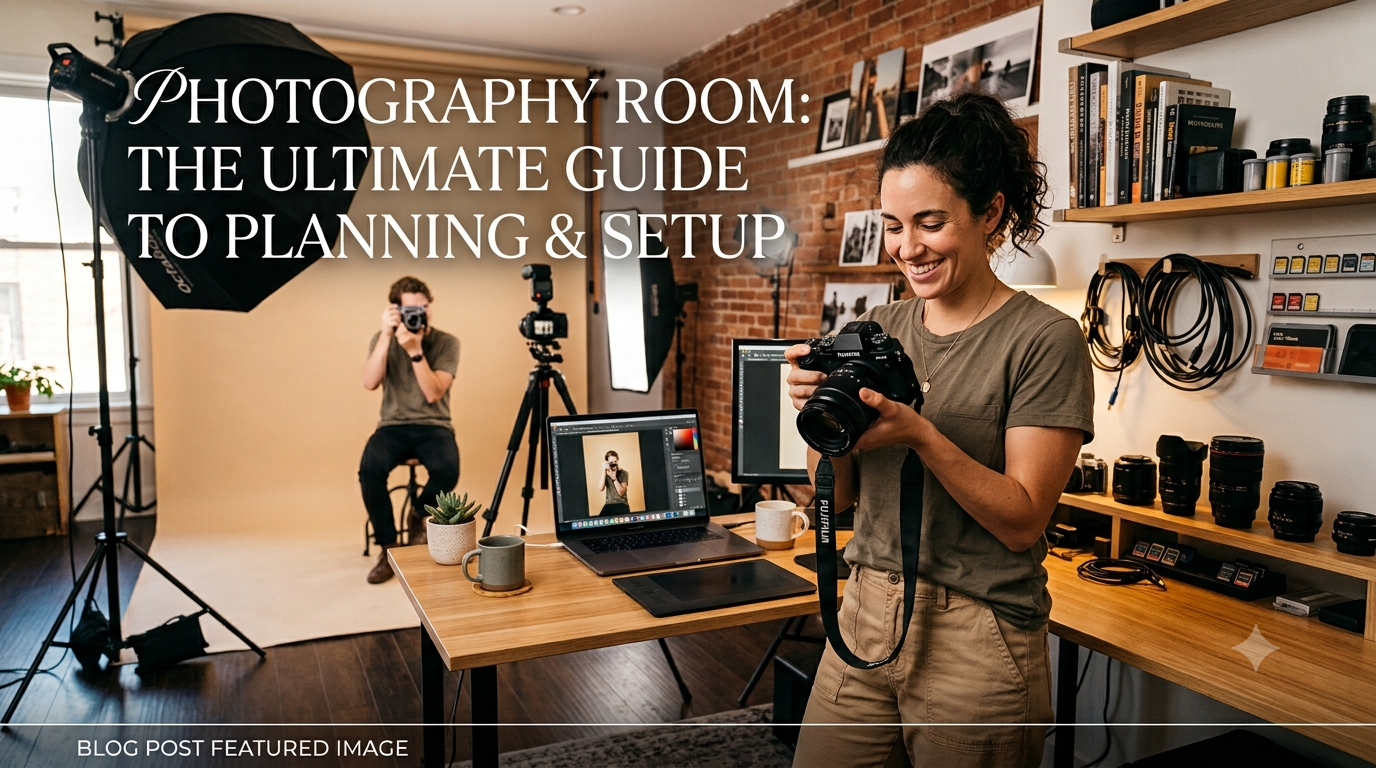
A well-designed photography room has the ability to change the way images are created or generated. Whether you’re a professional photographer, a content creator, or even someone who enjoys photography as a hobby, having the right set of equipment & the right environment makes it quite easy to experiment, work efficiently, & also produce better results.
You don’t need a huge studio or the most expensive equipment. Organise your photography room thoughtfully with some essential tools. This can provide everything you need for social media content, portraits, still life, products, & also creative projects. A new trend has emerged with the advent of AI. People are now going for home studios. Let’s look at the 10 essential things every photography room must have.
Table of Contents
10 Photography Room Essentials
Light Modifiers
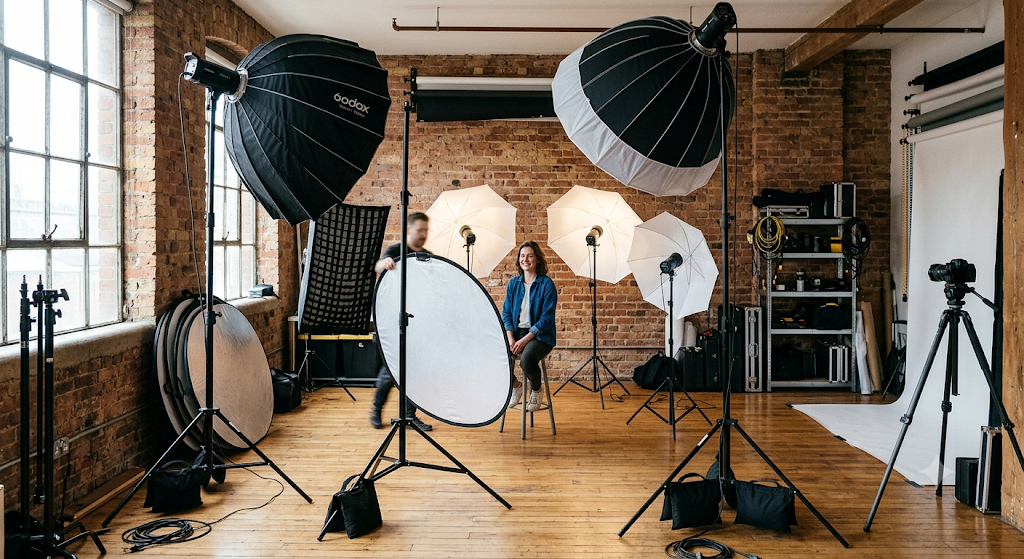
Simply having lights in the room isn’t enough. You must have light modifiers to help you control how the various lights affect the subjects that you are shooting. A white reflector can easily brighten up the available shadows, while a black surface is capable of absorbing light & also increasing the contrast.
Reflectors are quite a useful addition to your Photography room.
Softboxes are known to create diffused illumination that are very smooth and that also works quite well for portraits & also the product photography. Umbrellas are quite affordable & versatile in nature, while beauty dishes can produce different lighting for fashion & portrait work.
A Selection of Backgrounds
Having good backgrounds in the photo room can change things a lot. Backgrounds can dramatically change the appearance of a photograph. A photography room should have several options, such as gray, white, black, & colored backgrounds.
For product photography, clean & simple backgrounds are a great element of the Photography Room ideas. Portrait photographers may prefer neutral or even textured backgrounds that complement their subjects.
Fabric Backdrops, vinyl sheets, Paper rolls, & painted walls can all work really effectively. You can go for various backgrounds that are based on the type of photography.
Good Photography Lighting
If you have a low budget, you can start with one quality light & then learn how to control that light. You can gradually add several additional lights as your photography skills & requirements grow. Lighting is also very important when you are shooting for capturing Behind the Scenes.
Lighting is known as the foundation of photography. Even an excellent camera can really struggle when the lighting is quite poor, which makes dependable lighting equipment one of the most significant investments for a photography room.
Consider having at least 1 or 2 continuous LED lights or studio strobes.
A sturdy Tripod
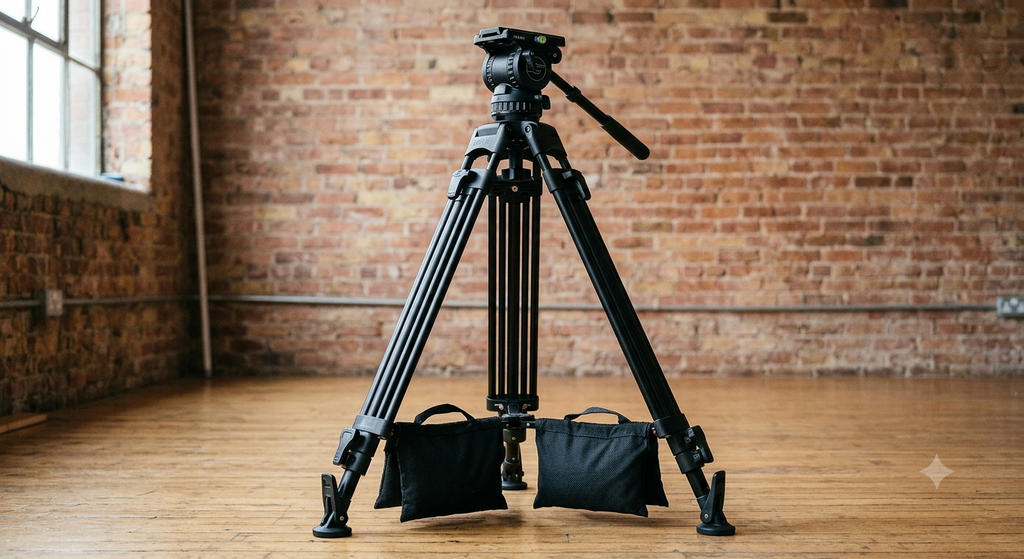
A reliable tripod provides stability as well as consistency. It is particularly useful for product photography, long exposures, still-life images, self-portraits, & also for video recording.
A tripod also allows you to maintain exactly the same camera position between various shots. This can be extremely helpful when photographing multiple products or even during the creation of images that need to be combined during editing. When choosing one, you can look for a stable model that can safely support the camera weight as well as the lense.
Camera & Essential Lenses
Shooting without a camera is not possible. Depending on your goals, this could be a DSLR camera, mirrorless camera, or even a high-quality smartphone. If you are a professional and using an interchangeable-lens camera, consider having lenses that is best suited to your photography style. A standard zoom lens is very helpful. There is also a prime lens that can provide excellent image quality & also attractive background blur.
Use of a macro lens can be quite valuable for close-up product or detail photography. The key is to choose equipment that supports your various creative goals rather than simply buying gear just because it is popular.
Reflectors & Diffusers
A diffuser can be placed between a strong light source & the subject to create softer illumination. You can control the natural window light with curtains or diffusion material. These simple tools can make a key difference, especially in portrait & still-life photography.
Comfortable and Organised Work Area
Work environment is very important. The type of work environment decides the output of the work or the job. A good work environment makes the life of the people involved in work good and hence the productivity rises. A photography room should not only contain equipments; it must also be comfortable & well organised. You can use various shelves, cabinets, hooks, equipment bags, & several storage boxes to keep lenses, cameras, cables, batteries, & accessories organised. Labeling storage areas can save time when you’re working on a project.
Power & Cable Management
Photography equipment often requires multiple power sources. Lights, chargers, computers, monitors, and other devices can quickly create a mess of cables.
Install accessible power outlets where possible, and use cable organizers or clips to keep wires under control. Avoid creating walkways where cables could become a tripping hazard.
A surge protector can also provide additional protection for electronic equipment.
Keeping your power setup organized makes the studio safer and helps you work more efficiently.
Computer & Photo Editing Setup
Editing is an important part of modern photography. A computer with sufficient processing power & storage can make photo editing faster & much more enjoyable. A good-quality monitor is quite helpful when working with colors, brightness, & even the detail.
Photo-editing software can be used to adjust exposure, white balance, contrast, colors, cropping, & also other elements.
Creative Props & Accessories
Finally, every photography room must have enough space for creativity. Props can give your images personality & also help you experiment with several concepts. Depending on the photography style, useful items might include plants, mirrors, stools, chairs, fabrics, textured surfaces, books, decorative items, glass objects, & colored materials. You don’t need to buy all the accessories once you start your business. Everyday household objects can become surprisingly effective photography props.
Try experimenting with textures, reflections, shadows, & unusual perspectives. Creativity often comes from seeing ordinary objects differently.
How to Set Up Your Photography Room
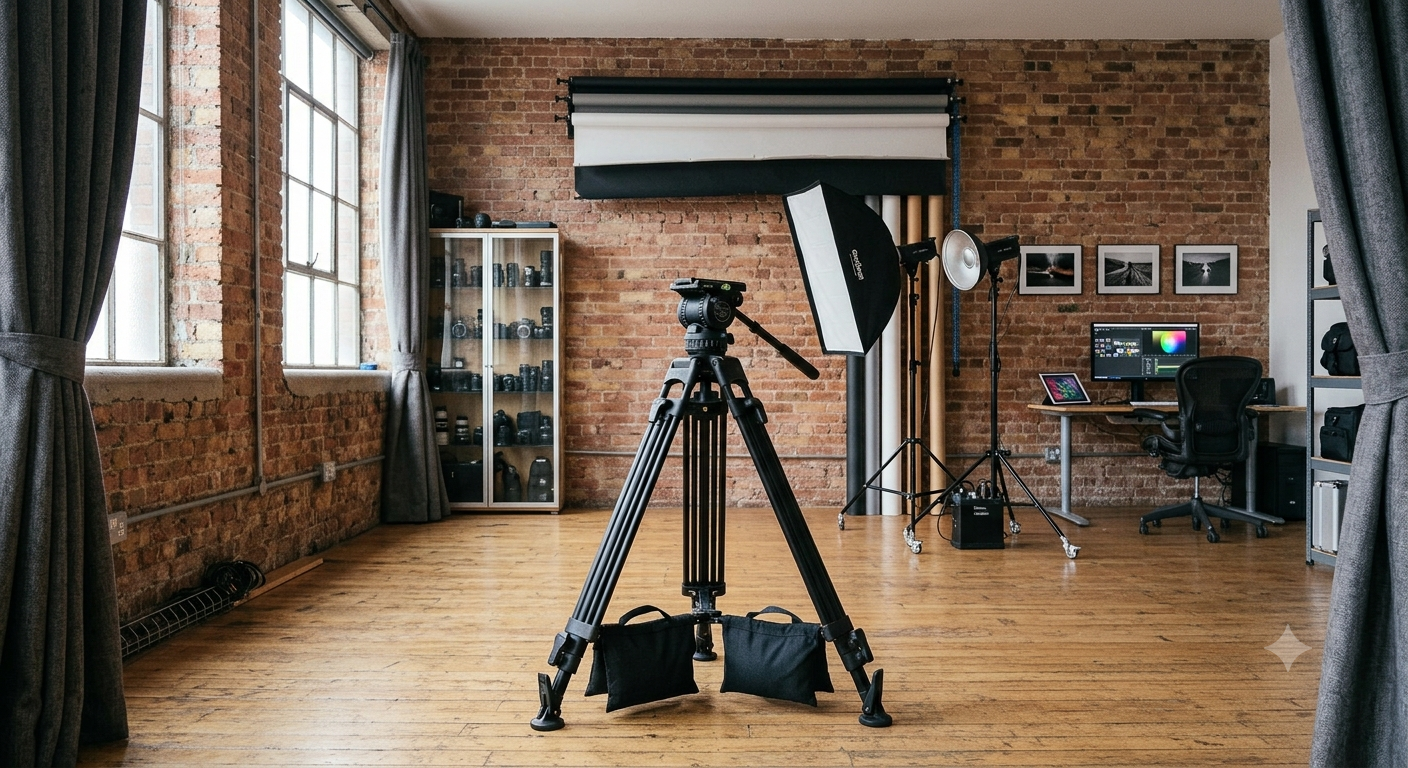
Once you have your essential equipment ready, arrange it well in a room so that it supports a good workflow. Keep your camera & frequently used accessories easily accessible. Position the primary lighting equipment well where it can be adjusted very quickly. Store the various backgrounds so they can be changed without disrupting the look of the rest of the room.
If possible, create separate areas for equipment storage, shooting, & also editing. Even in a small room, simple organization can make the space feel much larger and more professional. Natural light must also be considered. If your room has a window, experiment with different times of day to understand how sunlight affects your photographs.
You Don’t Need an Expensive Studio
One of the biggest misconceptions about photography is that you need very expensive studio equipment to create beautiful images. People think that a big gear room is required adjacent to Photography Room.
While professional gear can offer greater control & convenience, creativity & technical knowledge plays a more important role. A simple setup with one light, a reflector, a tripod, a suitable background, & a camera has the power to produce excellent results.
Start with the essentials & then learn how each piece of equipment affects your images. As your skills develop, you’ll have a much better understanding of what additional equipment is actually worth buying.
Final Thoughts
A great photography room is more than a collection of various cameras & lights. It is a creative environment designed to make photography much easier, more organized, & also more inspiring.
From dependable lighting & versatile backgrounds to comfortable storage & creative props, these 10 essentials can help you build a photography space that suits your needs.
FAQs
Below are the FAQs related to the Photography room:
Q. What is a Photography room?
A. A photography room or a studio is a dedicated indoor workspace that is designed for taking professional photographs in a completely controlled environment.
Q. What is Darkroom photography?
A. Darkroom photography is known as a traditional analog process. It is different from the Photography room where shooting of photos takes place. Darkroom photography is for developing photographic films & also creating physical prints using light-sensitive materials inside a specially controlled & darkened room.
Q. What are the basics of photography that you should be aware of while shooting in the photography room?
A. The 7 basics of photography are focus, lighting, white balance, composition, exposure, depth of field, & also the perspective.
Q. Can I make one of my rooms a photography room?
A. Yes, there is no need to spend so much money on rent and other things. You can convert your personal room into a photography room. All you have to do is have the correct equipment ready for shooting. Essential Gear for photography are given below:
- Lighting: You can use a single LED light or a studio flash with a softbox. You can also use a continuous light. These lights are great for beginners because you can see the shadows before you can even shoot.
- Support: A sturdy tripod keeps your camera steady during low-light or self-portrait sessions.
- Reflectors: Use a 5-in-1 reflector to bounce light and fill in dark shadows on your subject.
Q. Can I create more than one background in the photography room?
A. Yes, if you want, you can create more than 1 background in the photography room. Its your room and it is up to you want kind of specifications and decorations you want to add in the room.


