

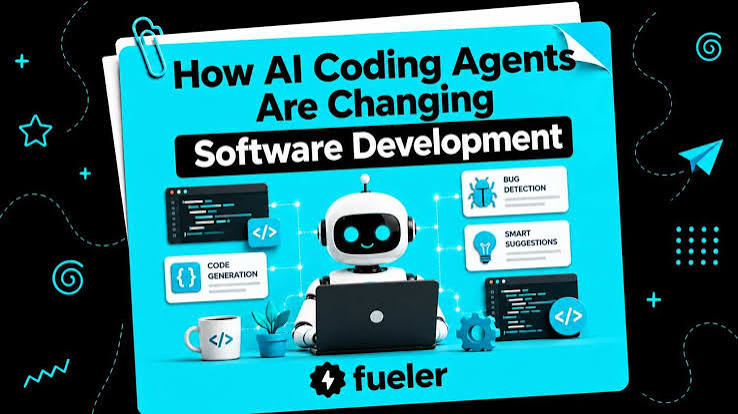
Software development is changing rapidly with the growth of artificial intelligence. Developers no longer use AI only to generate small pieces of code or explain programming concepts. A newer generation of AI tools, known as AI coding agents, can understand development tasks, create code, inspect existing projects, run tests, identify errors, and make changes across multiple files. This shift is changing how developers approach software development. They work best when developers review their output, provide clear instructions, and remain responsible for important technical decisions in software development.
Table of Contents
What are AI Coding Agents?
AI coding agents are AI-powered software development tools designed to perform multi-step programming tasks. Traditional AI coding assistants generally respond to a specific prompt. A developer in software development may ask for AI tools:
- Write a Python function.
- Explain an error message.
- Convert JavaScript code into TypeScript.
- Create a SQL query.
- Suggest improvements to existing code.
An AI coding agent can go further. It can potentially inspect a repository, understand relationships between files, modify multiple files, execute commands or tests in an appropriate environment, analyse the results, and continue working based on what it discovers.
For example, instead of asking:
“Write a login function.”
A developer in software development might give an agent a broader task:
“Add user authentication to this application, create the required API endpoints, update the database models, add validation, and run the existing tests.”
The agent can then break the request into smaller tasks and work through them.
How Do AI Coding Agents Work?
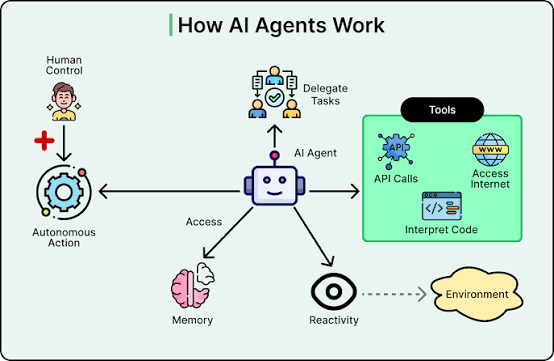
AI coding agents combine large language models with software development tools and a software environment.
A simplified workflow looks like this:
Understand → Plan → Inspect → Code → Test → Fix → Review
1. Understanding the Request
The developer provides a task using natural language.
For example:
“Add a search feature to the product page.”
The AI agent analyzes the request and identifies the likely requirements.
2. Inspecting the Project
The agent may examine the project’s files, directory structure, configuration files, existing components, dependencies, and documentation.
3. Creating a Plan
Instead of immediately generating code, an agent may determine which files need to be modified and what changes are required.
For example:
- Create a search API.
- Update the product component.
- Add search input validation.
- Connect the frontend to the API.
- Add tests.
4. Writing or Modifying Code
The agent then creates new code or modifies existing files. Because it can work with the surrounding project context, it may make changes across several files instead of producing an isolated code snippet.
5. Running Tests
The agent can use available tests or development commands to check whether its changes work as expected.
6. Fixing Problems
If a test fails, the agent can inspect the error, determine a possible cause, modify the code, and run the test again.
This creates an iterative development process.
7. Human Review
The final step should remain human review. Developers in Software development should inspect the changes, test important functionality, and verify security, performance, maintainability, and compatibility before accepting the work.
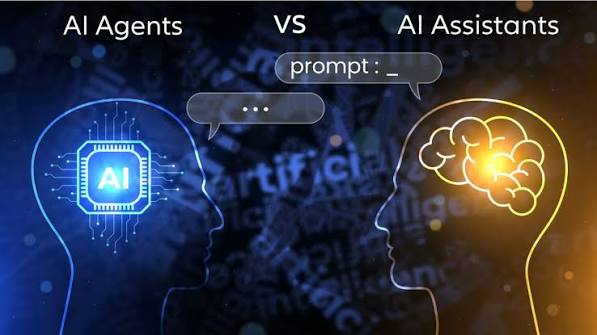
AI Coding Assistants vs AI Coding Agents
Look at the differences below:
| AI Coding Assistance | AI Coding Agents |
| Usually respond to individual prompts | Can handle multi-step tasks |
| Often generate code snippets | Can modify project files |
| Primarily assist the developer | Can execute a planned workflow |
| Limited task autonomy | Greater ability to act across a development environment |
| Developer frequently directs each step | Agent may determine intermediate steps |
For example, an assistant might generate a function when requested. An agent could potentially implement an entire feature by inspecting the repository, modifying files, running tests, and responding to failures. The exact capabilities vary significantly between tools and configurations.
How AI Coding Agents Are Transforming Software Development
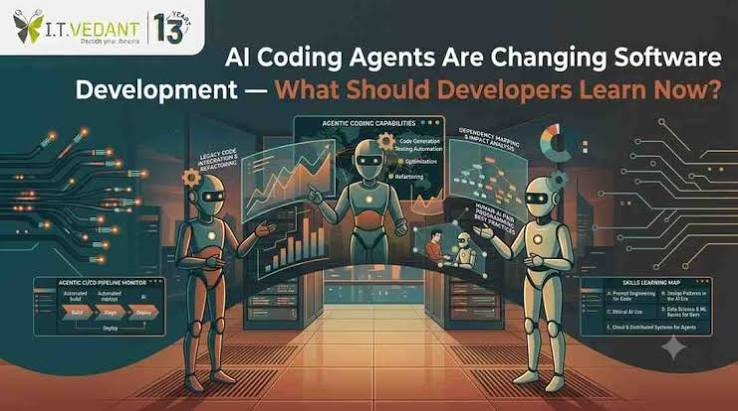
following are some points to explains how AI Coding Agents Are Transforming Software Development.
1. Faster Code Generation
One of the most obvious benefits is faster implementation. This can reduce the amount of repetitive coding required for common tasks.
For example, an agent can help create:
- API endpoints
- Database models
- User interfaces
- Configuration files
- Unit tests
- Documentation
- Utility functions
Then developers can review the generated code.
2. Automating Repetitive Tasks
Software development contains many repetitive activities.
Examples include:
- Updating similar files
- Creating test cases
- Renaming variables
- Converting code formats
- Updating documentation
- Fixing straightforward linting errors
- Generating boilerplate code
3. Working With Large Codebases
An AI coding agent can help navigate a repository by identifying relevant files and explaining how different components interact.
For example, a developer could ask:
“Where is user authentication handled in this project?”
The agent can search the codebase and identify relevant files and functions. This can make code exploration easier.
4. Debugging and Error Resolution
AI coding agents can analyse error messages, inspect related code, suggest potential causes, and attempt fixes.
For example, if a test reports that an API is returning an incorrect response, an agent may inspect:
- API routes
- Controllers
- Database queries
- Validation logic
- Tests
It can then suggest or implement a possible correction. However, developers in software development should still verify that the proposed fix addresses the underlying problem rather than simply hiding the error.
5. Improving Testing
Testing is another area where AI agents can provide assistance. An agent can help generate unit tests, identify missing test cases, and run existing tests after making changes.
For example, if a developer creates a payment-related function, the agent can help create tests for:
- Successful transactions
- Invalid input
- Missing values
- Failed requests
- Unexpected responses
Human review remains especially important for critical systems.
6. Supporting Documentation
Documentation is essential but is sometimes neglected during software development.
They may assist with:
- README files
- API documentation
- Function descriptions
- Installation instructions
- Configuration guides
- Code comments
This is particularly useful when a project contains many APIs or complex configuration steps.
Benefits of AI Coding Agents
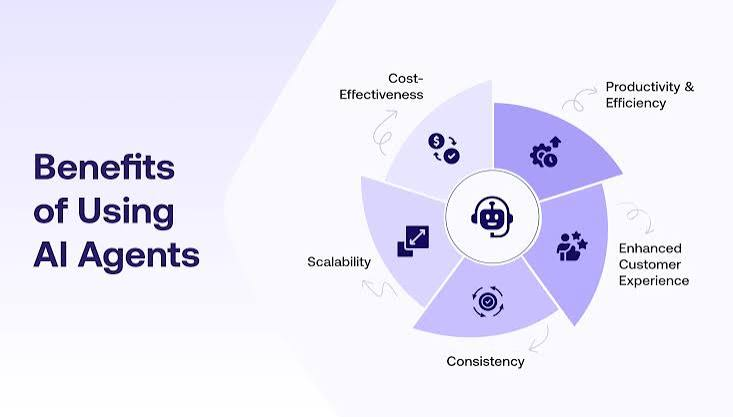
AI coding agents can provide several benefits when used appropriately.
Increased Productivity
Developers can delegate repetitive implementation tasks and focus on architecture, business requirements, and complex technical decisions.
Faster Prototyping
An idea can be converted into a working prototype more quickly. This allows teams to experiment with different approaches before investing significant development time.
Easier Learning
Beginners can use AI agents to understand unfamiliar code, programming concepts, frameworks, and error messages.
However, learners should study the generated code rather than blindly copying it.
Better Developer Experience
Developers can communicate with development tools using natural language instead of manually searching through every file.
Assistance With Legacy Code
AI agents can help explain older codebases and identify areas that may require modification. This can be useful when documentation is incomplete.
Challenges and Risks
Despite their advantages, AI coding agents introduce important challenges.

Incorrect Code
AI-generated code can contain bugs or incorrect assumptions. Code that appears correct may still fail under unusual conditions.
Therefore, generated code must be tested and reviewed.
Security Vulnerabilities
AI-generated code may introduce security problems such as:
- Improper input validation
- Weak authentication
- Unsafe database queries
- Insecure configuration
- Incorrect authorissation logic
Security-sensitive code requires careful human review.
Lack of Context
An AI agent may not fully understand business rules or organisational requirements. For example, two applications may use the same programming language but have completely different security and compliance requirements in software development.
Over-Reliance on AI
Developers in software development who accept generated code without understanding it can create long-term maintenance problems. AI should support programming expertise rather than replace the need to understand software development engineering fundamentals.
Code Quality and Maintainability
Generated code may work but still be unnecessarily complex, repetitive, or inconsistent with the project’s coding standards.
Developers should evaluate readability and maintainability before merging changes.
Best Practises for using AI Coding Agents
Developers in software development can get better results by following a structured approach.
Give Clear Instructions
Instead of saying:
“Fix my application.”
Provide specific requirements.
For example:
“Fix the validation error in the registration form. Preserve the existing API structure and add tests for invalid email addresses.”
Clear requirements reduce ambiguity.
Start With Small Tasks
For unfamiliar projects, begin with smaller changes before assigning large tasks.
This makes it easier to understand how the agent behaves.
Review Every Important Change
Read the generated code and understand what it does before accepting it.
Run Tests
Always run relevant tests after significant changes. For critical applications, add additional manual testing and security checks.
Protect Sensitive Information
Developers should avoid exposing passwords, API keys, private credentials, customer data, or other sensitive information to AI systems.
Use appropriate security controls and organizational policies.
Use Version Control
Git and similar systems provide a safety net when experimenting with AI-generated changes. Create branches, review diffs, and commit changes in logical units.
The Future of AI Coding Agents
AI coding agents are likely to become increasingly integrated into software development environments.
Future software development workflows may involve developers describing high-level goals while AI systems handle more of the repetitive implementation process.
For example, a developer could specify:
“Build a customer dashboard with authentication, reporting, search, and automated tests.”
The AI agent could potentially break the project into smaller tasks and work through them with developer oversight. This does not necessarily mean that traditional programming skills will become unnecessary. Instead, developers may spend more time on architecture, system design, security, testing, requirements, and reviewing AI-generated work. The role of the developer may gradually shift from writing every line manually toward directing, evaluating, and validating software created with AI assistance.
AI Coding Agents and the Changing Role of Developers
The rise of AI coding agents is changing the skills developers need. Programming fundamentals remain important, but additional skills are becoming increasingly valuable.
Developers should learn:
- Prompting and task specification
- Code review
- Software architecture
- Testing
- Debugging
- Security
- Git and version control
- API design
- Cloud technologies
- Understanding AI limitations
The ability to evaluate AI-generated code may become just as important as the ability to generate code.
Conclusion
AI coding agents represent an important software development in AI-assisted software engineering. Unlike traditional coding assistants that mainly generate snippets or answer programming questions, coding agents can work through multi-step development tasks and interact with project files and testing environments. They can help developers generate code faster, automate repetitive work, explore unfamiliar repositories, debug problems, create tests, and maintain documentation.
However, they should not be treated as completely autonomous replacements for software engineers. AI-generated code can contain bugs, security vulnerabilities, and incorrect assumptions. The most effective approach is to combine AI automation with human expertise. Developers can use AI coding agents to handle repetitive tasks while they remain responsible for architecture, security, quality, testing, and final decisions. As AI continues to evolve, coding agents are likely to become an increasingly common part of modern software development. The developers who learn how to use these tools effectively while maintaining strong programming fundamentals will be better prepared for an increasingly AI-assisted development environment.
FAQs
1. What are AI coding agents?
AI coding agents are AI-powered development tools that can understand programming tasks, inspect codebases, write or modify code, run tests, identify errors, and assist with multi-step software development tasks.
2. How are AI coding agents different from traditional coding assistants?
Traditional coding assistants generally provide code suggestions or answer programming questions. AI coding agents can handle broader, multi-step tasks and may interact with project files, development tools, and testing environments.
3. How do AI coding agents help developers?
They can help developers generate code, automate repetitive tasks, debug errors, create tests, understand unfamiliar codebases, and produce technical documentation.
4. Can AI coding agents write complete applications?
AI coding agents can assist with building substantial parts of an application, but the results still require human review, testing, security checks, and refinement before production use.
5. Do AI coding agents replace software developers?
AI coding agents are designed to assist developers rather than completely replace them. Human expertise remains important for architecture, security, requirements, testing, and technical decision-making.
6. Can AI coding agents fix bugs automatically?
They can identify potential causes of errors and suggest or implement fixes. Developers should test the changes to confirm that the actual problem has been resolved.
7. Are AI-generated code and AI coding agents secure?
Not necessarily. AI-generated code can contain security vulnerabilities or incorrect assumptions. Developers should review security-sensitive code and follow appropriate security practices.
8. What are the main benefits of AI coding agents?
Major benefits include faster development, automation of repetitive tasks, easier code exploration, assistance with debugging, test generation, and improved developer productivity.
9. What are the limitations of AI coding agents?
They can generate incorrect code, misunderstand requirements, introduce bugs, miss security issues, or produce code that is difficult to maintain. Their effectiveness also depends on the quality of the instructions and project context they receive.
10. What skills should developers learn to work effectively with AI coding agents?
Developers should maintain strong programming fundamentals while developing skills in prompt/task specification, code review, debugging, testing, software architecture, cybersecurity, Git, APIs, and cloud technologies.


