

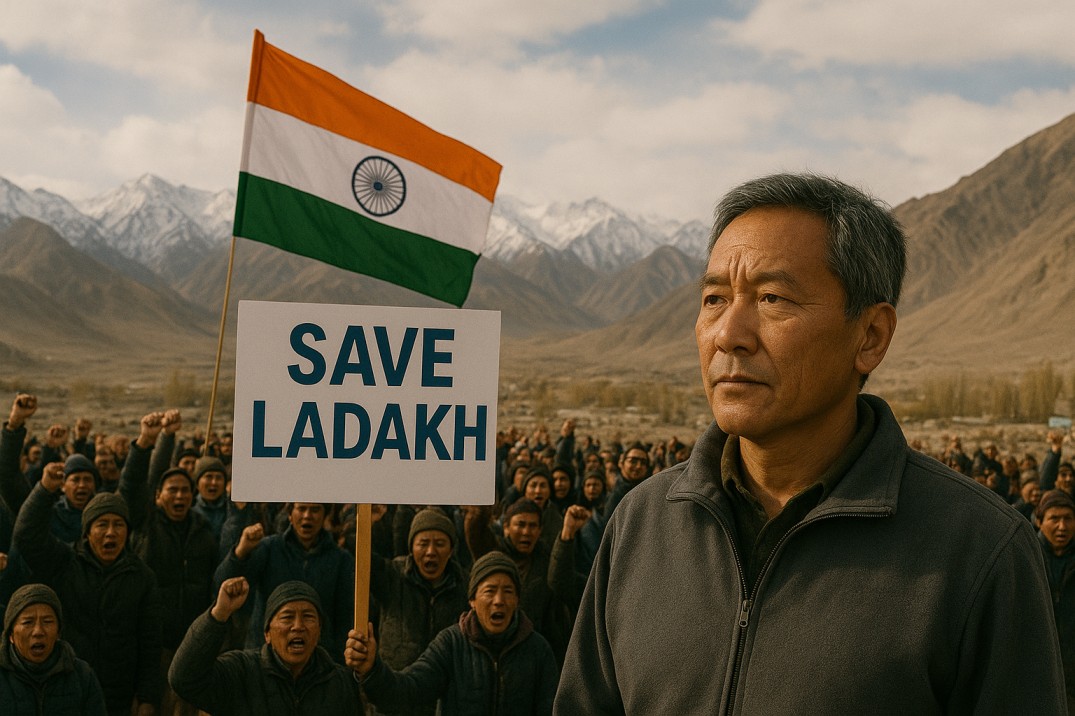
The union territory of Ladakh, often described as the crown of India is witnessing a historic movement that has captured national attention. The region, known more for its tranquillity than turbulence, has turned into the stage of a significant civic awakening — the Ladakh protest. At the center of this movement stands Sonam Wangchuk, the visionary education reformer, environmentalist, and engineer whose recent detention has stirred widespread concern across the country. His arrest has reignited a national conversation about democracy, environment, and representation in one of India’s most sensitive regions.
This article offers a complete and balanced picture of the Ladakh protest — tracing its origins, explaining the demands of the people, the reasons behind Sonam Wangchuk’s imprisonment, and what the future may hold for this Himalayan territory.
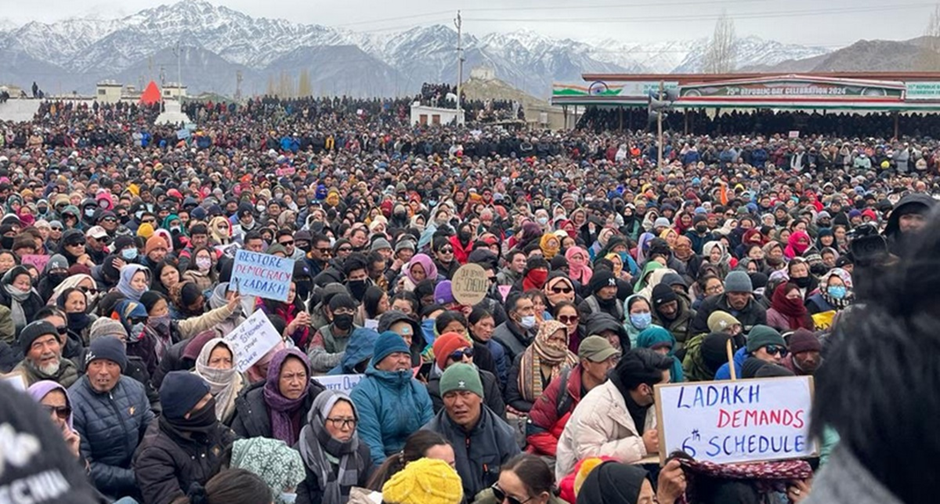
Who Is Sonam Wangchuk
Sonam Wangchuk is a name that resonates not only in Ladakh but across India and abroad. An engineer by training and a reformer by passion, he rose to prominence for revolutionizing education in the mountains through his work with the Students’ Educational and Cultural Movement of Ladakh, commonly known as SECMOL. His approach to education emphasized practical learning and problem-solving rather than rote memorization, giving local students tools to adapt to their unique geographical and cultural environment.
Beyond education, Sonam Wangchuk became a global figure in sustainable innovation through his creation of Ice Stupas — artificial glaciers that store winter water for use in summer. These remarkable inventions have helped Ladakh’s farmers survive water scarcity during crucial agricultural months. His environmental and educational work earned him numerous accolades, including the Ramon Magsaysay Award, often regarded as Asia’s Nobel Prize.
However, Sonam Wangchuk’s journey eventually expanded from classrooms and engineering labs to the streets and public squares, where he began advocating for Ladakh’s political rights and ecological security. His activism grew out of a deep belief that sustainable development, people’s participation, and environmental protection must go hand in hand.
The Roots of the Ladakh Protest
To understand the ongoing movement, one must look back to August 2019, when Article 370 of the Indian Constitution was abrogated. This move split the former state of Jammu and Kashmir into two Union Territories — Jammu and Kashmir, and Ladakh. At that time, many Ladakhis welcomed the decision. It was viewed as a long-pending recognition of Ladakh’s distinct identity and an opportunity for direct governance from New Delhi.
The initial optimism, however, gradually turned into anxiety. The people of Ladakh began to realize that the new administrative setup came without a legislative assembly, leaving them with limited decision-making power. Concerns deepened over whether local voices would continue to shape the region’s future or whether decisions would now be dictated from far away.
In a land where nearly 97 percent of the population belongs to tribal communities, questions arose about land ownership, employment opportunities, and cultural preservation. The absence of constitutional safeguards to protect land and resources triggered a growing sense of unease. The people who once celebrated their Union Territory status soon began to demand more — not separation from the nation, but protection within it.
The Demands of the Ladakh Protest
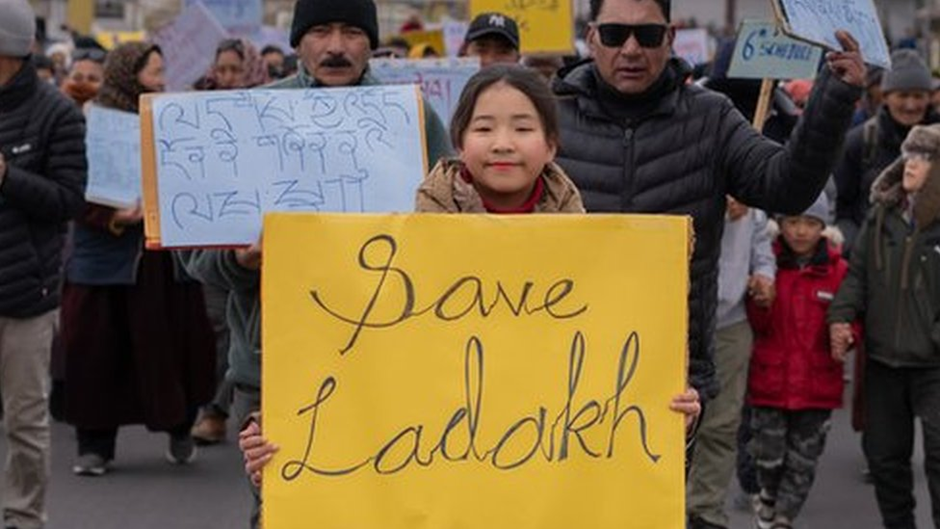
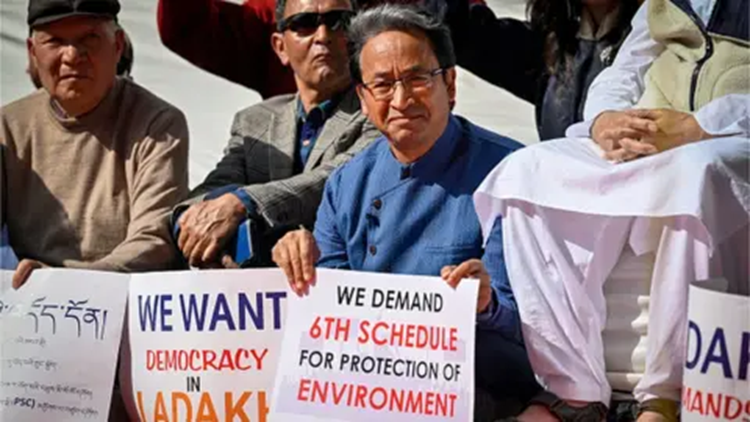
At its core, the Ladakh protest is a call for recognition, protection, and participation. The people are seeking full statehood, which would give them an elected assembly and greater control over their affairs. Alongside statehood, they are demanding inclusion under the Sixth Schedule of the Constitution, a provision designed to safeguard tribal communities by granting them special rights over land, resources, and culture.
The Sixth Schedule demand has become the symbolic heart of the movement. For Ladakhis, it represents security — a legal shield to prevent indiscriminate industrialization, demographic shifts, and the possible erosion of their fragile ecosystem. It also stands as a guarantee that decisions affecting the region’s environment and livelihood would be made by its own people.
Another major concern revolves around employment. Since the creation of the Union Territory, Ladakh has lacked its own Public Service Commission, forcing youth to depend on Jammu and Kashmir’s recruitment system. Protesters argue that a separate commission would ensure fair representation and bring jobs closer to home.
Yet, beyond administrative and political rights, the movement also reflects a deeper, emotional concern: the preservation of Ladakh’s culture and ecology. For a land where life and livelihood are intertwined with the rhythms of nature, the fear of unsustainable development runs deep. The people want progress, but they want it on their terms — respectful of their traditions and mindful of their mountains.
Sonam Wangchuk’s Role and Philosophy
Sonam Wangchuk’s leadership in the Ladakh protest is neither accidental nor opportunistic. It stems from years of consistent advocacy for the region’s sustainable growth and self-reliance. Known for his non-violent methods, he began organizing peaceful fasts, marches, and awareness campaigns urging the central government to grant Ladakh the constitutional safeguards it deserves.
His voice carries moral weight because it is rooted in lived experience. For decades, Sonam Wangchuk has worked among the people — teaching, innovating, and addressing real challenges such as water scarcity and education inequality. When he speaks of Ladakh’s environment or culture, he speaks not as a politician, but as a son of the soil.
He has always clarified that the Ladakh protest is not against the government but rather for the protection of Ladakh’s unique identity and ecological balance. His message has consistently emphasized unity, peace, and dialogue. That is why his arrest came as a shock to many who viewed him as a bridge-builder rather than a disruptor.
Why Sonam Wangchuk Is in Jail
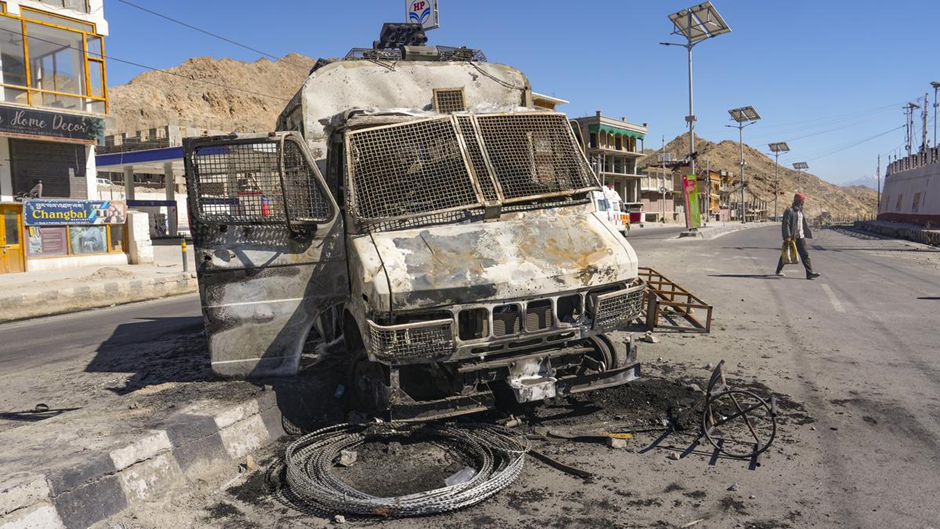
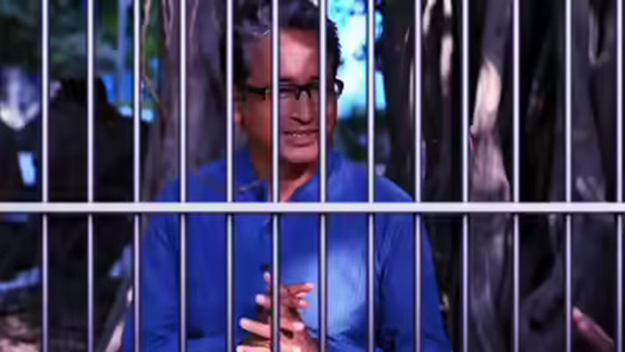
In September 2025, Sonam Wangchuk was detained under the National Security Act following reports of unrest during the ongoing Ladakh protests. Authorities claimed that some of his statements during gatherings could incite disturbance and threaten public order. He was later moved from Ladakh to a jail in Jodhpur, Rajasthan, more than a thousand kilometers away.
The government’s position is that the move was preventive — a step taken to maintain peace during a tense situation. Officials maintained that the administration respects peaceful expression but would not allow any law and order breakdown.
Supporters, however, view the arrest differently. To them, it is a troubling act against a peaceful protester who has always advocated for non-violence and constructive dialogue. Many saw his detention as symbolic of the larger disconnect between the administration and Ladakh’s people. The reaction on social media was immediate and massive, with the hashtags #ReleaseSonamWangchuk and #LadakhProtest trending nationwide. Students, activists, and environmentalists rallied in solidarity, describing Sonam Wangchuk as the conscience of the mountains.
The Spirit of the Ladakh Protest
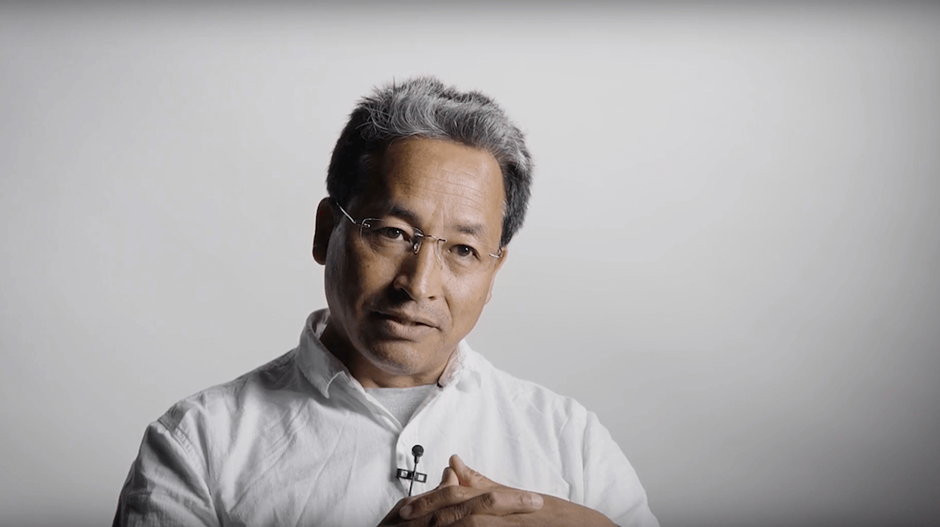
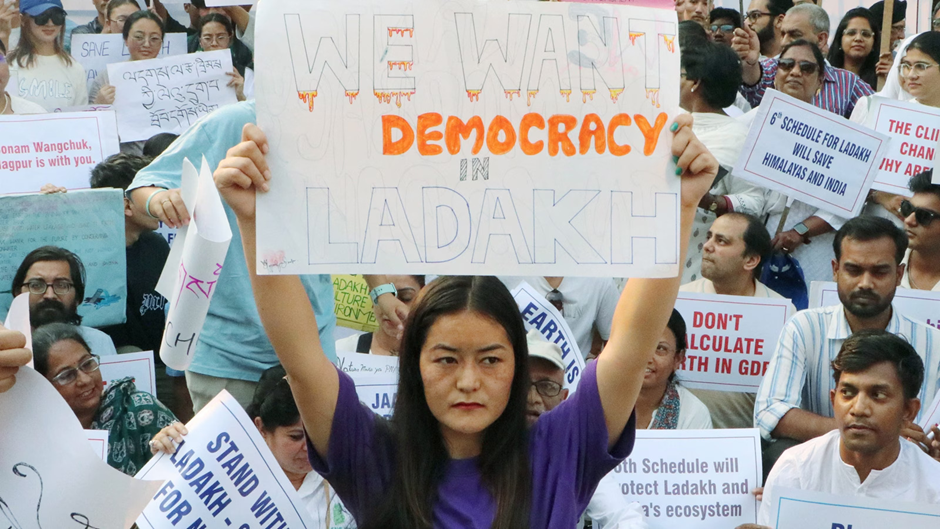
Despite these developments, the Ladakh protest has remained largely peaceful and orderly. The demonstrators, often carrying the national flag, have continued to affirm their faith in the Constitution and democratic processes. In Leh and Kargil, both Buddhist and Muslim communities have stood shoulder to shoulder, symbolizing the unity that defines Ladakh’s character.
The protests have not only been about political rights but also about dignity and identity. Women, students, and the elderly have all taken part, reinforcing that this movement belongs to everyone. Their chants and placards echo a simple message — they seek justice within the framework of law, not outside it.
The discipline and calm of the movement have drawn admiration even from those outside the region. Observers have described it as a model of civil resistance, where people are determined to make their voices heard without crossing the line of violence or hatred.
Environmental Dimensions of the Movement
At its heart, the Ladakh protest is also an environmental struggle. The region, with its high-altitude deserts and glacial rivers, is one of the most ecologically fragile zones in the world. Climate change has already begun to reshape its landscape, with receding glaciers and unpredictable weather patterns threatening livelihoods.
Sonam Wangchuk and other activists have long warned that unsustainable tourism, unregulated construction, and overexploitation of natural resources could devastate Ladakh’s future. They have called for an economic model that values conservation as much as development. In his speeches, Sonam Wangchuk often reminds people that the true wealth of Ladakh lies not in minerals or industries, but in its clean air, pure water, and resilient communities.
This environmental consciousness has turned the Ladakh protest into more than a regional agitation. It has become a moral appeal for climate responsibility and sustainable growth — one that resonates with citizens across India and beyond.
A Movement That Speaks to the Nation
The Ladakh protest, though geographically confined to the country’s northern frontier, carries lessons for the entire nation. It underscores the importance of listening to local communities before making policy decisions that affect their lives. It also reflects how deeply environmental and cultural concerns are intertwined with governance.
The movement’s inclusive and peaceful nature has made it difficult to ignore. From academics to environmentalists, many voices across India have urged the government to engage with Ladakh’s representatives and find a lasting solution. Global observers too have expressed solidarity, praising the protesters for maintaining their non-violent spirit even in the face of adversity.
Constructive Path Forward
A constructive solution to the Ladakh issue lies in dialogue, empathy, and respect for both national interests and regional aspirations. Experts suggest that granting Ladakh suitable constitutional protections, whether under the Sixth Schedule or a similar framework, could address most concerns while maintaining administrative stability. There is also growing consensus that policies on tourism, land use, and industry in Ladakh must be shaped in close consultation with local communities and environmental experts.
Implementing green policies inspired by Sonam Wangchuk’s ideas could turn Ladakh into a model of sustainable development — a region where innovation and ecology coexist harmoniously. Such steps would not only ease tensions but also reaffirm the government’s commitment to inclusive growth and environmental stewardship.
The Ladakh protest is a reminder that true progress cannot be measured solely in roads built or projects launched. It must be seen in how deeply people feel included in their own development. The people of Ladakh are not demanding separation or privilege — they are demanding protection, participation, and the right to preserve what makes their land unique.
Sonam Wangchuk’s imprisonment has, ironically, amplified his message. His life’s work stands as testimony that one can serve the nation not through confrontation, but through constructive engagement. His vision for Ladakh is rooted in peace, sustainability, and dignity — principles that reflect the best of Indian democracy.
As the movement continues, the hope remains that the government and the people will come together in dialogue rather than discord. The mountains of Ladakh have always symbolized endurance and serenity; perhaps they will once again inspire the rest of the nation to seek solutions through patience, wisdom, and respect for every voice that rises in good faith.


Your article helped me a lot, is there any more related content? Thanks!