

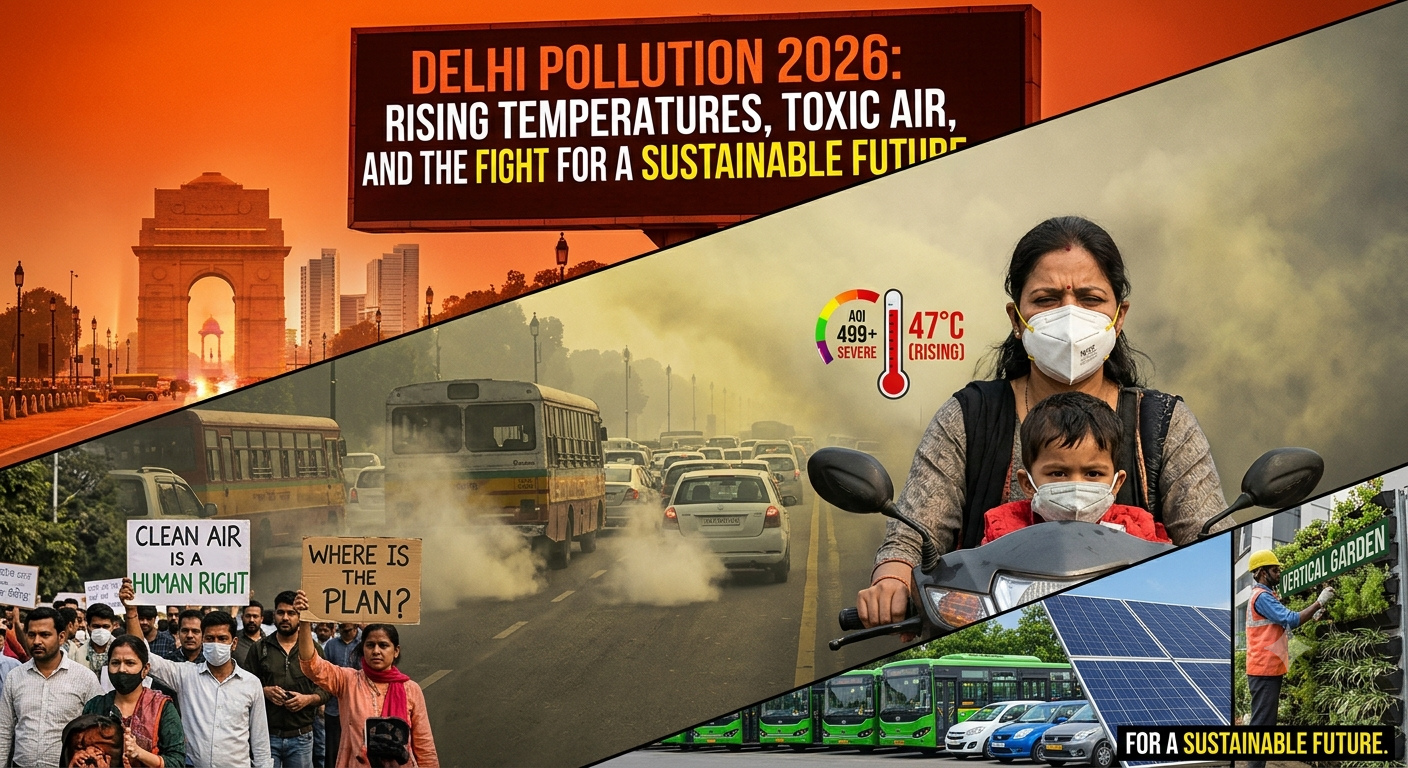
In 2026, the growing concerns surrounding Delhi Pollution have once again brought public health, climate change, and sustainable urban development into the spotlight. Delhi, the capital of India, is known for its historical monuments, vibrant culture, growing economy, and fast-paced lifestyle. However, alongside its development, the city faces a serious environmental challenge: deteriorating air quality.
From rising summer temperatures and dust storms to winter smog and toxic particulate matter, Delhi’s air quality is affected by several interconnected environmental and human activities. Millions of residents experience breathing difficulties, eye irritation, coughing, and other health problems during periods of poor air quality.
Although government authorities have introduced several pollution-control initiatives, achieving consistently clean air remains a difficult task. The challenge requires coordinated action from policymakers, industries, businesses, and ordinary citizens.
This article explores the major causes, health consequences, government initiatives, and sustainable solutions that can help Delhi move towards a cleaner and healthier future.
Table of Contents
Understanding Delhi Pollution Crisis in 2026
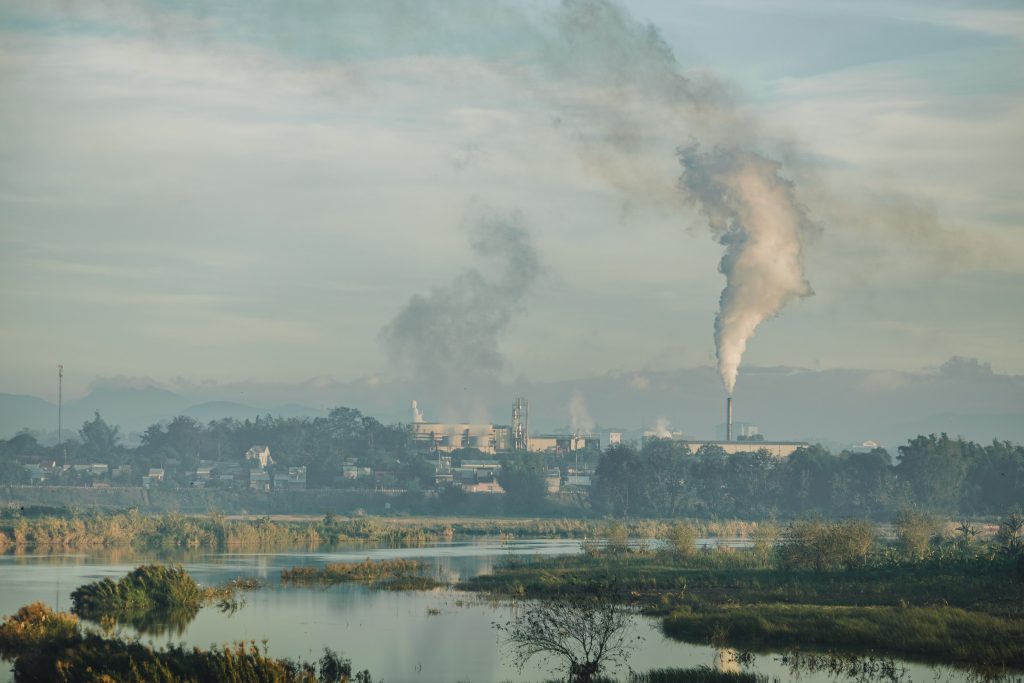
Delhi pollution occurs because of harmful substances, including particulate matter, gases, smoke, and chemicals, accumulate in the atmosphere at dangerous concentrations.
One of the biggest concerns is PM2.5, which refers to extremely fine particles measuring 2.5 micrometres or smaller. These particles can penetrate deep into the lungs and may enter the bloodstream, increasing the risk of serious health conditions.
PM10, nitrogen dioxide, sulphur dioxide, carbon monoxide, and ground-level ozone are other important pollutants affecting urban air quality.
According to a February 2026 assessment presented by the Commission for Air Quality Management (CAQM), PM2.5 remains the dominant pollutant affecting Delhi’s air quality.
The assessment also highlights how pollution sources change across seasons. During summer, dust becomes a major contributor, whereas winter pollution is strongly influenced by transport emissions, biomass burning, and secondary particulate formation.
The Air Quality Index (AQI) helps residents understand the condition of the air they breathe. Higher AQI readings indicate greater pollution levels and increasing health risks.
Rising Temperatures and Their Connection with Delhi Pollution
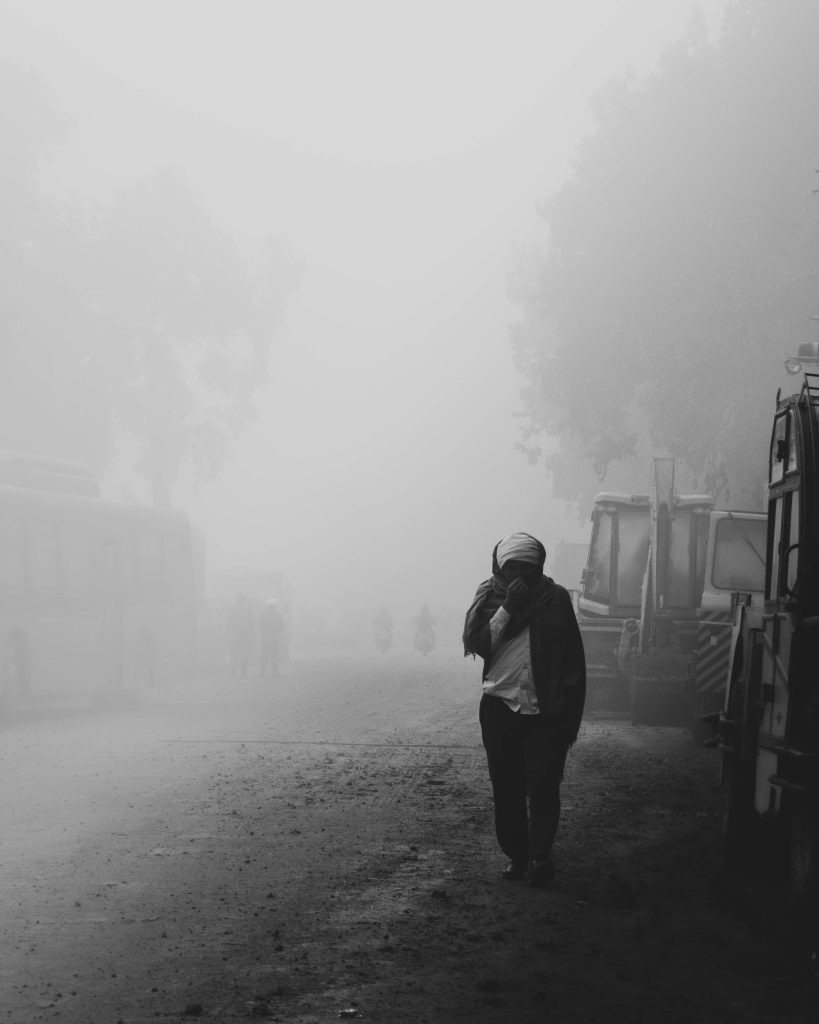
Rising temperatures and climate change have become important parts of the environmental discussion in Delhi.
During summer, temperatures can rise significantly, increasing the likelihood of heatwaves, dry conditions, and dust storms. These conditions can worsen existing air-quality problems.
One important factor is atmospheric chemistry. Higher temperatures and strong sunlight can accelerate chemical reactions involving nitrogen oxides and volatile organic compounds, contributing to the formation of ground-level ozone.
Ozone is particularly concerning because it can irritate the respiratory system and aggravate existing breathing problems.
Dry weather also increases the movement of dust from roads, construction sites, and exposed land. Strong winds can carry dust from neighbouring regions into the capital.
Climate change can further complicate the situation by influencing rainfall patterns, wind conditions, and the frequency of extreme weather events.
However, it is important to understand that higher temperatures do not automatically mean higher concentrations of every pollutant. Weather conditions influence different pollutants in different ways.
For example, winter temperature inversions and low wind speeds can trap pollutants close to the ground, creating the thick smog frequently experienced across Delhi-NCR.
Major Causes of Delhi Pollution (Air)
The pollution crisis is not caused by a single source. Several activities contribute to the city’s deteriorating environmental conditions.
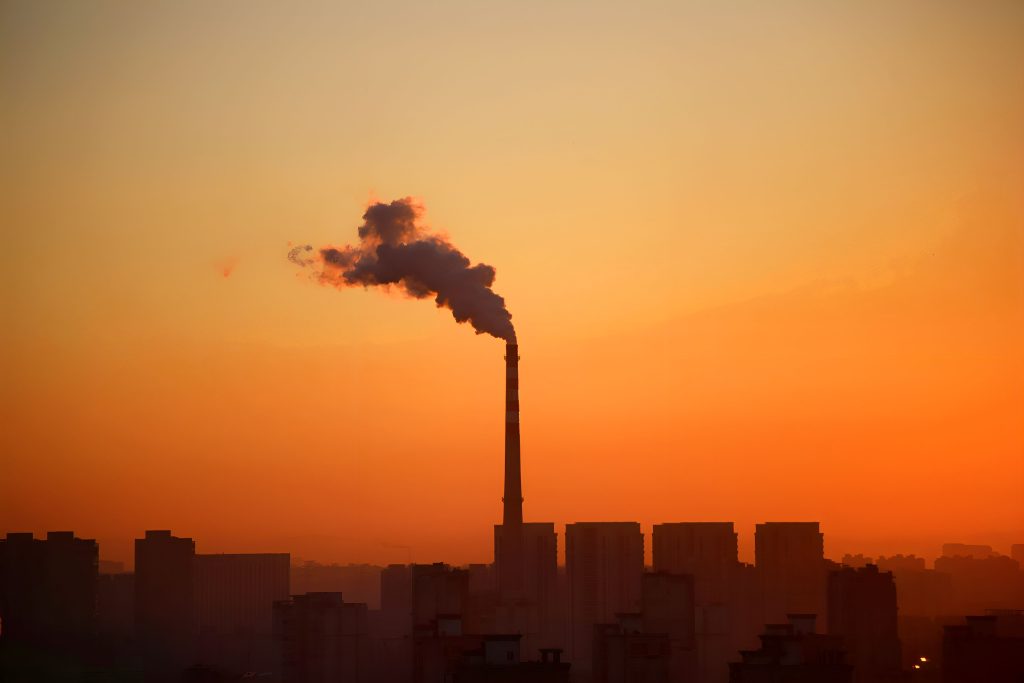
A. Vehicular Emissions
The growing number of private cars, motorcycles, buses, trucks, and commercial vehicles contributes significantly to urban air pollution.
Petrol and diesel vehicles release nitrogen oxides, carbon monoxide, particulate matter, and other harmful pollutants.
Traffic congestion makes the problem worse because vehicles often spend extended periods running at low speeds or idling.
Promoting electric vehicles, improving public transportation, and encouraging carpooling can help reduce transport-related emissions.
B. Industrial Emissions
Factories, power plants, manufacturing facilities, and other industrial operations can release harmful gases and particulate matter.
Industries using coal and other fossil fuels contribute to atmospheric pollution when emissions are not properly controlled.
Strict environmental standards, cleaner fuels, improved industrial technologies, and regular inspections are essential to reducing these emissions.
C. Construction and Road Dust
Construction activities, demolition work, uncovered building materials, and poorly maintained roads generate substantial amounts of dust.
During dry summer months, dust can become a particularly important contributor to poor air quality.
Covering construction materials, installing dust barriers, sprinkling water where appropriate, and using mechanical road-sweeping equipment can reduce dust pollution.
D. Stubble Burning
Agricultural residue burning in neighbouring states, particularly Punjab and Haryana, has historically contributed to seasonal pollution episodes in Delhi.
After harvesting paddy crops, some farmers burn leftover straw to prepare fields for the next agricultural cycle.
The resulting smoke can travel over long distances and contribute to elevated particulate concentrations.
Providing farmers with affordable residue-management machinery, financial assistance, and alternative uses for agricultural waste is essential to addressing this challenge.
E. Waste Burning and Firecrackers
Open burning of household waste, plastic, leaves, and other materials releases toxic pollutants into the atmosphere.
Firecrackers can also produce short-term spikes in particulate pollution, particularly during festive celebrations.
Better waste collection, scientific disposal systems, recycling, and responsible celebrations can reduce these emissions.
Health Effects of Toxic Air on Delhi Residents
The consequences of poor air quality extend far beyond environmental damage.
Exposure to polluted air can affect people of different ages, although children, older adults, pregnant women, and individuals with existing respiratory or cardiovascular conditions may face greater risks.
Some common health effects include:
- Respiratory problems: Polluted air can trigger coughing, wheezing, asthma attacks, and breathing difficulties.
- Cardiovascular diseases: Long-term exposure to fine particulate matter is associated with an increased risk of heart disease and stroke.
- Eye and throat irritation: Smoke, dust, and chemical pollutants can cause irritation and discomfort.
- Reduced lung development: Children exposed to prolonged air pollution may experience impaired lung development.
- Mental well-being: Environmental stress, limited outdoor activities, and concerns about long-term health can negatively affect quality of life.
The effects of Delhi Pollution are especially concerning for people who spend several hours outdoors, including traffic police officers, street vendors, delivery workers, and construction labourers.
Long-term exposure can contribute to chronic health problems, making air pollution an important public-health priority.
Government Initiatives to Control Delhi Pollution in 2026
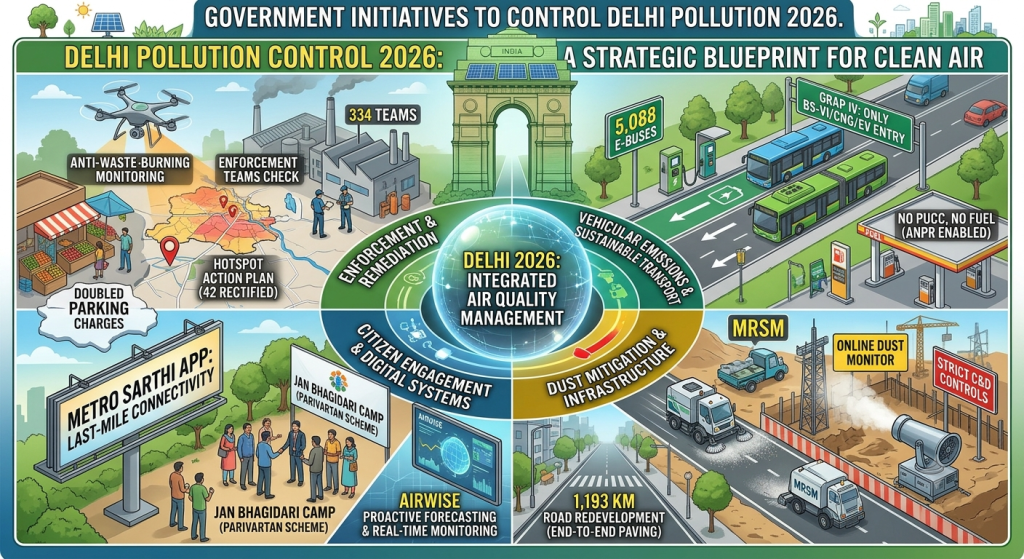
The Delhi government and national environmental authorities have introduced several measures to control emissions and improve air quality.
In 2026, the focus has increasingly shifted towards preventive measures, stronger monitoring, and year-round pollution management.
Some important initiatives include:
1. Graded Response Action Plan (GRAP): This framework introduces progressively stricter restrictions depending on the severity of air pollution. Measures can include construction restrictions, limits on certain vehicles, and industrial controls.
2. Pollution Under Control (PUC) Checks: Authorities have strengthened enforcement of valid PUC certificates to discourage highly polluting vehicles.
3. Electric Vehicle Promotion: Encouraging electric mobility and cleaner public transportation can help reduce emissions from conventional vehicles.
4. Dust Management: Mechanised road cleaning, water sprinkling, construction-site inspections, and improved waste management are being used to tackle dust pollution.
5. Real-Time Air Quality Monitoring: The CAQM approved 46 additional air-quality monitoring stations across Delhi-NCR in February 2026 to strengthen pollution assessment.
6. Crop Residue Management: Authorities are working with neighbouring states to encourage alternatives to stubble burning.
According to October 2026 reporting, Delhi’s Winter Action Plan also includes expanded mechanical road sweeping and stronger monitoring of construction activities.
These initiatives are important steps, but their effectiveness depends on consistent implementation, transparent reporting, and accountability.
The Role of Technology in Building a Cleaner Delhi
Technology can play a transformative role in reducing pollution and improving environmental management.
Modern air-quality monitoring systems can provide real-time information about particulate matter, harmful gases, and changing weather conditions.
Artificial intelligence and data analytics can help authorities identify pollution hotspots, understand emission patterns, and predict periods of poor air quality.
Smart traffic management systems can reduce congestion and unnecessary fuel consumption. Electric buses and cleaner transport technologies can also support sustainable mobility.
Renewable energy is another important part of the solution. Expanding solar and wind power can reduce dependence on fossil fuels and help limit industrial and electricity-related emissions.
Technology alone, however, cannot solve the problem. It must be supported by effective environmental regulations, public participation, and long-term investment.
Practical Steps Citizens Can Take to Reduce Delhi Pollution
Every resident has a role to play in improving the city’s environmental conditions.
Although individual actions cannot replace government policies or industrial accountability, collective behavioural changes can make a meaningful difference.
Here are some practical steps:
- Use public transportation, the Delhi Metro, bicycles, or shared vehicles whenever possible.
- Avoid unnecessary use of private vehicles.
- Maintain vehicles regularly and obtain valid PUC certificates.
- Never burn household waste, plastic, or dry leaves in open spaces.
- Separate recyclable and non-recyclable waste.
- Support tree plantation and urban green-space initiatives.
- Reduce electricity consumption and support renewable energy.
- Follow daily AQI updates before planning outdoor activities.
- Wear a well-fitting N95 or equivalent particulate-filtering mask when outdoor exposure is unavoidable during heavily polluted conditions.
- Encourage schools, offices, and residential communities to adopt environmentally responsible practices.
For personal protection, residents should limit strenuous outdoor activities when air quality is poor, particularly during pollution episodes.
Indoor air quality also matters. Proper ventilation when outdoor conditions are favourable, avoiding indoor smoking, and using appropriately sized air purifiers can help reduce exposure.
Building a Sustainable Future: What Delhi Needs
A cleaner Delhi requires more than temporary restrictions during winter. It needs a long-term environmental strategy that addresses pollution throughout the year.
First, public transportation must become more accessible, affordable, reliable, and convenient. A well-connected network of electric buses, metro services, cycling routes, and pedestrian-friendly streets can reduce dependence on private vehicles.
Second, urban planning should prioritise green spaces, sustainable construction, and environmentally responsible infrastructure.
Third, industries must adopt cleaner technologies and comply with strict emission standards. Regular inspections and meaningful penalties should discourage environmental violations.
Fourth, neighbouring states must cooperate to address regional pollution sources, especially crop-residue burning and industrial emissions.
Finally, environmental education should become an important part of schools, colleges, workplaces, and community programmes.
The fight against Delhi Pollution is not simply about improving AQI readings. It is about protecting public health, creating sustainable cities, and ensuring that future generations inherit a healthier environment.
Conclusion About Delhi Pollution
Delhi’s air-quality crisis in 2026 highlights the growing connection between urbanisation, climate change, public health, and environmental responsibility.
Rising temperatures, dust storms, vehicle emissions, industrial activities, and seasonal agricultural burning create a complicated challenge that cannot be solved through isolated measures.
Government policies, technological innovation, cleaner transportation, stronger industrial regulations, and responsible public behaviour must work together.
Most importantly, environmental protection should not become a seasonal priority that disappears when winter ends.
The future of the capital depends on the decisions made today. By adopting sustainable practices, strengthening environmental governance, and encouraging collective responsibility, Delhi can move towards a future where economic development and clean air coexist.
A sustainable Delhi is not merely an environmental ambition; it is a necessity for healthier lives and a better future.
FAQs
Q. What are the main causes of Delhi pollution?
A. The main causes include vehicular emissions, industrial activities, construction dust, road dust, agricultural stubble burning, waste burning, and emissions from fossil-fuel consumption.
Q. Why does Delhi pollution (air) become worse in Delhi during winter?
A. During winter, low wind speeds, temperature inversions, and a shallow atmospheric boundary layer prevent pollutants from dispersing. Smoke from agricultural burning and local emissions further worsen the situation.
Q. How does rising temperature affect air quality in Delhi?
A. Higher temperatures and strong sunlight can accelerate the formation of ground-level ozone. Dry weather and dust storms can also increase airborne particles, although weather affects different pollutants differently.
Q. What is PM2.5, and why is it dangerous for Delhi Pollution?
A. PM2.5 refers to airborne particles with a diameter of 2.5 micrometres or smaller. These particles can penetrate deep into the lungs and are associated with respiratory and cardiovascular health problems.
Q. What is the AQI, and how can Delhi residents check it?
A. The Air Quality Index measures the level of air pollution and communicates its potential health effects. Residents can check updates through the CPCB website, official monitoring platforms, and reliable air-quality applications.
Q. What is the government doing to control Delhi pollution in 2026?
A. Authorities are implementing GRAP restrictions, strengthening PUC enforcement, improving road cleaning, monitoring construction sites, expanding air-quality monitoring, and encouraging cleaner transportation and crop-residue management.
Q. How does stubble burning contribute to Delhi’s pollution?
A. Stubble burning releases smoke and fine particulate matter. Winds can transport these pollutants from agricultural regions in neighbouring states into Delhi-NCR, particularly during the post-monsoon season.
Q. How can individuals protect themselves from Delhi Pollution?
A. People can monitor AQI levels, avoid strenuous outdoor activities during severe pollution episodes, wear well-fitting N95 or equivalent masks when necessary, and use suitable indoor air purifiers.
Q. Can electric vehicles help reduce Delhi Pollution?
A. Yes. Electric vehicles produce no tailpipe emissions and can reduce local transport-related pollution. Their overall environmental benefits are greater when electricity comes from cleaner energy sources.
Q. What is the long-term solution to Delhi Pollution crisis?
A. Long-term solutions include better public transportation, renewable energy, strict industrial emission controls, sustainable urban planning, dust management, alternatives to stubble burning, and coordinated action across NCR states.


