

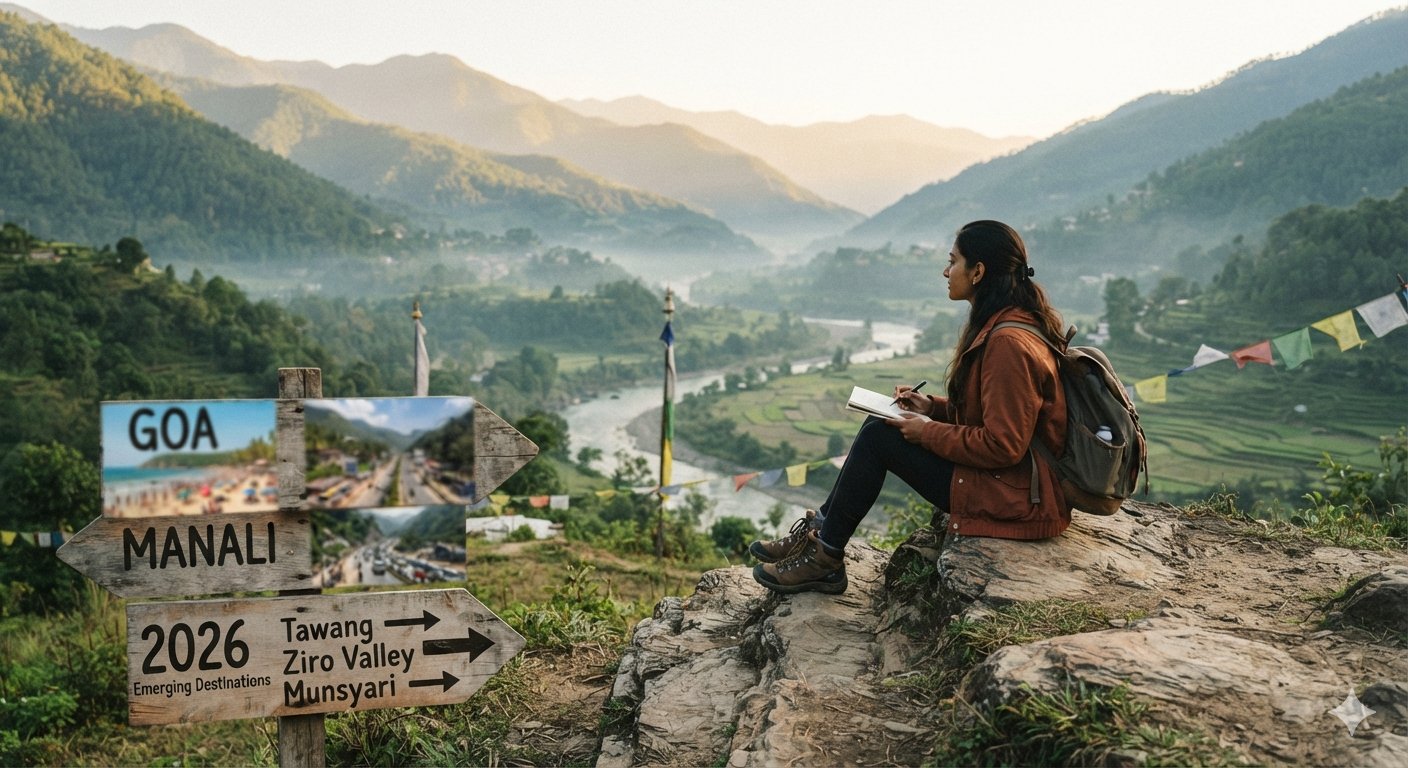
For years, Goa and Manali were the default answer to every holiday plan. Beach or mountains, pick one, book it, go. But in 2026, more travelers are skipping the usual picks and choosing quieter destinations that feel less like a queue and more like a break.
This is not about Goa and Manali becoming bad. It is about travelers wanting something different. Here is why the shift is happening and which destinations are gaining attention.
Table of Contents
Why Travellers Are Moving Away from the Usual Destinations
1. Crowds and Traffic
Peak-season Manali means long jams on the way in and packed cafes once you arrive. Goa’s popular beaches are similar during December and long weekends. A holiday is meant to reduce stress, not add to it.
2. Rising Costs
Hotels, taxis, and food in famous destinations get expensive in peak season. Lesser-known destinations usually offer comparable stays and food at much lower prices.
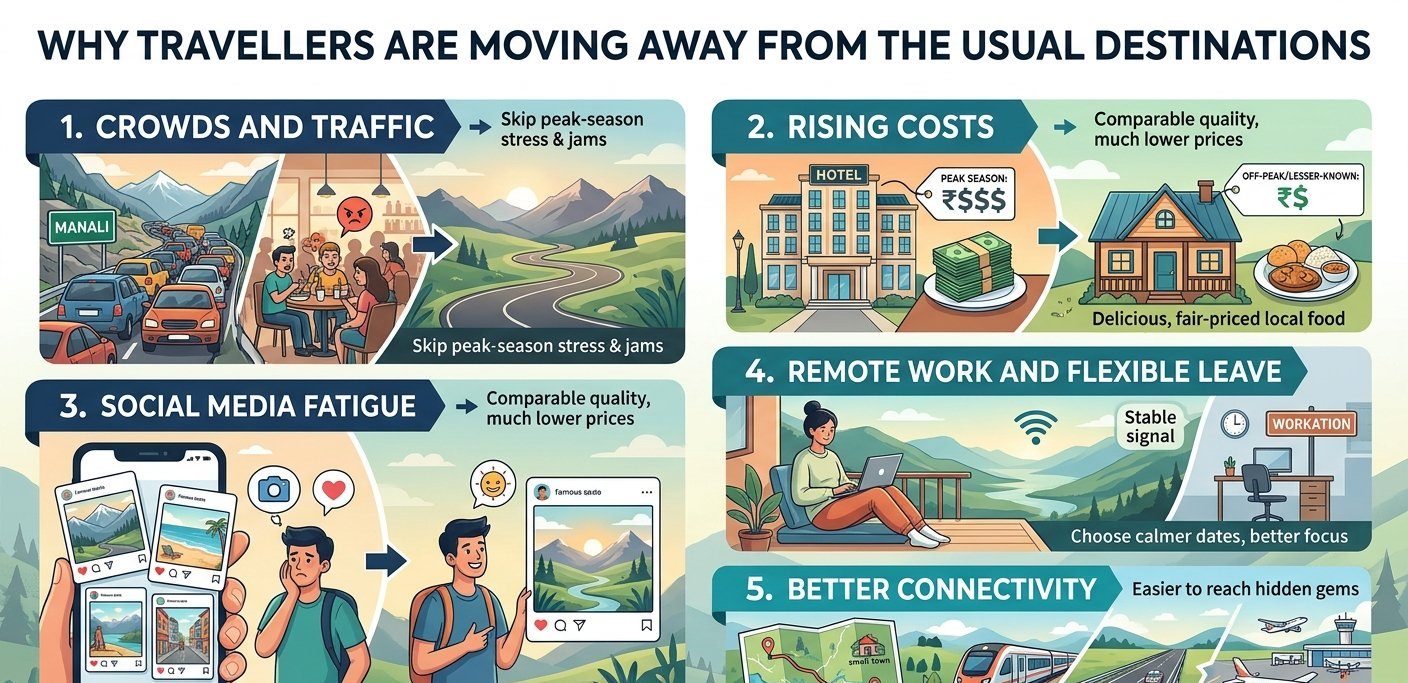
3. Social Media Fatigue
When every traveller has seen the same reels from the same spots, the urge to go somewhere unseen grows. People now want a trip that feels like their own.
4. Remote Work and Flexible Leave
Workations and longer stays let people avoid peak dates and choose calmer destinations that have decent internet.
5. Better Connectivity
Improved highways, new rail links, and more regional flights have made small towns easier to reach than they were a few years ago.
Offbeat Alternatives to Manali
1. Tirthan Valley, Himachal Pradesh
Often described as a quieter alternative to Manali, it offers river views, forest trails, and homestays. It suits people who want to relax rather than sightsee.
2. Chopta, Uttarakhand
Known as a mini Switzerland of the Garhwal region, Chopta is a base for the Tungnath and Chandrashila trek. It is simple, scenic, and far less commercial.
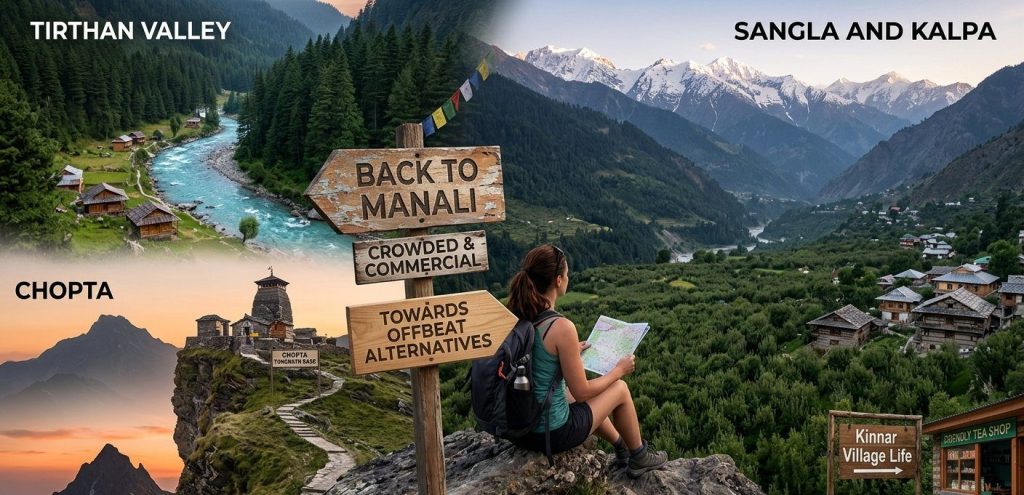
3. Sangla and Kalpa, Himachal Pradesh
Apple orchards, snow-capped peaks, and village life in Kinnaur make these destinations feel like a different world from Manali’s Mall Road.
Offbeat Alternatives to Goa
1. Gokarna, Karnataka
Clean beaches, temple town charm, and a relaxed pace. It is often the first name that comes up when people ask where to go instead of Goa. See Karnataka Tourism for more.
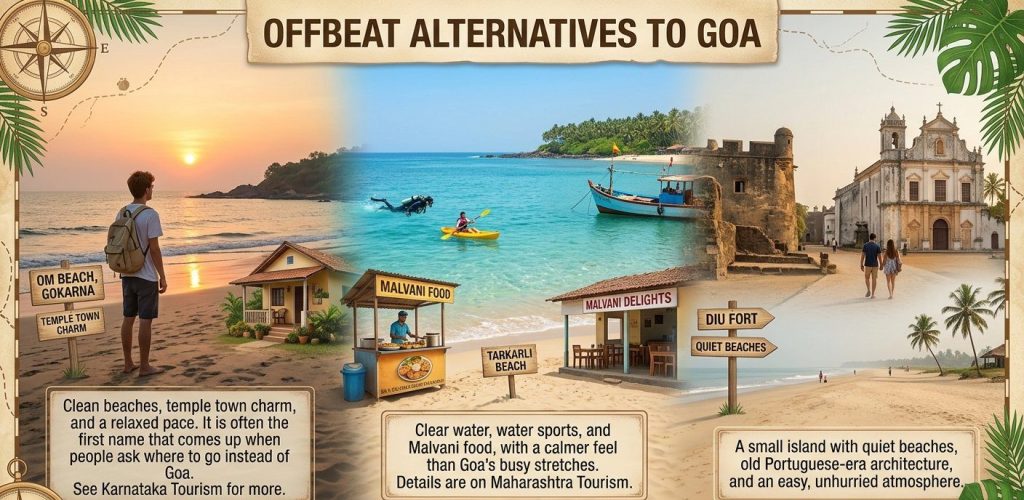
2. Tarkarli, Maharashtra
Clear water, water sports, and Malvani food, with a calmer feel than Goa’s busy stretches. Details are on Maharashtra Tourism
3. Diu
A small island with quiet beaches, old Portuguese-era architecture, and an easy, unhurried atmosphere.
Beyond the Mountains and Beaches
Not every new favourite is a hill or a beach. Some of the most talked-about destinations now are cultural or nature-led.
1. Ziro Valley, Arunachal Pradesh
Green paddy fields, Apatani culture, and music festivals.
2. Majuli, Assam
One of the world’s largest river islands, known for its monasteries and traditions.
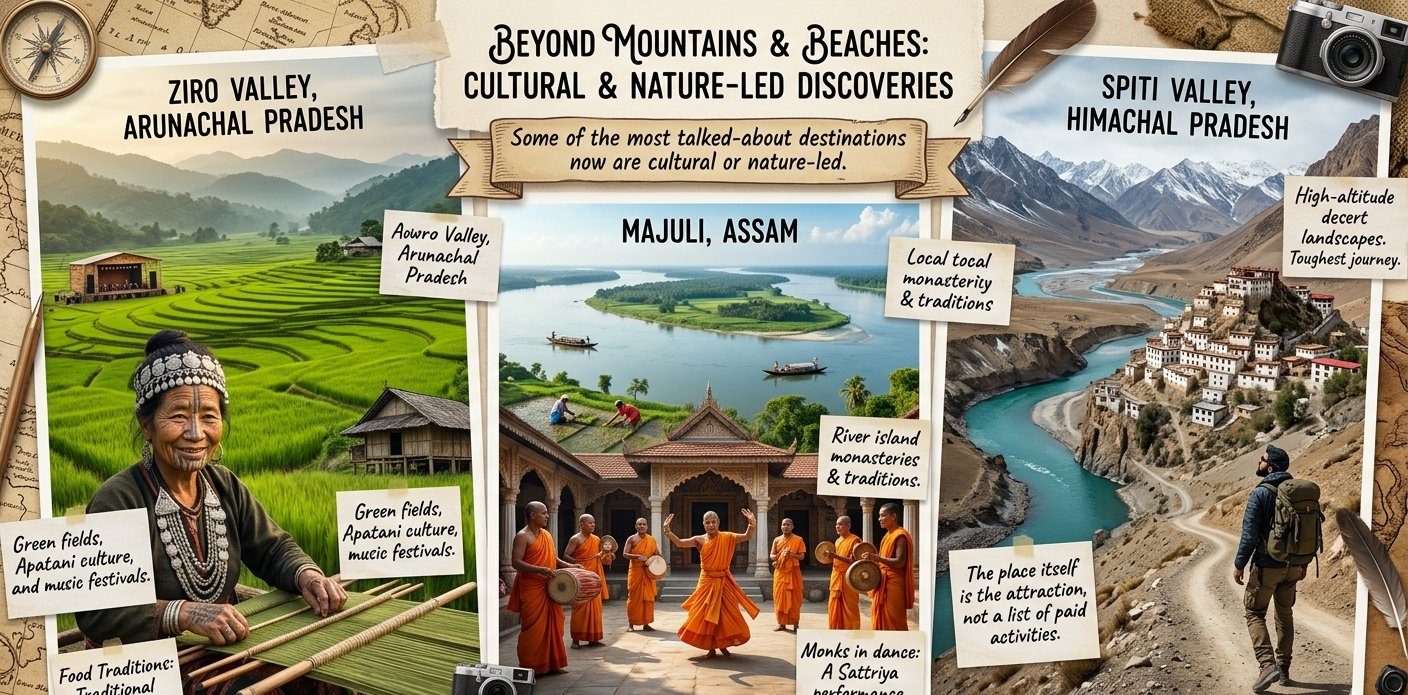
3. Spiti Valley
High-altitude desert landscapes for those ready for a tougher journey.
food traditions. The place itself is the attraction, not a list of paid activities.
How to Plan a Trip to Offbeat Destinations
Planning a trip to a lesser-known place is slightly different from booking a popular one. A little research makes the difference between a peaceful holiday and a stressful one.
Step 1: Choose the Right Season
Every destination has a best time to visit. Hill destinations can be difficult during heavy monsoon or snowfall, while beach destinations are usually more comfortable in the cooler months. Check the local weather pattern before you fix dates.
Step 2: Decide Your Transport
Many offbeat destinations are not directly connected by train or flight. You may need to reach the nearest big town and then take a local bus or a taxi for the last stretch. Keep extra time in your plan, because hill and village roads are slower than they look on a map.
Step 3: Book Stays Directly
Good homestays have limited rooms. Contact the host, confirm the booking, and ask about meals, hot water, parking, and internet before you pay.
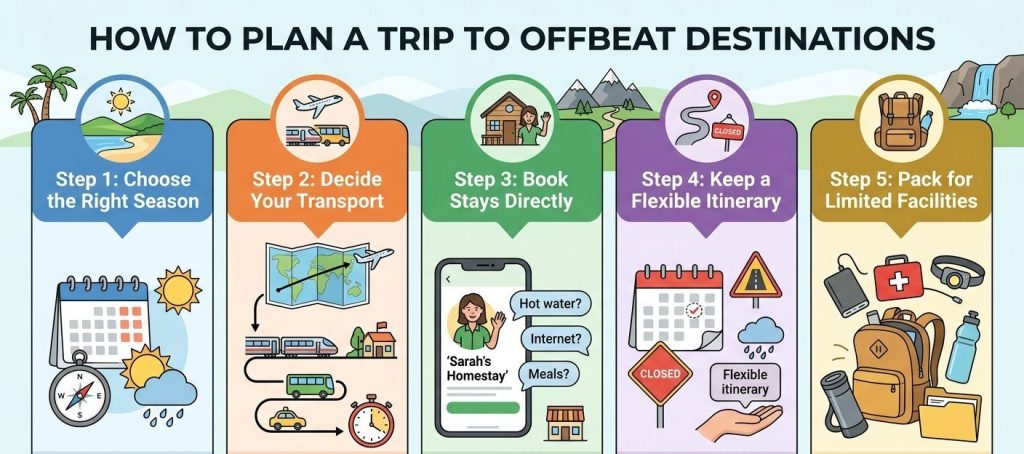
Step 4: Keep a Flexible Itinerary
Landslides, weather, or a closed road can change your plan. Keep one spare day in your itinerary and avoid booking non-refundable tickets that depend on a tight schedule.
Step 5: Pack for Limited Facilities
Carry a power bank, basic medicines, a torch, a reusable water bottle, and a printed copy of your bookings. Shops can be far apart, so it is better to carry essentials.
How Much Does an Offbeat Trip Cost?
Costs depend on the destination, season, and where you start from, so the figures below are only rough estimates for a couple travelling for 3 to 4 days in India. Always check current prices before you book.
Stays
Homestays and small guesthouses in offbeat destinations often cost around ₹1,000 to ₹2,500 per night, while popular tourist hubs in peak season can cost much more for a similar room.
Food
Local meals at small eateries or homestays can cost around ₹200 to ₹400 per person per day, which is usually lower than cafe-style dining in busy tourist areas.
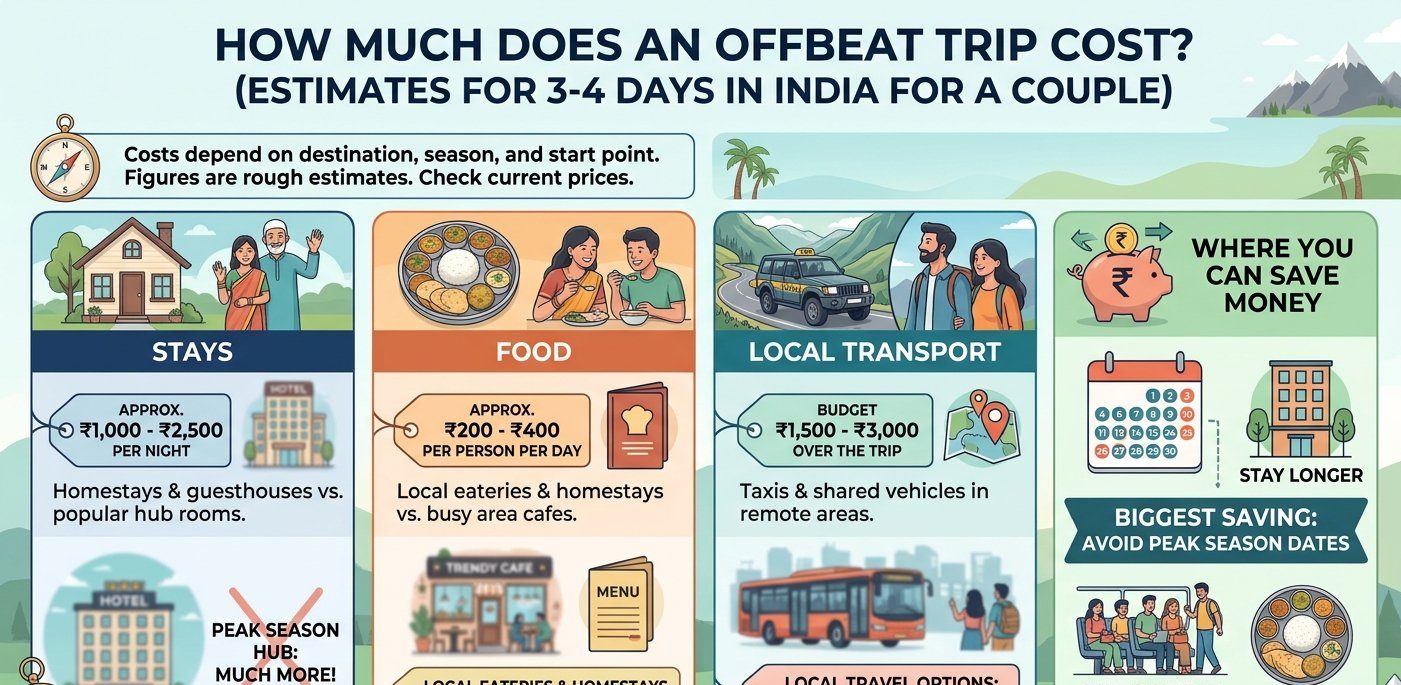
Local Transport
Local taxis and shared vehicles can add up in remote areas because distances are longer and options are fewer. Budget around ₹1,500 to ₹3,000 for local travel over the trip, depending on the route.
Where You Can Save Money
Travelling on weekdays, staying longer in one place, using shared transport, and eating at local places instead of tourist cafes can reduce your total spending. The biggest saving usually comes from avoiding peak-season dates.
What to Check Before Visiting Offbeat Destinations
Offbeat does not mean effortless. A little planning goes a long way.
Plan Ahead
- Check road and weather conditions. Hill roads can close because of snow or landslides.
- Book stays in advance. Good homestays are few and fill quickly in season.
Pack and Travel Smart
- Carry cash. ATMs and UPI may be unreliable in remote areas.
- Expect limited connectivity. Download maps and tickets before you go.
- Travel responsibly. Small destinations have limited resources. Avoid littering, respect local customs, and support local businesses.
Will Goa and Manali Lose Their Popularity?
Unlikely. Both will stay popular because they offer infrastructure, nightlife, adventure activities, and easy access. What is changing is that they are no longer the only option. Travellers now compare more destinations before booking, and many choose peace over popularity.
Responsible Travel in Offbeat Destinations
Offbeat destinations stay special only if travellers treat them with care. Many of these places have limited water, waste management, and electricity, and a sudden rise in visitors can strain them.
Respect Local Culture
Dress modestly in villages and religious places, ask before photographing people, and follow local customs and rules.
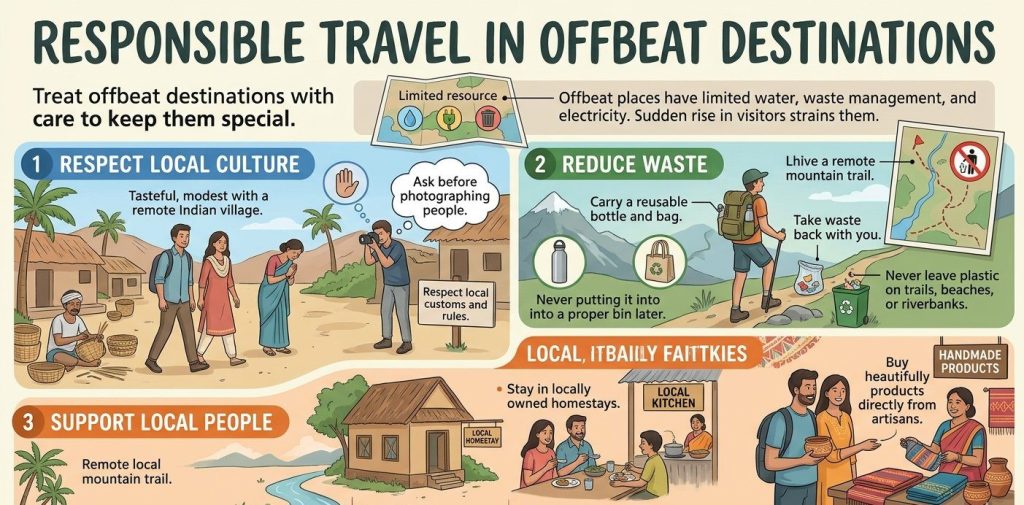
Reduce Waste
Carry a reusable bottle and bag, and take your waste back with you if there are no proper disposal facilities. Never leave plastic on trails, beaches, or riverbanks.
Support Local People
Stay in locally owned homestays, eat at local kitchens, and buy handmade products directly from artisans. This keeps your money in the community and helps these destinations grow in a sustainable way.
Frequently Asked Questions (FAQs)
What are offbeat destinations?
Offbeat destinations are lesser-known places that attract fewer tourists than popular spots like Goa or Manali. They usually offer quieter surroundings, local culture, and more affordable stays.
Why are travelers choosing offbeat destinations over Goa and Manali?
The main reasons are crowds, rising prices in peak season, social media fatigue, flexible work options, and better road, rail, and air connectivity to smaller towns.
Which are the best offbeat destinations to visit instead of Manali?
Tirthan Valley, Chopta, and Sangla-Kalpa are popular quieter alternatives, offering mountain views, trekking, and village stays.
Which are the best offbeat destinations to visit instead of Goa?
Gokarna, Tarkarli, and Diu are commonly chosen for calmer beaches and a relaxed atmosphere.
Are offbeat destinations cheaper than popular tourist spots?
Often yes, especially for stays and food, since demand is lower. However, transport to remote places can add to the cost, so compare the full trip budget before booking.
Are offbeat destinations safe for solo and family travel?
Most are safe, but facilities are more limited than in popular destinations. Book verified stays, share your itinerary with someone, and check local conditions before travelling.
What is the best time to visit offbeat destinations?
It depends on the place. Hill destinations are best outside monsoon and heavy snow periods, while beach destinations are usually pleasant from October to March. Check the local season before you plan.
Will Goa and Manali lose their popularity?
Unlikely. They will remain popular for their facilities and activities, but travelers now have more destinations to choose from.
How many days are enough for an offbeat destination?
Plan at least 3 to 4 days. Travel to remote places takes longer, and the main reason to go is to slow down, so a rushed one-day visit defeats the purpose.
Do I need permits to visit offbeat destinations?
Some regions need permits, for example Arunachal Pradesh for most visitors from other states. Always check the official state tourism website before you travel.
Conclusion
The rise of offbeat destinations shows how Indian travel is maturing. People want experiences, not just checklists. Whether it is a riverside homestay in Tirthan or a quiet beach in Gokarna, the new favourite destinations in 2026 are the ones that let you slow down.
So before you book the usual trip this year, ask yourself: do you want the famous place, or the place that feels right? The answer may lead you to your next favourite destination.


