

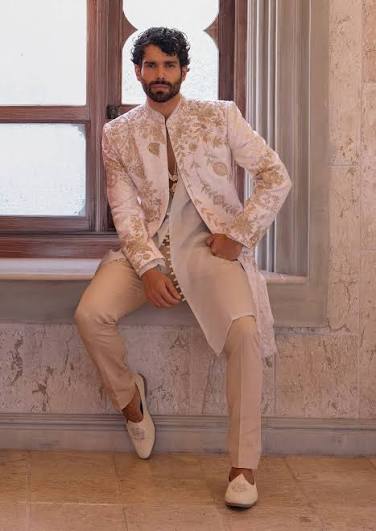
Wedding season has a way of making every man ask the same question: what should I wear? A suit feels too ordinary, a plain kurta may feel too casual, and a heavy outfit might not suit the weather. This is exactly where the sherwani steps in. Elegant, regal and unmistakably Indian, it has been the first choice for grooms, brothers and guests for generations.
But the choices today go far beyond one traditional design. There are long coats, short jackets, cross-over cuts, velvet pieces for winter and lighter kurta sets for guests. This guide walks you through six stunning styles, then explains fabrics, colours, fit and accessories so you can choose confidently and avoid costly mistakes.
Table of Contents
What Is a Sherwani?
Before choosing one, it helps to know what you are choosing.
A Quick Introduction
A sherwani is a long, coat-style garment worn by men in South Asia. It buttons down the front, usually reaches around the knee, has a structured collar and is worn over a kurta with churidar, pyjama or trousers. Its roots lie in the courtly dress of the Indian subcontinent, and it grew in popularity among nobility before becoming a standard choice for weddings and formal occasions. You can read a short overview of its history on the sherwani page on Wikipedia.
Why It Remains Popular
A sherwani instantly adds presence. The structured fit gives a sharp silhouette, the fabrics photograph beautifully, and the detailing suits both traditional and modern tastes. Few outfits can look equally at home in a grand wedding hall and a small family ceremony.
6 Stunning Sherwani and Kurta Styles for Men
1. The Classic Long Sherwani
This is the style most people picture first. It is a knee-length or slightly longer coat with a front button line, a mandarin or standing collar and fine embroidery along the collar, cuffs or hem.
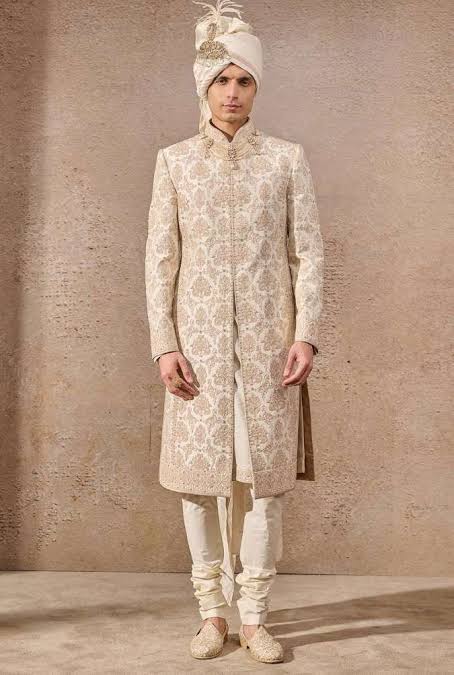
- Best for: grooms and close family members at traditional weddings
- Looks great in: ivory, gold, cream, deep maroon and dark green
- Style tip: keep the base simple and let one detail, such as zari work on the collar, stand out
2. The Bandhgala or Jodhpuri Style
Closely related to the sherwani, the bandhgala is a shorter, tailored jacket with a closed neck and neat buttons. It is often worn with matching trousers, which gives a polished look that sits between a suit and a traditional outfit.
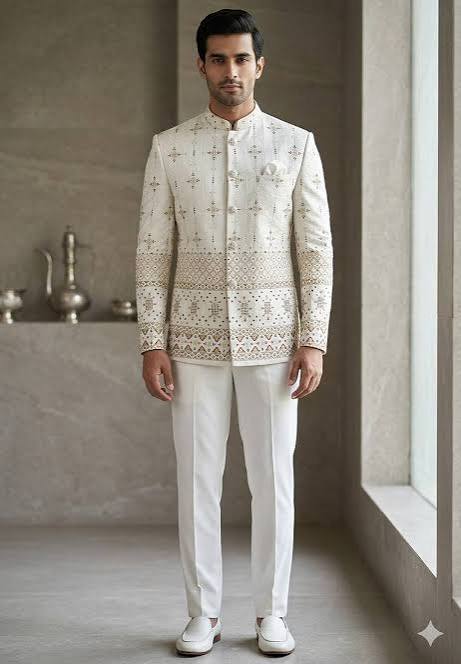
- Best for: men who like a clean, structured and modern look
- Looks great in: navy, black, charcoal, wine and muted pastels
- Style tip: choose a slim but comfortable fit, because bandhgalas look best when well tailored
3. The Angrakha or Cross-Over Sherwani
Instead of buttons straight down the middle, this style has a flap that crosses over the chest and fastens at the side. The shape feels unique and instantly stands out in photographs.
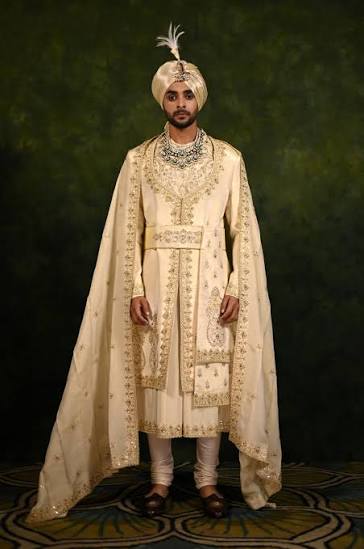
- Best for: grooms and guests who want something different from the classic style
- Looks great in: pastel shades, off-white and soft earthy tones
- Style tip: keep jewellery and accessories minimal, since the cut is the star
4. The Velvet Sherwani for Winter Weddings
Velvet brings richness and warmth, which makes it a natural choice for cooler months. Deep shades like emerald, burgundy, royal blue and black look especially striking under wedding lights.
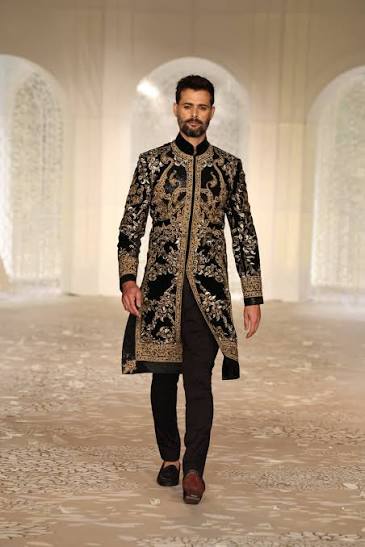
- Best for: winter and evening ceremonies
- Looks great in: jewel tones, with subtle embroidery or plain finishes
- Style tip: check the lining and breathability, because indoor venues can get warm and velvet can feel heavy
5. The Pastel and Indo-Western Sherwani
Light shades such as powder blue, mint, blush, lavender and sand have become popular for day weddings and ceremonies like mehendi and haldi. Indo-western versions may include capes, asymmetric hems or contrast buttons.
- Best for: daytime functions and grooms who want a fresh look
- Looks great in: soft pastels with tone-on-tone embroidery
- Style tip: avoid too many contrasting elements, so the outfit looks elegant instead of busy
6. The Kurta with Nehru or Bandi Jacket
Not every wedding guest wants a full sherwani, and that is perfectly fine. A well-cut kurta paired with a Nehru or bandi jacket gives a festive and refined appearance that is lighter and easier to wear for long hours.
- Best for: guests, siblings and cousins, or anyone who wants comfort without losing style
- Looks great in: solid kurtas with a textured or embroidered jacket
- Style tip: match the jacket to the occasion, using richer fabrics for evening events
How to Choose the Right Sherwani Fabric
Fabric decides how your sherwani looks, feels and photographs.
Silk and Raw Silk
Silk has a natural sheen and a rich feel. Raw silk has a slightly textured finish and works beautifully for traditional styles.
Brocade and Jacquard
These have woven patterns that give depth without heavy embroidery. They are good for men who want texture but not too much decoration.
Velvet
Velvet is luxurious and warm. It suits winter evenings, but it may be too heavy for hot or crowded venues.
Cotton Silk and Blends
These are lighter and more comfortable for day events and warm weather, and they usually cost less than pure silk.
Colour Guide for Different Occasions
The right shade depends on the event, the time of day and your skin tone.
For the Groom
Ivory, gold, cream, deep red and rich green are traditional favourites. Pastels are growing in popularity for modern ceremonies.
For Guests
Choose colours that do not clash with the couple’s theme and avoid dressing exactly like the groom. Navy, olive, wine, grey and softer tones work well.
For Day and Night Events
Light and pastel colours look fresh in daylight, while darker or jewel tones look sharper under evening lights.
Fit and Tailoring Tips
Even the best piece looks ordinary if it does not fit well.
Start Early
Begin shopping or ordering six to eight weeks before the wedding if you plan to have it stitched or altered. Last-minute rushes lead to compromises.
Check Shoulders and Sleeves First
Shoulders should sit squarely, and sleeves should end near the wrist bone. These are difficult to fix later.
Length Matters
The hem usually falls around the knee. A very long garment can look heavy on shorter men, while a very short one can lose the classic effect.
Test Movement
Sit, raise your arms and hug someone before finalising. You will wear it for hours, so comfort counts.
Accessories That Complete the Look
Stoles and Dupattas
A stole in a contrasting or matching fabric adds drama and balance. Hold it neatly and avoid anything too long that gets in the way.
Footwear
Mojaris and juttis suit most styles, and polished formal shoes work with bandhgalas and modern looks.
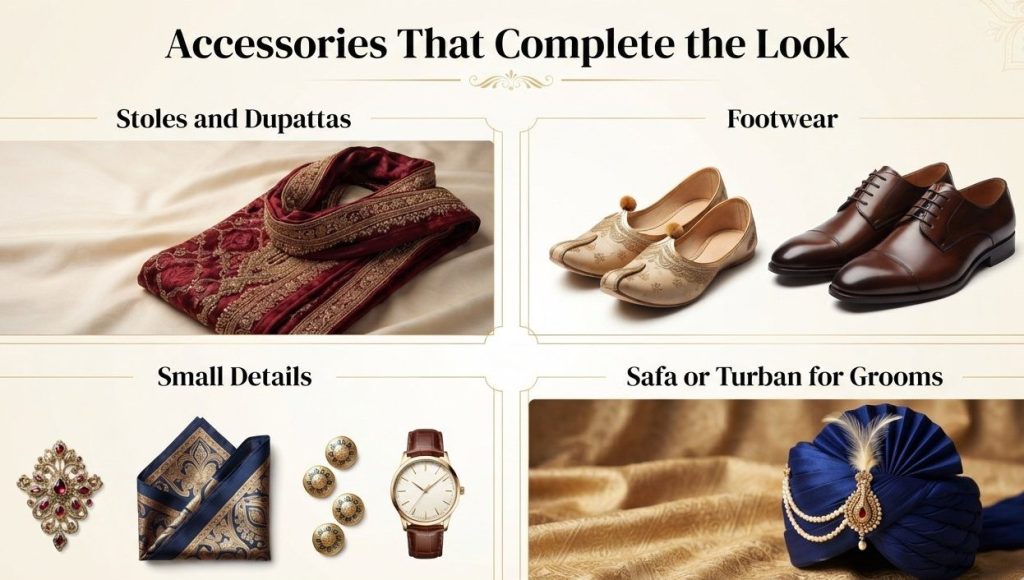
Small Details
Brooches, pocket squares, buttons and a classic watch add personality. Pick one or two and avoid overdoing it.
Safa or Turban for Grooms
If it suits the family tradition, a safa in a complementary colour completes the groom’s look.
5 Costly Sherwani Mistakes to Avoid
1. Choosing Looks Over Comfort
Heavy fabrics and tight collars can ruin your enjoyment. Always try the outfit for a while before the event.
2. Ignoring the Weather and Venue
Velvet in a warm hall or light cotton at a cold outdoor event can be uncomfortable. Plan for the setting.
3. Wearing Something Too Similar to the Groom
If you are a guest, avoid copying his colour and heavy embroidery, so he stands out.
4. Skipping a Trial
Always do a full trial well before the wedding. Small alterations take time.
5. Poor Storage and Care
Store it in a breathable cover, away from moisture and direct sunlight, and dry clean it as advised for the fabric.
Final Checks on the Wedding Day
A great outfit still needs a few finishing touches to look its best.
Press and Steam
Wrinkles ruin the structured look of formal wear. Steam it gently on the morning of the event and avoid pressing directly on embroidery or velvet.
Plan Your Grooming
A fresh haircut, trimmed beard and neat nails take the whole look up a notch. Book your barber a few days before the event, not the same morning.
Carry Small Essentials
Keep safety pins, a handkerchief, a small comb and a spare button in your pocket or with a family member. Tiny emergencies are easier to handle when you are prepared.
Be Comfortable and Confident
Stand tall, smile and enjoy the day. Clothes look best on people who feel at ease in them.
Should You Rent or Buy?
If you will wear a sherwani rarely, renting can be sensible, especially for guests. For grooms or men who attend many weddings, buying or customising can be a better long-term choice. Compare the total cost, fitting options and return rules before deciding.
For more style inspiration, Vogue India regularly features menswear and wedding fashion, and the Ministry of Textiles shares information about Indian handloom and textile traditions that influence many wedding fabrics.
You can also explore more outfit ideas in our website or browse the fashion category for more trends.
Frequently Asked Questions (FAQs) About Sherwani
What is a sherwani?
A sherwani is a long, coat-style garment worn by men, usually knee-length and buttoned in front, and commonly worn at weddings and formal occasions.
What is the difference between a sherwani and a bandhgala?
A sherwani is usually longer, like a coat, while a bandhgala is a shorter tailored jacket with a closed collar, often worn with matching trousers.
Which colour of sherwani is best for a groom?
Ivory, gold, cream, deep red and rich green are traditional favourites, while pastels and jewel tones are popular for modern weddings. Choose a shade that suits your skin tone and the theme.
Can a guest wear a sherwani at a wedding?
Yes, as long as it does not clash with the groom’s outfit. Guests often choose subtler colours and lighter designs.
What should I wear under a sherwani?
It is usually worn over a kurta with a churidar, pyjama or trousers.
Which sherwani fabric is best for winter?
Velvet, heavier silk and brocade are good for winter because they feel warm and look rich.
Which sherwani is best for a summer wedding?
Lighter fabrics such as cotton silk and blends in pastel shades are more comfortable in warm weather.
How long before the wedding should I buy or stitch a sherwani?
Start six to eight weeks before the wedding to allow time for fittings and alterations.
How should I store a sherwani?
Keep it in a breathable garment bag in a cool, dry place away from direct sunlight, and follow dry cleaning instructions for the fabric.
Is it better to rent or buy a sherwani?
Renting suits occasional wear, while buying or customising is better for grooms or men who attend many weddings.
Conclusion
A well-chosen outfit does more than make you look good. It makes you feel confident, comfortable and part of the celebration. Start by deciding the occasion and weather, choose a style and fabric that suit them, get the fit right and finish with simple accessories. Whether you pick a classic long coat, a sharp bandhgala or a light kurta with a jacket, the right choice is the one that feels like you.


