

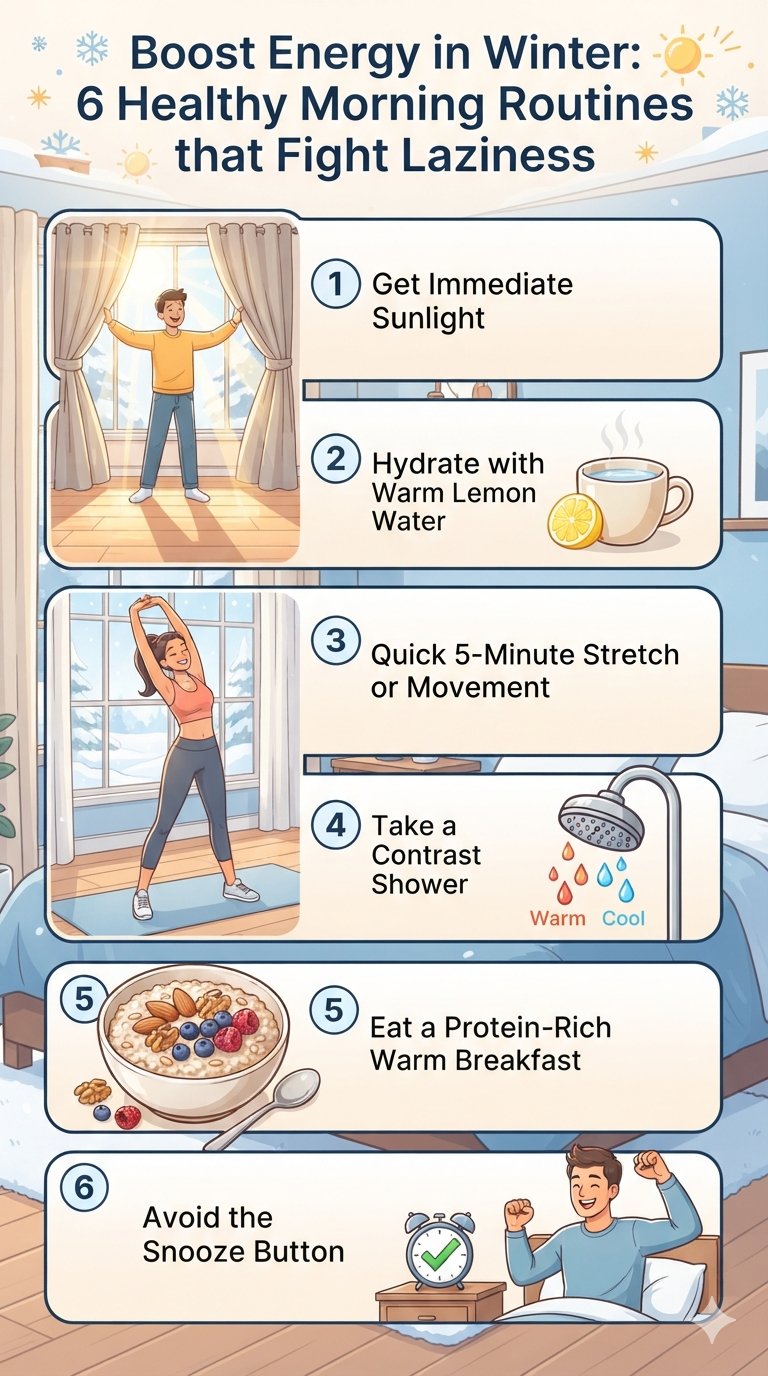
The alarm rings, the room is dark, the blanket feels like the safest place on earth, and your brain whispers, “five more minutes.” If this sounds familiar, you are not lazy. Winter mornings are genuinely harder. Days are shorter, sunlight is weaker and cold air makes it tempting to stay still. The good news is that a few small habits can help you boost energy naturally, without extreme challenges or complicated plans.
This guide shares six healthy winter morning routines that are simple, realistic and easy to start tomorrow. You will also find a sample 30-minute plan, common mistakes to avoid and answers to ten frequently asked questions.
Table of Contents
Quick Answer: How Can You Boost Energy on Winter Mornings?
The fastest ways to boost energy on a cold morning are to wake up at a regular time, get natural light, drink water, move your body gently, eat a balanced breakfast and avoid your phone for the first few minutes. Each habit supports your body clock, circulation or blood sugar, which together make you feel more alert.
Key Takeaways
- Consistency matters more than perfection.
- Light, water, movement and food are the four basic building blocks.
- Small changes done daily beat big changes done once.
- Constant tiredness that does not improve may need a doctor’s advice.
Why Do Winter Mornings Feel So Hard?
Understanding the cause makes it easier to boost energy with the right habits.
Less Daylight Affects Your Body Clock
Your body uses light to decide when to feel awake and when to feel sleepy. In winter, the sun rises later, so your body may stay in “sleep mode” for longer. This is one reason you may struggle to boost energy after waking up.
Cold Weather Encourages Inactivity
When it is cold, people move less, stay indoors and sit more. Less movement can mean less circulation and a lower feeling of alertness.
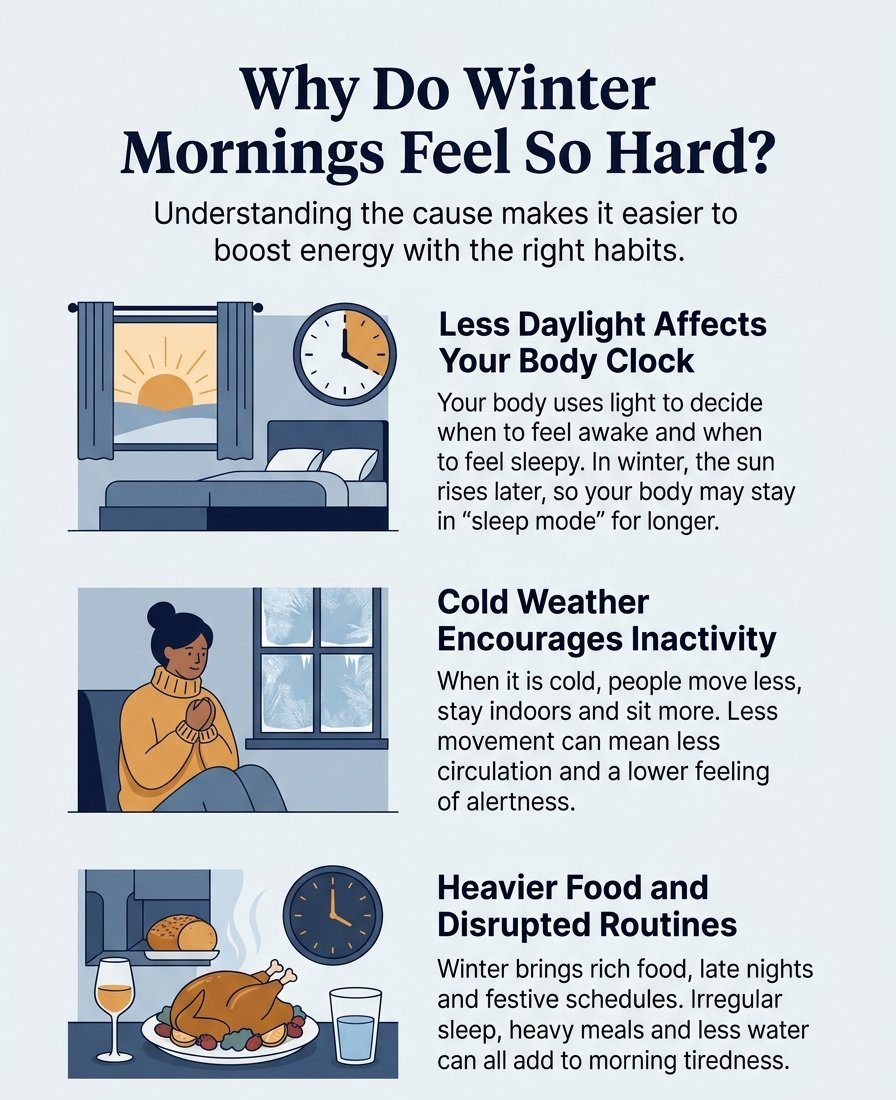
Heavier Food and Disrupted Routines
Winter brings rich food, late nights and festive schedules. Irregular sleep, heavy meals and less water can all add to morning tiredness.
6 Healthy Winter Morning Routines That Boost Energy
1. Wake Up at a Consistent Time
Going to bed and waking up at similar times every day helps train your body clock. A steady schedule can make mornings feel less shocking. Most adults need around seven to nine hours of sleep, so work backwards from your wake-up time and set a realistic bedtime.
How to start:
- Choose a wake-up time you can follow on most days, including weekends.
- Place your alarm across the room so you have to stand up to switch it off.
- Avoid repeated snoozing, because it breaks your sleep into short, unrefreshing pieces.
2. Get Natural Light as Early as Possible
Morning light is one of the easiest ways to boost energy, because it is one of the strongest signals that tells your brain it is time to wake up. In winter, you need to be more deliberate about it.
How to start:
- Open the curtains the moment you get up.
- Spend ten to fifteen minutes near a window or outside on a balcony, terrace or garden, once the sun is up.
- Sit near the brightest window while having your tea or breakfast.
Even on cloudy days, outdoor light is usually brighter than indoor light, so it still helps.
3. Drink Water Before Tea or Coffee
You lose water overnight through breathing and sweat, and even mild dehydration can make you feel tired or unfocused. A glass of water first thing is a simple way to boost energy and prepare your body for the day.
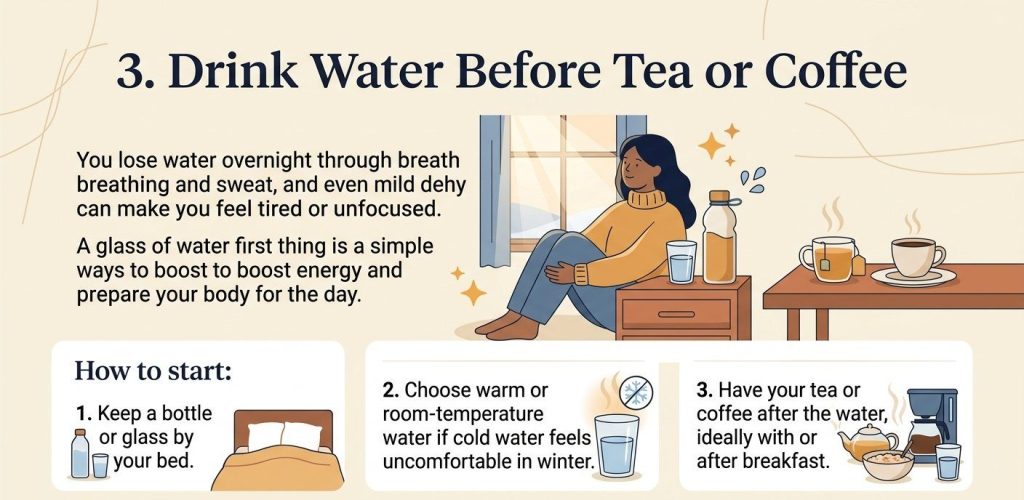
How to start:
- Keep a bottle or glass by your bed.
- Choose warm or room-temperature water if cold water feels uncomfortable in winter.
- Have your tea or coffee after the water, ideally with or after breakfast.
4. Do Five to Ten Minutes of Gentle Movement
You do not need a full workout. A short burst of movement can boost energy by waking up your muscles, improves circulation and often lifts your mood.
Easy options:
- Light stretching for the neck, shoulders, back and legs
- A short walk around the house, terrace or neighbourhood
- A few rounds of simple yoga or sun salutations, if you are familiar with them
- Marching in place or light jumping jacks
The World Health Organization’s physical activity guidance explains how regular movement supports overall health. If you have a medical condition or injury, check with a doctor before starting something new.
5. Eat a Warm, Balanced Breakfast
What you eat in the morning affects how steady your energy feels later, so a smart breakfast can help boost energy for hours. Very sugary breakfasts can give a quick rise followed by a crash. A mix of protein, fibre and healthy fats helps you stay full and focused for longer.
Winter-friendly ideas:
- Moong dal or besan chilla with vegetables
- Poha or upma with peanuts and vegetables
- Oats or dalia cooked with milk, nuts and seeds
- Eggs with whole-grain toast, if you eat eggs
- Warm soup with a protein side
Listen to your body and eat in a way that suits your health needs. If you have a medical condition or special diet, follow your doctor’s or dietitian’s advice.
6. Protect the First 20 Minutes From Your Phone
Picking up your phone the moment you wake up floods your brain with messages, news and social media. This can create stress or distraction before the day has even started, and it makes it harder to boost energy with healthy habits.
How to start:
- Keep your phone charging away from the bed.
- Use a simple alarm clock if the phone tempts you.
- Spend the first twenty minutes on water, light, movement and breakfast, then check messages.
- Take two minutes to decide your top three tasks for the day. Having a clear plan helps you start with purpose.
A Sample 30-Minute Winter Morning Routine
If you like to see everything in one place, here is an example routine to boost energy that you can adjust.
| Time | Activity | Why it helps |
|---|---|---|
| 0 to 3 min | Wake up, switch off alarm, open curtains | Starts the light signal |
| 3 to 6 min | Drink a glass of water | Rehydrates after sleep |
| 6 to 16 min | Stretching or a short walk near light | Wakes up muscles and mood |
| 16 to 26 min | Warm, balanced breakfast | Provides steady fuel |
| 26 to 30 min | Write your top three tasks | Gives your mind direction |
You do not need to follow this exactly. If you only have ten minutes, pick the two habits that feel easiest, such as light and water, and build from there.
Evening Habits That Make Winter Mornings Easier
If you want to boost energy in the morning, the work often starts the night before.
Keep a Regular Bedtime
Going to bed at a similar time every night makes it easier to wake up at a similar time. The CDC’s sleep information offers simple, reliable guidance on healthy sleep habits.
Limit Caffeine and Screens Late in the Day
Caffeine late in the day and bright screens near bedtime can make it harder to fall asleep. Try to reduce both in the last few hours before bed.
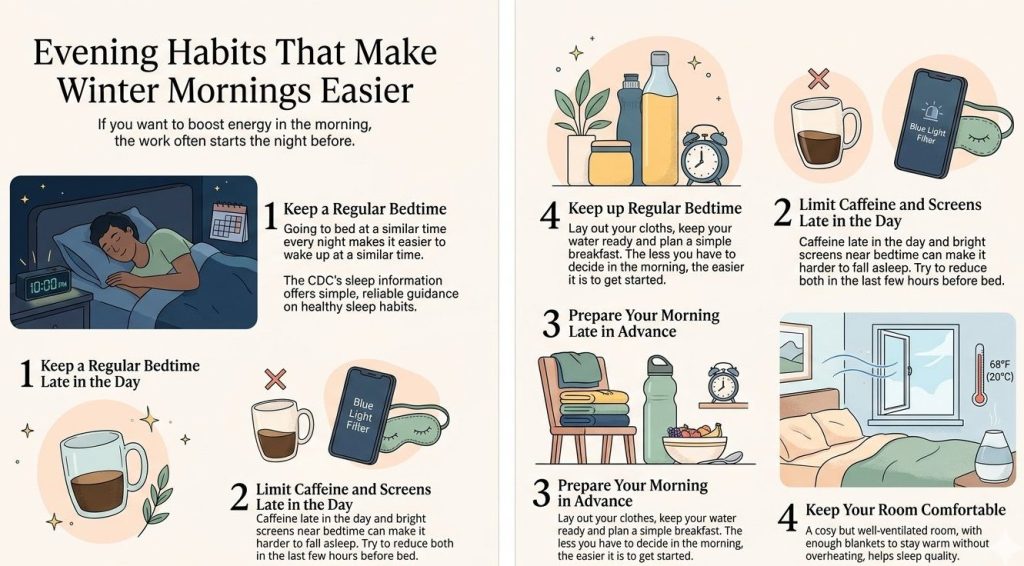
Prepare Your Morning in Advance
Lay out your clothes, keep your water ready and plan a simple breakfast. The less you have to decide in the morning, the easier it is to get started.
Keep Your Room Comfortable
A cosy but well-ventilated room, with enough blankets to stay warm without overheating, helps sleep quality.
5 Common Mistakes That Make It Harder to Boost Energy
1. Hitting Snooze Again and Again
Short bursts of extra sleep rarely feel refreshing. It is better to get up at the first alarm.
2. Starting the Day With Only Tea or Coffee
Caffeine can help alertness for some people, but it does not replace water or food. Have them first or together.
3. Skipping Movement Completely
Even a few minutes helps you boost energy. Staying still all morning can make you feel more sluggish.
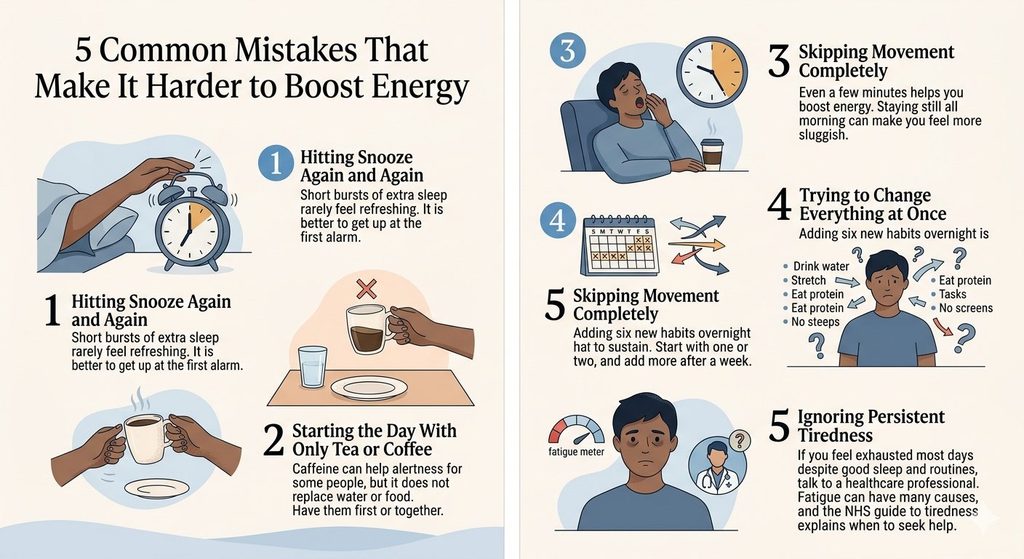
4. Trying to Change Everything at Once
Adding six new habits overnight is hard to sustain. Start with one or two, and add more after a week.
5. Ignoring Persistent Tiredness
If you feel exhausted most days despite good sleep and routines, talk to a healthcare professional. Fatigue can have many causes, and the NHS guide to tiredness explains when to seek help.
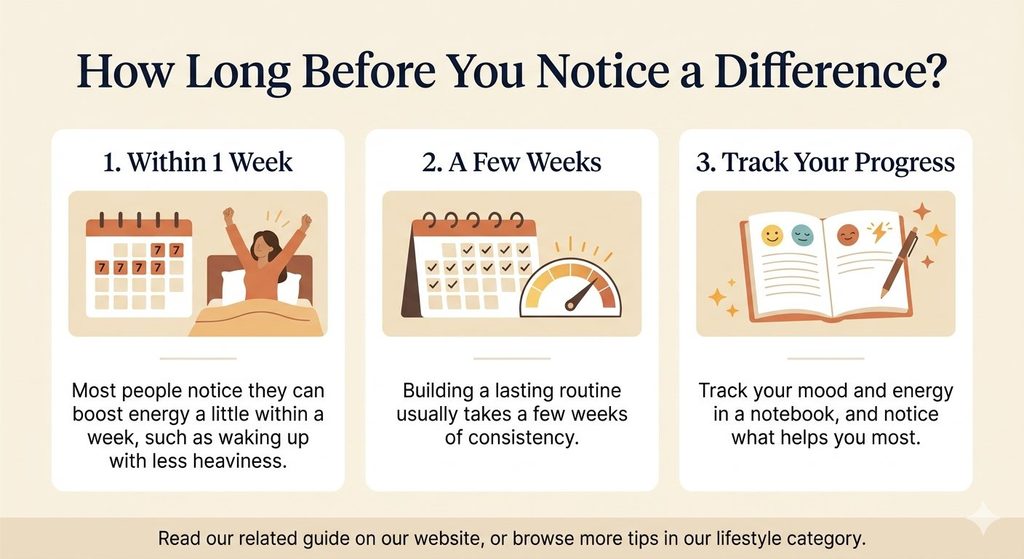
How Long Before You Notice a Difference?
Most people notice they can boost energy a little within a week, such as waking up with less heaviness. Building a lasting routine usually takes a few weeks of consistency. Track your mood and energy in a notebook, and notice what helps you most.
You can also read our related guide on our website, or browse more tips in our lifestyle category.
Frequently Asked Questions (FAQs) About How to Boost Energy
How can I boost energy in the morning naturally?
Wake up at a regular time, get natural light, drink water, move gently for a few minutes and eat a balanced breakfast. These simple habits support your body clock and circulation.
Why do I feel so tired in winter mornings?
Shorter days, less sunlight, colder weather and disrupted sleep can all make you feel sluggish. Your body clock relies on light, so darker mornings can make waking up harder.
What is the best breakfast to boost energy?
A balanced breakfast with protein, fibre and healthy fats, such as chilla with vegetables, oats with nuts or eggs with whole-grain toast, tends to provide steadier energy than sugary foods.
Does drinking water in the morning really help?
Water helps rehydrate you after sleep, and even mild dehydration can make you feel tired. A glass of water is a simple habit with no downside for most people.
How much exercise do I need in the morning?
Even five to ten minutes of gentle movement can help you feel more awake. You do not need a long or intense workout.
Is coffee a good way to boost energy?
Coffee can increase alertness for some people, but it works best alongside water, food and good sleep. Avoid too much, and limit it later in the day to protect your sleep.
How much sleep do I need to feel energetic?
Most adults need around seven to nine hours of sleep. Needs vary from person to person, so notice how you feel and adjust.
Can I boost energy without waking up early?
Yes. The key is consistency and quality. Choose a wake-up time that fits your schedule and follow the same routine daily.
When should I see a doctor about constant tiredness?
If you feel very tired for weeks despite adequate sleep and healthy habits, or if you have other symptoms such as dizziness or breathlessness, consult a doctor.
How long does it take to build a morning routine?
Many people notice small improvements in a week, but forming a lasting habit usually takes several weeks of regular practice.
Conclusion
You do not need a perfect routine to boost energy on winter mornings. You need a few small, repeatable habits: consistent sleep, morning light, water, gentle movement, a balanced breakfast and a calm first twenty minutes. Start with just two this week, notice how you feel and add more when you are ready. Cold mornings may never feel easy, but they can start to feel a lot lighter.


