

You stream a video. You send an email. You ask an AI a question. All of this happens in seconds, but you never think about where it actually happens. It happens in a data center.
Right now, the world is building data centers at a scale never seen before. These are facilities that use as much electricity as entire cities and cost billions of dollars to build. The race to build the biggest data center in the world is moving faster than most people realize. Here are five shocking facts and what is really going on inside.
Table of Contents
Fact 1: The Biggest Data Center in the World Uses Enough Power to Run 1.6 Million Homes
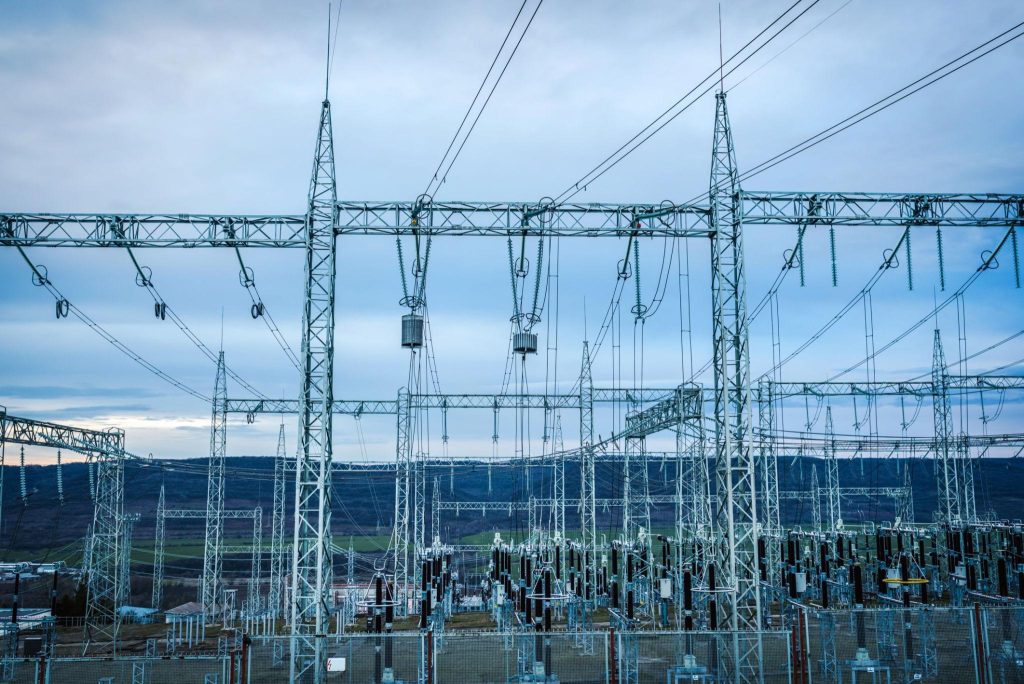
AWS Project Rainier in New Carlisle, Indiana, is one of the biggest data center in the world. At full capacity, it will use 2.2 gigawatts of electricity, which is enough to power over 1.6 million homes. Amazon spent $11 billion to build it on 1,200 acres of what used to be farmland.
Construction started in September 2024, and the first buildings were live within seven months. That is one of the fastest build times for a project of this size, ever. The full campus will eventually hold 30 buildings, each larger than 200,000 square feet.
The entire facility was built to train Anthropic’s Claude AI models. Every time Claude gets smarter, this data center is likely the reason why. It also runs about 500,000 of Amazon’s own custom AI chips with no Nvidia GPUs anywhere on site.
To power a campus this large, Amazon worked with Indiana Michigan Power to upgrade the local electricity grid. The project created more than 1,000 jobs in a county where the average wage jumped well above the local average. This shows just how much energy the biggest data center in the world demands and how much it can change the area around it.
Fact 2: What Is Inside the Biggest Data Center in the World
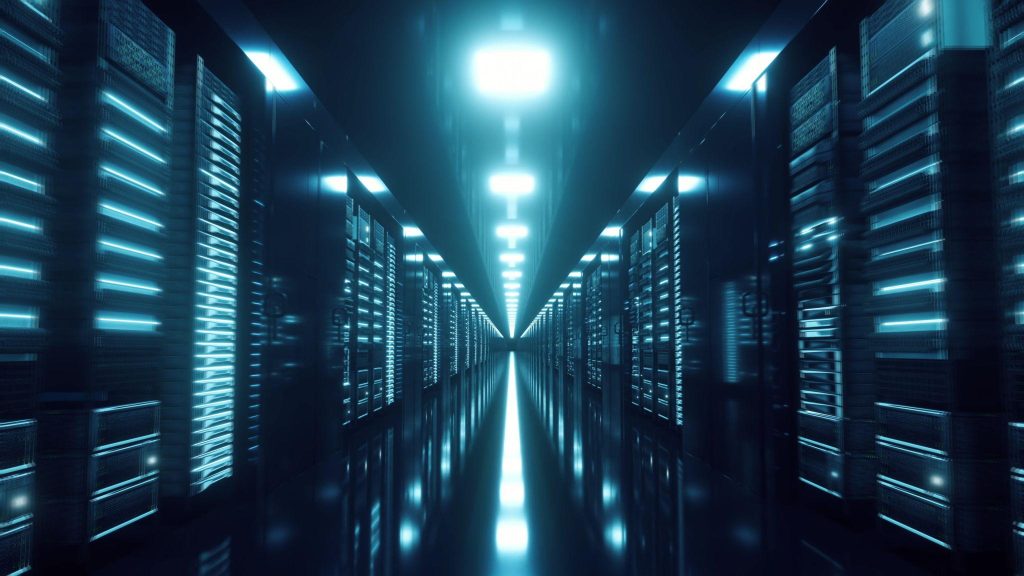
Most people think a data center is just a big room full of computers. It is much more than that. A data center runs on three systems working together at all times: power, cooling, and networking.
Servers do the actual computing. They run non-stop and are stacked in tall metal frames called racks. Thousands of these racks sit in rows across the floor of the data center.
Power systems keep everything running without interruption. The biggest data center in the world gets electricity from the local grid but cannot afford even one second of downtime. So it also has backup generators and battery systems ready to kick in immediately if the main supply fails.
Cooling systems remove the heat that servers produce. Servers get very hot, and without cooling, they would break down in minutes. Modern data centers push cold air through the floor, pipe chilled water through the ceiling, or deliver coolant directly to each chip. Project Rainier uses outside air for cooling from October to March, using zero water during those months.
Networking connects all the servers to each other and to the internet. Without fast, reliable cables and switches, none of the computing power inside a data center would be useful. A single large data center can carry more internet traffic in one second than most countries do in a minute. Data centers also connect to each other through underground and undersea fiber cables, forming the invisible web that holds the internet together.
Security is another layer you would not expect. Data centers have no windows, no visible signs outside, and multiple locked doors before you reach the servers. Only a small number of approved staff can ever walk inside. When you are storing data for millions of people, physical security matters just as much as digital security.
Fact 3: China Has the Largest Data Center Cluster on the Planet
The biggest data center in the world by total size (and cluster) is not in the US. It is in Inner Mongolia, China. The area around the city of Hohhot is home to huge data centers built by every major Chinese tech company.
The reason is simple: the region has very cold weather, which cuts cooling costs significantly. It also has cheap electricity and strong government support through Beijing’s “East Data, West Computing” program, which actively pushes tech companies to build in this region.
China Telecom’s facility in Hohhot alone covers over 10.7 million square feet, making it the largest single internet data center in the world by area. China Mobile also operates a data center in the same region, covering 720,000 square meters with over 40,000 server racks. It was built with an initial investment of $1.92 billion and serves as a hub for cloud computing and 5G research across China.
The US leads in power used at a single campus. China leads in total computing volume across a region. Southeast Asia is the fastest-growing market, with over $30 billion in new data center investment announced for the Johor region of Malaysia since 2023. The hub for the biggest data center in the world is no longer limited to just the US and Europe.
Fact 4: SpaceX Plans to Put Data Centers in Space
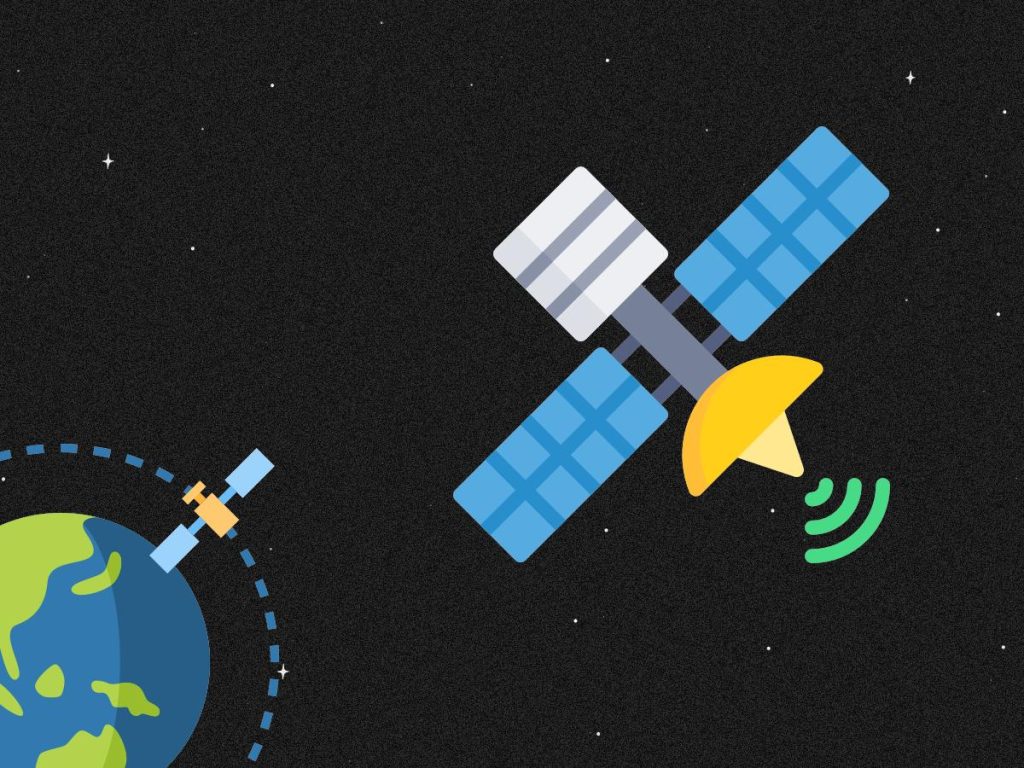
SpaceX has filed plans to build a network of up to one million satellites that would work as a giant data center in orbit. This is not a distant idea, as launches are planned to begin in 2026.
The plan uses next-generation Starlink V3 satellites, launched by SpaceX’s Starship rocket. Each satellite can handle download speeds of 1 terabit per second and will connect to nearby satellites using laser links. Together, they would form a computing network floating above the Earth.
SpaceX already runs about 150 Starlink ground stations around the world. These stations connect the satellites to internet cables on the ground. The new space-based data center would go much further because the satellites themselves would do the computing, not just pass data along.
Space has real advantages as a data center location. There is no land to buy, no water needed for cooling, and the vacuum of space naturally pulls heat away from electronics. Satellites in sun-facing orbits would stay in sunlight for more than 99% of the time, providing a steady supply of solar power. For a company always pushing boundaries, space is SpaceX’s answer to put the next biggest data center in the world.
Fact 5: The Data Center Industry Is Growing Faster Than Ever Before
The scale of growth in this industry is hard to wrap your head around. Global data center power capacity is expected to rise from 45,676 megawatts in 2024 to 66,504 megawatts by 2026. By 2030, it could grow by 177% from where it stands today.
Since the launch of ChatGPT, more than 70 projects, each requiring a gigawatt of power, have been proposed in the US alone. One gigawatt is the amount of electricity used by a large city. The demand for data center space is growing so fast that power grids in some US states are already running close to their limits, forcing utilities to fast-track new power plants just to keep up.
AI is the main reason for all this growth. Every AI tool you use for writing, searching, or generating images needs a lot of computing power to work. As AI gets more powerful, the biggest data centers in the world have to keep growing to keep up.
Switch’s SuperNAP campus in Las Vegas spans 7 million square feet across 48 buildings, runs on 100% renewable energy, and holds 750 megawatts of capacity. Equinix’s facility in Silicon Valley, the biggest data center in the world on a shared basis, is on track to reach 600 megawatts in 2026. Both show that this race is happening on multiple fronts at once.
Why This Matters to You

You may never see a data center in person. But you use one every single day. Every video you watch, every message you send, and every AI answer you get passes through one of these facilities.
The energy required to keep these buildings running is growing fast, too. The biggest data center in the world already accounts for a significant share of global electricity use, and that number is going up every year. Some facilities are turning to solar panels, wind energy, and smarter cooling systems to reduce their footprint. The choices companies make about where to build, how to cool, and what energy to use will matter for the planet.
Understanding what is inside a data center and how large the biggest data center in the world has become is really just understanding how the modern internet works. These buildings are the backbone of digital life.
The biggest data center in the world is not just a building. It is where the future is being built, scaled, and powered, and it is getting bigger every single year.
Frequently Asked Questions
Q1: What is the biggest data center in the world right now?
A. AWS Project Rainier in New Carlisle, Indiana, is currently one of the biggest data centers in the world by power capacity, designed to draw 2.2 gigawatts at full buildout.
Q2: What is inside the biggest data center in the world?
A. A data center contains servers, power backup systems, cooling equipment, and networking cables. All of these work together to keep websites, apps, and AI tools running 24 hours a day.
Q3: How much does it cost to build the biggest data center in the world?
A. Large data centers cost billions of dollars. Amazon spent $11 billion on Project Rainier alone, and that does not include the cost of grid upgrades needed to power it.
Q4: Why are data centers built in cold regions?
A. Cold weather reduces the cost of cooling servers. Regions like Inner Mongolia in China are popular data center locations because the natural climate does nearly half the cooling work for free.
Q5: What is a SpaceX data center?
A. SpaceX plans to build data centers in space using upgraded Starlink satellites. These satellites would do computing in orbit, using solar power and the natural cold of space instead of land and water.
Q6: How much electricity does the biggest data center in the world use?
A. A large data center can use anywhere from a few hundred megawatts to over 2 gigawatts of electricity. One gigawatt is roughly what a large city consumes.
Q7: Are data centers bad for the environment?
A. They do consume a lot of energy and water. However, many are now switching to renewable energy like solar and wind, and building smarter cooling systems to reduce their environmental footprint.
Q8: Who owns the most data centers in the world?
A. Amazon Web Services operates the largest data center footprint globally, with over 900 facilities across more than 50 countries.


