

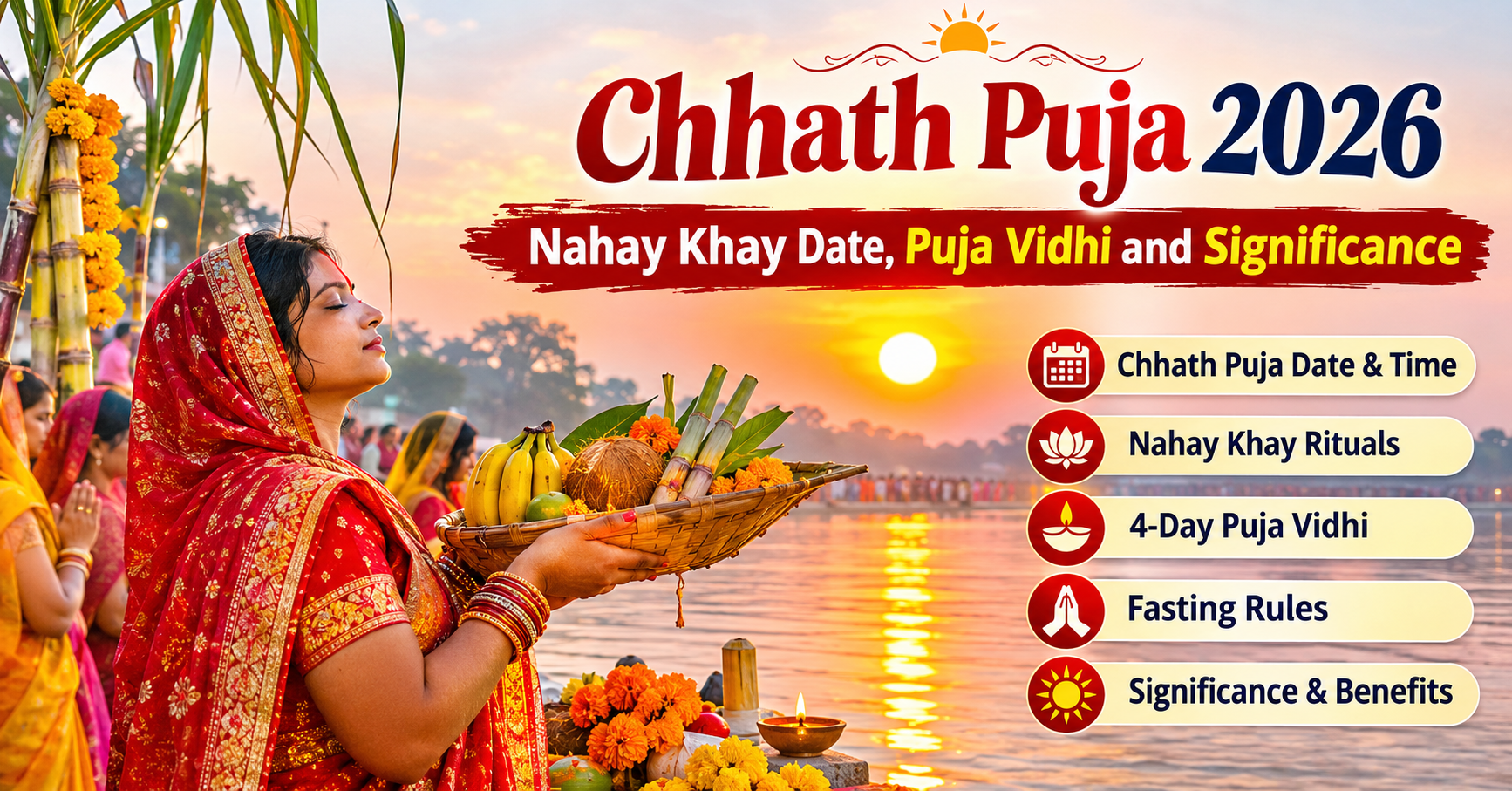
Chhath Puja is the most sacred and heartwarming festivals celebrated in India, especially in Bihar, Jharkhand, eastern Uttar Pradesh, and parts of Nepal. Dedicated to Surya Dev (the Sun God) and Chhathi Maiya, this beautiful festival represents faith, purity, gratitude, discipline, and the eternal connection between nature and human life.
The four-day-long Chhath Mahaparv is celebrated with immense devotion. From the sacred beginning of Nahay Khay to the peaceful morning prayers of Usha Arghya, every ritual holds a special spiritual meaning. Devotees observe strict fasting, prepare traditional offerings, and worship the rising and setting Sun to seek happiness, prosperity, good health, and blessings for their families.
Chhath Puja 2026 will begin on Friday, November 13, with Nahay Khay and conclude on Monday, November 16, with Usha Arghya and Parana. The main Chhath Puja and Sandhya Arghya will be observed on Sunday, November 15, 2026.
If you are looking for the complete details of Chhath Puja 2026, including Nahay Khay date, puja vidhi, fasting rules, important timings, and religious significance, this detailed guide will help you understand the festival.
Chhath Puja 2026: Date and Four-Day Schedule
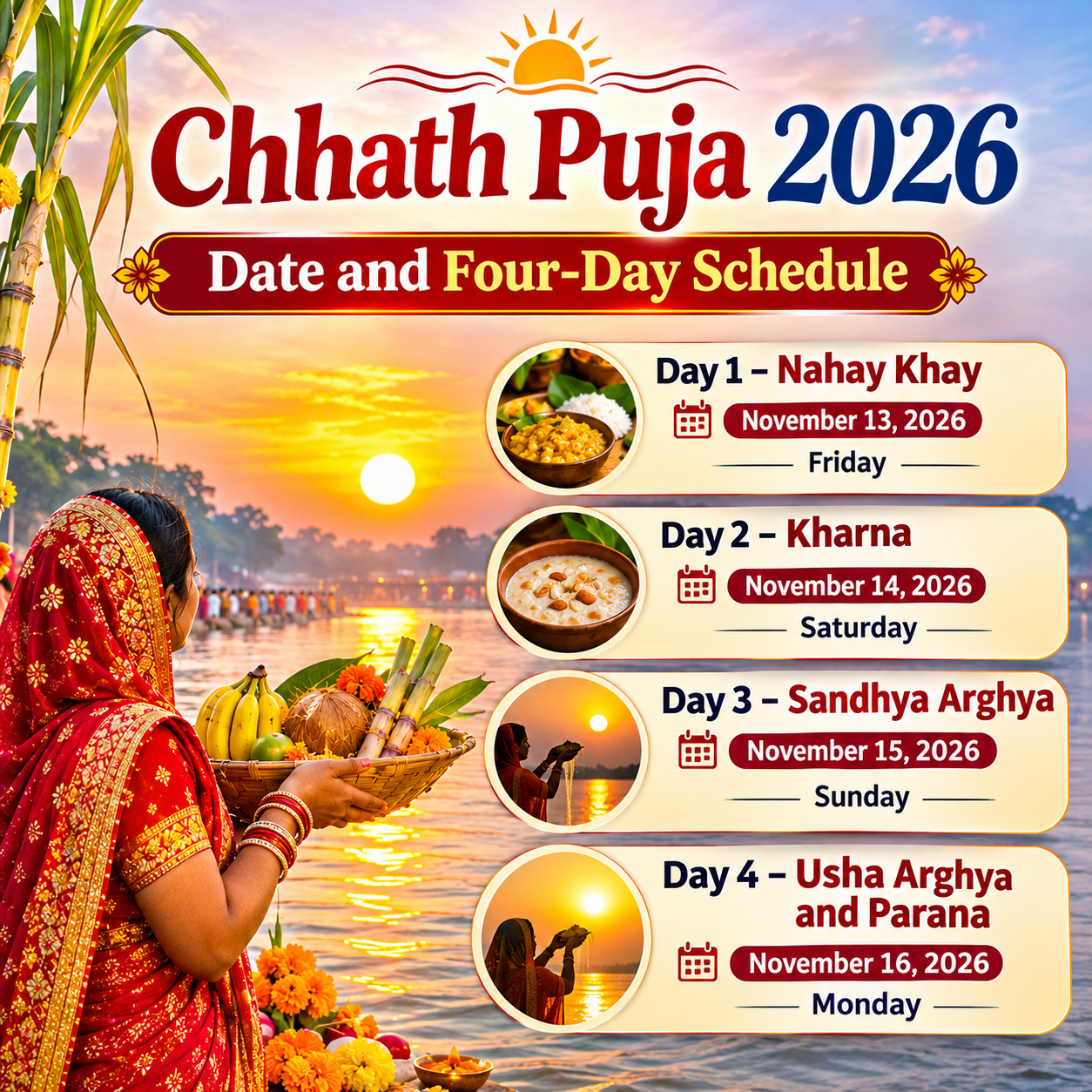
Here is the complete Chhath Puja 2026 calendar:
| Chhath Puja Ritual | Date | Day |
| Nahay-Khay | November 13, 2026 | Friday |
| Kharna (Lohanda) | November 14, 2026 | Saturday |
| Sandhya Arghya | November 15, 2026 | Sunday |
| Usha Arghya and Parana | November 16, 2026 | Monday |
The main Chhath Puja will take place on November 15, when devotees offer Arghya to the setting Sun. The festival concludes the following morning with prayers to the rising Sun.
Note: Sunrise, sunset, and Arghya timings may vary depending on your city.
Nahay Khay 2026: Date, Rituals and Significance
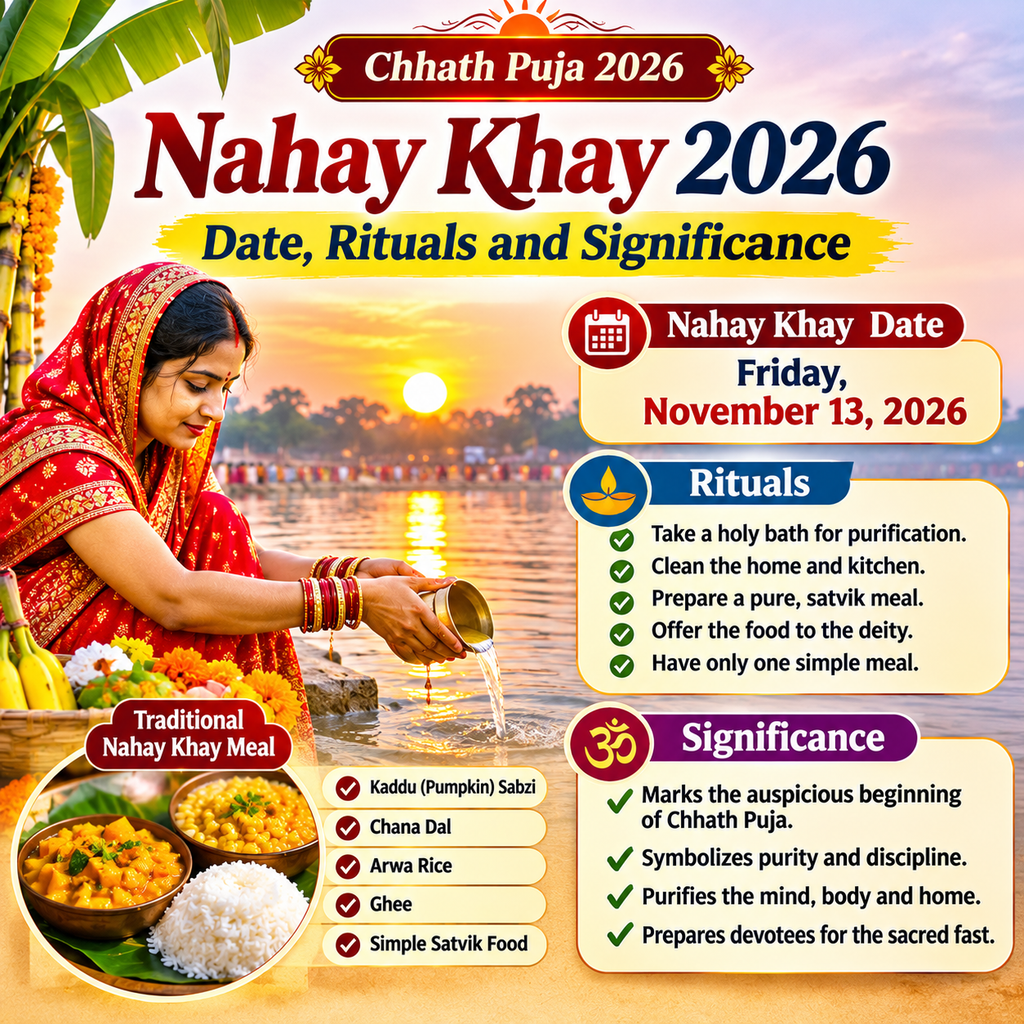
Nahay-Khay is the beginning of Chhath Puja. In 2026, Nahay Khay will be celebrated on Friday, November 13.
The word “Nahay” means bathing, and “Khay” means eating. This first day is associated with physical purification, spiritual cleanliness, and preparing oneself for the upcoming sacred fast.
On this day, devotees take a holy bath, often in a river or other clean water body. They clean their homes and kitchens and prepare a pure, vegetarian meal using traditional ingredients.
Nahay Khay Puja Vidhi
The traditional Nahay Khay rituals generally include:
- Devotees wake up early in the morning and take a holy bath.
- The house and kitchen are thoroughly cleaned to maintain purity.
- A satvik meal is prepared using fresh and carefully selected ingredients.
- Traditional food items such as kaddu (pumpkin), chana dal, and rice are prepared.
- The food is offered to the family deity or as part of the Chhath observance before the vrat performer consumes it.
- Devotees usually eat only one meal on this day and begin preparations for Kharna.
The food is prepared without onion and garlic, following the traditional customs of Chhath Puja.
What Is Eaten on Nahay Khay?
The traditional Nahay Khay meal often includes:
- Lauki or kaddu ki sabzi
- Chana dal
- Arwa rice
- Homemade ghee
- Simple satvik food
This wholesome meal symbolizes purity, simplicity, and the beginning of a disciplined spiritual journey.
Nahay Khay is not merely about food or fasting. It is a beautiful reminder that devotion begins with a clean heart, a peaceful mind, and a pure lifestyle.
Chhath Puja 2026: Complete Puja Vidhi for Four Days
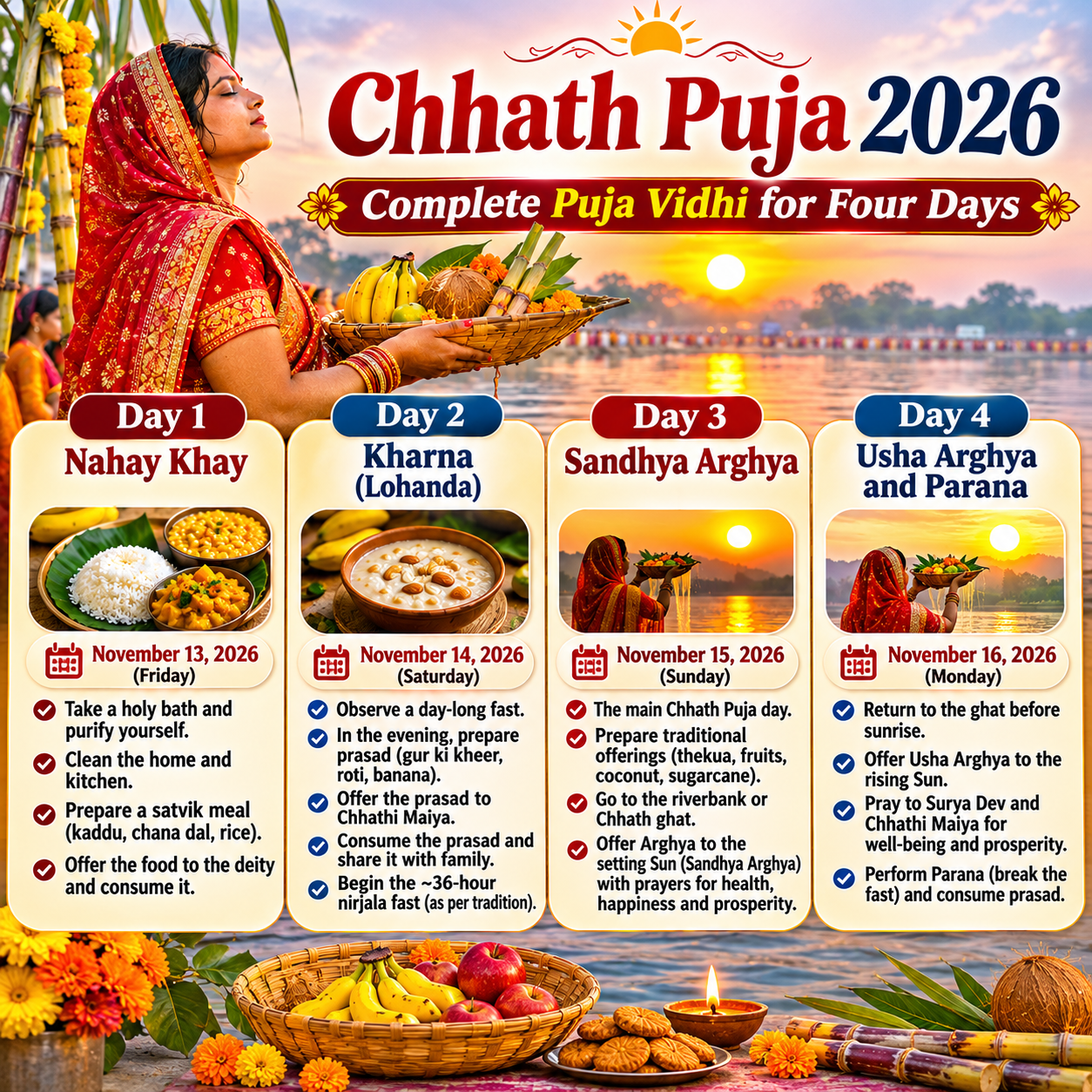
The Chhath Puja rituals are deeply rooted in faith and tradition. Every day brings devotees closer to the divine through prayers, fasting, and gratitude toward nature.
Day 1: Nahay Khay –
The festival begins with Nahay Khay. Devotees take a holy bath, clean their homes, and prepare a traditional satvik meal.
The vrat performer, commonly known as the “vrati,” follows strict cleanliness practices and eats a simple meal. This day establishes the spiritual foundation for the remaining rituals.
Day 2: Kharna – November 14, 2026
Kharna, also known as Lohanda.
On this day, devotees keep fast throughout the day. After sunset, they prepare a meal and offer it to Chhathi Maiya.
The traditional Kharna prasad generally consists of:
- Gur ki kheer (jaggery-based rice pudding)
- Roti or chapati
- Bananas
- Other simple traditional offerings
After offering the prasad, the vrati consumes the meal and distributes it among family members and devotees.
Following Kharna, many devotees begin a rigorous approximately 36-hour nirjala fast, during which they abstain from food and water until the final morning rituals.
Kharna is a powerful symbol of self-discipline, dedication, and unwavering faith.
Day 3: Sandhya Arghya – November 15, 2026
Devotees prepare traditional offerings and gather at riverbanks, ponds, and designated Chhath ghats to worship the setting Sun.
Devotees arrange bamboo baskets or soop containing fruits, thekua, sugarcane, coconuts, and other sacred offerings. They stand in the water and offer Arghya to Surya Dev while praying for prosperity, happiness, good health, and the well-being of their families.
Thekua is one of the most popular traditional prasad items prepared during Chhath Puja. It is usually made using wheat flour, jaggery or sugar, and ghee.
The sight of devotees standing together at the ghats, singing traditional Chhath songs and offering prayers to the setting Sun, creates a deeply emotional and spiritually uplifting atmosphere.
Day 4: Usha Arghya and Parana – November 16, 2026
The fourth and final day of Chhath Puja begins before sunrise.
Devotees gather once again at riverbanks and sacred water bodies to offer Usha Arghya and prayers to the rising Sun. This ritual represents new beginnings, hope, positivity, and the triumph of light.
The vrati offers prayers to Surya Dev and Chhathi Maiya with folded hands and sacred offerings.
After completing Usha Arghya, devotees perform Parana, which marks the conclusion of the fast. They consume prasad and share it with family members andothers.
The festival ends withabeautiful feeling of gratitude, peace, and spiritual fulfillment.
Chhath Puja 2026 Date and Time: Arghya Muhurat
The most important moments of Chhath Puja are Sandhya Arghya and Usha Arghya
The ritual timing may depend on the location of the Chhath ghat and the local Panchang- https://www.drikpanchang.com/
Chhath Puja Significance: Why Is Surya Dev Worshipped?
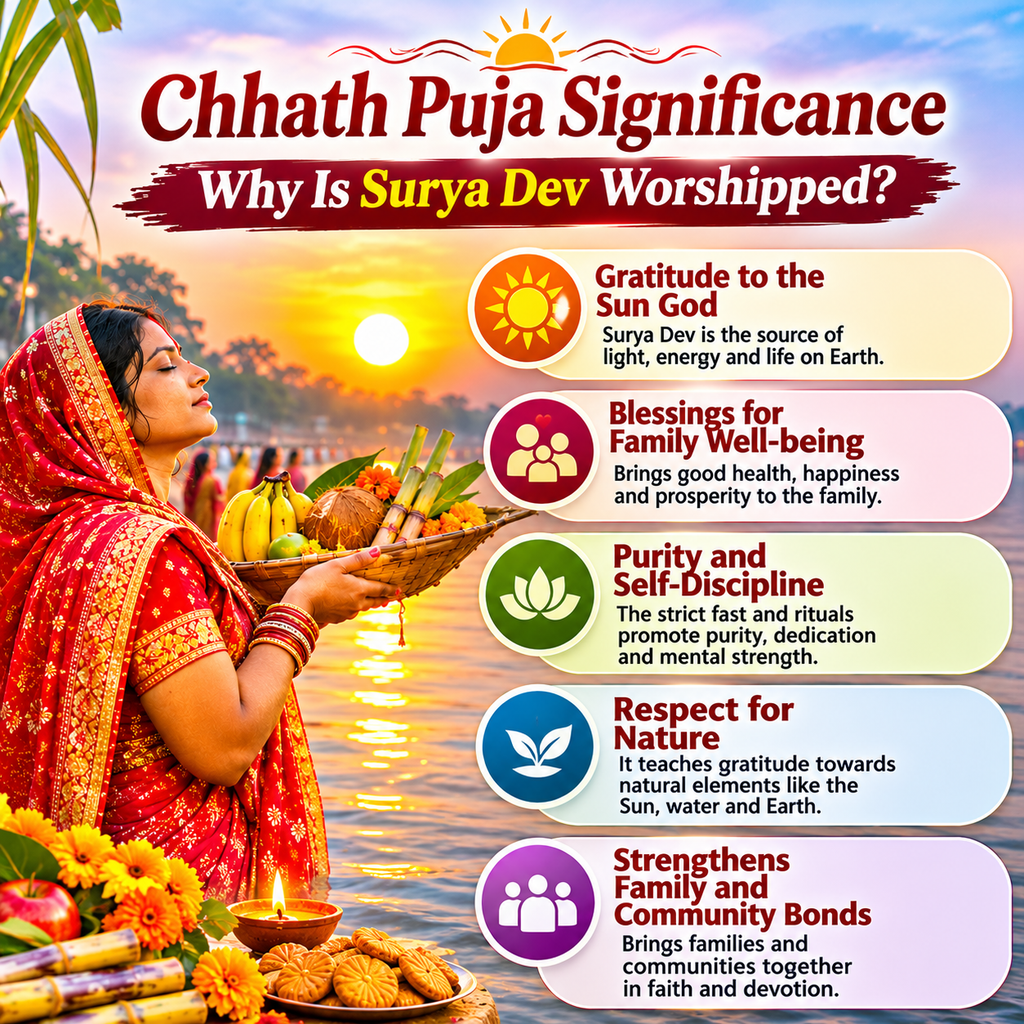
Chhath Puja holds extraordinary religious and cultural significance in Hindu traditions. It is dedicated to Surya Dev, the Sun God, who is considered the source of energy, light, life, and vitality.
The festival also honors Chhathi Maiya, who is worshipped for the protection, happiness, and well-being of children and families.
- Expressing Gratitude to the Sun God
The Sun is essential for life on Earth. Through Chhath Puja, devotees express gratitude to Surya Dev for providing light, energy, and nourishment to all living beings.
- Praying for Family Happiness and Prosperity
Many devotees observe Chhath Puja to seek blessings for their children, family members, and loved ones. It is believed to bring happiness, peace, and prosperity into the household.
- Promoting Purity and Self-Discipline
The strict fasting rules, cleanliness, and traditional practices encourage self-discipline and devotion. The festival inspires devotees to lead a more mindful and spiritually focused life.
- Celebrating Nature and Environmental Awareness
Chhath Puja emphasizes the importance of natural elements, including the Sun, water, and earth. The traditional rituals encourage gratitude toward nature and remind people of the need to protect rivers and water bodies.
- Strengthening Family and Community Bonds
Chhath Puja is a festival of togetherness. Families prepare prasad, clean homes, visit ghats, and participate in rituals collectively.
The festival creates a powerful sense of unity, cultural pride, and shared devotion.
Chhath Puja Fasting Rules: Important Things to Know
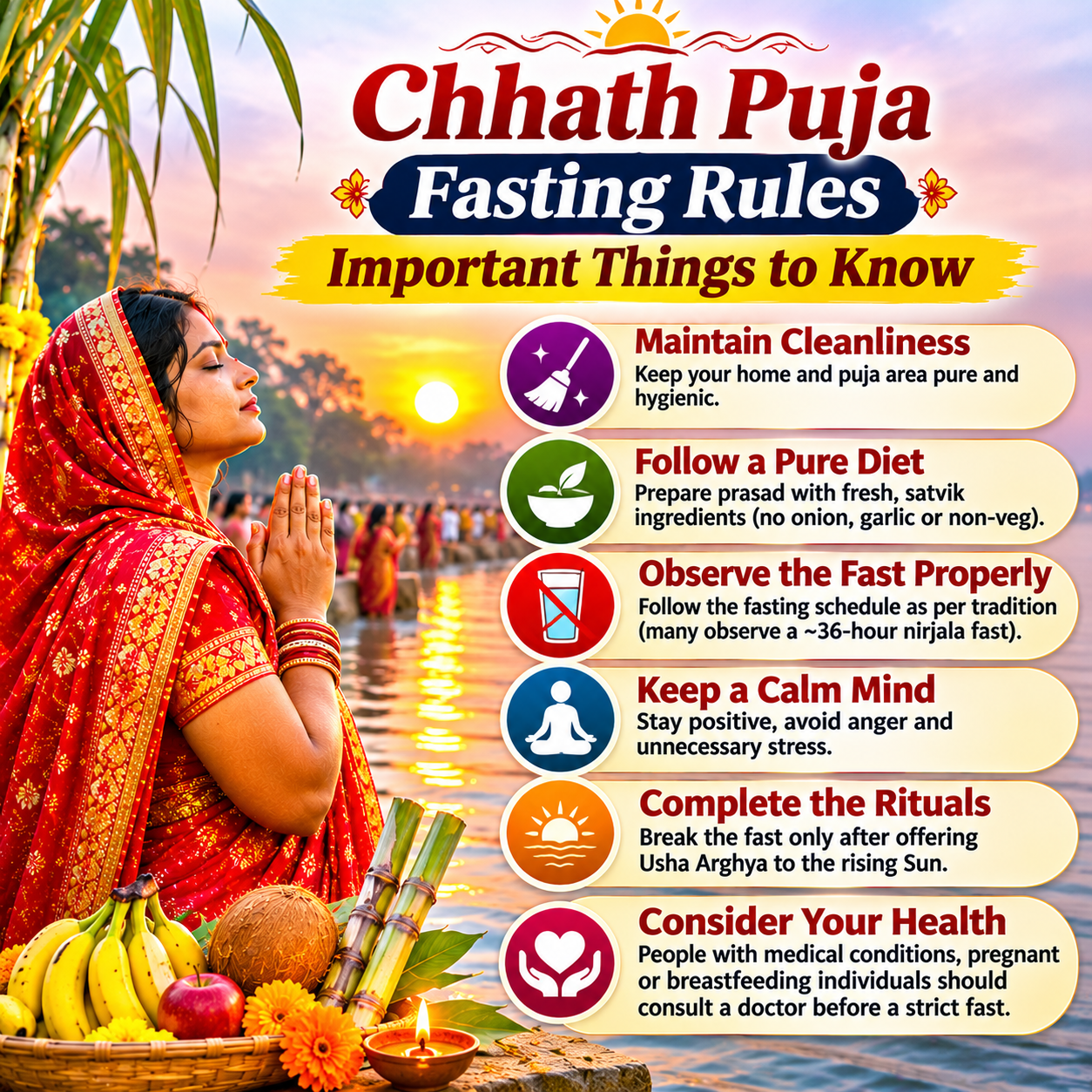
Chhath Puja fasting rules are traditionally strict and require considerable dedication. Devotees should understand the customs before observing the vrat.
Some common Chhath Puja fasting rules include:
- Maintain cleanliness in the home and puja area.
- Prepare prasad using pure and traditional ingredients.
- Avoid non-vegetarian food during the observance.
- Follow the prescribed fasting schedule according to family tradition.
- Avoid consuming food or water during the nirjala fast if following that particular observance.
- Maintain a peaceful mindset and avoid anger, negativity, and unnecessary conflicts.
- Complete the fast only after performing the Usha Arghya ritual.
Important health note: A prolonged waterless fast may be unsafe for some people, including those with medical conditions, pregnant or breastfeeding individuals, and people taking certain medications. Consult a healthcare professional before undertaking a strict fast. Devotion can also be expressed through adapted rituals according to one’s health and family tradition.
Chhath Puja Samagri List 2026
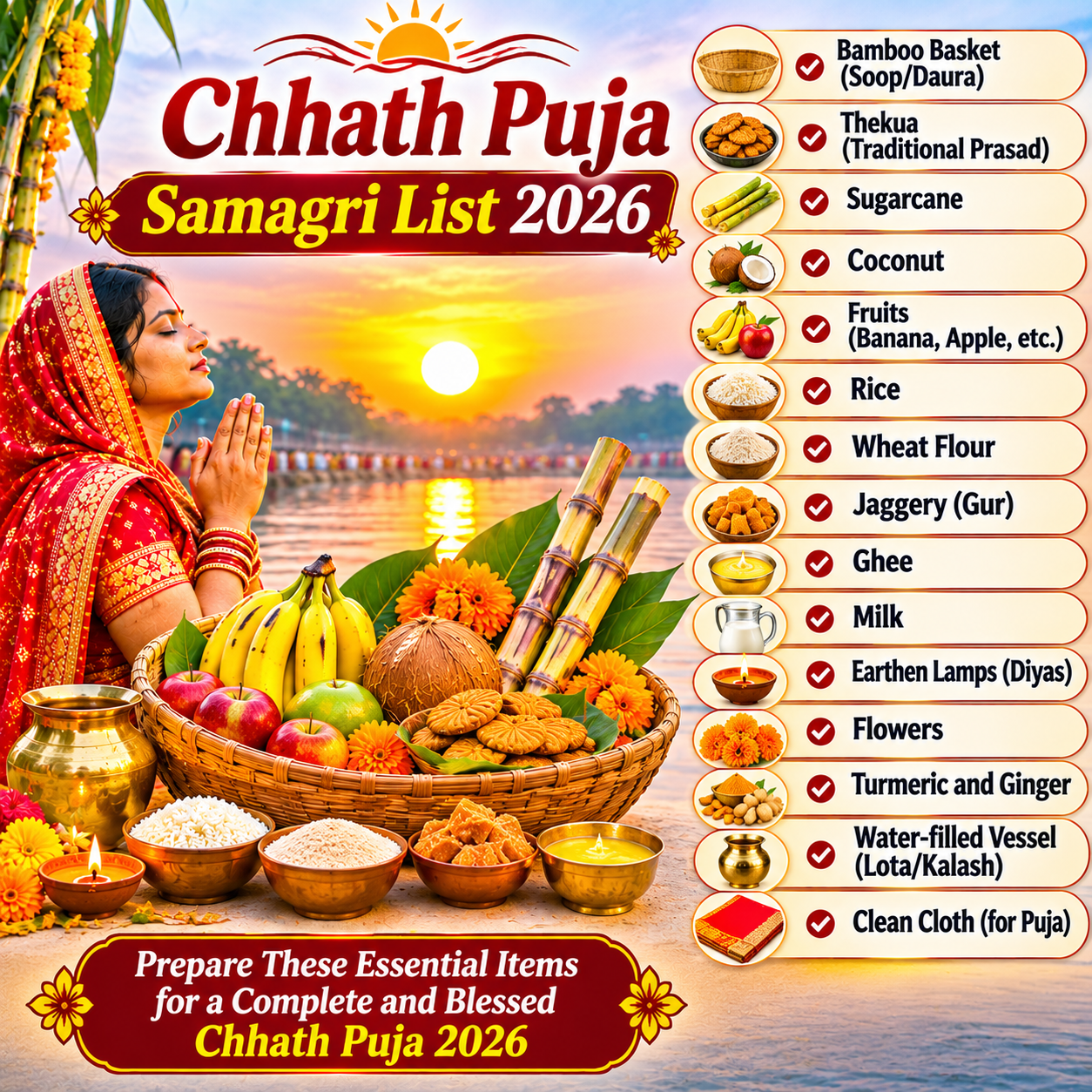
Preparing the required puja samagri in advance helps devotees perform the rituals smoothly.
The commonly used Chhath Puja samagri includes:
- Bamboo basket (soop or daura)
- Thekua and traditional homemade prasad
- Sugarcane
- Coconut
- Bananas and seasonal fruits
- Rice and wheat flour
- Jaggery
- Ghee
- Milk
- Earthen lamps (diyas)
- Flowers
- Turmeric and ginger
- Water-filled vessel
- Clean cloth for the puja
- Fruits and other traditional offerings
The exact items may vary according to regional customs and family traditions.
Chhath Puja Celebration: A Beautiful Festival of Faith and Devotion
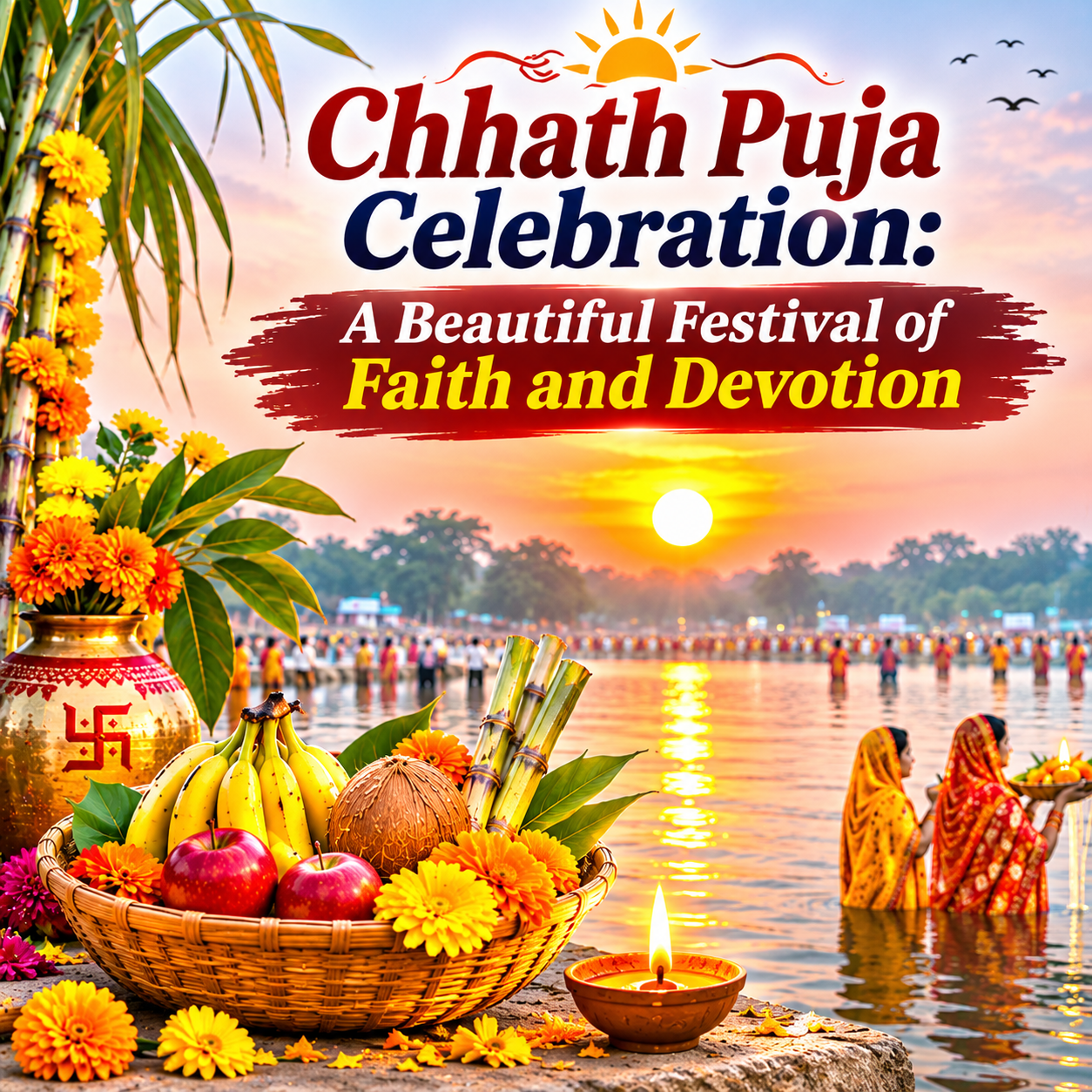
Chhath Puja is much more than a religious celebration. It is a magnificent expression of faith, love, sacrifice, and gratitude.
In Bihar, Jharkhand, eastern Uttar Pradesh, and many other regions, the festival transforms riverbanks and ghats into vibrant centers of devotion. Traditional Chhath songs fill the atmosphere, homes are decorated, and families come together to prepare sacred offerings.
The devotion of the vratis, the peaceful prayers offered to the setting Sun, and the magical beauty of the sunrise make Chhath Puja an unforgettable spiritual experience.
Even people living away from their hometowns return to celebrate this sacred festival with their families. For many, Chhath Puja is deeply connected to childhood memories, cultural identity, and the unconditional love of family.
The festival beautifully teaches us to remain grateful, stay disciplined, respect nature, and believe in the power of faith.
Conclusion
Chhath Puja 2026 will be celebrated from November 13 to November 16, bringing four days of sacred rituals, heartfelt prayers, and joyful devotion.
Starting with Nahay Khay on November 13, followed by Kharna on November 14, Sandhya Arghya on November 15, and Usha Arghya on November 16, the festival offers a meaningful opportunity to express gratitude to Surya Dev and seek blessings from Chhathi Maiya.
The remarkable traditions of Chhath Puja remind us that true devotion comes from purity, discipline, gratitude, and love for our families.
May Chhathi Maiya and Surya Dev bless everyone with happiness, good health, peace, prosperity, and a bright future. Jai Chhathi Maiya!
Frequently Asked Questions (FAQs) About Chhath Puja 2026
- When is Chhath Puja 2026?
Chhath Puja 2026 will be celebrated from November 13 to November 16. The main Chhath Puja and Sandhya Arghya will take place on Sunday, November 15. - What is the date of Nahay Khay in 2026?
Nahay Khay will be observed on Friday, November 13, 2026. It marks the first day of the four-day Chhath festival. - When is Kharna in Chhath Puja 2026?
Kharna will be celebrated on Saturday, November 14, 2026. Devotees observe a day-long fast and consume traditional prasad after evening prayers. - What is the date of Sandhya Arghya in 2026?
Sandhya Arghya will be performed on Sunday, November 15, 2026. Devotees offer prayers and Arghya to the setting Sun. - When is Usha Arghya in Chhath Puja 2026?
Usha Arghya will take place on Monday, November 16, 2026. Devotees offer prayers to the rising Sun before completing their fast. - Why is Chhath Puja celebrated?
Chhath Puja is celebrated to worship Surya Dev and Chhathi Maiya. Devotees seek blessings for good health, prosperity, family happiness, and the well-being of their children. - What is the traditional food prepared on Nahay Khay?
The traditional Nahay Khay meal usually includes kaddu or lauki ki sabzi, chana dal, arwa rice, and ghee. The meal is prepared following satvik traditions. - How long is the Chhath Puja fast?
Many devotees observe an approximately 36-hour nirjala fast after Kharna. The fast is completed after offering Usha Arghya on the fourth day. Fasting practices may vary according to tradition and individual health. - Which prasad is famous during Chhath Puja?
Thekua is one of the most famous prasad items of Chhath Puja. Other traditional offerings include jaggery kheer, bananas, coconuts, sugarcane, and seasonal fruits. - What is the significance of offering Arghya to the rising and setting Sun?
Offering Arghya to the setting and rising Sun symbolizes gratitude, devotion, hope, renewal, and respect for nature. It is a central ritual of Chhath Puja and reflects the importance of the Sun in sustaining life.


