

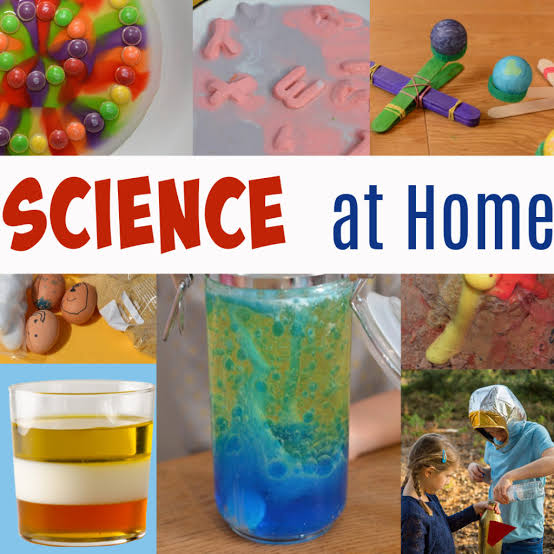
You do not need a laboratory, a white coat or expensive equipment to see science in action. Your kitchen already holds most of what you need: oil, vinegar, salt, milk, a few eggs and some food colouring. With these, you can make a lava lamp, an erupting volcano and a colour explosion in a bowl of milk.
This guide shares seven amazing science experiments you can do at home, each with a simple materials list, clear steps and a short explanation of why it works. They are low-risk, budget-friendly and suitable for students, parents and anyone curious. Pick one, gather your items and get ready to observe.
Table of Contents
Why Science Experiments at Home Are Worth Your Time
Reading about science is useful, but doing it makes the idea stick.
Learning by Doing
When you watch an egg float in salt water, the word “density” stops being a definition in a textbook. It becomes something you saw with your own eyes. That is why teachers recommend science experiments as a way to build understanding and memory.
No Lab Needed
Most home science experiments rely on safe, common items. This keeps costs low and lets you repeat the activity whenever you like, with small changes, to see what happens.
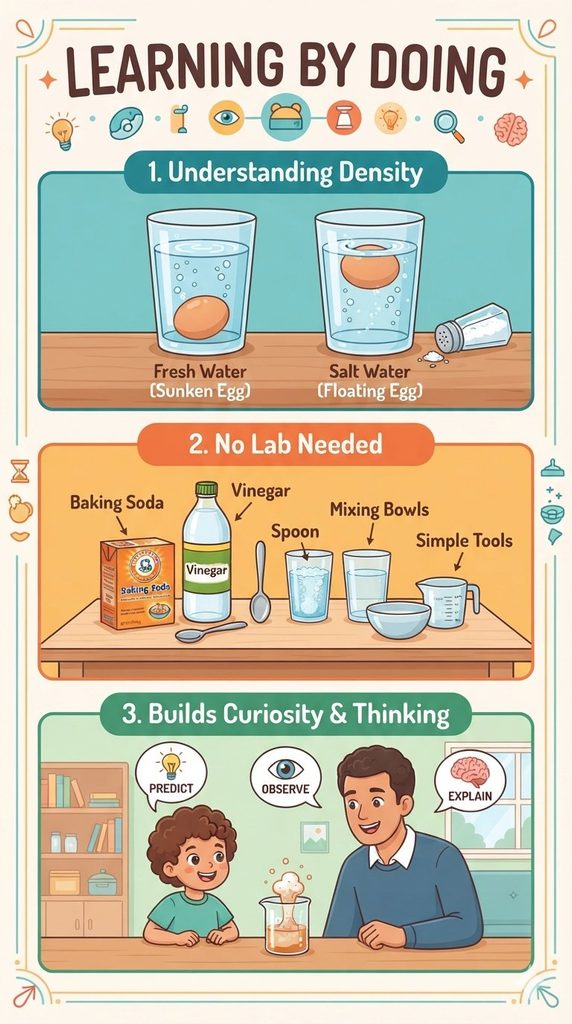
Builds Curiosity and Thinking Skills
Good experiments make you ask “why” and “what if”. Predicting, observing and explaining are the same habits real scientists use, and children and adults can both practise them.
Safety Rules Before You Start Any Science Experiments
Safe science experiments are fun science experiments. Follow these rules every time.
Always Have an Adult Around for Children
Children should do these activities with an adult present, especially where heat, glass or sharp tools are involved.
Use Safe Materials Only
Stick to the materials listed. Do not mix random household chemicals, because some combinations release harmful gases. Never taste or drink anything made during an experiment.
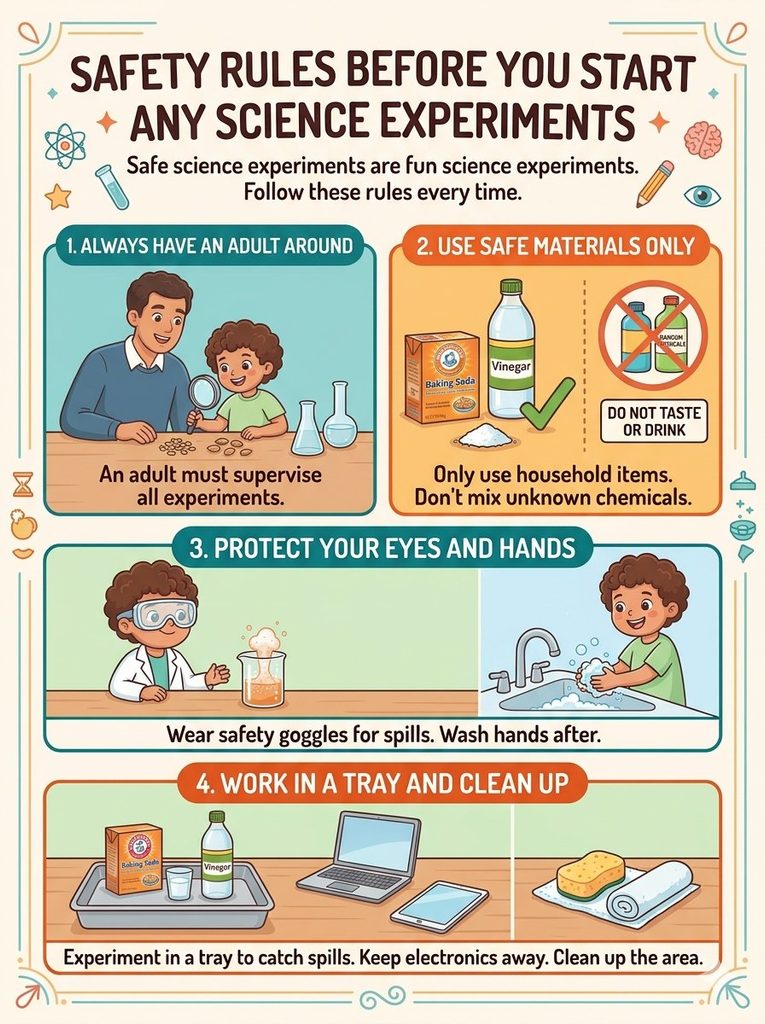
Protect Your Eyes and Hands
Wear simple safety glasses for anything that fizzes, splashes or erupts, and wash your hands after you finish.
Work in a Tray and Clean Up
Use a baking tray or plastic tub to catch spills, keep experiments away from electronics and clean the area when you are done.
Basic Kit for Home Science Experiments
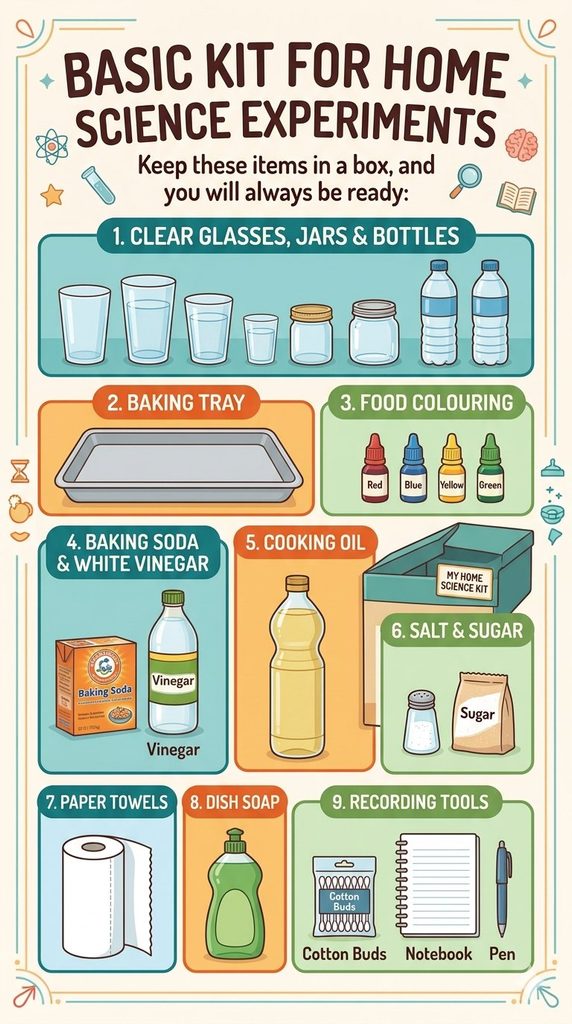
Keep these items in a box, and you will always be ready:
- Clear glasses, jars and bottles
- A baking tray
- Food colouring
- Baking soda and white vinegar
- Cooking oil
- Salt and sugar
- Paper towels
- Dish soap
- Cotton buds, a notebook and a pen
7 Amazing Science Experiments You Can Do at Home
1. Lava Lamp in a Bottle
What you need: a clear bottle or jar, water, cooking oil, food colouring and a spoonful of salt.
Steps:
- Fill the bottle about one-third with water and the rest with oil, and watch the layers separate.
- Add a few drops of food colouring and watch them sink through the oil.
- Sprinkle a little salt on top of the oil, a small amount at a time.
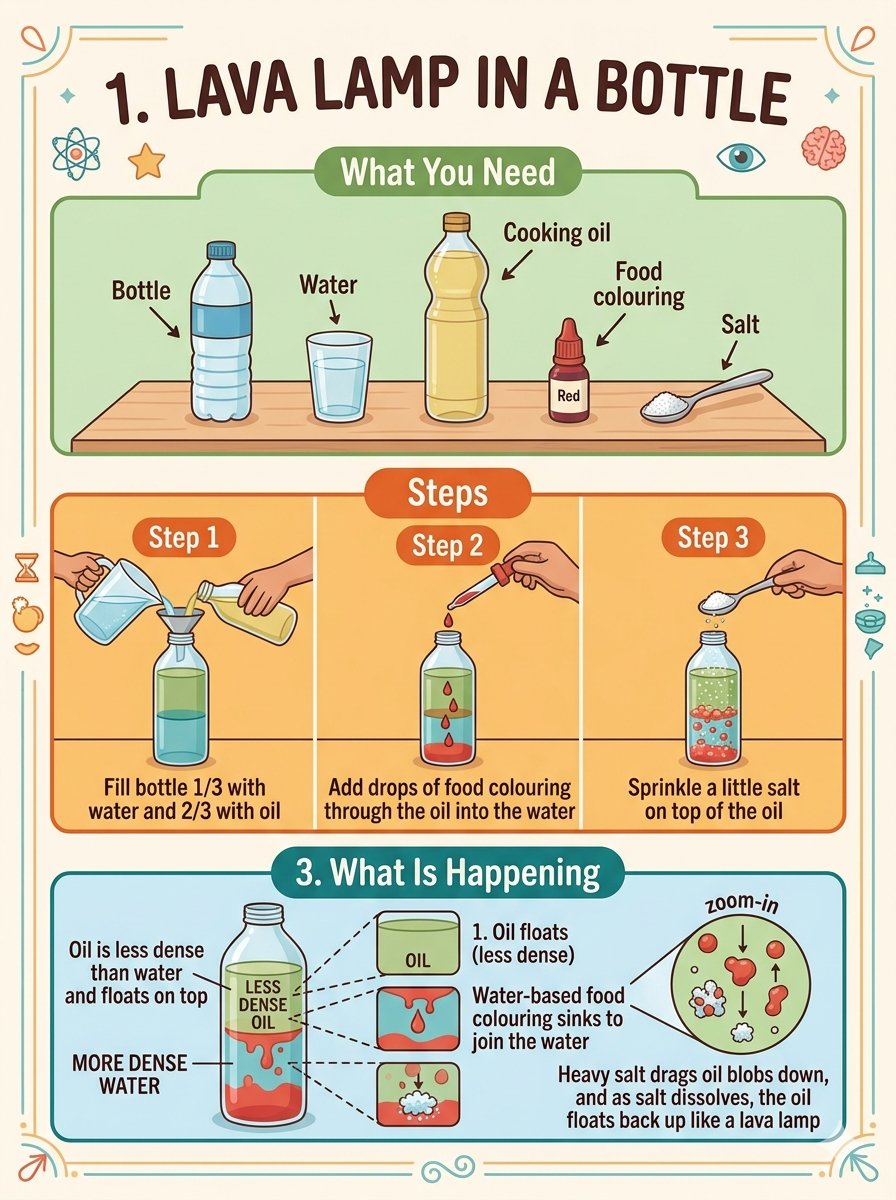
What is happening: Oil is less dense than water, so it floats on top and the two do not mix. The food colouring is water-based, so it sinks through the oil and joins the water. Salt grains are heavier than oil, so they drag blobs of oil downwards. When the salt dissolves, the oil blobs are released and rise again, creating a lava lamp effect.
2. Baking Soda and Vinegar Volcano
What you need: baking soda, white vinegar, a small cup, a tray, a few drops of dish soap and food colouring.
Steps:
- Place the cup in the middle of a tray.
- Add two spoonfuls of baking soda, a drop of dish soap and some colouring.
- Pour in vinegar and step back.
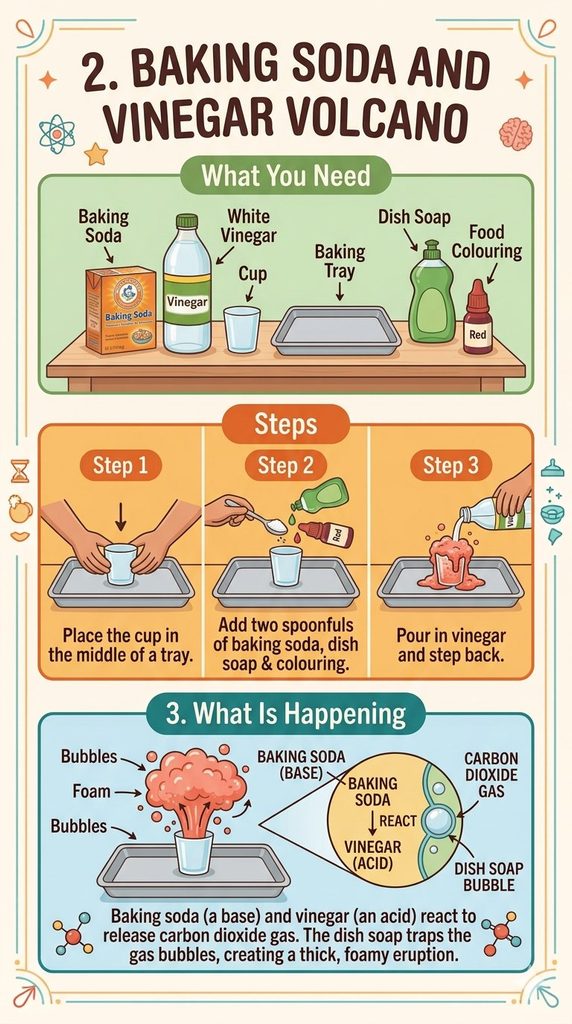
What is happening: Baking soda is a base, and vinegar contains acetic acid. When they meet, they react and produce carbon dioxide gas, which makes the fizzy foam. The dish soap traps the gas in bubbles, so the eruption looks thicker. Do this in an open container, never inside a tightly closed bottle.
3. Walking Water Rainbow
What you need: six clear glasses, water, red, yellow and blue food colouring, and paper towels.
Steps:
- Place the glasses in a row and fill the first, third and fifth with water.
- Add red, yellow and blue colour to those glasses, and leave the others empty.
- Fold paper towels into strips and place each strip with one end in one glass and the other end in the next.
- Wait patiently, because the water will begin to travel over a few hours.
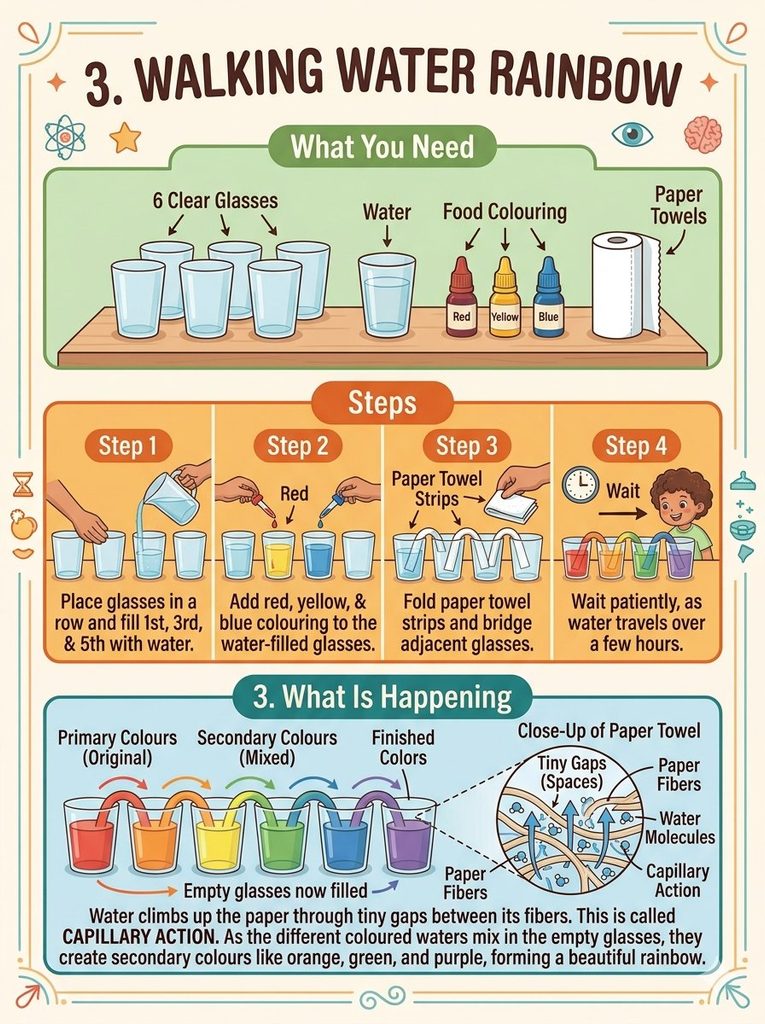
What is happening: Water climbs up the paper through tiny gaps between its fibres, a process called capillary action. As the colours meet in the empty glasses, they mix to create new colours, such as orange, green and purple.
4. Milk Colour Burst
What you need: a shallow plate, full-fat milk, food colouring, dish soap and a cotton bud.
Steps:
- Pour milk onto the plate so it covers the bottom.
- Add a few drops of different colours near the centre.
- Dip a cotton bud in dish soap and touch it to the milk.
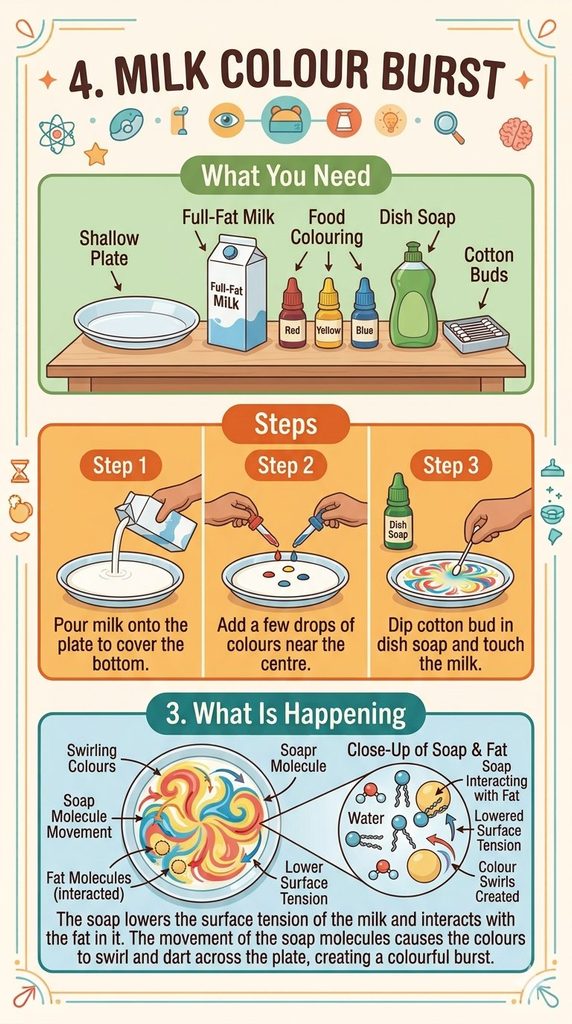
What is happening: The soap lowers the surface tension of the milk and interacts with the fat in it. The movement of the soap molecules causes the colours to swirl and dart across the plate. This is one of the most colourful science experiments for children.
5. Dancing Raisins
What you need: a tall clear glass, fresh fizzy water or a clear carbonated drink, and a few raisins.
Steps:
- Pour the fizzy drink into the glass.
- Drop in a few raisins and watch carefully.
- Observe how the raisins sink, rise and sink again.
What is happening: Bubbles of carbon dioxide cling to the rough surface of each raisin. The bubbles make the raisin lighter on the whole, so it floats up. When it reaches the top, the bubbles pop, the raisin becomes heavy again and sinks. The cycle continues until the fizz fades.
6. Lemon Juice Invisible Ink
What you need: lemon juice, a cotton bud, plain white paper and an adult for the heating step.
Steps:
- Dip the cotton bud in lemon juice and write a message on the paper.
- Let the paper dry completely, and the writing will disappear.
- An adult can warm the paper gently with an iron on a low setting to reveal the message. Children should not handle the iron.
What is happening: Lemon juice contains substances that weaken the paper and turn brown at a lower temperature than the paper itself. When gently warmed, the writing browns first and becomes visible.
7. Floating Egg in Salt Water
What you need: two tall glasses, water, salt, a spoon and two eggs.
Steps:
- Fill one glass with plain water and place an egg in it. It will sink.
- Fill the second glass with warm water and stir in plenty of salt, one spoonful at a time, until no more dissolves. Let it cool.
- Gently place an egg in the salty water and watch it float.
What is happening: Salt dissolved in water increases its density. When the salt water becomes denser than the egg, the egg floats. This is the same reason people float more easily in very salty seas. Wash your hands after handling raw eggs.
How to Make Your Science Experiments More Meaningful
Following the steps is only half the fun. Thinking like a scientist makes the learning deeper.
Make a Prediction First
Before starting, ask yourself what you think will happen and why. Write it down. A wrong guess is not a failure, because it shows you something new.
Change One Thing at a Time
Try a different amount of salt, or a different type of oil, but change only one thing per attempt. This keeps the results easy to understand.
Keep a Simple Science Journal
Write the date, materials, steps and what you observed. Sketches help too. Over time, your journal becomes a record of your own discoveries.
Explain It to Someone Else
Teaching a friend or family member is one of the best ways to check your own understanding of science experiments.
5 Costly Mistakes to Avoid in Home Science Experiments
1. Skipping the Safety Rules
Eye protection, supervision and a tray take seconds but prevent accidents.
2. Sealing Gas-Producing Mixtures
Never close a bottle or container tightly when a reaction produces gas, such as baking soda and vinegar. Pressure can build and burst it.
3. Mixing Unknown Household Chemicals
Never combine cleaning products or unknown chemicals. Some combinations create toxic fumes. Stay with the materials listed in trusted guides.
4. Rushing the Observation
Some experiments, like walking water, need time. Patience is part of science.
5. Forgetting to Record Results
Without notes, you will forget details and miss patterns. Keep your journal handy.
Where to Find More Science Experiments
If you want more ideas, these trusted resources offer free activities. Science Buddies has a large library of projects sorted by topic and difficulty. The Exploratorium shares hands-on activities from its science museum. The Royal Society of Chemistry education site provides classroom-tested chemistry activities and safety guidance.
You can also read more simple explainers in our related article on ADD ARTICLE TITLE HERE, or explore other topics in our science category.
Frequently Asked Questions (FAQs) About Science Experiments
What are science experiments?
Science experiments are organised activities where you test an idea, observe what happens and draw conclusions based on evidence.
Which science experiments are safe to do at home?
Experiments using common, non-toxic items such as water, oil, salt, baking soda, vinegar and food colouring are generally safe when done with proper care and supervision for children.
What are some easy science experiments for kids?
The milk colour burst, dancing raisins, walking water and floating egg are easy science experiments that children can follow with help from an adult.
Why do science experiments need safety rules?
Even simple materials can cause problems, such as eye irritation or spills. Safety rules protect people and make sure the experience stays enjoyable.
Can I do science experiments without a lab?
Yes. Most basic science experiments need only kitchen items and a flat, safe surface such as a tray.
Why does the baking soda and vinegar volcano erupt?
Baking soda and vinegar react to form carbon dioxide gas. The gas creates bubbles that push foam out of the container.
What is density, as shown in the lava lamp and egg experiments?
Density tells you how much mass is packed into a given space. Oil is less dense than water, so it floats, and a salty solution is denser than plain water, so it makes an egg float.
How do I turn a simple activity into a proper experiment?
Make a prediction, change only one variable at a time, record your observations and compare the results with your prediction.
How can parents make science experiments educational?
Ask questions such as “what do you think will happen?” and “why do you think that happened?” Let the child explain, and connect the activity to the real world.
How often should students do science experiments?
Even one experiment a week can build curiosity and understanding. Regular, short activities work better than occasional long ones.
Conclusion
The best science experiments do more than entertain. They turn everyday objects into lessons about density, gases, surface tension and capillary action. Start with one of the seven activities above, observe carefully, ask questions and write down what you find. With safe materials and a curious mind, your kitchen can become the most interesting science classroom you have ever visited.


