

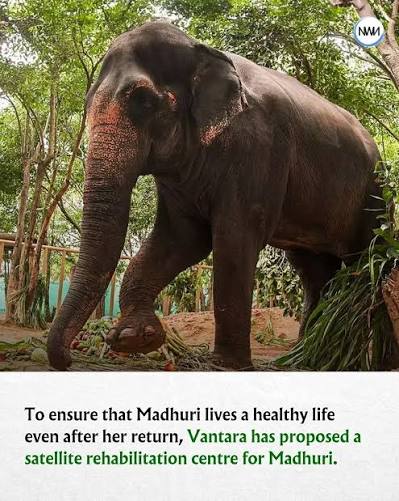
For over a year, the fate of a single 36-year-old elephant named Madhuri — also known as Mahadevi — became one of the most emotionally charged animal welfare stories in India, pulling in the Supreme Court, Maharashtra’s Chief Minister, tens of thousands of protesters, and one of the country’s most powerful business families. At the center of it all sat Vantara, the sprawling wildlife rescue centre founded by Anant Ambani, which found itself simultaneously praised as a lifesaving sanctuary and accused of overstepping its role. On September 9, 2026, the story reached a turning point, when a Supreme Court-appointed committee ruled that Madhuri could finally return home.
Table of Contents
- Who Is Madhuri, and Why Does Her Story Matter?
- What Led to Her Removal From Kolhapur
- Enter Vantara: What Is It, Exactly?
- The Protests That Followed
- Vantara’s Response to the Backlash
- The September 2026 Ruling
- The Conditions Attached to Her Return
- Vantara’s Broader Controversies
- The Supreme Court’s Clearance of Vantara
- Why This Case Became So Significant
- What Happens Next
- Conclusion
- FAQs
Who Is Madhuri, and Why Does Her Story Matter?
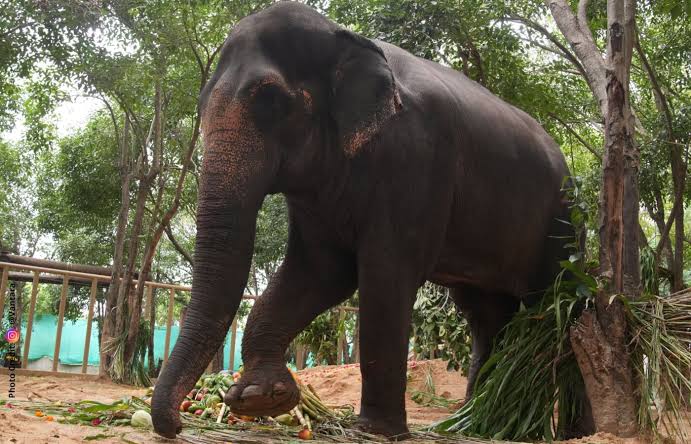
Madhuri, also widely known by her original name Mahadevi, spent more than three decades living at the Swastishree Jinsen Bhattarak Pattacharya Mahaswami Sansthan Math, a Jain monastery in Nandani village, in Maharashtra’s Kolhapur district. Over those thirty-plus years, she became something close to a local icon — deeply woven into the religious and cultural life of the community that had cared for her.
In 2017, a tragic incident altered the course of her life. Madhuri fatally injured the monastery’s chief priest, reportedly after repeatedly slamming him against a wall in what officials later described as an act of frustration. The incident triggered renewed scrutiny of her living conditions and eventually led to formal welfare complaints.
What Led to Her Removal From Kolhapur
Animal rights organization PETA India filed a complaint in October 2023 with the Supreme Court-appointed High-Powered Committee (HPC), backed by veterinary reports and photographic evidence. The complaint alleged that Madhuri had suffered years of neglect and psychological trauma, and that she had been used unlawfully for commercial and religious purposes — including being paraded in processions, deployed at public events, and, according to reports, made to lift children with her trunk, all practices considered unsafe and inappropriate for a captive elephant with her documented history.
Following an investigation, the HPC ordered Madhuri’s transfer out of the monastery for proper rehabilitation. In line with that order, in late July 2025, she was relocated to Vantara‘s Radhe Krishna Temple Elephant Welfare Trust (RKTEWT) facility in Jamnagar, Gujarat — a decision the Supreme Court and Bombay High Court both upheld.
Enter Vantara: What Is It, Exactly?
Vantara, meaning “Star of the Forest” in Sanskrit, is a large-scale wildlife rescue, care, and rehabilitation centre located in Motikhavdi, near Jamnagar in Gujarat. It was founded by Anant Ambani, son of Reliance Industries chairman Mukesh Ambani, and operates under the Reliance Foundation. Spanning approximately 3,500 acres, Vantara was formally inaugurated by Prime Minister Narendra Modi on March 3, 2025, to mark World Wildlife Day, and it has since been described as one of the largest privately funded wildlife rehabilitation projects in the world, housing well over 2,000 species.
Crucially, in the Madhuri case, Vantara has consistently maintained that it did not request or initiate her transfer. According to the organization, it acted purely as the “court-appointed recipient facility,” receiving her strictly in compliance with the HPC’s directions, rather than actively seeking custody of the elephant.
The Protests That Followed
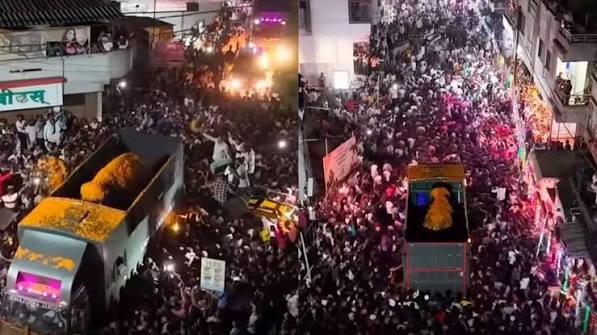
Madhuri’s relocation to Gujarat sparked immediate and significant public backlash in Maharashtra. Within days, nearly 30,000 people joined a mass silent march in Kolhapur demanding her return, reflecting just how deeply her presence had been tied to local religious and cultural identity over her decades at the monastery. The controversy quickly escalated beyond a local animal welfare dispute into a broader political and emotional flashpoint, drawing public commentary from prominent figures and extensive social media attention.
Maharashtra Chief Minister Devendra Fadnavis publicly weighed in, assuring residents that the state government would make every effort to bring Madhuri back to Kolhapur, and formally initiated discussions toward that goal shortly after the protests began.
Vantara’s Response to the Backlash
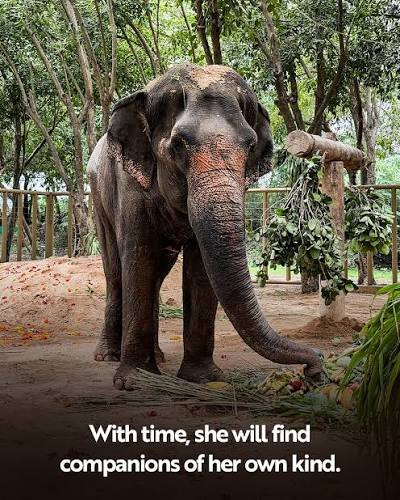
Facing mounting pressure, Vantara sought to strike a conciliatory tone rather than dig in. On August 6, 2025, the organization stated that it understood and respected the strong sentiments surrounding Madhuri in Kolhapur, following discussions with the Maharashtra government, its officials, and community stakeholders. Vantara also proposed working directly with the Jain monastery and the state government to establish a satellite rehabilitation centre for Madhuri within the Nandani area itself, rather than keeping her permanently in Gujarat.
Ultimately, the matter was directed back to the courts, with the Supreme Court instructing all parties to formally present their case before the High-Powered Committee for a final determination.
The September 2026 Ruling
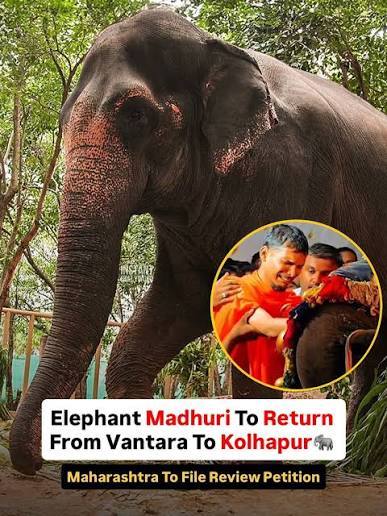
After hearing from all parties, reviewing veterinary and welfare reports, and personally inspecting the newly upgraded facility at Nandani, the HPC issued its reasoned decision on September 9, 2026: Madhuri would be permitted to return to Kolhapur. Vantara publicly stated that it respects the authority of the HPC and would comply fully with its directions, while also noting that it had already worked on improving the enclosure and facility at Nandani in anticipation of her return.
The Conditions Attached to Her Return
Madhuri’s homecoming was not unconditional. The HPC’s order set out strict, ongoing requirements designed to prevent a repeat of the welfare concerns that led to her removal in the first place:
- She cannot be used for religious processions or any other public event or purpose.
- She must receive round-the-clock dedicated care.
- She must undergo a formal medical examination every fortnight.
Vantara has stated it will remain available to assist the Jain Math with further facility upgrades if directed to do so by the courts or other competent authorities going forward, framing its continued involvement as an extension of care rather than a completed handoff.
Vantara’s Broader Controversies
The Madhuri case unfolded against the backdrop of separate, larger controversies swirling around Vantara itself. In March 2026, German newspaper Süddeutsche Zeitung, working with Venezuelan investigative outlet Armando Info, published a report alleging that many of the animals housed at Vantara may have actually been wild-caught individuals removed from their native habitats by traders, rather than genuinely “rescued” animals. The report cited data suggesting that at least 39,000 wild animals had been delivered to the facility by the end of December 2024, sourced from roughly 32 countries.
Vantara firmly rejected the report’s characterization, calling the allegations “baseless.” Critics have also separately questioned the facility’s location, situated near one of the world’s largest oil refineries, and raised concerns about elephants specifically being kept on flat, dry terrain without any pathway toward eventual reintroduction into the wild.
The Supreme Court’s Clearance of Vantara
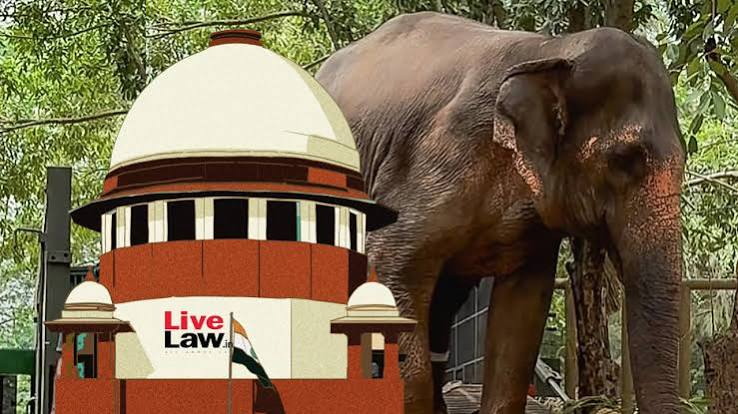
Despite the international scrutiny, Vantara’s legal standing on the wildlife-sourcing allegations was notably strengthened earlier in 2026. In March, the Supreme Court rejected a public interest petition that had accused Vantara’s animal welfare trusts of violating international wildlife trade rules, ruling that the claims closely mirrored an earlier case that had already been examined and cleared through a court-appointed investigation.
This legal clearance is an important piece of context for the Madhuri case specifically — while Vantara has faced significant public skepticism over its broader acquisition practices, the courts that ultimately decided Madhuri’s fate had already reviewed and dismissed the most serious allegations against the organization’s legitimacy as a rehabilitation facility.
Why This Case Became So Significant
Madhuri’s story resonated so strongly in India for reasons that go well beyond animal welfare policy alone. It touched on religious sentiment, given her three-decade presence at a Jain monastery; regional pride, given Kolhapur’s deep emotional attachment to her; and a broader, increasingly visible tension between traditional community-based animal care and the growing footprint of large-scale, corporate-backed conservation projects like Vantara.
The case also placed Vantara in an unusually difficult position — an organization built around a public mission of rescue and rehabilitation, suddenly cast by many in Kolhapur as having effectively “taken” a beloved community elephant, despite Vantara’s insistence that it was acting solely under court direction rather than by choice.
What Happens Next
With the HPC’s ruling now in place, the immediate focus shifts to Madhuri’s actual transition back to Nandani and ongoing compliance with the conditions attached to her return. Vantara has signaled it intends to stay involved in supporting her care and the facility’s upkeep, suggesting the relationship between Vantara, the Jain Math, and Maharashtra authorities is likely to continue in some form even after her physical return, rather than concluding entirely with the ruling itself.
Conclusion
Madhuri’s journey — from a Jain monastery in Kolhapur, to Vantara’s rehabilitation facility in Gujarat, and now back home under strict new welfare conditions — became far more than a routine animal relocation story. It surfaced genuine questions about who gets to decide what’s best for an animal at the center of deep community and religious attachment, and it placed Vantara, already navigating international scrutiny over its wildlife acquisition practices, squarely in the middle of one of India’s most emotionally resonant animal welfare disputes in recent memory. With the September 2026 ruling now finalized, all eyes turn to whether this carefully conditioned homecoming can deliver the outcome everyone involved says they want: a safer, healthier life for Madhuri herself.
FAQs
1. What is Vantara?
Vantara is a large wildlife rescue, care, and rehabilitation centre in Jamnagar, Gujarat, founded by Anant Ambani and operated under the Reliance Foundation. It spans roughly 3,500 acres and houses over 2,000 species.
2. Why was the elephant Madhuri sent to Vantara?
Madhuri, also known as Mahadevi, was relocated to Vantara in 2025 following a Supreme Court-upheld order from a High-Powered Committee, after welfare complaints alleged she had suffered neglect and unlawful commercial use at the Jain monastery where she had lived for over three decades.
3. Is Madhuri returning to Kolhapur?
Yes. On September 9, 2026, the High-Powered Committee ruled that Madhuri could return to the Nandani facility in Kolhapur, subject to strict conditions including a ban on processions, round-the-clock care, and fortnightly medical checkups.
4. Did Vantara initiate Madhuri’s relocation?
No. Vantara has stated it did not request or initiate her transfer, and acted only as the court-appointed recipient facility in compliance with the HPC’s directions.
5. Has Vantara faced other controversies?
Yes. Vantara has faced international scrutiny over reports alleging some of its animals may have been wild-caught rather than genuinely rescued, though the Supreme Court rejected a related public interest petition against Vantara in March 2026, citing an earlier cleared investigation.


