

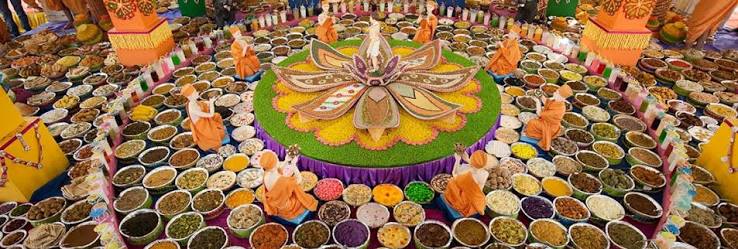
The morning after Diwali has a gentle, grateful mood. The lamps of the night before are still glowing in many homes, but the focus of the day shifts from lights to food, nature, and thanks. In temples and houses across India, tall mounds of rice, bowls of kadhi, and plates of sweets are arranged before the deity. This is Govardhan Puja, also called Annakut, one of the most colourful and delicious festivals of the Diwali season.
Govardhan Puja is a festival of gratitude for the earth, the cows, and the food that sustains every family. The word Annakut itself means a “mountain of food”, and the offerings made on this day are among the most varied of any Hindu festival.
Table of Contents
Govardhan Puja and Reason Behind of It’s Celebration?
Govardhan Puja is a festival of Hindu religion celebrated on the day after Deepawali, on the first day of the bright fortnight of the month of Kartik. It is the fourth day of the five-day Diwali festival. On this day, devotees worship Govardhan Hill, Lord Krishna, and the cows, and they offer large quantities of food as a sign of thanks.
The Meaning of Annakut
Annakut is made of two words: “anna”, which means food or grain, and “kut”, which means a heap or mountain. Families and temples prepare a large variety of dishes and arrange them in a heap before the deity. The heap represents the mountain of Govardhan itself, and it also represents the abundance that nature gives to people. For this reason, Govardhan Puja is often described as a festival that teaches respect for the environment and for everything that feeds us.
Date and Timing
Govardhan Puja falls on the day after Diwali, but the exact date and the best time for the puja depend on the lunar calendar and on your city. In some years, the tithi changes in the middle of the day, so the puja may be done in the morning or the evening. Always check a trusted local panchang to confirm the date and the muhurat for your place before planning your Govardhan Puja.
Why Govardhan Puja Matters Today
The message of Govardhan Puja is surprisingly modern. In an age of concern about the environment, the festival asks people to respect hills, soil, rivers, and animals instead of taking them for granted. It also teaches gratitude for food, which encourages families to avoid waste. For children, Govardhan Puja is a lovely way to learn that nature is not an object to be used but a partner to be honoured.
The Legend of Lord Krishna and Govardhan Hill
The most loved story behind Govardhan Puja comes from the Bhagavata Purana and is told in homes and temples every year.
Indra’s Pride
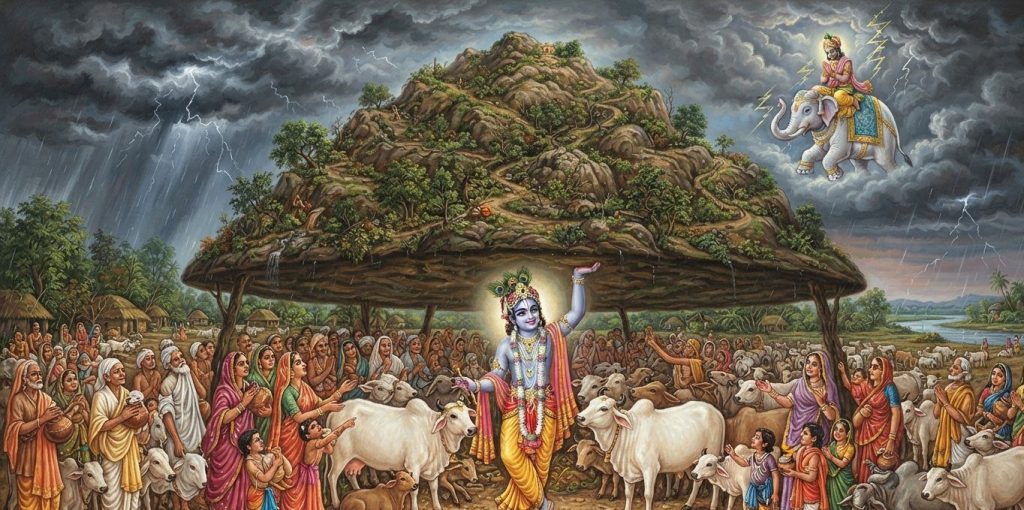
In the village of Vrindavan, the people used to hold a large yearly worship of Indra, the king of the gods and the lord of rain, so that he would send good rainfall for their crops and cattle. Young Krishna noticed that the people worked hard, but they offered everything to Indra. He explained that their real support came from the land, the grass, and Govardhan Hill, which gave pasture and shelter to their cows. He asked them to worship the hill and the cows instead of making an expensive offering to Indra.
The villagers listened to Krishna and prepared a great feast for Govardhan. Indra, hearing this, became angry because he felt his honour had been lowered.
Lifting the Hill
To punish the people, Indra sent terrible storms and endless rain over Vrindavan. The villagers and their animals were frightened. Krishna calmly lifted Govardhan Hill on the little finger of his left hand and held it like an umbrella. For seven days and nights, Krishna held the mountain, and the storm raged without harming anyone.
The Lesson
At last, Indra understood that his pride had been wrong. He stopped the rain, bowed before Krishna, and asked for forgiveness. The villagers came out and celebrated. Since then, the day has been remembered as Govardhan Puja.
Govardhan Puja Vidhi: Rituals Step by Step
The way Govardhan Puja is observed differs from home to home, but these are the most common steps.
Preparing the Govardhan Figure
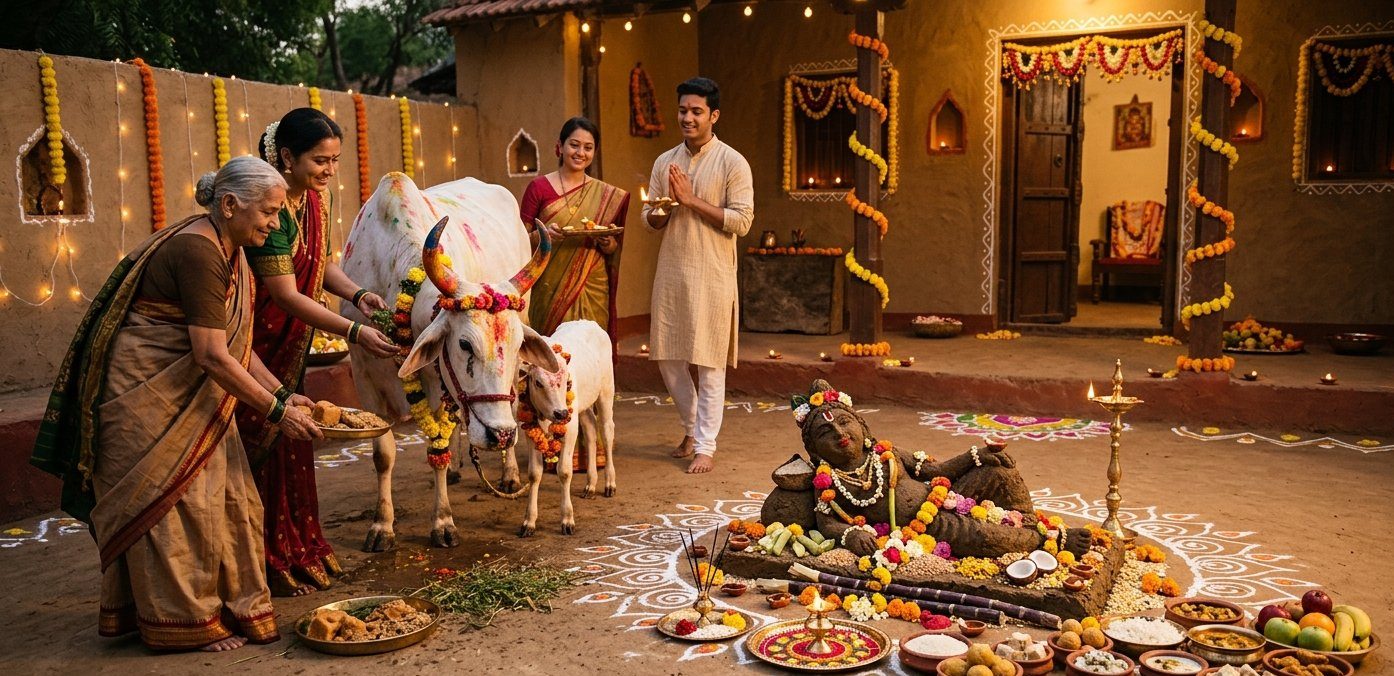
In many homes, especially in northern India, a small figure of Govardhan is made from fresh cow dung in the courtyard or at the entrance. It is usually shaped like a reclining human figure or a small mound. It is decorated with flowers, small clay lamps, and sometimes with pieces of sugarcane and grains. If you live in a flat or city home, you can use a small mound of clean clay, a picture of Govardhan Hill, or an idol of Krishna holding the mountain.
Setting Up the Puja and Offerings
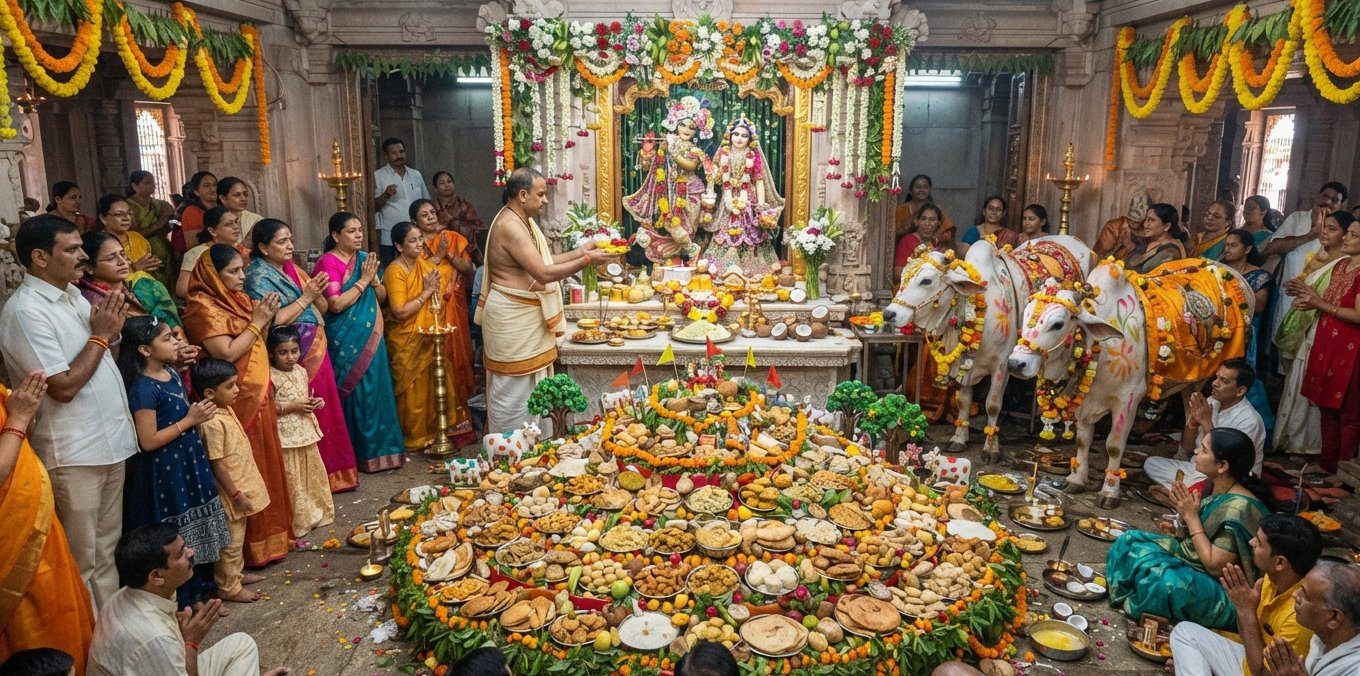
Clean the area, place the figure or picture on a clean cloth, and light a lamp and incense. Offer roli, rice, flowers, and a little water. Place the prepared dishes, sweets, and fruits in front of the deity. In temples, a very large range of dishes is displayed, but a home Govardhan Puja can be simple, with a few traditional dishes prepared with devotion.
Worship of Cows
Cows hold a special place in Govardhan Puja, because Krishna is closely tied to cow herding in Vrindavan. Where possible, families wash and decorate cows with flowers, colours, and garlands, and they offer them fresh fodder, jaggery, or sweets. This is often called Gau Puja. If you live in a city, you can offer food to a cow at a nearby shelter or support a cow welfare organisation.
Aarti and Parikrama
After offering the food, perform the aarti with a ghee lamp while singing a devotional song for Krishna. Many families walk around the Govardhan figure in a circle, called parikrama, while praying. Devotees who visit Govardhan in the Mathura district take a long walk around the hill itself, which is a famous pilgrimage.
Sharing the Prasad
Once the puja is complete, the food is shared as prasad among the family, neighbours, and visitors. Sharing food is an important part of the day, since Govardhan Puja is about abundance and gratitude, not just worship.
A Quick Home Method for Beginners
If you are new to the festival and want a simple version of Govardhan Puja, follow this short plan:
- Wake early, bathe, and clean the puja corner.
- Place a picture of Krishna lifting Govardhan Hill on a clean cloth.
- Light a lamp and offer flowers, rice, and roli.
- Place three to five homemade dishes before the picture.
- Perform a short aarti, then share the food as prasad.
This simple Govardhan Puja is complete in under an hour, and it keeps the spirit of the festival alive.
9 Delicious Dishes Offered on Govardhan Puja
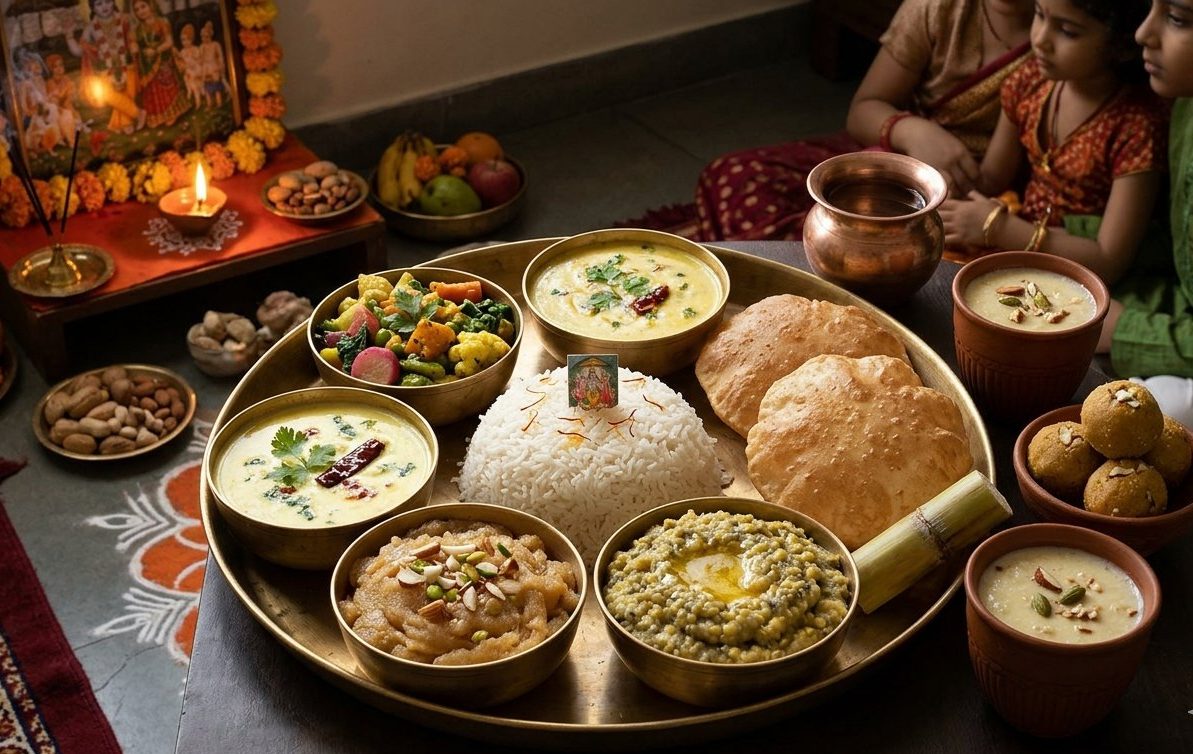
The offerings on Govardhan Puja are traditionally vegetarian and made without onion and garlic in most households. Menus differ by region, but these nine dishes are loved and commonly seen. Choose a few of them for your own Annakut.
1. Mixed Seasonal Vegetable Sabzi
A mixed vegetable curry is the heart of many Annakut offerings. Cooks combine seasonal vegetables such as radish, carrot, pumpkin, peas, cauliflower, and leafy greens, and cook them with mild spices. The mix represents the variety of the earth’s produce and the idea that every kind of food is worth offering.
2. Kadhi
Kadhi, a tangy dish of curd and gram flour, is a favourite across northern India. It is usually served with rice and is believed to be very pleasing as an offering. The soft, slightly sour taste goes well with sweet dishes in the meal.
3. Steamed Rice
A big heap of plain, fluffy rice is often placed at the centre of the offering to look like a mountain, which is the very idea of Annakut. Many temples arrange a huge mound of rice, which is then shared as prasad.
4. Puri
Golden, puffed puris are served with sabzi and are among the most popular festive foods. They are easy to make at home using wheat flour, and they remain soft for a few hours when kept covered.
5. Bajra Khichdi
In winter regions, especially Rajasthan and parts of Gujarat, millet khichdi is a traditional dish for this season. Made with pearl millet and moong dal and served with ghee, it is warming, filling, and full of fibre.
6. Kheer
Rice pudding made with milk, sugar, cardamom, and dry fruits is almost always on the Govardhan Puja menu. It is simple to prepare and is a sweet that every family member enjoys.
7. Besan Laddoo
Gram flour laddoos roasted in ghee, with sugar and cardamom, are a classic sweet for this day. They stay fresh for several days, so they are ideal for sharing with neighbours and relatives.
8. Malpua
Malpua, a soft pancake fried in ghee and soaked in sugar syrup, is a traditional festive sweet in many regions. Some families serve it with a spoon of thickened milk on top.
9. Suji Halwa
A warm semolina halwa made with ghee, sugar, and dry fruits is quick to prepare and loved by all ages. It is often one of the first sweets offered during the puja.
Other popular items include boondi raita, jalebi, pakoras, dal, and mixed fruits. In many temples, the number of dishes can run into the hundreds, but a few well-prepared dishes offered with devotion are just as meaningful.
Tips for Preparing the Govardhan Puja Feast
Cooking many dishes in one morning can feel stressful, so a little planning helps. These tips will make your Govardhan Puja cooking smoother:
- Plan the menu a day early. Pick three to nine dishes, and note which can be prepared in advance, such as laddoo and halwa.
- Prepare ingredients the night before. Wash and cut vegetables, measure rice and flour, and keep spices ready.
- Use fresh, clean ingredients. Offerings are traditionally made with care and purity.
- Cook sweets first, savoury dishes next. Sweets keep well, while puri and sabzi taste best when fresh.
- Use clean utensils and a clean kitchen. Many families keep separate vessels for the puja food.
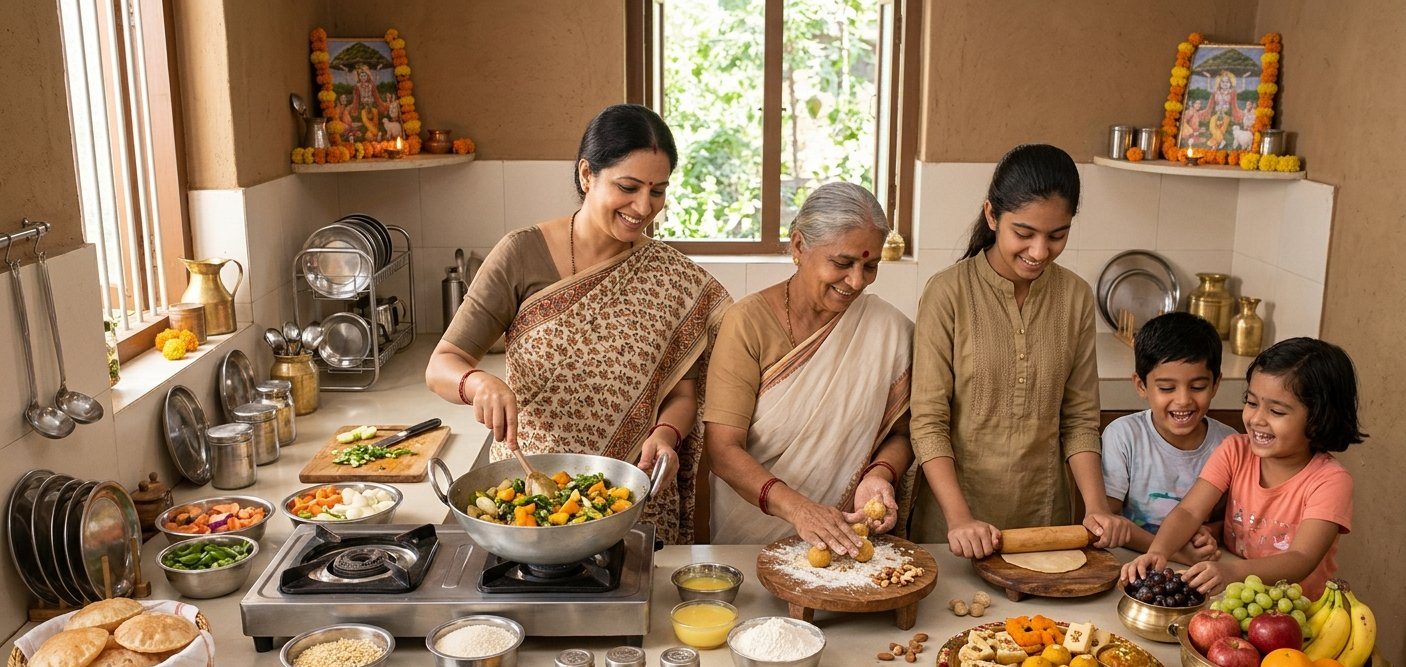
- Involve the family. Children can roll laddoos or arrange fruits, which makes Govardhan Puja a shared joy.
What Is Chappan Bhog?
Chappan Bhog means “fifty-six offerings”, and it is a grand feast offered to Lord Krishna in many temples, especially at Govardhan Puja. According to tradition, young Krishna lifted the hill for seven days and nights. His mother Yashoda used to feed him eight times a day, and since he went without food during those seven days, the villagers offered him seven times eight dishes, which makes 56.
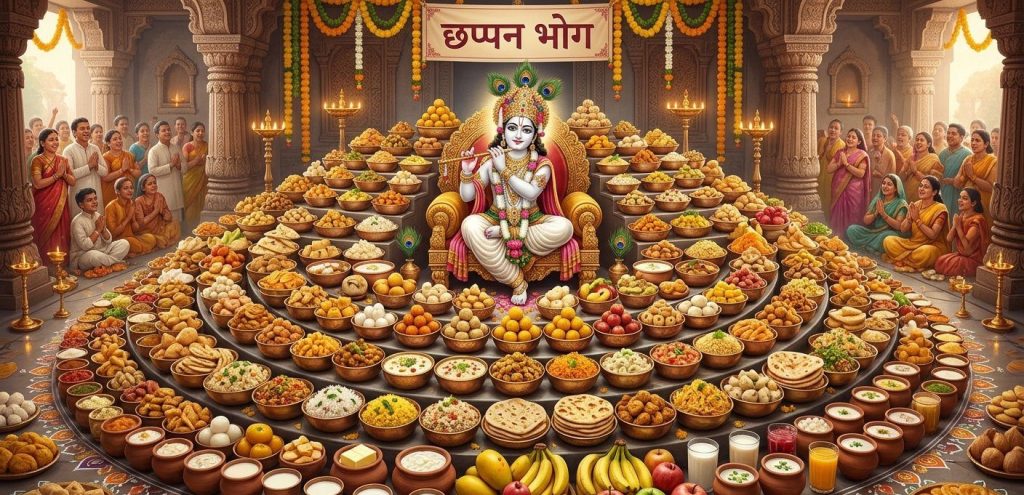
A typical Chappan Bhog includes sweets, savoury snacks, rice dishes, breads, dairy items, fruits, and drinks. Most homes cannot prepare 56 dishes, so they offer a smaller selection with the same spirit. The number matters less than the love and care behind the offering.
How Govardhan Puja Is Celebrated Across India
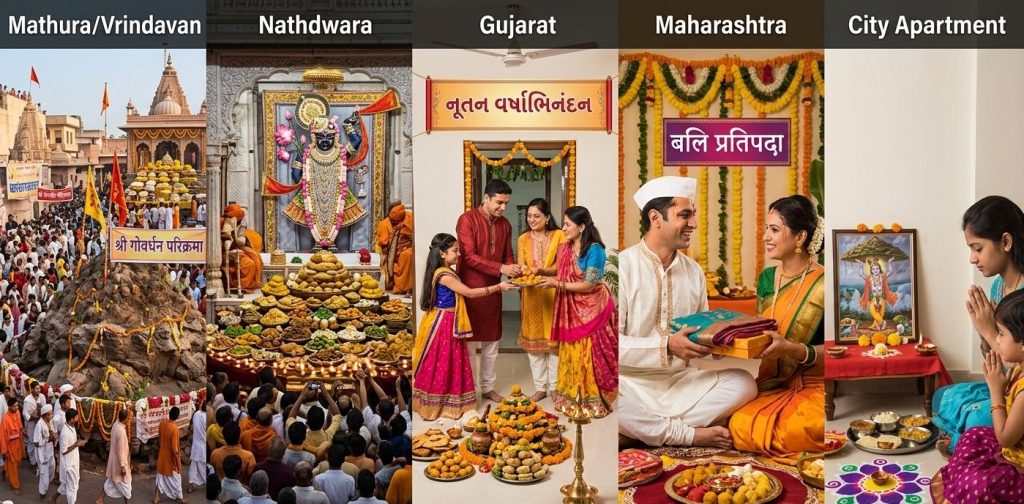
Although the story is the same, each region has its own way of celebrating the festival.
Mathura, Vrindavan, and Govardhan
These towns, closely tied to Krishna’s childhood, hold the grandest celebrations. Temples are decorated, and large Annakut offerings are arranged before the deities. Devotees from all over the country travel to Govardhan Hill for the parikrama, which is about 21 kilometres around the hill, and many perform it barefoot.
Nathdwara in Rajasthan
The Shrinathji temple at Nathdwara is famous for its Annakut festival. Huge quantities of food are offered, and thousands of visitors come to receive the prasad. The darshan during this time is among the most celebrated of the year.
Gujarat
In Gujarat, the day after Diwali is also the start of the new year, known as Bestu Varas. Families visit temples, exchange greetings, and offer Annakut in many shrines. Businesses begin a new financial year, and the day carries a mood of fresh beginnings.
Maharashtra
In Maharashtra, this day is known as Bali Pratipada or Padwa. Along with worship, it is a day when husbands and wives exchange gifts, and many homes make special sweets.
Home Celebrations in Towns and Cities
In apartments and cities, people often keep the celebration small. A simple picture of Krishna and the hill, a few dishes, and a lamp are enough. Many families also donate food or fodder as a way of honouring the spirit of the festival.
Dos and Don’ts of Govardhan Puja
Dos:
- Clean the puja area and wear fresh, clean clothes.
- Prepare the food with a calm mind and keep it pure and vegetarian.
- Offer a variety of dishes, even if only a few, and include something from each course.
- Share the prasad with family, neighbours, and anyone in need.
- Remember the message of respect for nature, and try to reduce waste on this day.
- Check the date and the muhurat on a reliable calendar for your city.
Don’ts:
- Do not taste the food before it is offered to the deity.
- Avoid onion and garlic in the offerings, unless your family tradition says otherwise.
- Do not waste food. Store leftovers properly and share them.
- Do not leave lit lamps unattended, especially near children and pets.
- Avoid arguments and rushed preparations. The mood of the day matters.
A Rough Budget for Home Annakut in Rupees
Govardhan Puja does not need a huge budget. These are rough estimates for a family of about four, and prices change by city and season, so treat them only as a guide:
- Ingredients for 5 to 9 simple dishes: about ₹800 to ₹1,500
- Flowers and garlands: about ₹100 to ₹300
- Clay diyas (a dozen): about ₹40 to ₹120
- Sweets bought from a shop, if you choose not to make them: about ₹300 to ₹800
- Fodder or food for a cow at a shelter: about ₹50 to ₹200
If your budget is tight, prepare just three or four dishes, such as rice, kadhi, puri, and kheer, and offer them with full devotion. A small, sincere offering is considered just as precious as a grand one.
Conclusion
Govardhan Puja is a festival of gratitude, humility, and shared food. It reminds us of the day Lord Krishna lifted Govardhan Hill, protecting an entire village and teaching that nature, animals, and honest living deserve respect. The mountain of Annakut, filled with kadhi, rice, puri, kheer, laddoo, and many other dishes, is a symbol of the abundance that the earth gives and a call to share it with others.
Whether you celebrate with a grand temple feast or a small plate of homemade food in front of a picture of Krishna, the spirit is the same. Prepare your dishes with care, offer them with a sincere heart, and share the prasad generously. With these simple steps, your Govardhan Puja will be both meaningful and joyful.
Wishing you and your family a happy and blessed Govardhan Puja.
Frequently Asked Questions (FAQs)
1. What is Govardhan Puja?
Govardhan Puja is a Hindu festival celebrated on the day after Diwali. It remembers how Lord Krishna lifted Govardhan Hill to protect the people of Vrindavan, and it is marked by worship of the hill, cows, and a large offering of food called Annakut.
2. Why is Govardhan Puja celebrated?
It is celebrated to honour Lord Krishna’s act of protecting the villagers from Indra’s storm and to show gratitude to nature, cows, and the food they provide. It also teaches humility and respect for the earth.
3. What is the meaning of Annakut?
Annakut means a “mountain of food”. Devotees prepare many dishes and arrange them in a heap before the deity, symbolising Govardhan Hill and the abundance of nature.
4. On which day is Govardhan Puja celebrated?
Govardhan Puja falls on the day after Diwali, on the first day of the bright fortnight of Kartik. The exact date and muhurat depend on the lunar calendar and your location, so check a reliable local panchang.
5. What dishes are offered on Govardhan Puja?
Popular offerings include mixed vegetable sabzi, kadhi, rice, puri, bajra khichdi, kheer, besan laddoo, malpua, and suji halwa. Temples often prepare a very large selection, including Chappan Bhog.
6. What is Chappan Bhog?
Chappan Bhog means 56 offerings. It is a grand feast of 56 dishes offered to Lord Krishna, based on the story that villagers offered food for each of the eight meals Krishna missed during the seven days he held the hill.
7. How can I perform Govardhan Puja at home?
Clean the space, place a picture or small figure of Govardhan or Krishna on a clean cloth, light a lamp, and offer flowers, roli, and a few cooked dishes. Perform an aarti, walk around the figure if you wish, and share the food as prasad.
8. Why is cow dung used on Govardhan Puja?
In traditional homes, a figure of Govardhan is made from fresh cow dung because the cow is considered sacred and closely tied to Krishna’s life. If this is not possible, clay or a picture can be used instead.
9. Is Govardhan Puja celebrated on the same day as the Gujarati New Year?
Yes, in many years the day after Diwali is also the Gujarati New Year, known as Bestu Varas. The two occasions often fall together, though the date can vary, so check a calendar.
10. Can Govardhan Puja be celebrated in an apartment?
Yes. You can set up a small altar with a picture of Krishna and the hill, prepare a few dishes, and light a lamp. You can also donate food or fodder to a cow shelter to honour the spirit of the festival.


