

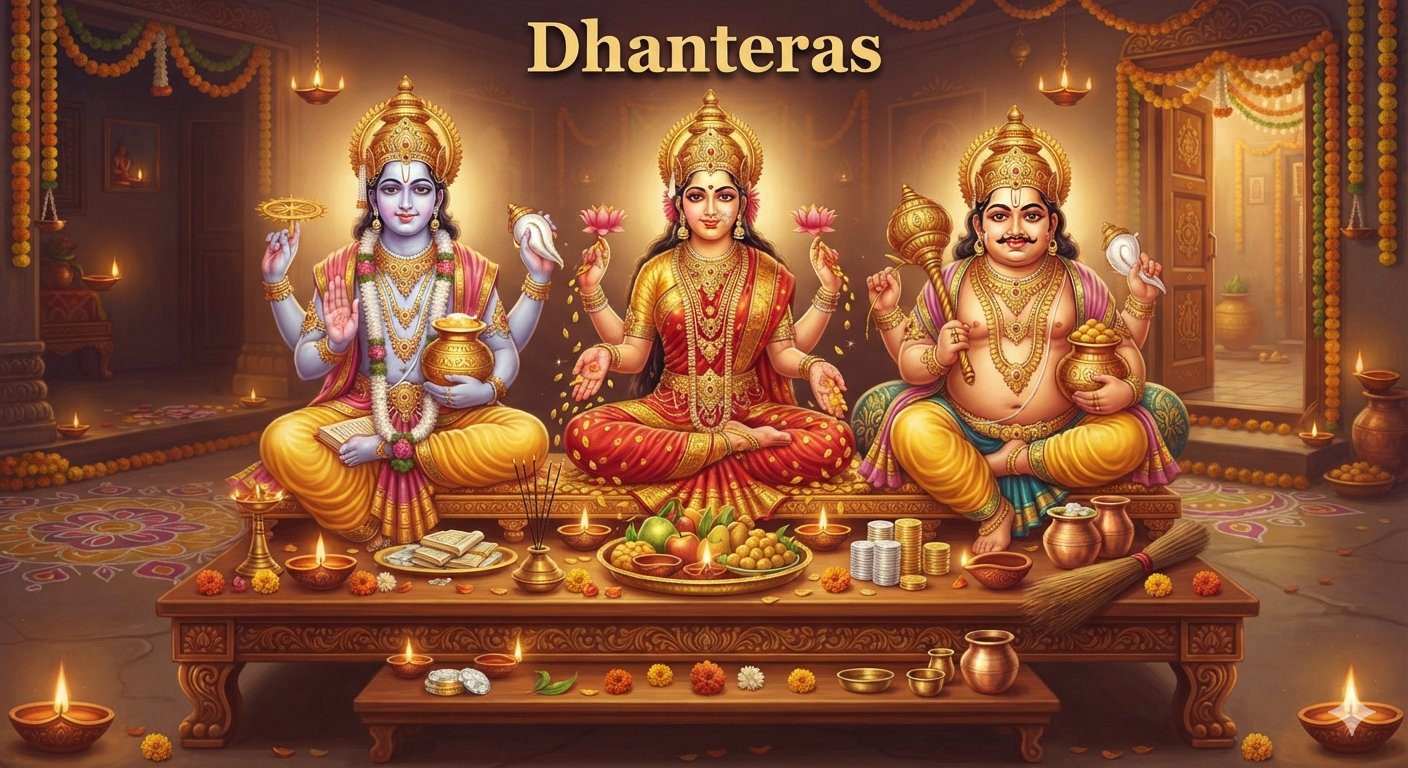
Dhanteras opens the five-day festival of Diwali, and for millions of families it is the day when wealth, health, and good fortune are invited into the home. Shops glow with gold and silver, houses are scrubbed and decorated, and in the evening, lamps are lit in every doorway. At the heart of all this activity is the Dhanteras puja vidhi, the set of rituals that turns a busy shopping day into a sacred one.
Many people, especially first-time hosts and young families, feel unsure about how to follow the Dhanteras puja vidhi correctly. What should be placed on the altar? Which deities are worshipped? What is the right time? And what is the lamp that is lit outside the house?
You will learn why the festival is celebrated, what materials you need, and the best time for the puja. Then you will follow 7 simple steps of the Dhanteras puja vidhi from start to finish. You will also find a short buying guide, dos and don’ts, regional differences, and 10 FAQs. Customs vary between families and regions, so treat this as a general guide and follow the traditions of your own home.
Table of Contents
The Meaning of Dhanteras and the Reason Families Celebrate It
Dhanteras, also called Dhantrayodashi, falls on the thirteenth lunar day (Trayodashi) of the dark fortnight before Diwali. The name combines “dhan”, meaning wealth, and “teras”, meaning the thirteenth day.
The Dhanteras puja vidhi honours three important figures:
- Lord Dhanvantari, the divine physician and the god of Ayurveda, who is believed to have appeared on this day holding a pot of nectar.
- Goddess Lakshmi, who is worshipped as the giver of riches, abundance, and luck.
- Lord Kubera, the treasurer of the gods and the guardian of wealth.
True wealth, according to this tradition, includes health as well as money. The Dhanteras puja vidhi therefore aims to bring prosperity, protection, and good health into the household for the year ahead.
The Beautiful Legends Behind Dhanteras
Two stories are most often told on this day.
The churning of the ocean. According to Hindu tradition, the gods and demons churned the ocean of milk to obtain nectar. Many treasures emerged, and on the thirteenth day Lord Dhanvantari rose from the waters carrying a vessel of nectar. This is why many people buy new utensils on Dhanteras, since the vessel symbolises health and abundance.
The story of the young prince. A prince was fated to die from a snake bite on the fourth day after his wedding. His wife stayed awake that night. She placed gold and silver coins and ornaments at the door and lit many lamps. When Yama, the god of death, came in the form of a snake, he was dazzled by the glow of the lamps and the coins. He sat listening to the songs and stories of the princess all night, and in the morning he left quietly. The prince was saved. Because of this legend, a lamp is lit for Yama on Dhanteras evening, a practice known as Yama Deepam.
Both stories show the same idea: light, devotion, and care protect a family. They are also the reason behind many steps of the Dhanteras puja vidhi.
Dhanteras Puja Samagri: Complete Materials List
Gather everything before the evening so that the Dhanteras puja vidhi can go smoothly. Here is a typical list:
- A wooden stool or chowki and a clean red or yellow cloth
- A murti or framed picture of each deity: Lakshmi, Ganesha, Kubera, and Dhanvantari
- A kalash (brass or copper pot) filled with water, with mango leaves and a coconut on top
- Roli (kumkum), turmeric, rice grains (akshat), and sandalwood paste
- Fresh flowers, especially marigold, and lotus if available
- Incense sticks and a camphor
- Clay diyas, cotton wicks, and ghee or oil for lighting them
- Sweets, fruits, batasha, and dry fruits for offering
- Coriander seeds with jaggery, which is a traditional offering for Lakshmi
- New coins, gold or silver items, or newly bought utensils
- A betel leaf with betel nut, and cloves and cardamom
- A bell, a small plate, and a spoon for offering water
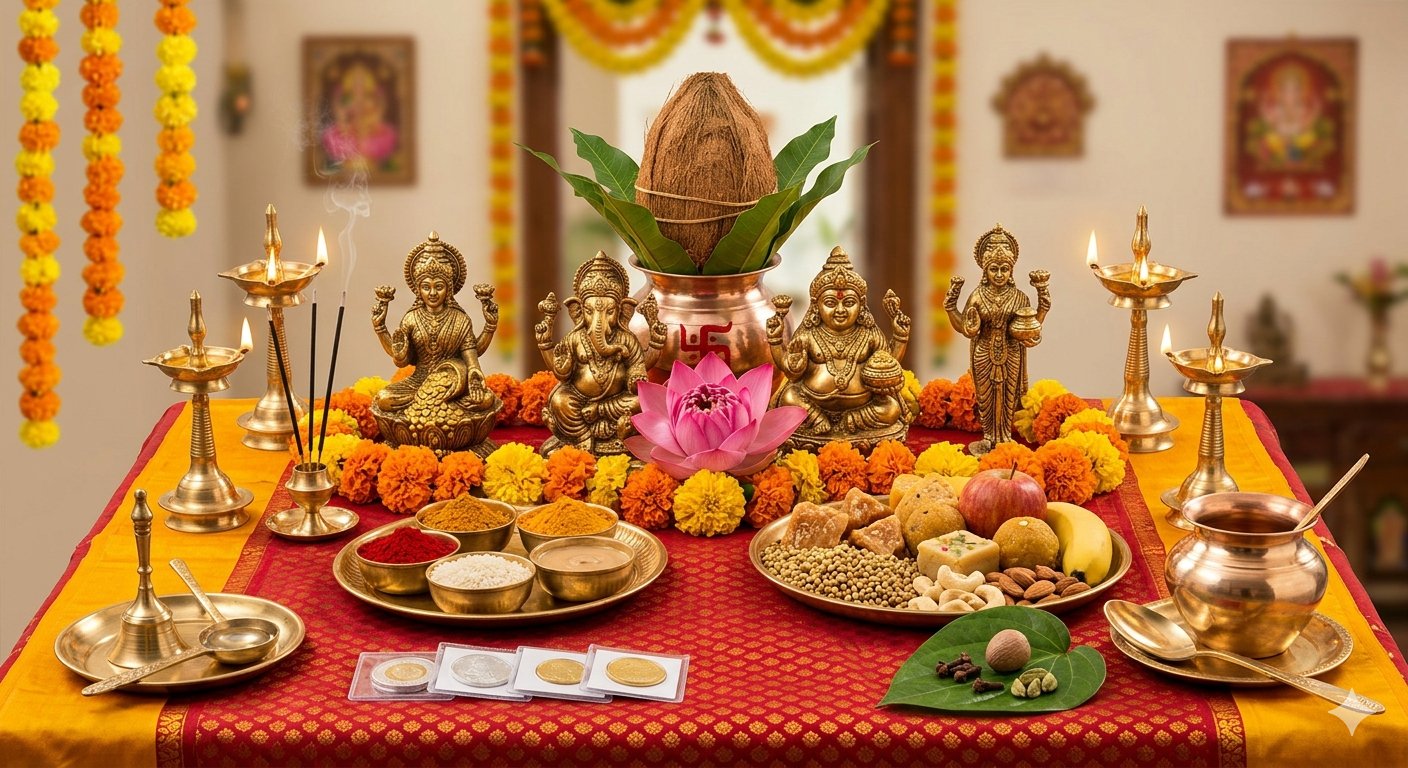
Keep a separate clay diya, mustard oil, and a wick ready for the Yama Deepam, which is part of the Dhanteras puja vidhi.
Best Time for Dhanteras Puja Vidhi
Timing matters in Hindu worship, so it is worth taking a moment to get it right. The Dhanteras puja vidhi is traditionally performed in the evening during Pradosh Kaal, which begins soon after sunset and lasts for about two hours. Many families also try to perform it during a stable ascendant period called Sthir Lagna, because it is believed that Lakshmi stays in the house longer when the puja is done at such a time.
The exact muhurat changes every year and differs from city to city, since sunset times are not the same everywhere. For this reason, always check a trusted local panchang or a reliable calendar for your city before you plan your Dhanteras puja vidhi. Shopping for gold, silver, and utensils is usually done earlier in the day, during the auspicious periods listed on the calendar.
Step 1: Clean and Decorate Your Home
The first step of the Dhanteras puja vidhi begins well before the puja itself. Tradition holds that Lakshmi visits homes that are clean, neat and bright.
- Clean every room, especially the entrance, kitchen, and prayer area, and clear out unwanted items.
- Wipe the floors, and some families add a few drops of Ganga jal or rose water to the water.
- Decorate the main door with a toran of mango leaves or marigold flowers.
- Draw a rangoli at the entrance, and place small footprints pointing into the house.
- Light a few decorative lamps or string lights for a warm glow.
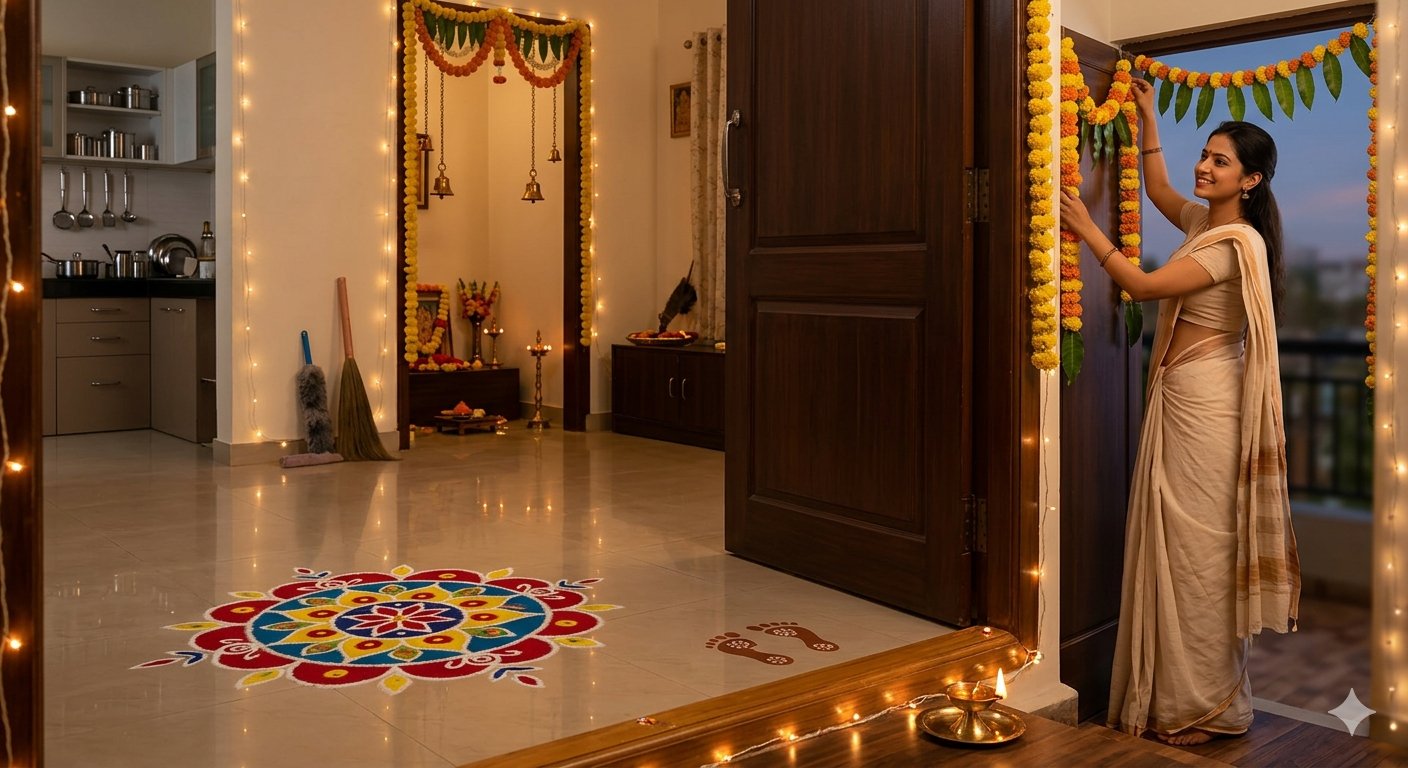
Wear fresh, clean clothes for the Dhanteras puja vidhi. Traditional or festive clothes in yellow, red, or white are a popular choice.
Step 2: Prepare the Puja Space
For the Dhanteras puja vidhi, choose a quiet corner, preferably in the north-east or north of the home, which is traditionally seen as favourable for prayer.
- Place the chowki and spread the red or yellow cloth over it.
- Put the idol of Lord Ganesha on the left side, and place Goddess Lakshmi to his right.
- Place Lord Kubera and Lord Dhanvantari nearby, in front or on the side.
- Set the kalash filled with water in front of the idols, with mango leaves and a coconut on top.
- Put coins, ornaments, or new utensils on a small plate near the idols.
- Arrange the flowers, sweets, fruits, and diyas within easy reach.
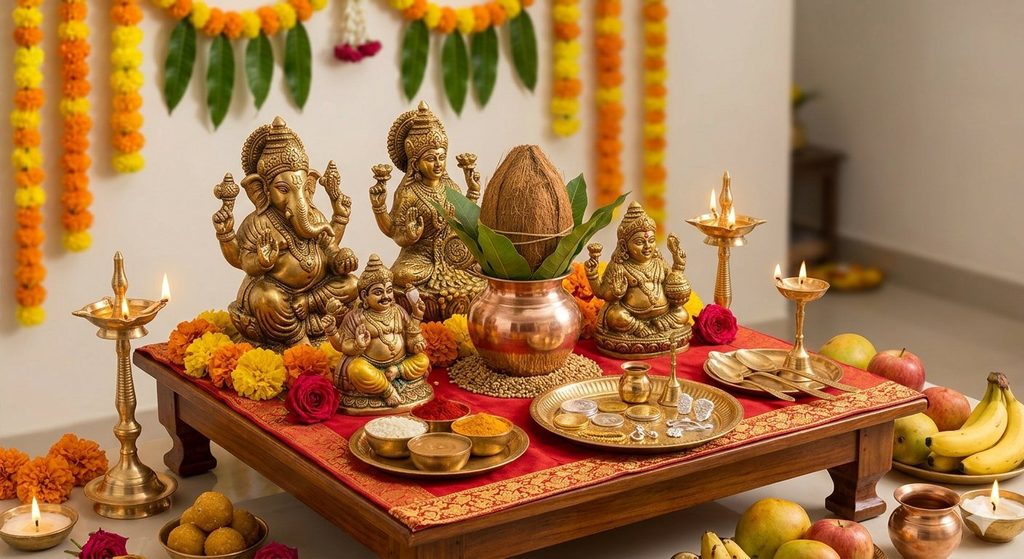
A tidy, well-arranged altar helps you stay calm and focused throughout the Dhanteras puja vidhi.
Step 3: Start With Sankalp and Ganesh Puja
Every Hindu puja begins with the worship of Lord Ganesha, the remover of obstacles. The Dhanteras puja vidhi is no exception.
- Sit facing east or north with the family gathered around you.
- Light a ghee lamp and some incense.
- Take a little water, rice, and a flower in your right hand, and state your sankalp, which is a simple prayer of intention. For example: “I perform this puja to seek health, prosperity, and peace for my family.”
- Offer roli, rice, flowers, and a sweet to Lord Ganesha, and chant a short mantra such as “Om Gam Ganapataye Namah”.
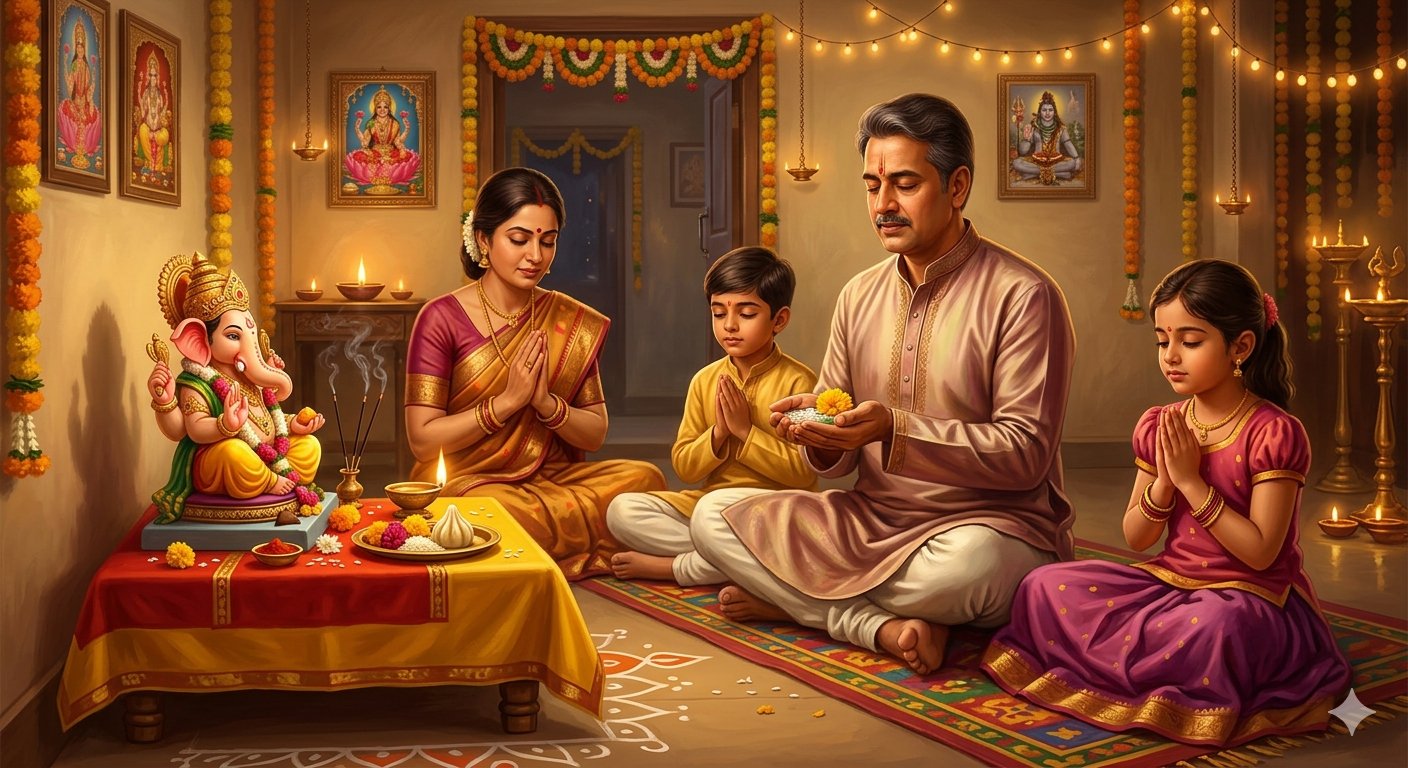
If you do not remember a formal sankalp, a sincere prayer in your own words is accepted in the Dhanteras puja vidhi.
Step 4: Worship Lord Dhanvantari
After Ganesha, worship Lord Dhanvantari, the god of health and healing. This step is one of the most meaningful parts of the Dhanteras puja vidhi, because it reminds us that good health is the greatest wealth.
- Offer a clean cloth or flowers to the idol or picture.
- Apply sandalwood paste or roli, and offer rice grains.
- Offer fruits, sweets, and tulsi leaves if your tradition permits.
- Chant “Om Dhanvantaraye Namah” or any mantra from your family tradition, 11 or 108 times if you wish.
- Pray for the health and long life of all family members.
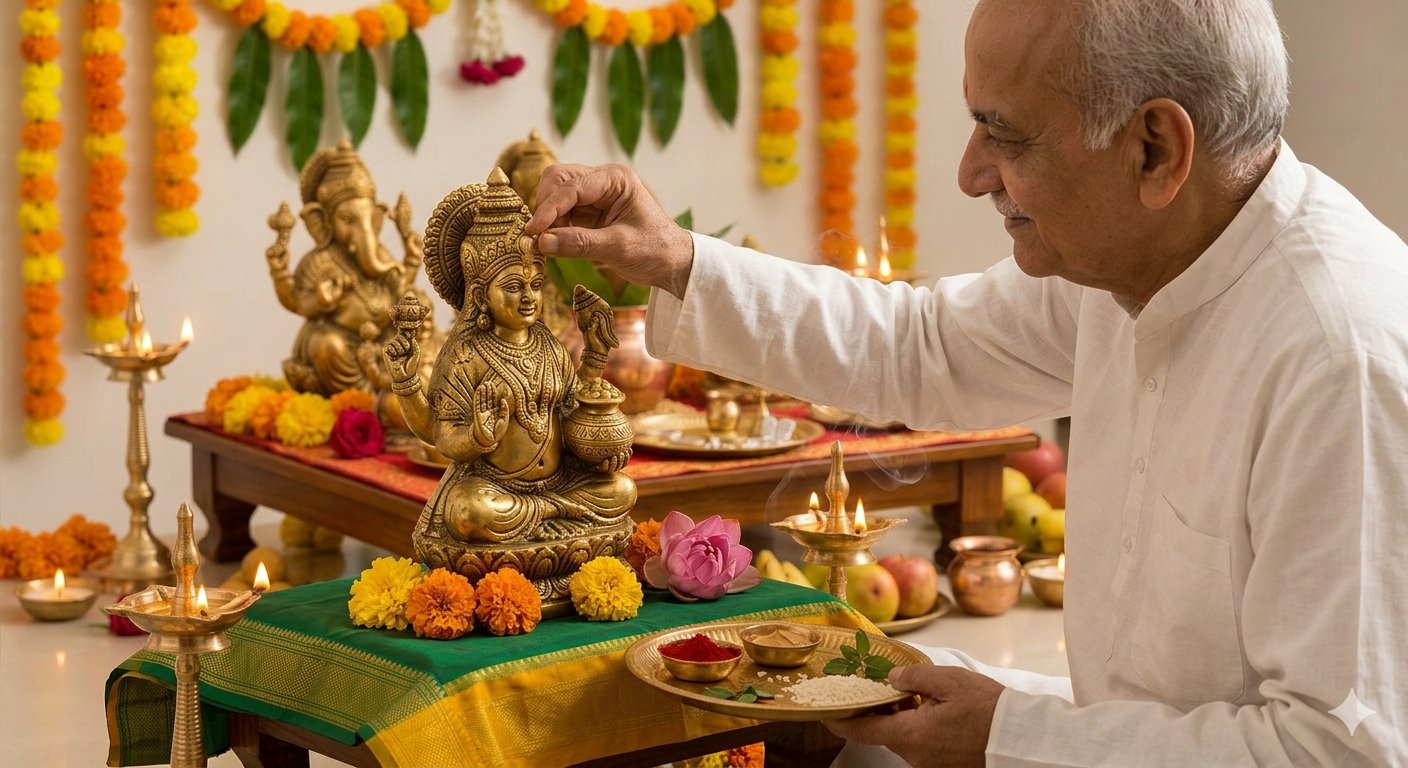
Some families also offer a small portion of herbs, honey, or a medicinal item as a symbol of Ayurveda.
Step 5: Worship Goddess Lakshmi and Lord Kubera
This is the central part of the Dhanteras puja vidhi.
Goddess Lakshmi:
- Offer a bath with a few drops of water or milk, if you are using a small idol, then wipe it gently with a clean cloth.
- Apply roli, turmeric, and sandalwood paste.
- Offer fresh flowers, especially a lotus or marigold garland.
- Place the new coins, silver or gold items, and utensils near her feet.
- Offer coriander seeds with jaggery, along with sweets and fruits.
- Chant “Om Shreem Mahalakshmyai Namah” or the Lakshmi mantra of your tradition.
Lord Kubera:
- Offer flowers, rice, and sweets.
- Light a lamp and chant “Om Kuberaya Namah”.
- Pray for steady income, financial stability, and wise spending.
In many homes, the family also places money, jewellery, or account books on the altar so that they receive blessings as well.
Step 6: Perform Aarti and Offer Prasad
- Light the camphor and a ghee lamp on the aarti plate.
- Ring the bell gently and sing the aarti of Lakshmi, Ganesha, or Dhanvantari while moving the plate in a clockwise circle.
- After the aarti, sprinkle a little water from the kalash around the altar and the home.
- Place the prasad on a plate and offer it to the deities, then distribute it among all family members and neighbours.
- Bow to the deities and thank them for their blessings.
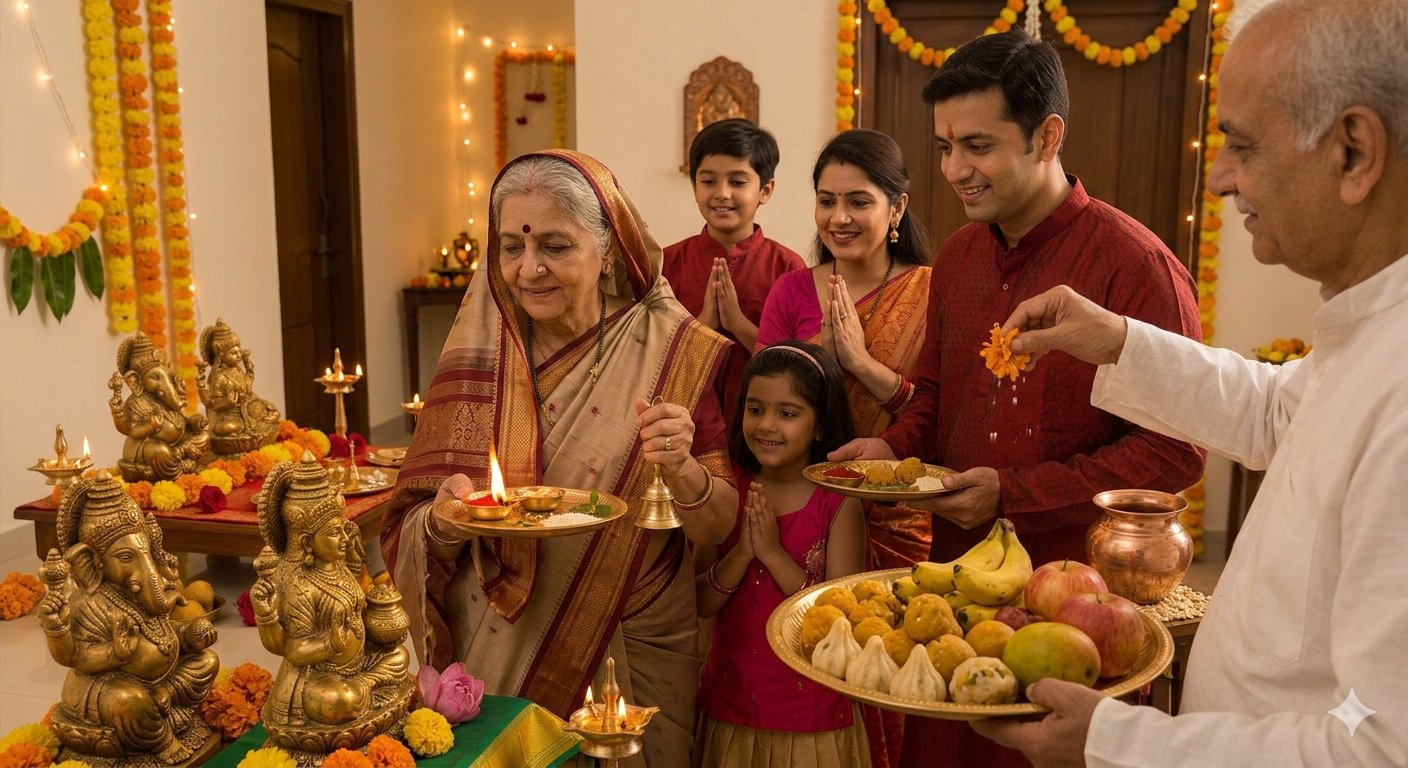
The sharing of prasad is as important as the Dhanteras puja vidhi itself, because the festival is about spreading prosperity and happiness to everyone.
Step 7: Light the Yama Deepam
The final step of the Dhanteras puja vidhi is the Yama Deepam, also called Yamadeepdaan. It is meant to protect the family from untimely death and misfortune, based on the legend of the young prince.
- In the evening, after the main puja, take a clay diya, preferably a four-sided one, filled with mustard oil.
- Add a wick and light it.
- Place the lamp outside the main door or in the courtyard, in the southern direction, since that is the direction linked to Yama.
- Say a quiet prayer for the safety and long life of the family.
- Light a few more diyas around the house, on the doorsteps, balcony, and windows, to fill the home with light.
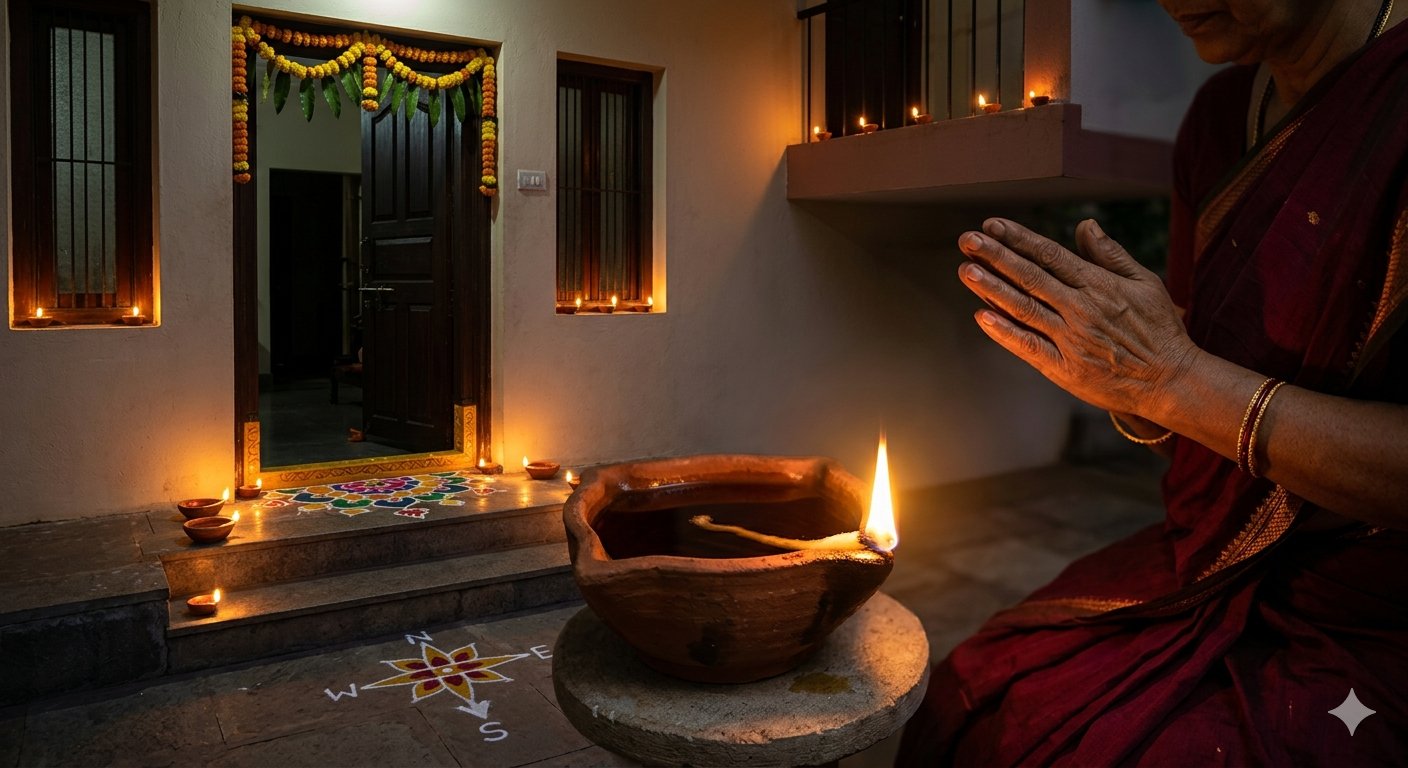
Make sure the lamp stays in a safe place away from curtains, children, and pets.
What to Buy on Dhanteras
Buying something new is the best-known custom that goes alongside the Dhanteras puja vidhi. Popular choices include:
- Gold and silver: coins, jewellery, or small items, depending on your budget
- Brass, copper, or steel utensils: a small pot or spoon is an easy choice
- Lakshmi-Ganesh idols or silver coins for the Diwali puja
- A new broom: in many regions it is seen as a symbol of removing negativity
- Coriander seeds: to be used in the puja and later planted or kept safely
- Electronics, vehicles, or property: some families choose these for the occasion
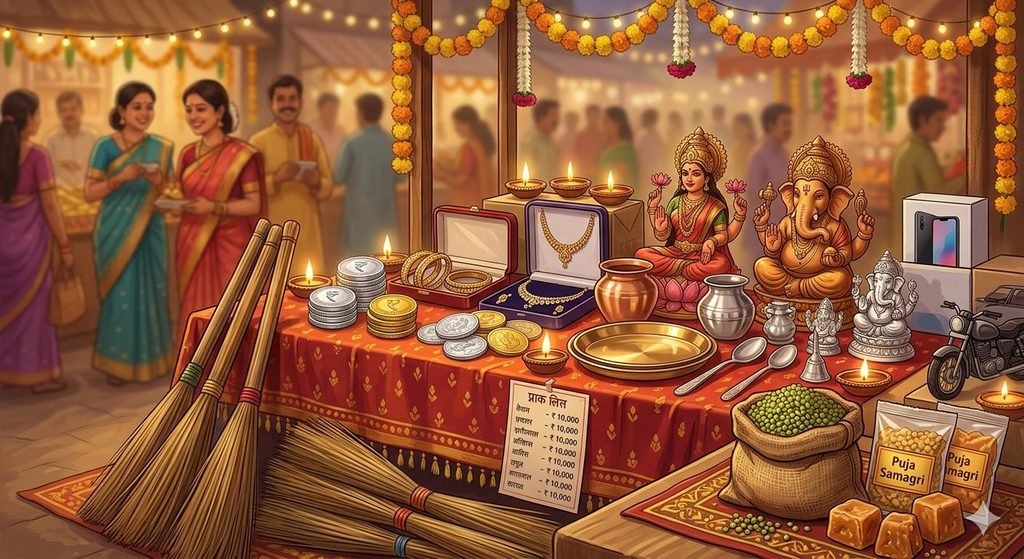
As a rough guide, small steel or brass items cost about ₹100 to ₹1,000, clay diyas about ₹40 to ₹120 per dozen, and a basic Lakshmi-Ganesh idol about ₹100 to ₹500. Prices vary by city and shop, so check local rates. If your budget is limited, buying a small utensil or a pack of coriander seeds is considered just as auspicious. Do not take loans or spend beyond your means only for the sake of tradition.
Dos and Don’ts of Dhanteras Puja Vidhi
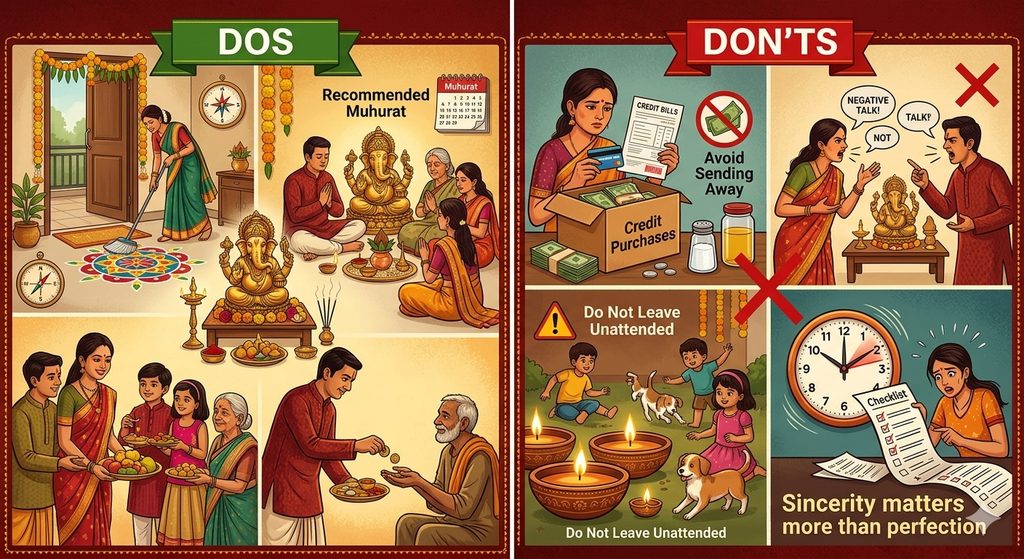
Dos:
- Clean your home thoroughly before the puja.
- Keep the north-east corner of the home tidy and well lit.
- Perform the Dhanteras puja vidhi at the recommended time and with a calm mind.
- Offer prasad and share it with others.
- Give charity or food to someone in need, since generosity is part of the festival.
- Light lamps at the entrance and keep them burning safely.
Don’ts:
- Do not buy items on credit if you cannot afford them.
- Many families avoid giving away money, salt, or oil to others on this day, because they see it as sending away prosperity. Follow your family’s custom.
- Avoid arguments and negative talk during the puja.
- Do not leave lit lamps unattended around children and pets.
- Do not rush the Dhanteras puja vidhi just to complete a checklist. Sincerity matters more than perfection.
How Dhanteras Puja Vidhi Differs Across Regions
India is a land of many traditions, and the Dhanteras puja vidhi changes a little from place to place.
- North India: families buy gold, silver, and utensils, worship Lakshmi, Ganesha, and Kubera, and light the Yama Deepam.
- Maharashtra: the festival is also known for the worship of Dhanvantari and for the offering of coriander seeds mixed with jaggery. Lamps are lit in the evening.
- Gujarat: business owners worship their account books and tools, and the day is closely tied to the start of the new business year after Diwali.
- South India: the festival is observed in slightly different forms, and many families begin their Diwali preparations with the worship of Lakshmi and other deities.
- Rajasthan and Madhya Pradesh: large markets for gold, silver, and utensils open early, and homes are decorated with rangoli.
If your family follows a different Dhanteras puja vidhi, you do not need to change it. The common thread everywhere is gratitude, light, and the wish for a healthy and prosperous year.
Conclusion
Dhanteras is a day that brings together faith, family, and fresh beginnings. The Dhanteras puja vidhi may look long, but each step is simple: clean the home, set up the altar, begin with Ganesha, worship Dhanvantari, Lakshmi, and Kubera, offer aarti and prasad, and finish by lighting the Yama Deepam at the door.
What matters most in the Dhanteras puja vidhi is not an elaborate setup but sincerity and a peaceful mind. Prepare your materials early, check your local muhurat, involve the whole family, and follow the traditions of your home. When the diyas are lit and the family is together, you will feel why this day is considered so special.
Wishing you and your family a prosperous and joyful Dhanteras.
Frequently Asked Questions (FAQs)
1. What is Dhanteras puja vidhi?
The Dhanteras puja vidhi is the traditional method of worship performed on Dhanteras. It includes cleaning the home, setting up the altar, worshipping Lord Ganesha, Lord Dhanvantari, Goddess Lakshmi, and Lord Kubera, offering aarti and prasad, and lighting the Yama Deepam.
2. Which gods are worshipped on Dhanteras?
Lord Dhanvantari, Goddess Lakshmi, and Lord Kubera are the main deities. Lord Ganesha is worshipped first, as in every puja, and Yama is remembered with the evening lamp.
3. What is the best time for the Dhanteras puja vidhi?
The Dhanteras puja vidhi is usually performed in the evening during Pradosh Kaal, soon after sunset. The exact muhurat depends on your city and the year, so check a reliable local panchang.
4. What items are needed for the Dhanteras puja vidhi?
You need idols or pictures of the deities, a kalash, roli, rice, flowers, incense, diyas, sweets, fruits, coriander seeds with jaggery, coins or newly bought items, and a bell. A separate clay diya is needed for the Yama Deepam.
5. What is Yama Deepam, and how is it lit?
Yama Deepam is a lamp lit in the evening outside the main door, facing south, to protect the family from untimely death. A clay diya filled with mustard oil is usually used.
6. What should I buy on Dhanteras?
Gold, silver, brass or steel utensils, coins, Lakshmi-Ganesh idols, a new broom, and coriander seeds are popular choices. If your budget is limited, a small utensil is enough.
7. Can I do the Dhanteras puja vidhi at home without a pandit?
Yes. Many families perform the puja themselves, using simple steps and sincere prayers. If you want to follow a detailed ritual, you may call a priest, but it is not required.
8. Why are utensils bought on the day of the Dhanteras puja vidhi?
According to the legend of the churning of the ocean, Lord Dhanvantari appeared with a pot of nectar. Buying a vessel on this day symbolises health, abundance, and good fortune.
9. What should not be done during the Dhanteras puja vidhi?
Avoid buying things you cannot afford, avoid arguments, and do not leave lamps unattended. Many families also avoid lending or giving away money, salt, or oil on this day, but customs differ.
10. How is Dhanteras connected to Diwali?
Dhanteras is the first day of the five-day Diwali festival. It is followed by Naraka Chaturdashi, Diwali with Lakshmi Puja, Govardhan Puja, and Bhai Dooj.


