

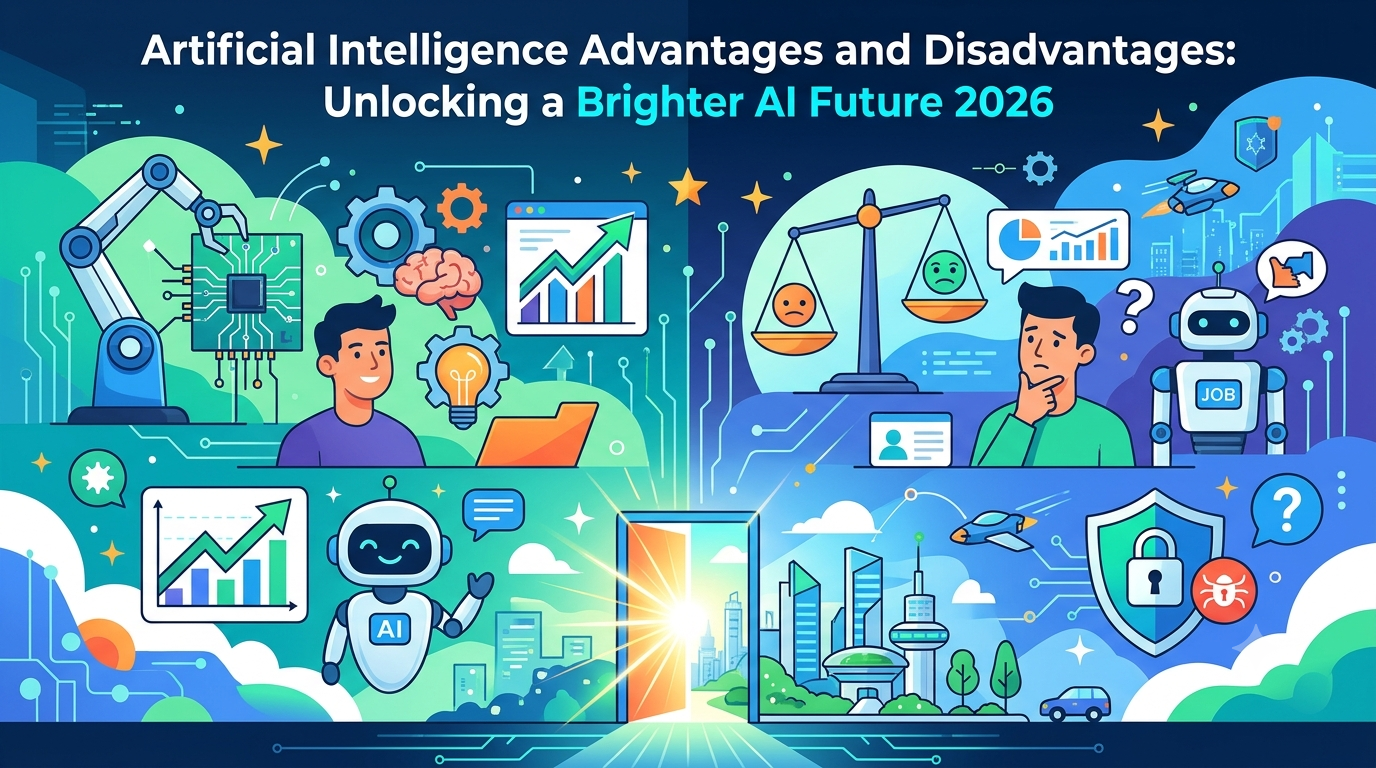
Understanding Artificial Intelligence Advantages and Disadvantages helps us recognise both the opportunities and the risks of this technological revolution. AI can make our lives easier, but excessive dependence may affect our creativity, privacy, judgement, and independence.
Imagine a student who asks AI to complete every assignment without understanding the answers. Or a professional who trusts every AI-generated recommendation without checking its accuracy. Both might save time initially, but they could miss opportunities to develop their own knowledge and skills.
This is where the AI trap begins. Refer to the Artificial Intelligence Advantages and Disadvantages below?
Table of Contents
What Is Artificial Intelligence?
Artificial intelligence, commonly known as AI, refers to computer systems designed to perform tasks that typically require human-like abilities. These include understanding language, recognising patterns, generating content, analysing information, and making predictions.
When exploring Artificial Intelligence Advantages and Disadvantages, it is important to understand that AI is powerful but not perfect. It can produce useful results, but it can also misunderstand questions, generate incorrect information, and reflect biases.
AI should therefore be treated as a helpful assistant rather than an unquestionable authority.
Major Advantages of Artificial Intelligence
Let’s talk about Artificial Intelligence Advantages and Disadvantages
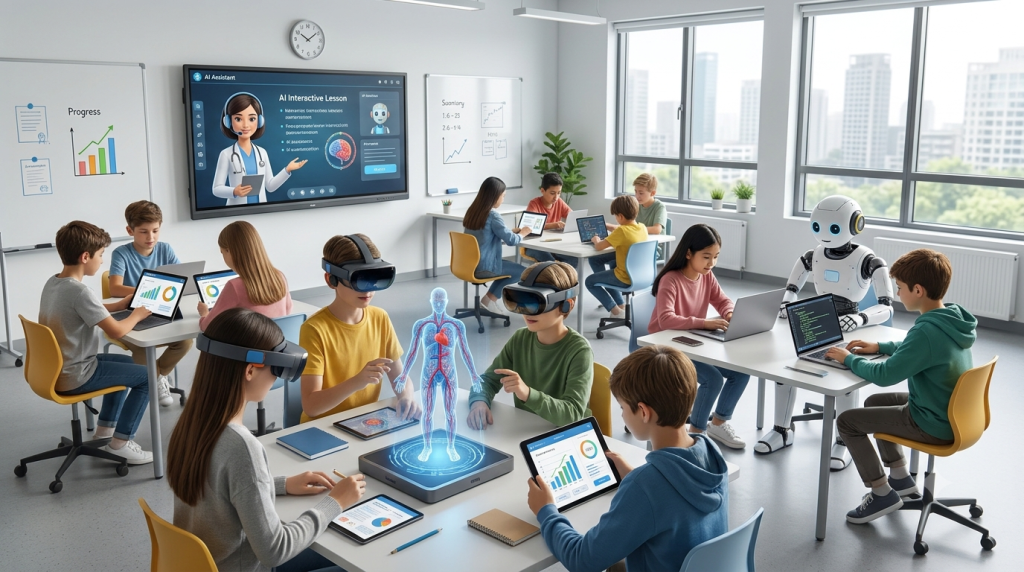
1. Saves Time and Improves Productivity
One of the most significant benefits of AI is its ability to handle repetitive tasks. It can summarise documents, organise information, draft emails, and assist with data analysis.
For example, a small business owner can use AI to brainstorm marketing ideas or prepare product descriptions. Instead of spending hours starting from scratch, they can focus on customer service and business development.
When discussing Artificial Intelligence Advantages and Disadvantages, productivity is one of the strongest advantages. However, saving time creates real value only when we use that time wisely. AI should reduce unnecessary effort without removing the thought and care that good work requires.
2. Encourages Creativity and Innovation
Everyone experiences creative blocks occasionally. Writers struggle to find ideas, designers look for inspiration, and entrepreneurs search for new business opportunities.
AI can help by suggesting concepts, exploring different approaches, and providing a starting point for creative projects.
For example, a blogger might use AI to brainstorm article titles before writing in their own voice. A designer might explore several concepts before developing an original design.
One of the most interesting Artificial Intelligence Advantages and Disadvantages is the relationship between AI and human creativity. AI can support imagination, but personal experiences, emotional understanding, originality, and human judgement remain essential.
3. Creates New Career Opportunities
Artificial intelligence is changing the workplace and creating demand for new skills. Opportunities may emerge in AI development, cybersecurity, data analysis, automation, and responsible technology management.
People who learn to work effectively with AI may discover new ways to improve services, develop products, or start businesses.
Understanding Artificial Intelligence Advantages and Disadvantages also means recognising that the future of employment is not entirely predictable. Some tasks may become automated, while other jobs may evolve or emerge. Developing adaptable skills can help people prepare for these changes.
Disadvantages of Artificial Intelligence: Understanding the AI Trap
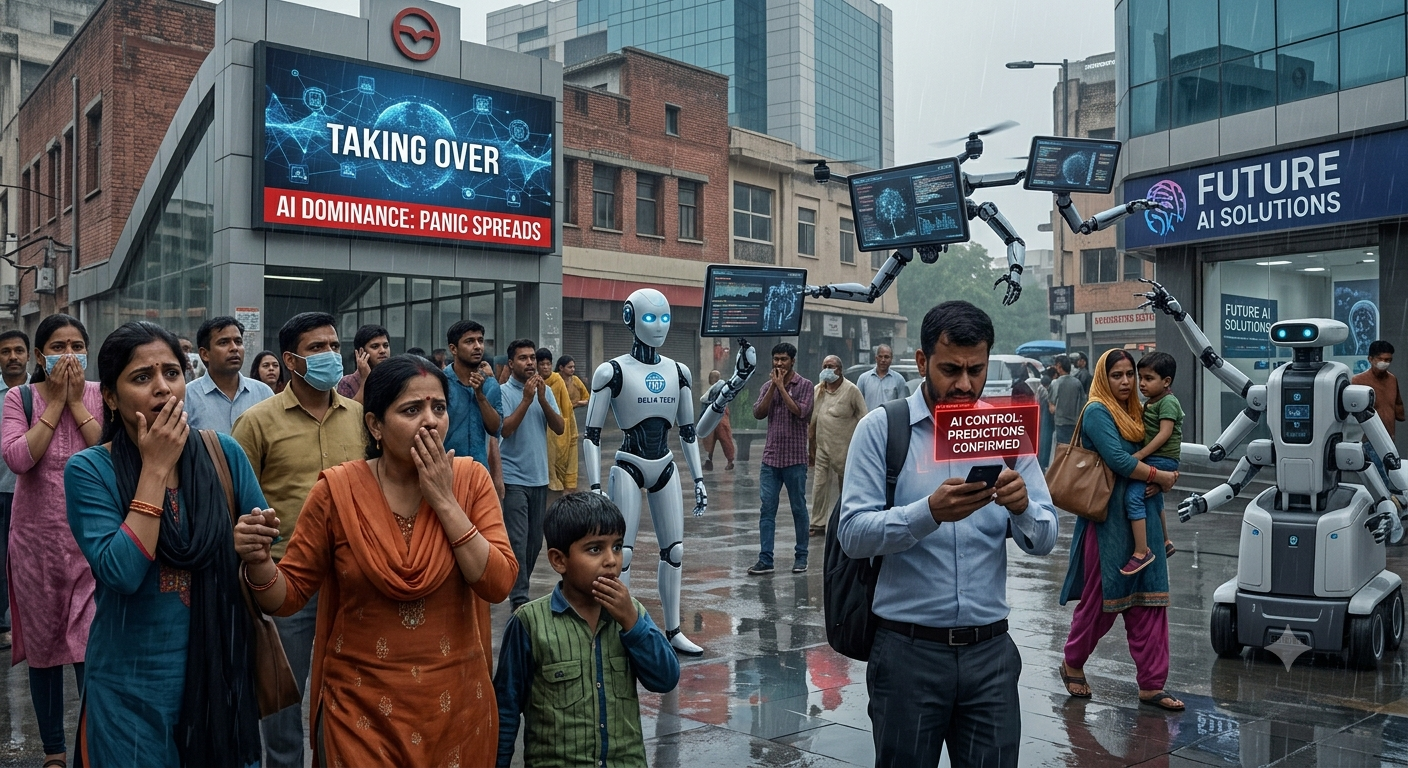
Despite its benefits, AI introduces challenges that deserve attention. Recognising these problems early can help us avoid unnecessary risks.
1. Overdependence on AI
The AI trap often begins with a simple habit: choosing the easiest option every time.
Imagine a student who uses AI to answer every question. Assignments may become easier, but the student might struggle during an examination that requires independent reasoning. Similarly, employees who accept automated recommendations without checking them may overlook important mistakes.
Excessive dependence can reduce opportunities to practise writing, critical thinking, problem-solving, and decision-making.
A balanced approach is essential. Try solving a problem yourself first, use AI to explore possible solutions, and then evaluate the results critically.
The real purpose of understanding Artificial Intelligence Advantages and Disadvantages is not to reject technology but to learn when it helps and when independent effort matters more.
2. Privacy and Security Risks
Many AI tools process information submitted by users. Depending on the platform and its policies, this information may be stored or handled in different ways.
Sharing confidential documents, financial records, personal details, or business information without understanding the risks can expose sensitive data.
Before using an AI platform, review its privacy policies and security settings. Avoid sharing sensitive information unnecessarily, and follow your organisation’s rules for handling confidential data.
Convenience should never come at the expense of personal privacy.
3. Inaccurate Information and Bias
AI can produce answers that sound convincing but contain errors. It may misunderstand a question, invent facts, or provide outdated information.
Some systems can also reproduce biases found in their training data. This may create unfair outcomes in areas such as recruitment, lending, and other important decisions.
Users should verify important claims through trustworthy sources and question unexpected results. When decisions have serious consequences, qualified professionals and human oversight remain essential.
4. Job Disruption and Changing Skills
Automation can change how work is performed. Some tasks may disappear, existing roles may evolve, and new occupations may emerge.
These changes can create uncertainty, particularly for workers whose experience is closely connected to traditional methods.
Rather than assuming that AI will replace every worker, it is more useful to understand how responsibilities are changing. Learning digital skills, communication, adaptability, and problem-solving can help people respond to new workplace demands.
A thoughtful discussion of Artificial Intelligence Advantages and Disadvantages should recognise these concerns while also exploring opportunities for reskilling and professional growth.
How to Escape the AI Trap
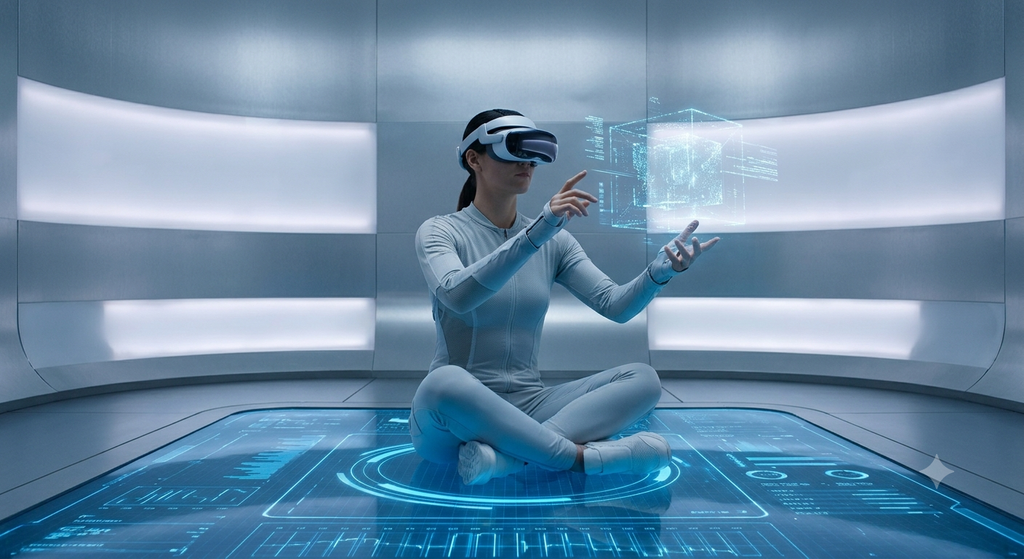
Avoiding the AI trap does not mean abandoning technology. It means using AI without surrendering our ability to think independently. We have already looked at Artificial Intelligence Advantages and Disadvantages.
Now here are practical habits that can make a difference.
Think before asking. Try understanding a problem yourself before requesting an AI-generated solution.
Use AI as an assistant. Let it help with research, brainstorming, organisation, and repetitive tasks, but remain responsible for the final result.
Verify important information. Check facts, calculations, quotations, and recommendations before relying on them.
Protect your privacy. Share only the information necessary for a task, and use tools with appropriate security controls.
Continue learning. Develop communication, creativity, subject knowledge, critical thinking, and adaptability.
Value human relationships. Use technology to support meaningful interactions instead of allowing it to replace them.
These habits help us enjoy the benefits of technology while preserving the abilities that make us independent thinkers.
AI and the Future: Unlocking a Brighter 2026
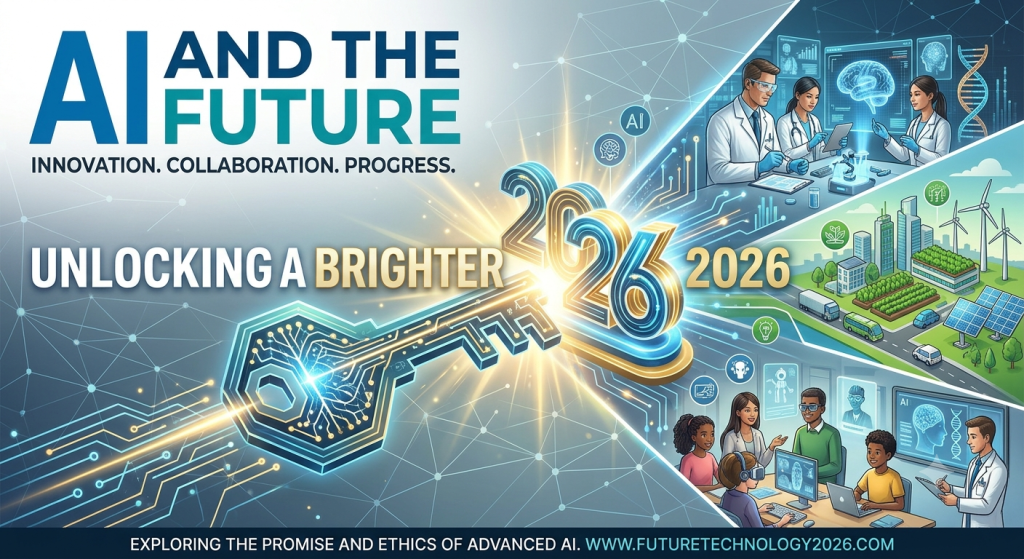
From this article, we can see there are Artificial Intelligence Advantages and Disadvantages.
The future of AI does not need to become a competition between humans and machines. Instead, technology can handle suitable routine tasks while people contribute creativity, empathy, judgement, leadership, and responsibility.
Understanding Artificial Intelligence Advantages and Disadvantages allows us to approach this future with realistic expectations. The benefits are promising, but they depend on responsible development, appropriate safeguards, and informed human decisions.
Developers, organisations, governments, and individual users all have a role in promoting privacy, fairness, safety, and accountability.
The most valuable skill in the AI era may not be knowing how to use every new tool. It may be knowing when AI is useful, when its answers need checking, and when human judgement should take priority.
Conclusion
Understanding Artificial Intelligence Advantages and Disadvantages helps us approach modern technology with curiosity, awareness, and confidence. AI is changing the way we live, work, study, and communicate, creating opportunities that were difficult to imagine just a few years ago. From helping students understand challenging subjects to supporting businesses with everyday tasks, artificial intelligence has the potential to make life more productive and accessible.
However, exploring Artificial Intelligence Advantages and Disadvantages also reminds us that every technological breakthrough comes with responsibilities. AI can save time, improve education, support research, encourage creativity, and create new career opportunities. At the same time, privacy concerns, misinformation, biased results, job disruption, and excessive dependence require thoughtful attention. Recognising these challenges does not mean we should fear AI. Instead, it means we should learn to use it with greater understanding and care.
Think about how you use technology every day. Do you use it to learn something new, or do you sometimes allow it to do all the thinking for you? This small difference can have a significant impact over time. The AI trap begins when convenience gradually replaces independent thinking. We can avoid it by checking information, protecting our privacy, practising essential skills, and taking responsibility for our decisions.
The discussion around Artificial Intelligence Advantages and Disadvantages should therefore focus on finding the right balance. We do not need to reject AI to protect our humanity, nor do we need to accept every new tool without question. We can embrace innovation while continuing to value creativity, empathy, honesty, and personal judgement.
For students, this means using AI to understand concepts rather than simply copying answers. For professionals, it means allowing automation to handle suitable routine tasks while remaining responsible for important decisions. For businesses, it means adopting technology that genuinely helps people while protecting customers and employees.
Ultimately, the future of artificial intelligence will depend not only on how advanced our machines become but also on the choices we make as individuals and communities. A thoughtful understanding of Artificial Intelligence Advantages and Disadvantages can help us make better decisions, develop relevant skills, and prepare for a rapidly changing world.
As we move towards a brighter AI future in 2026 and beyond, let us remember that progress should improve human lives, not diminish our ability to think, create, and connect with others. The real opportunity is to combine the speed of technology with the wisdom of human experience.
Use AI as a partner in progress, question it when necessary, and never stop believing in your own potential.
FAQs
Q. What are the main Artificial Intelligence Advantages and Disadvantages?
A. AI can automate repetitive tasks, increase productivity, support personalised learning, assist scientific research, improve accessibility, and help people explore creative ideas.
Q. What are the Artificial Intelligence Advantages and Disadvantages in daily life?
A. The Artificial Intelligence Advantages and Disadvantages in daily life include convenience, faster access to information, personalised recommendations, and automated tasks. However, potential disadvantages include privacy concerns, misinformation, and overdependence on technology.
Q. What are the biggest disadvantages out of the Artificial Intelligence Advantages and Disadvantages ?
A. Major concerns include inaccurate information, privacy risks, algorithmic bias, excessive dependence, possible job disruption, and reduced human interaction.
Q. What is the AI trap while studying the Artificial Intelligence Advantages and Disadvantages ?
A. The AI trap describes becoming so dependent on artificial intelligence that you stop questioning its answers, practising essential skills, or making independent decisions.
Q. Can AI replace human intelligence as per the Artificial Intelligence Advantages and Disadvantages ?
A. AI can perform specialised tasks associated with human intelligence, but it does not reproduce the full range of human experiences, emotional understanding, responsibility, and judgement.
Q. How can students use AI responsibly?
A. Students can use AI for explanations, practice questions, feedback, and brainstorming. They should develop their own reasoning skills, verify information, and follow academic-integrity rules.
Q. Will artificial intelligence replace human jobs?
A. AI may automate some tasks and change many occupations, but its effects will vary by industry. Learning adaptable skills can help workers respond to changing job requirements.
Q. How can people avoid becoming dependent on AI?
A. Try solving problems independently, question AI-generated answers, verify important information, and continue practising writing, reasoning, and problem-solving.
Q. Is artificial intelligence safe to use?
A. AI can be useful when applied carefully, but safety depends on the tool, the information involved, and the consequences of its output. Privacy protection and fact-checking are essential.
Q. Can AI improve creativity?
A. Yes. AI can suggest ideas, explore alternatives, and help people overcome creative blocks. Human imagination, experience, and judgement remain important to the final result.
Q. What is the future of artificial intelligence in 2026 and beyond?
A. AI is likely to become increasingly integrated into education, business, research, and everyday services. Responsible development, human oversight, and continuous learning will help people benefit from these changes.


