

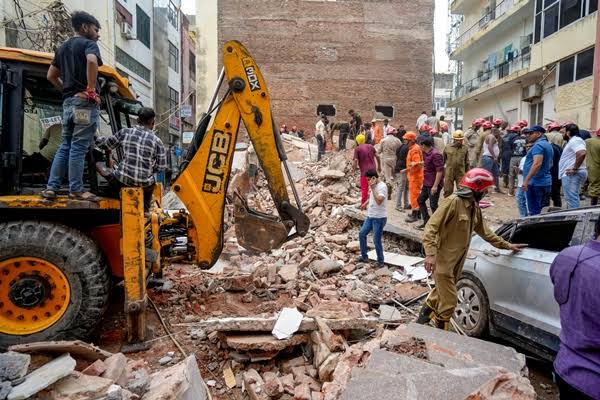
On September 6, 2026, a multistorey building in Delhi’s Satya Niketan area — an neighborhood known for housing large numbers of college students near Delhi University’s South Campus — collapsed, due to basement flooding, killing at least six people and trapping dozens more under the rubble. The tragedy has once again put a spotlight on a problem tied directly to basement flooding and poor maintenance that Delhi has faced for years: aging, poorly maintained buildings that give way with little warning, often with fatal consequences for the students and low-income tenants who rent rooms in them.
Table of Contents
What Happened in Satya Niketan
The building that collapsed was located near Delhi University’s South Campus, in an area that primarily houses students attending nearby colleges. According to fire officer Abhilash Malik, up to 40 people were believed trapped under the rubble in the immediate aftermath. The All India Institute of Medical Sciences (AIIMS) reported treating ten patients from the incident, stating that five were brought in dead, while a sixth patient in critical condition later succumbed to injuries — bringing the confirmed death toll to at least six.
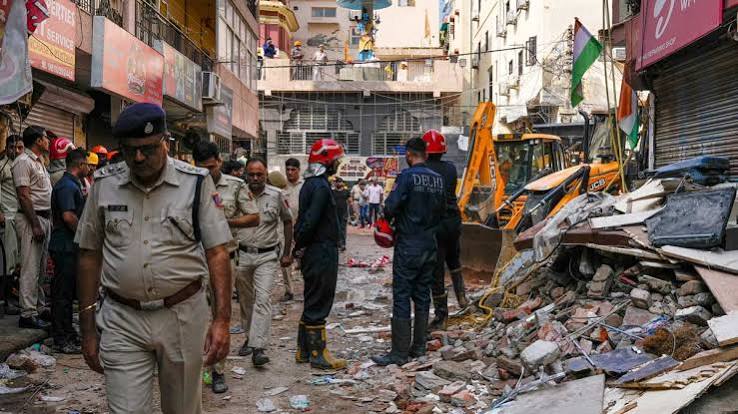
Disturbing footage circulated online in the hours following the collapse, including a video filmed by a man trapped under the debris as bystanders called for rescuers to reach him. Additional footage showed local residents attempting to pull survivors from the wreckage before official disaster response teams arrived on the scene — a detail that speaks to both the scale of community response and the initial gap before formal rescue operations could be mobilized.
What Caused the Building to Collapse
While a full investigation was still underway in the immediate aftermath, Delhi Chief Minister Rekha Gupta offered an early explanation to reporters. According to her statement, basement flooding was the key factor – water had accumulated in the building’s basement (basement flooding) and this accumulation, combined with ongoing repair work being carried out on the structure at the time, caused the already-old building to give way.
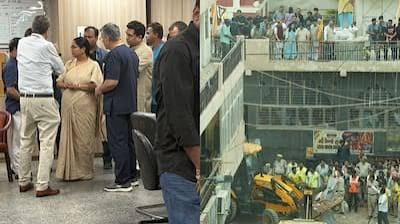
This explanation fits a pattern seen repeatedly in Delhi building collapses over the years: an aging structure, undergoing some form of construction or renovation work, basement flooding, weakened further by water damage (basement flooding) — frequently tied to monsoon rains or basement flooding — until it can no longer bear its own structural load.
The Rescue Operation
Crews from India’s National Disaster Response Force (NDRF), Delhi Police, and fire services worked together at the site, using earthmovers to clear heavy debris and detection dogs to help locate anyone still trapped beneath the rubble. A neighboring building was evacuated as a precaution, amid concerns that it too could be structurally compromised and at risk of collapsing.
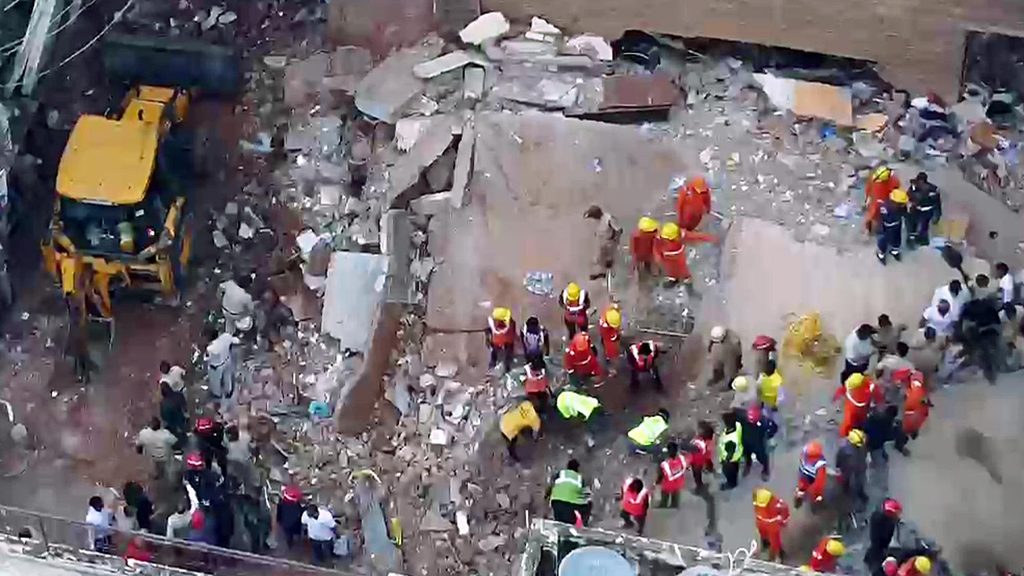
The scale of the response — involving multiple agencies working simultaneously — reflects both the severity of the incident and the genuine uncertainty officials faced in the collapse’s early hours about exactly how many people remained trapped and what condition they were in.
Official Response
Delhi Chief Minister Rekha Gupta addressed the incident directly, stating that saving the lives of the students involved was the most important priority, and that rescue operations would continue until complete. She also struck a firmer tone regarding accountability, stating plainly that those found responsible would not be spared.
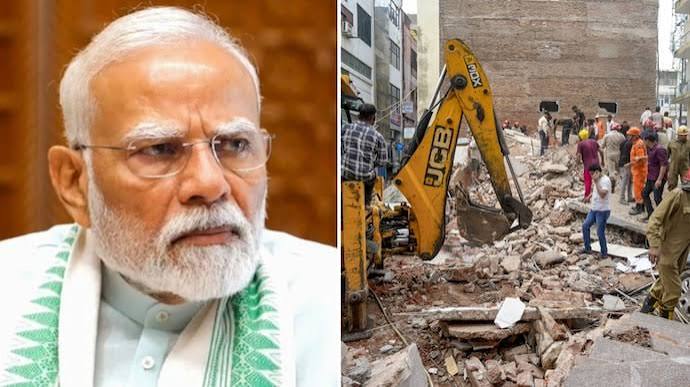
Indian Prime Minister Narendra Modi’s office also issued a statement following the collapse, offering condolences to those who lost loved ones and expressing hope for the speedy recovery of the injured, while noting that authorities were working at the site to assist those affected.
This Isn’t Satya Niketan’s First Collapse
What makes this tragedy especially difficult to process is that it isn’t an isolated incident for this specific neighborhood. Satya Niketan has seen building collapses before — in one earlier incident, a three-storey house undergoing renovation collapsed in the same area, killing two labourers and injuring several others. In that case, officials later determined that the building had been old and structurally unfit for the renovation work being carried out, which reportedly involved converting the property into a paying-guest (PG) accommodation for students — precisely the kind of dense, informally converted housing that dominates the area.
The recurrence of collapses in the same neighborhood points to a deeper, unresolved issue: buildings in Satya Niketan are frequently old structures that have been repeatedly modified, extended, or converted to house as many paying tenants as possible, often without the structural assessments that this kind of repurposing genuinely requires.
A Pattern Across Delhi
Zooming out further, Satya Niketan’s history is far from unique within Delhi as a whole. The city has experienced building collapses with troubling regularity over the past decade, frequently involving significant loss of life. In 2025, at least 11 people were killed after a residential building collapsed in a northeastern district of Delhi. Other incidents in recent years include a building collapse in Delhi’s Welcome area that killed six members of a single family, a collapse in Bhajanpura that killed five people — four of them students attending a coaching class — and a Daryaganj collapse that killed three construction workers.
Data on structural collapses across India paints an even starker national picture: between 2018 and 2022 alone, structural collapses killed 8,756 people nationwide, at a rate of roughly five people every single day, with residential building collapses accounting for the overwhelming majority of these deaths. Delhi recorded the highest number of structural-collapse-related deaths of any union territory during that period.
Why Monsoon Season Makes This Worse
Building collapses in India, and in Delhi specifically, spike noticeably during the monsoon season, which typically runs from June through September. Heavy, sustained rainfall during this period is one of the most common causes of basement flooding, which frequently weakens building foundations leads to water accumulation in basements and foundations, exactly as officials described in the Satya Niketan case. Older buildings — many of which were never engineered with modern basement waterproofing or drainage standards — are especially vulnerable to this kind of gradual water damage, which can silently weaken a structure’s foundation for weeks or months before a sudden, catastrophic failure occurs and basement flooding.

Notably, the Satya Niketan collapse wasn’t an isolated weather-related incident even within its own week — a separate three-storey building collapse occurred in northern India just one day earlier, following heavy rain, causing basement flooding though that incident did not result in any casualties.
Why Student Housing Is Especially at Risk
A recurring, uncomfortable thread across many of Delhi’s deadliest building collapses is their connection to student housing. The Bhajanpura collapse killed students attending a coaching class. The Satya Niketan building that collapsed this month primarily housed students, given its proximity to Delhi University’s South Campus. This pattern isn’t a coincidence — it reflects the specific economics of student housing in cities like Delhi, where basement flooding is quite normal.
Areas near major universities and coaching hubs tend to see enormous, often informal demand for cheap, dense housing, basement flooding which creates strong financial incentive for property owners to convert or extend old residential buildings into as many rentable rooms as possible. This kind of conversion — turning a single-family home into a multi-tenant PG accommodation, for instance — frequently happens without the structural engineering review that repurposing a building for significantly higher occupancy actually requires, leaving these buildings more vulnerable precisely in the areas where large numbers of young people are living.
What Renters Can Actually Check Before Moving In
While individual tenants obviously can’t control a landlord’s maintenance decisions or a municipal body’s inspection failures, there are a few practical steps that can help renters — especially students moving into unfamiliar cities — reduce their own risk when choosing housing:
- Ask how old the building is, and whether it’s been recently renovated or extended. Buildings that have added floors or undergone significant structural changes carry more risk if that work wasn’t professionally certified.
- Look for visible warning signs. Cracks in walls or ceilings, doors and windows that no longer close properly, or any visible tilting or unevenness in the structure are all signs worth taking seriously rather than dismissing as cosmetic.
- Ask whether the building has a completion certificate or occupancy certificate from local municipal authorities. Buildings without these are more likely to have bypassed formal safety inspections.
- Check specifically for signs of basement flooding given how often water accumulation in basements has been cited as a contributing factor in recent collapses. Persistent dampness, standing water, or a musty basement smell can be an early warning sign.
- Trust community knowledge. In areas with a history of building issues, like Satya Niketan, local students and long-term residents often have informal knowledge about which buildings or landlords have a poor safety reputation.
What Needs to Change
Addressing this problem at its root requires action well beyond what individual tenants can manage on their own. Housing safety experts and past investigations into Delhi’s building collapses have repeatedly pointed to the same underlying gaps: insufficient enforcement of building codes, particularly around unauthorized construction and renovation; a lack of routine structural inspections for aging buildings, basement flooding, especially those that have been informally converted for higher-density rental use; and municipal bodies that are frequently under-resourced relative to the sheer number of structures they’re responsible for monitoring across a city as large as Delhi.
Following past collapses, city officials have periodically announced probes and promised stricter enforcement, but the recurrence of similar incidents — including within the same neighborhood, as seen in Satya Niketan — suggests that meaningful, lasting structural reform has yet to fully take hold.
Conclusion
The collapse of the Satya Niketan building is a genuine tragedy, and one that, painfully, fits into a well-established and largely unaddressed pattern within Delhi’s housing landscape. Aging buildings, basement floodings, informal conversions into dense student and low-income housing, monsoon-driven water damage, basement flooding and inconsistent enforcement of safety standards have combined repeatedly over the years to produce entirely preventable loss of life. Until those underlying structural and regulatory issues are addressed at a city-wide level, the risk that another building — in Satya Niketan or elsewhere in Delhi — could suffer the same fate remains uncomfortably real. Aging buildings, informal conversions into dense student and low-income housing, monsoon-driven water damage and basement flooding issues.
FAQs
1. What caused the Satya Niketan building collapse?
According to Delhi Chief Minister Rekha Gupta, water had accumulated in the building’s basement, causing basement flooding, and this, combined with ongoing repair work on the old structure, led to its collapse.
2. How many people died in the Satya Niketan collapse?
At least six people were confirmed dead, according to AIIMS, which treated victims from the incident. Up to 40 people were initially reported trapped under the rubble.
3. Has Satya Niketan had building collapses before?
Yes. The neighborhood has experienced at least one previous building collapse, in which a three-storey house undergoing renovation into student PG accommodation collapsed, killing two labourers.
4. Why do building collapses happen so often in Delhi during monsoon season?
Heavy monsoon rainfall, typically from June to September, frequently leads to water accumulation in basements (basement flooding) and foundations, which can weaken older buildings over time, especially those without modern waterproofing or drainage systems.
5. What can renters do to check if a building is safe before moving in?
Renters can ask about the building’s age and any recent renovations, look for visible cracks or structural warning signs, check for a valid occupancy or completion certificate, and pay attention to basement flooding conditions like dampness or standing water.


