

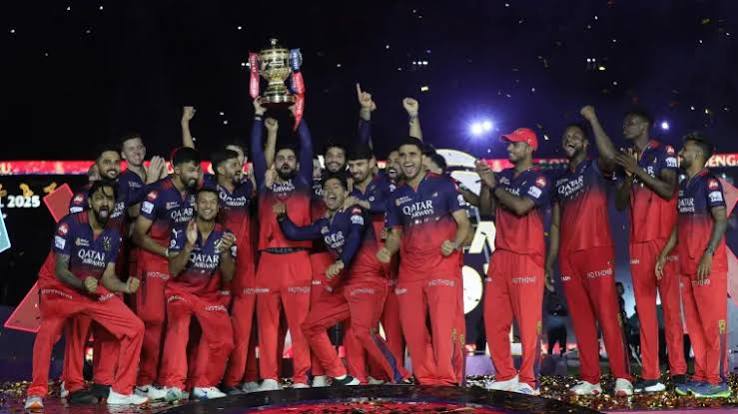
The India Premier League has never been short on drama, but the 2026 season delivered something the tournament had only seen twice before in its history: a successful title defence. Royal Challengers Bengaluru (RCB), a franchise that spent 17 years chasing its first trophy before finally winning in 2025, didn’t just win again — they made IPL history by joining an incredibly exclusive club. But RCB’s triumph was only one part of a season that broke records on nearly every front, from the highest run tally in IPL history to a 15-year-old debutant who rewrote what a single season could look like.
Table of Contents
- The Final: How RCB Sealed History
- Why Back-to-Back Titles Are So Rare
- Vaibhav Sooryavanshi: The Season’s Breakout Star
- Kagiso Rabada’s Purple Cap Triumph
- A Season of Records: IPL 2026 by the Numbers
- Other Standout Performers
- What This Season Taught Us
- Cocnlusion
- Frequently Asked Questions
The Final: How RCB Sealed History
The IPL 2026 final at the Narendra Modi Stadium in Ahmedabad pitted RCB against Gujarat Titans, a rematch of sorts given GT’s own strong campaign throughout the season. Sent in to bat first, Gujarat got off to a shaky start, losing both openers inside the powerplay. Captain Shubman Gill fell for just 10, dismissed by Josh Hazlewood, while Sai Sudharsan followed soon after off Bhuvneshwar Kumar. It was Washington Sundar who anchored the innings, top-scoring with a composed 50 not out off 37 balls, but the rest of the GT batting lineup couldn’t build around him.
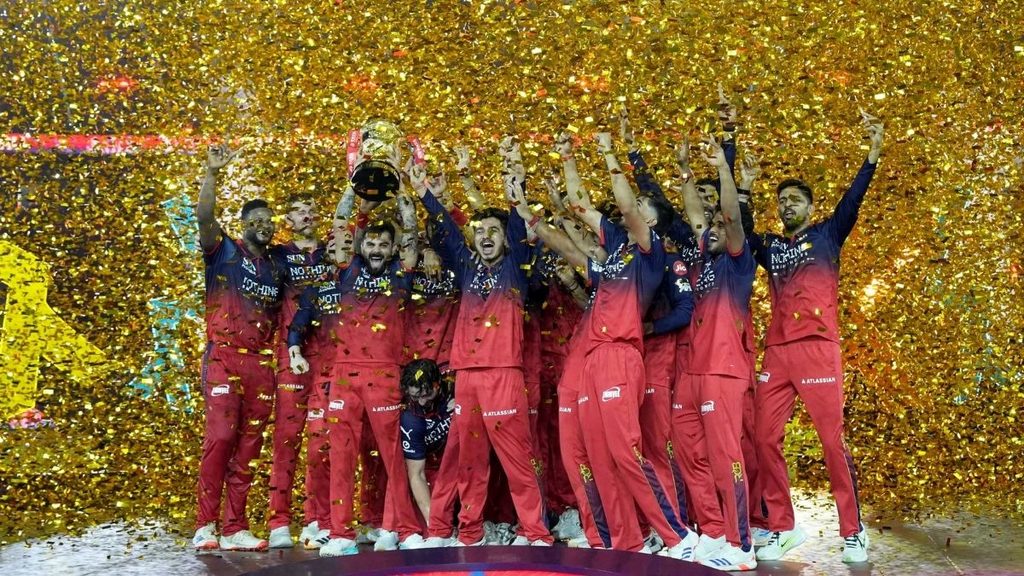
Rasikh Salam picked up 3 wickets for 27 runs, restricting Gujarat to 155 for 8 in their 20 overs — a below-par total on a pitch that had generally favored batters all season. Chasing 156, RCB openers Virat Kohli and Venkatesh Iyer put on an electric start, taking Purple Cap frontrunner Kagiso Rabada for 37 runs in his first two overs alone. Mohammed Siraj eventually broke through, dismissing Iyer for 32 off 16 balls, and Rabada struck back immediately by removing Devdutt Padikkal — a wicket that also handed Rabada the outright Purple Cap lead for the tournament.
Rashid Khan then briefly threatened a Gujarat comeback, picking up Rajat Patidar and Krunal Pandya within four balls of each other to reduce RCB to 91 for 4. That’s when Kohli took over. Batting with the calm authority that has defined his IPL career, Kohli brought up his half-century off just 25 balls — his fastest fifty in IPL history — and finished unbeaten on 75 from 42 deliveries, including nine fours and three sixes. Tim David chipped in with a brisk 24 off 17, and RCB eventually got home with 5 wickets and two overs to spare, finishing on 161 for 5.
Kohli was named Player of the Match, capping off a final that gave him his second IPL trophy in as many seasons.
Why Back-to-Back Titles Are So Rare
To understand why RCB’s win mattered so much, it helps to look at just how difficult defending an IPL title actually is. Across 18 previous seasons, only two franchises had managed it before 2026: Chennai Super Kings, who went back-to-back in 2010 and 2011, and Mumbai Indians, who repeated the feat in 2019 and 2020. Both of those teams were considered among the most dominant sides in IPL history at the time, built around deep, experienced squads and stable leadership.
RCB’s achievement carries an added layer of significance because of the franchise’s own history. For 17 seasons, RCB was the team most associated with heartbreak in the IPL — reaching finals without ever lifting the trophy, and often falling short in agonizing fashion. Their maiden title win in 2025, followed immediately by a successful defence in 2026 under captain Rajat Patidar, effectively rewrote the franchise’s identity within the space of two seasons. Cricket analysts have already started referring to this stretch as the beginning of a new RCB era, one built around a blend of Kohli’s continued brilliance and a supporting cast that has matured around him.
Vaibhav Sooryavanshi: The Season’s Breakout Star
If RCB’s title defence was the season’s headline story, Vaibhav Sooryavanshi’s individual campaign was its most talked-about subplot. The Rajasthan Royals batter, just 15 years old, won the Orange Cap with 776 runs in 16 matches at an average of 48.50 and an extraordinary strike rate of 237.30 being the highest strike rate ever being recorded by winner of Orange Cap.
What made Sooryavanshi’s season even more remarkable was the sheer range of individual honors he collected. Alongside the Orange Cap, he also picked up the MVP award, Emerging Player of the Season, Super Striker, and Super Sixes awards — five individual honors in a single season, a first in IPL history. He also broke a long-standing record along the way, hitting 72 sixes across the season and surpassing Chris Gayle’s previous record of 59 sixes, set back in 2012. For a player who started the season as a teenager largely unknown outside serious cricket circles, it was a campaign that instantly placed him among the most talked-about young talents in the sport.
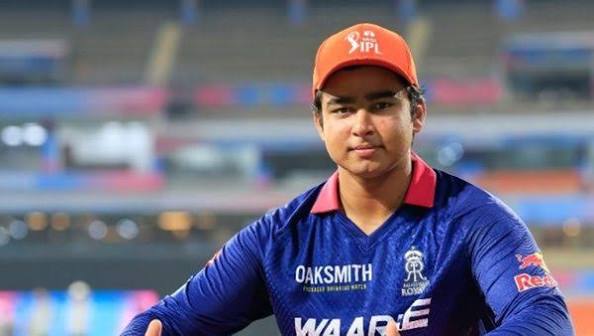
The race for the Orange Cap was tighter than the final numbers might suggest. Shubman Gill finished second with 732 runs despite Gujarat’s final defeat, and his GT teammate Sai Sudharsan was third with 722. Kohli’s own consistency throughout the season saw him finish fourth with 675 runs, a tally boosted by his match-winning knock in the final itself.
Kagiso Rabada’s Purple Cao Triumph
While Sooryavanshi dominated headlines with the bat, Kagiso Rabada quietly put together one of the finest bowling seasons in recent IPL history. Playing for Gujarat Titans, Rabada finished with 29 wickets in 17 matches at an economy of 9.68, claiming the Purple Cap for the second time in his IPL career — his first came with Delhi Capitals back in 2020, where he took 30 wickets.
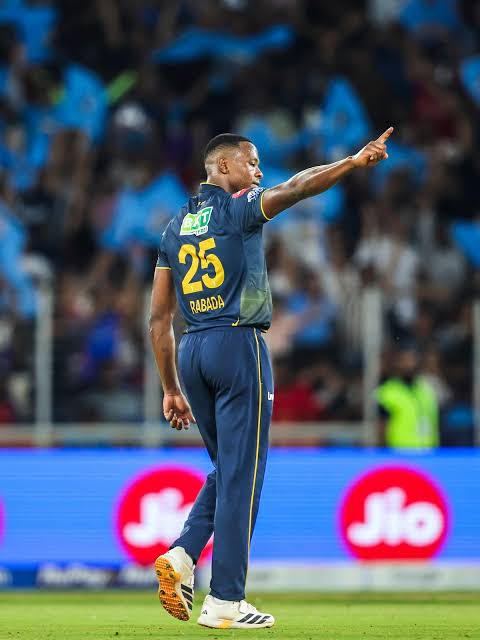
Rabada’s path to the Purple Cap had an unusual twist in the final itself. Despite bowling for the losing side, his dismissal of RCB’s Devdutt Padikkal in the fifth over of the chase moved him past Bhuvneshwar Kumar, who had been level with him on the wicket-taking charts heading into the final. Bhuvneshwar finished the season with 28 wickets, agonizingly close to matching Rabada’s tally but ultimately falling one short. It was a reminder that even in a tournament built around explosive batting, disciplined, high-pace bowling still had a decisive say in how the season’s individual honors were decided.
A Season of Records: IPL 2026 by Numbers
Beyond the individual storylines, IPL 2026 was, statistically speaking, the most extreme season the tournament has ever produced. The numbers tell their own story:
27,450 total runs were scored across the season — the highest run tally in IPL history, comfortably surpassing the previous record set in IPL 2025.
a) Teams crossed the 200-run mark a record 65 times during the tournament, reflecting just how aggressive batting approaches had become across every franchise.
b)The tournament’s overall batting average sat at 31.26, suggesting that partnerships were lasting longer and innings were collapsing less often than in previous seasons — even as scoring rates climbed.
c) Remarkably, there were instances of teams trailing by 40 runs at the halfway mark and still winning the match, a testament to how deep most batting lineups had become by 2026.
d) The season also featured its share of standout individual moments: Praful Hinge picked up three wickets in his very first over in IPL cricket — a first in the tournament’s 18-year history — while Urvil Patel equalled the record for the fastest IPL fifty, reaching it in just 13 balls.
e) Taken together, these numbers point to a broader shift in how IPL cricket is being played. Bowlers, even highly skilled ones, faced arguably their toughest test yet, while batting depth — not just top-order firepower — increasingly decided which teams could sustain a serious title push.
Other Standout Performers
While Sooryavanshi and Rabada took home the season’s headline awards, several other players had campaigns worth remembering. Prabhsimran Singh was a consistent threat at the top of the order for Punjab Kings, finishing with 510 runs and playing a major role in Punjab’s strong start to the season. Angkrish Raghuvanshi provided reliable middle-order runs for Kolkata Knight Riders, ending the season with 422 runs. On the bowling side, Prince Yadav impressed for Lucknow Super Giants with 16 wickets, regularly clocking speeds above 140 kph and emerging as one of the tournament’s most exciting fast-bowling prospects.
Fielding also had its own standout performers. Dhruv Jurel of Rajasthan Royals led all players with 12 catches in just eight matches, with Jos Buttler and Rinku Singh close behind. RCB’s fielding unit was widely regarded as the strongest in the tournament, with Devdutt Padikkal taking several crucial catches during the playoffs that helped power the team’s title defence.
What This Season Taught Us
IPL 2026 offered a few clear lessons for anyone following the tournament closely. First, sustained success in T20 cricket increasingly depends on squad depth rather than a handful of star performers — RCB’s title defence was built on contributions across the batting order, not just from Kohli. Second, age is becoming far less of a barrier to elite performance, as Sooryavanshi’s season demonstrated in dramatic fashion; a 15-year-old topping the run charts with a record strike rate suggests the pool of talent entering the IPL is only getting younger and more fearless.
Third, disciplined bowling — particularly at the death overs — remains just as valuable as ever, even in a season defined by record-breaking batting totals, as Rabada and Bhuvneshwar’s tight race for the Purple Cap showed. Finally, and perhaps most importantly for RCB fans specifically, the 2026 season confirmed that the franchise’s 2025 title wasn’t a one-off. Back-to-back championships put RCB in the same conversation as CSK and Mumbai Indians — two franchises long considered the gold standard of IPL success. Whether RCB can extend this run into a third consecutive title in 2027 remains to be seen, but for now, they’ve cemented themselves as the team to beat heading into the next season.
Conclusion
IPL 2026 will be remembered for a lot of things including the highest run tally in the tournament’s history, a 15-year-old’s record-breaking season, and Kagiso Rabada’s disciplined march to a second Purple Cap. But above all, it will be remembered as the season Royal Challengers Bengaluru finally shed their long-standing reputation for heartbreak and stepped into a new era of dominance. Virat Kohli’s fastest-ever IPL fifty in the final was a fitting way to seal a season that, from start to finish, redefined what was possible in T20 cricket.
The season also highlighted the depth of talent and the growing competitiveness of T20 cricket, with both established stars and emerging players marking their mark. As the IPL continues to evolve, the 2026 season will stand as a memorable chapter in the tournament’s history and set exciting benchmark for the seasons to come.
Frequently Asked Questions
Q: Who won IPL 2026?
Royal Challengers Bengaluru (RCB) won IPL 2026, defeating Gujarat Titans by 5 wickets in the final at the Narendra Modi Stadium in Ahmedabad.
Q: Is this RCB’s second IPL title?
Yes. RCB won their maiden IPL title in 2025 and successfully defended it in 2026, becoming only the third franchise in IPL history to win back-to-back titles, after Chennai Super Kings (2010-11) and Mumbai Indians (2019-20).
Q: Who won the Orange Cap in IPL 2026?
Vaibhav Sooryavanshi of Rajasthan Royals won the Orange Cap with 776 runs in 16 matches at a strike rate of 237.30, the highest ever by an Orange Cap winner.
Q: Who won the Purple Cap in IPL 2026?
Kagiso Rabada of Gujarat Titans won the Purple Cap with 29 wickets in 17 matches, his second Purple Cap after previously winning it in 2020 with Delhi Capitals.
Q: Who was Player of the Match in the IPL 2026 final?
Virat Kohli was named Player of the Match for his unbeaten 75 off 42 balls, which included his fastest-ever IPL fifty, reached in just 25 balls
Q: What records were broken in IPL 2026?
IPL 2026 produced 27,450 runs, the highest total in any IPL season, with teams crossing 200 runs a record 65 times. Vaibhav Sooryavanshi also broke Chris Gayle’s record for most sixes in a season, hitting 72 compared to Gayle’s 59 in 2012.


