

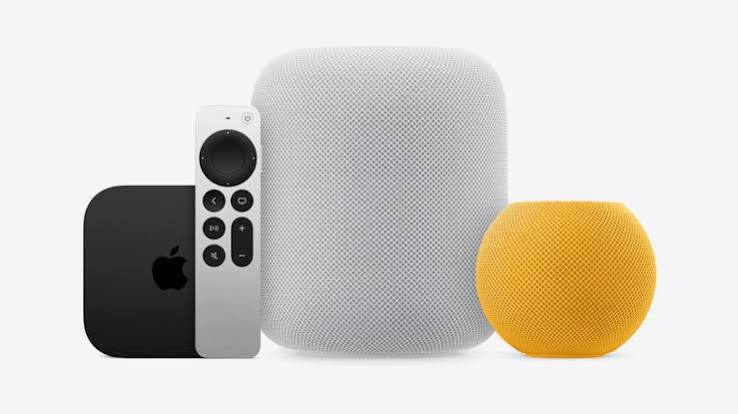
For years, Apple has watched Amazon and Google dominate the smart home space while its own offerings — the HomePod and Apple TV — sold decently but never became the centerpiece of the modern connected household. That’s about to change. After repeated delays dating back to 2024, brand is finally preparing to launch a full lineup of Siri-powered smart home devices, marking its most serious entry yet into a market it has largely sat out of.
Table of Contents
- Why Now: The Siri Delay That Held Everything Back
- The Apple Home Hub: Apple’s Answer to Echo Show
- Apple’s First-Ever Security Camera
- Updated HomePod and Apple TV
- A Future Siri-Powered Robot
- How This Challenges Amazon and Google
- What’s Still Uncertain
- Conclusion
- FAQs
Why Now: The Siri Delay That Held Everything Back
Apple’s smart home ambitions aren’t new — the company has reportedly been working toward this moment since as far back as 2024. The hardware itself was originally expected as early as spring 2025, then pushed to fall 2025, then spring 2026, with each delay tied to the same root cause: an overhauled, more conversational version of Siri wasn’t ready. Engineering and quality issues repeatedly pushed back the launch of Brand’s Intelligence-powered Siri, and since nearly every new smart home device brand has planned depends on that smarter assistant as its core interface, the hardware simply couldn’t ship without it.

With Siri AI now on track for iOS 27, iPadOS 27, and macOS 27 “Golden Gate,” brand finally has the software foundation needed to introduce new hardware built around it. That timing is why this fall is shaping up to be the moment Apple’s smart home push actually becomes real, rather than just another rumor cycle.
The Apple Home Hub: Apple’s Answer to Echo Show
The centerpiece of Apple’s plans is a new home hub, widely expected to feature a square 7-inch touchscreen display designed to act as a command center for the connected home. Reports describe it as similar in spirit to the Amazon Echo Show or Google Nest Hub, but built specifically around Siri and Apple Intelligence rather than a screen-first interface.
Design details suggest the device will be available in two forms — a wall-mounted option and a speaker-base option, the latter featuring a hemispherical dome reminiscent of the old iMac G4. A built-in camera would support video calls and offer facial recognition and presence detection, letting the hub display content specific to whichever family member walks up to it. Interestingly, the hub reportedly won’t have a dedicated App Store; instead, it will run existing apps like Calendar, Camera, Music, Reminders, Notes, and Photos, keeping the experience tightly scoped rather than turning into a full tablet-style platform. Higher-end versions are also said to be in development, including one variant with a small robotic arm and a larger 9-inch screen.
Apple’s First-Ever Security Camera
Alongside the home hub, brand is reportedly developing its first-ever HomeKit-enabled security camera, aiming to compete directly with Amazon’s Ring and Google’s Nest. According to analyst Ming-Chi Kuo, brand has been preparing a wireless smart home IP camera for mass production, with ambitions of shipping millions of units annually through assembly partner Goertek.
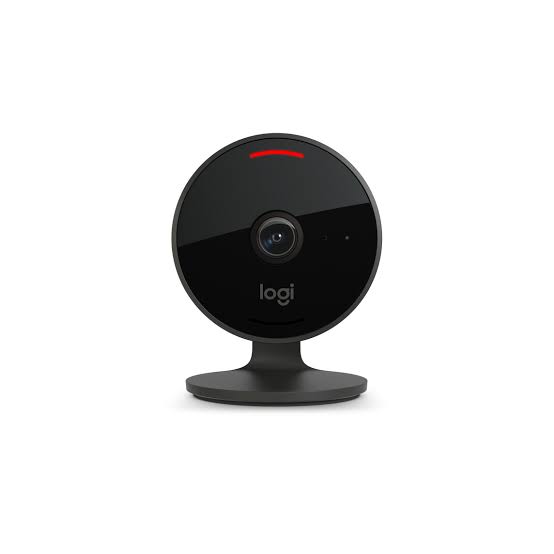
The camera is expected to lean heavily on HomeKit Secure Video, which already offers end-to-end encrypted footage that even brand itself cannot access — a privacy angle the company is likely to lean into heavily as a differentiator against Ring and Nest, both of which have faced scrutiny over cloud footage access in the past. Feature-wise, the camera is expected to support facial and presence recognition for smarter automation, tie into the broader Home app ecosystem, and benefit from several HomeKit Secure Video upgrades arriving in iOS 27, including 4K recording, AI-generated summaries of captured footage, and the ability to stitch together video from multiple cameras to track a single event as it moves through different rooms of a house.
Updated HomePod and Apple TV
Brand’s smart home refresh isn’t limited to brand-new product categories — existing devices are getting meaningful updates too. Both the HomePod mini and Apple TV are expected to receive faster chips, with the HomePod mini also picking up new color options. The updated Apple TV 4K, now priced at $199 following a recent increase, and the refreshed HomePod mini at $129, are both expected to arrive in fall 2026, potentially serving as an early wave ahead of the home hub’s own release.
These speaker and streaming box updates matter more than they might initially seem, since both devices currently serve as smart home hubs for Matter, the cross-platform protocol that expands how many third-party smart home accessories work with HomeKit. In other words, before Apple’s dedicated home hub even arrives, these smaller updates are quietly reinforcing the infrastructure the bigger push will rely on.
A Future Siri-Powered Robot
Perhaps the most ambitious — and most distant — piece of Brand’s smart home vision is a Siri-powered tabletop robot, described in leaks as aiming for genuine “Pixar-level charm.” The device is reportedly a motorized, lamp-like unit capable of swiveling, tracking movement around a room, and even performing expressive, animation-like gestures. Sources have described it as one of brand’s most ambitious hardware projects since the original iPhone, though it’s said to still be a few years out, with a rough target of 2027.
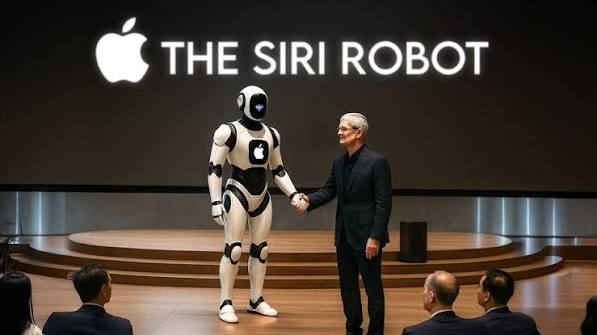
While it won’t factor into this fall’s launches, the robot underscores just how far Apple’s smart home ambitions extend beyond a simple speaker-and-camera lineup — the company appears to be aiming for something closer to a genuine home companion device than a conventional smart display.
How This Challenges Amazon and Google
What makes this push notable isn’t just the individual products — it’s the direct challenge it represents to two companies that have effectively owned the smart home category for over a decade. Amazon’s Echo lineup and Google’s Nest ecosystem have had a significant head start, with millions of devices already installed in homes worldwide. Brand’s repeated delays only widened that gap further, costing the company precious time in a market where early habit formation matters enormously — once someone has an Echo in every room, switching platforms is a real behavioral hurdle, not just a purchasing decision.
Apple’s bet is that its privacy-first approach, combined with tighter integration across iPhone, Mac, and other devices, can be enough of a differentiator to pull users away from entrenched habits. Whether that’s enough to meaningfully dent Amazon and Google’s dominance remains an open question, but it’s a far more serious attempt than Apple’s previous, comparatively passive approach to the category.
What’s Still Uncertain
Despite the growing amount of reporting on Apple’s smart home plans, several key details remain unresolved. Exact pricing for the home hub and security camera hasn’t been confirmed, and while a fall 2026 window has been widely discussed, some reports suggest the hub specifically may not land until as late as early 2027, given Apple’s history of pushing this launch back multiple times already. The security camera’s timeline is similarly described as “not a sure thing” for 2026 by some outlets, leaving open the possibility of further delays.
Conclusion
After years of watching from the sidelines while Amazon and Google built out the modern smart home, brand appears ready to make its most serious push yet — anchored by a new home hub, its first security camera, refreshed HomePod and Apple TV hardware, and eventually, an ambitious Siri-powered robot. Whether this finally gives Apple a genuine foothold in a category it has long underestimated, or simply adds another set of expensive accessories to its ecosystem, will likely become clearer once these devices actually start shipping later this year.
What makes this moment different from Apple’s past, more half-hearted attempts at the smart home is the sheer scale of what’s reportedly in development at once. Rather than a single new speaker or a minor software update, brand is lining up an entire connected ecosystem — a display-based hub, a dedicated camera, refreshed audio hardware, and a long-term robotics project — all built around one unified, smarter version of Siri. That kind of coordinated rollout suggests the company sees this less as an experiment and more as a genuine long-term category commitment.
Of course, ambition alone won’t be enough. Amazon and Google have spent over a decade building trust, third-party accessory support, and daily habits into millions of homes, and brand will need more than tighter ecosystem integration to meaningfully shift that. Pricing, reliability, and how well Siri actually performs against Alexa and Google Assistant in real-world use will likely decide whether this becomes brand’s next major product category, or just another well-intentioned experiment that never quite catches on.
FAQs
1. What is Apple’s smart home hub?
It’s a rumored device featuring a 7-inch touchscreen designed to act as a central command center for smart home devices, similar to the Amazon Echo Show or Google Nest Hub, but built around Siri and Apple Intelligence.
2. When will Apple’s smart home hub launch?
Reports suggest a launch window between October 2026 and early 2027, though the timeline has shifted multiple times due to delays in brand’s overhauled Siri.
3. Is Apple making a security camera?
Yes, reports indicate brand is developing its first HomeKit-enabled security camera, expected to compete with Amazon Ring and Google Nest, potentially launching as soon as 2026.
4. Why has Apple’s smart home hardware been delayed?
Most of brand’s smart home devices depend on an upgraded, more conversational version of Siri, which faced repeated engineering and quality issues, pushing hardware launches back from 2025 into 2026 and potentially 2027.
5. What other smart home products is Apple working on?
Alongside the home hub and security camera, brand is reportedly updating the HomePod mini and Apple TV, and developing a Siri-powered tabletop robot expected around 2027.


