

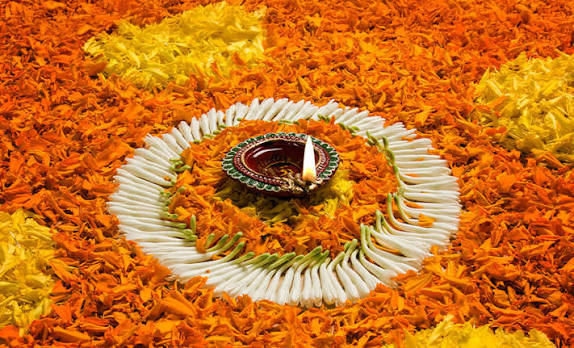
When the festival of lights arrives, every doorstep in India starts to glow with colour. Long before the first diya is lit, families sit together on the floor, drawing patterns of flowers, lamps, and sacred symbols at the entrance of the house. This is the heart of Diwali rangoli, a tradition that welcomes guests, invites good fortune, and makes the whole home feel ready for celebration.
Many people believe that a beautiful pattern needs years of practice or a lot of time. In truth, some of the loveliest designs are the simplest. With a few dots, a handful of petals, or a good stencil, you can create something eye-catching in under an hour. That is why Diwali ki rangoli is one of the most loved parts of the festival in every Indian home.
This guide shares 8 easy patterns, with materials, steps, and tips for each, so you can choose Diwali rangoli designs that match your skill and space. You will also find the latest trends, colour ideas, a rough budget in rupees, safety tips, and 10 FAQs. Whether you are drawing for the first time or the fortieth, you will find an idea here that suits you.
Table of Contents
What Is Rangoli and Why Is It Part of Diwali?
Rangoli is a traditional Indian art form in which patterns are created on the floor using coloured powder, rice flour, flower petals, or other natural materials. The word comes from the Sanskrit idea of “rows of colour”. In Tamil Nadu it is called kolam, in West Bengal alpana, in Andhra Pradesh and Telangana muggu, and in Rajasthan mandana.
During the festival, Diwali rangoli has a special meaning. Families believe that a bright, welcoming entrance invites Goddess Lakshmi, the goddess of wealth and prosperity, into the home. This is why the patterns are placed at the doorway, in the courtyard, or near the prayer corner. Lamps and flowers are often added around the design to make it feel even more auspicious.
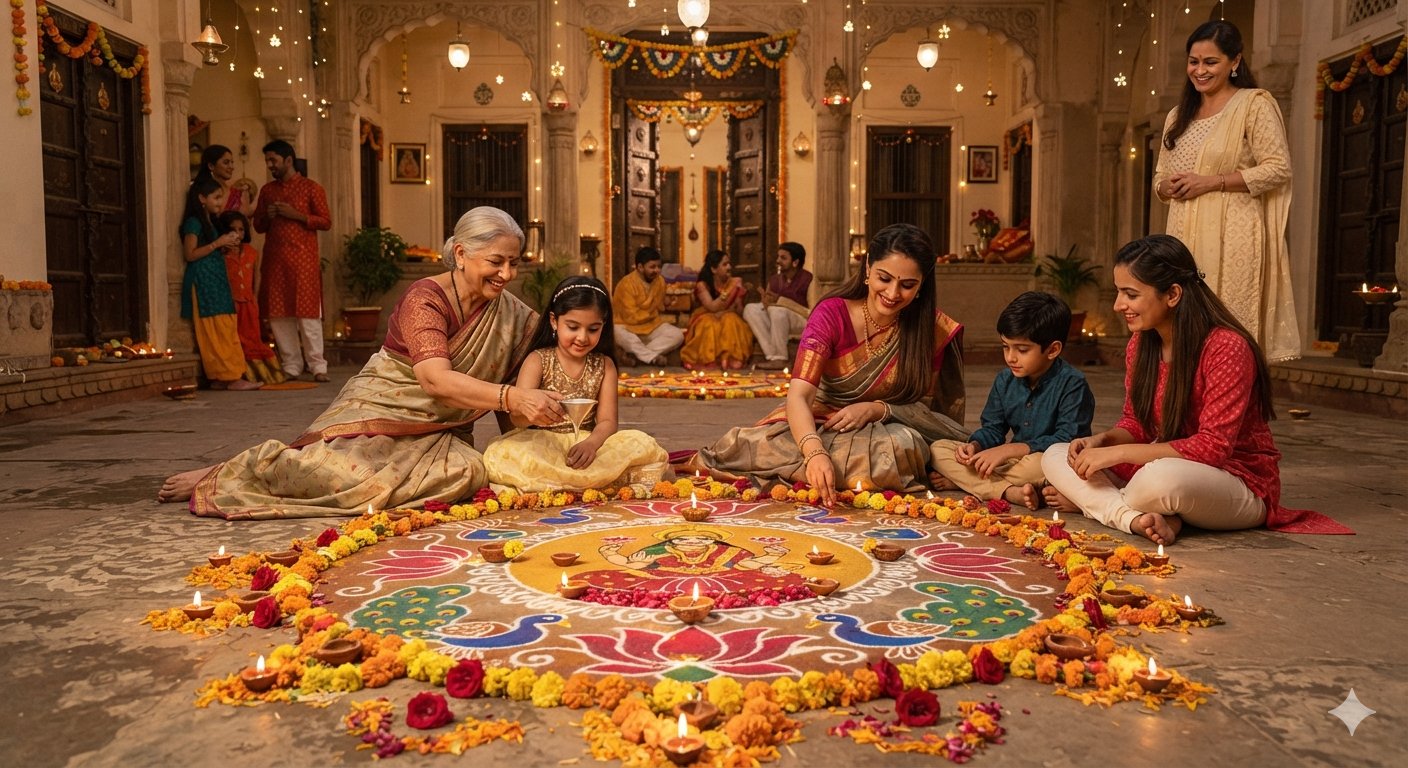
There is a practical charm as well. Making Diwali rangoli brings the family together, children learn the tradition, and neighbours stop to admire each other’s work. For many households, creating a Diwali rangoli special to their family is one of the most loved parts of the festival.
Materials You Need Before You Start
Gather your materials first so that you can work without stopping. You do not need everything on this list, so choose according to your chosen pattern. These materials work for almost all the Diwali rangoli ideas in this guide.
- Rangoli colours: powder colours in red, orange, yellow, green, blue, pink, and white.
- Rice flour or chalk powder: for outlines and white backgrounds.
- Fresh flowers and petals: marigold, rose, and chrysanthemum are the most popular.
- Diyas and tea-light holders: to add warmth and shine.
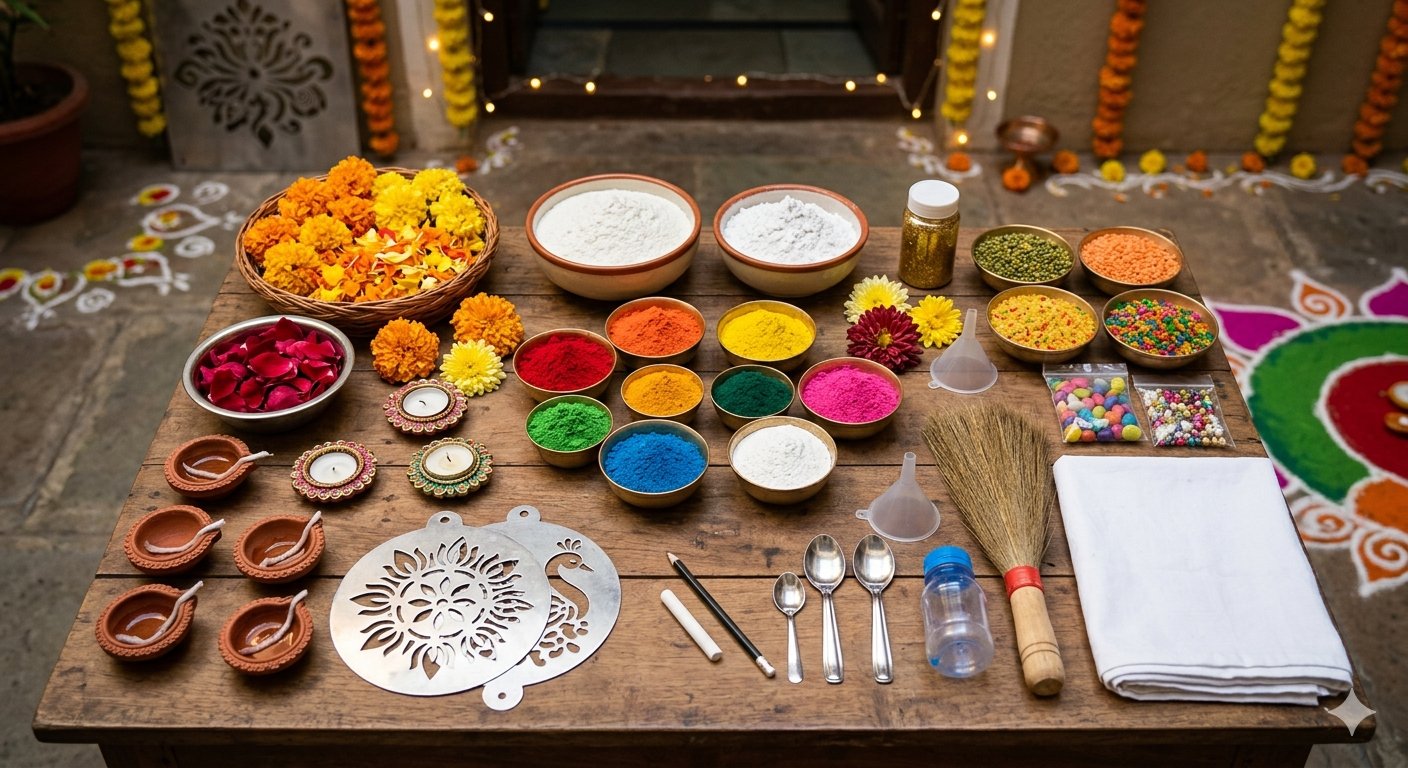
- Stencils or moulds: for quick, neat shapes.
- Chalk or a pencil: to sketch the outline lightly.
- A broom or soft brush: to clean the floor first.
- Small spoons, a funnel, or a plastic bottle with a hole in the cap: for fine lines.
- Extras: glitter, coloured pulses, rice, pebbles, or small decorative beads.
Before you begin, sweep and wipe the floor so that the colours sit evenly. A clean, dry surface gives sharper lines and brighter colour.
Pattern 1: Simple Dot Rangoli With a Diya Border
If you are a beginner, this Diwali rangoli is the best place to start. Dot-based designs help you keep the shape even, and the result always looks neat. This is one of the easiest Diwali rangoli designs simple enough for children to try with help.
How to make it:
- Mark a grid of dots with chalk, for example 9 dots by 9 dots, keeping the spacing equal.
- Join the dots with curved or straight lines to make a flower or star shape in the centre.
- Fill each section with a different colour, using a pinch of powder at a time.
- Draw small diya shapes around the border and colour them in orange and yellow.
- Outline the whole design in white to make the colours stand out.
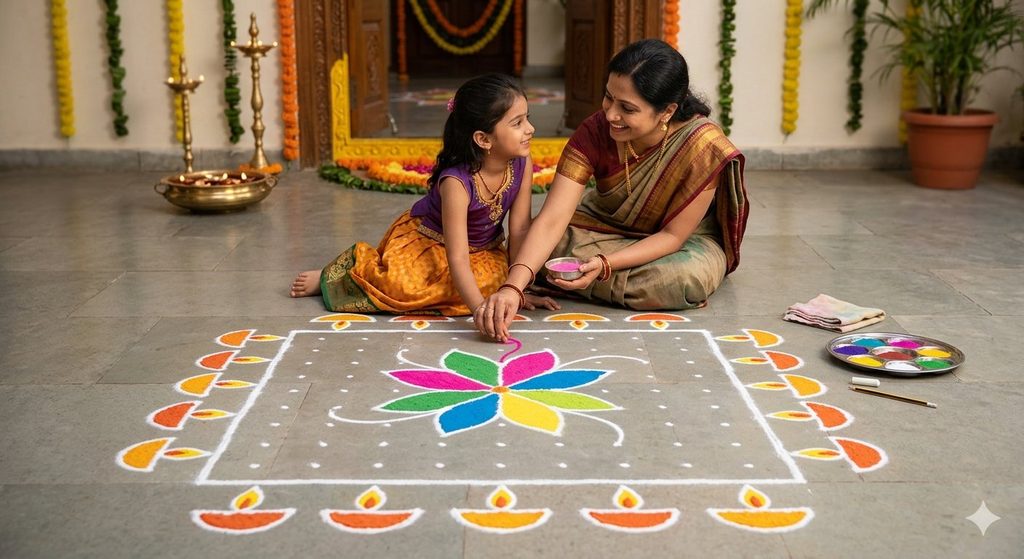
Tip: work from the centre outward, so you do not step on finished areas.
Pattern 2: Marigold Flower Rangoli
Nothing says festival like marigolds. A Diwali rangoli flower design is fresh, fragrant, and eco-friendly, and a single bag of petals can create a surprisingly large design. A Diwali rangoli flower arrangement also needs no special drawing skill.
How to make it:
- Separate marigold petals by colour into small bowls: orange, yellow, and, if you like, a few red rose petals.
- A large circle with chalk on the floor and divide in equal sections.
- Fill the sections with alternating petal colours.
- Place a ring of white flowers or jasmine around the edge for contrast.
- Put a diya or a bright bloom in the middle.
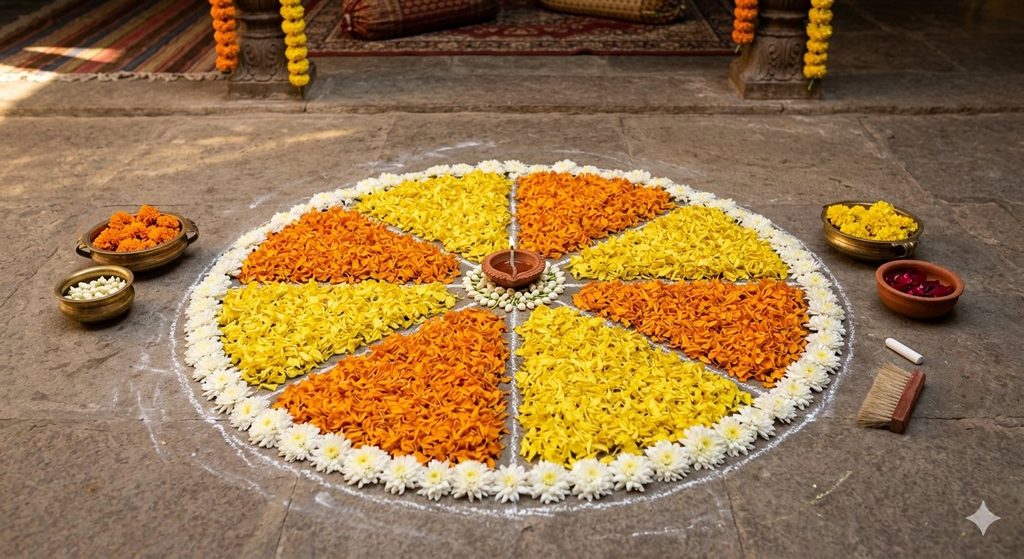
Tip: sprinkle a little water on the petals now and then so that they stay fresh for longer, and keep the design out of direct sun.
Pattern 3: Lotus Rangoli for Goddess Lakshmi
The lotus is closely linked with Goddess Lakshmi, who is often shown seated on one. A lotus Diwali rangoli near the entrance is both beautiful and meaningful.
How to make it:
- Draw a small circle for the centre of the lotus.
- Around it, sketch a ring of pointed petals, then a second, larger ring behind them, staggered so that each new petal sits between two from the row before.
- Fill the petals with shades of pink, from light to dark, and keep the centre yellow or orange.
- Add green leaves and a few curved lines to suggest water.
- Finish with a white outline and tiny dots.
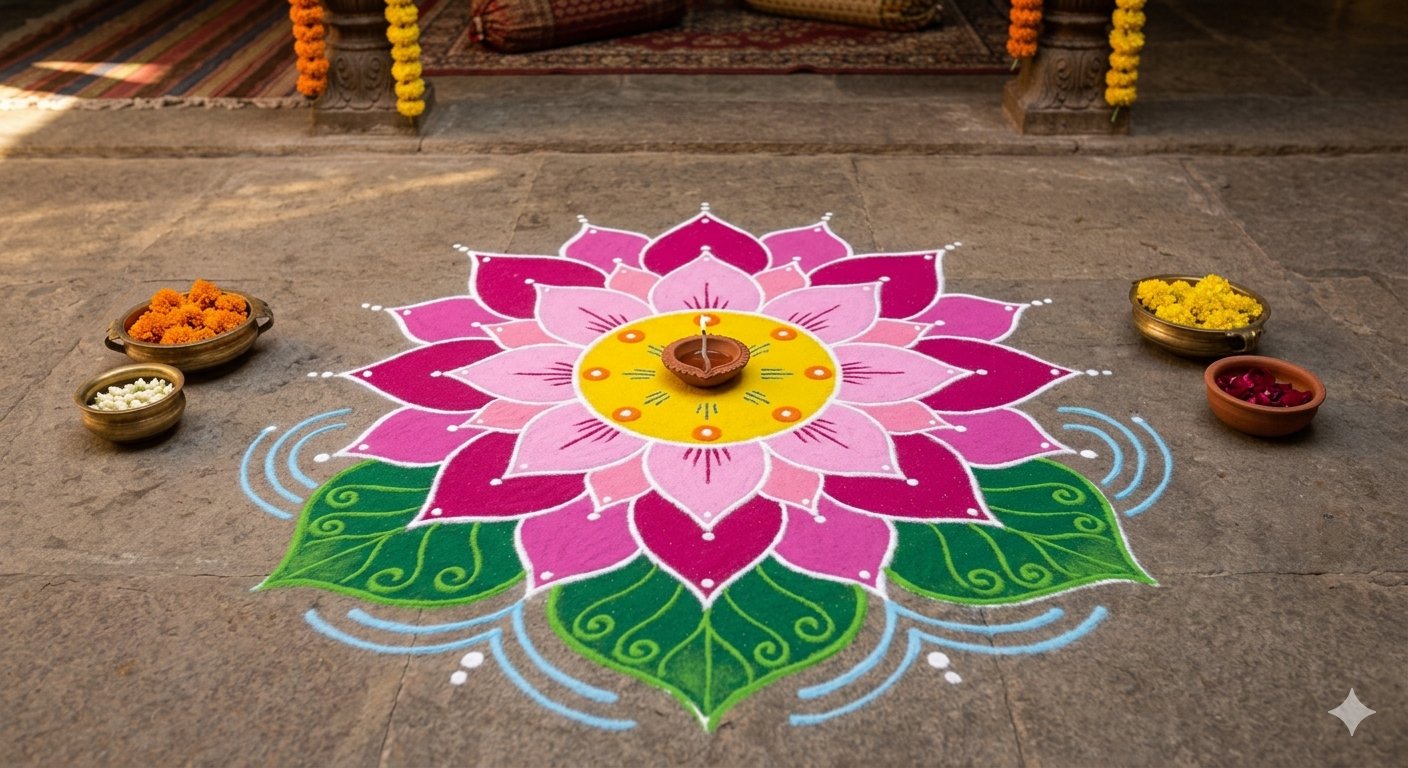
Tip: use a darker shade at the base of each petal and a lighter one at the tip. This simple trick gives the lotus a lifelike look.
Pattern 4: Circular Diya Rangoli
A diya-themed Diwali rangoli fits the spirit of the festival perfectly. It can be drawn with powder, or you can use real diyas as part of the design.
How to make it:
- Sketch a large circle and divide it into eight equal parts.
- In each part, draw a small diya shape with a flame, then colour the flames yellow and the lamp bodies orange or red.
- Fill the space between the lamps with leaves, curls, or dots.
- Draw a bold outer border in a contrasting colour.
- Place real diyas on the border in the evening.
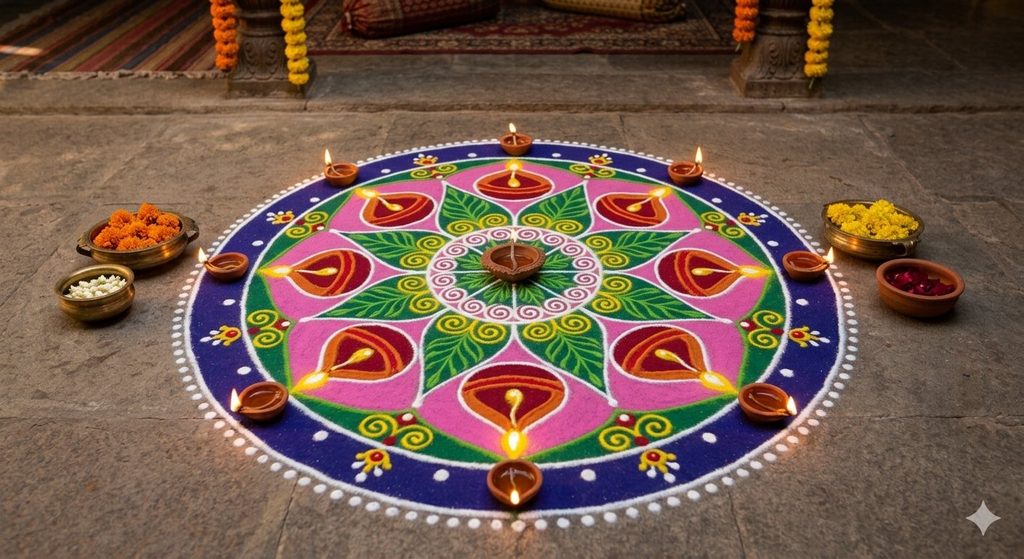
Tip: leave small gaps at the edge where real diyas will sit so that the powder does not catch fire or get disturbed when you light them.
Pattern 5: Peacock Rangoli
The peacock is a favourite of Indian art, and its colourful feathers suit festive decoration well. This Diwali rangoli special looks impressive, but it can be broken into simple steps.
How to make it:
- Draw the body as a small teardrop shape with a thin neck and a tiny head.
- Sketch the tail as a large fan with five to seven curved feather lines.
- Draw an eye shape at the end of each feather.
- Fill the eyes with blue, green, and a touch of gold, and the feathers with teal, green, and purple.
- Add small dots or beads along the outline for shine.
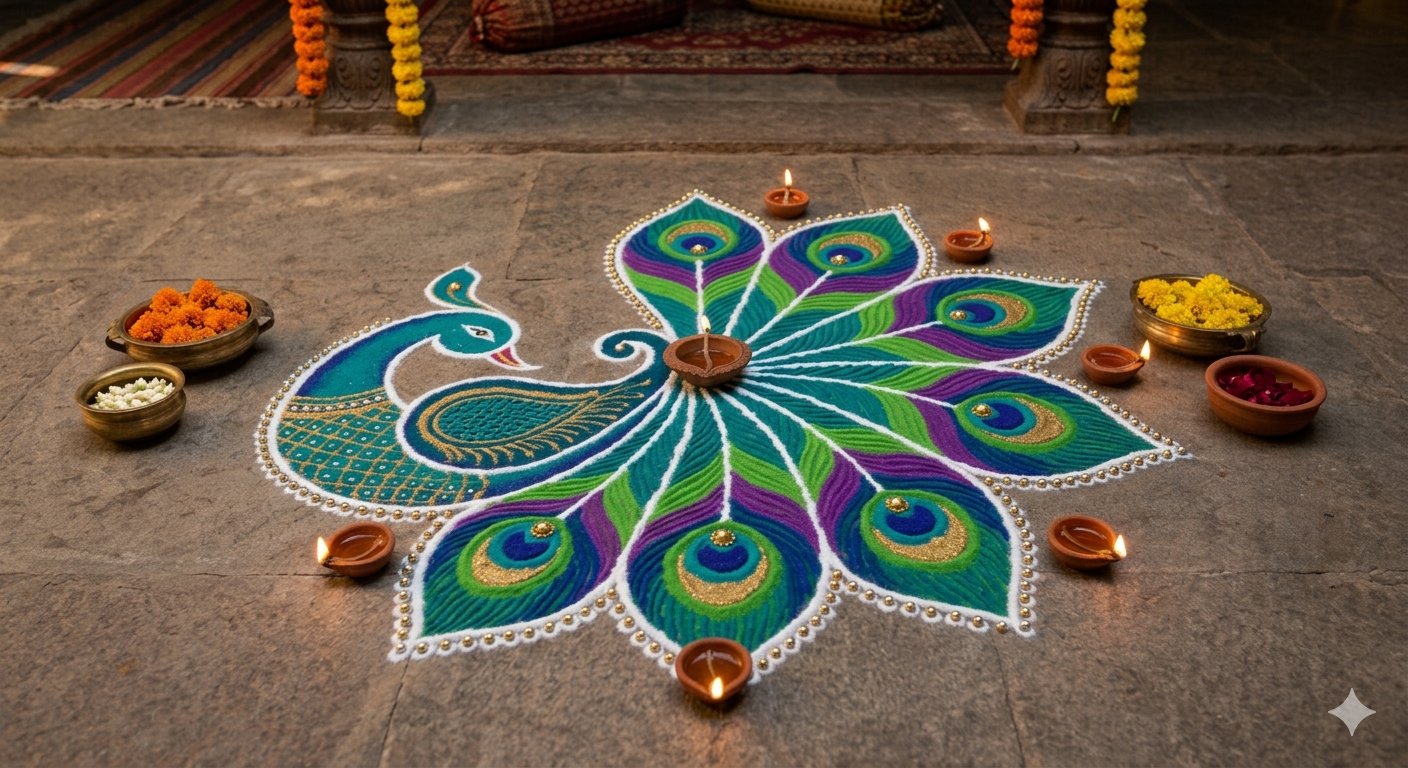
Tip: use a stencil if you are nervous about the shape. A good outline makes the rest easy.
Pattern 6: Traditional Symbols for an Auspicious Rangoli
Sacred symbols are an important part of every Diwali rangoli at the entrance. The swastik is considered auspicious in Indian tradition, and the words “Shubh Labh” (meaning good fortune and gain) are often written near the entrance.
How to make it:
- Draw a clean swastik in the centre using a ruler or grid so the arms are straight and even.
- Fill it in red or orange, with a yellow border.
- On either side, write “Shubh” and “Labh” with white powder or rice flour.
- Decorate around the letters with small flowers, dots, and curling lines.
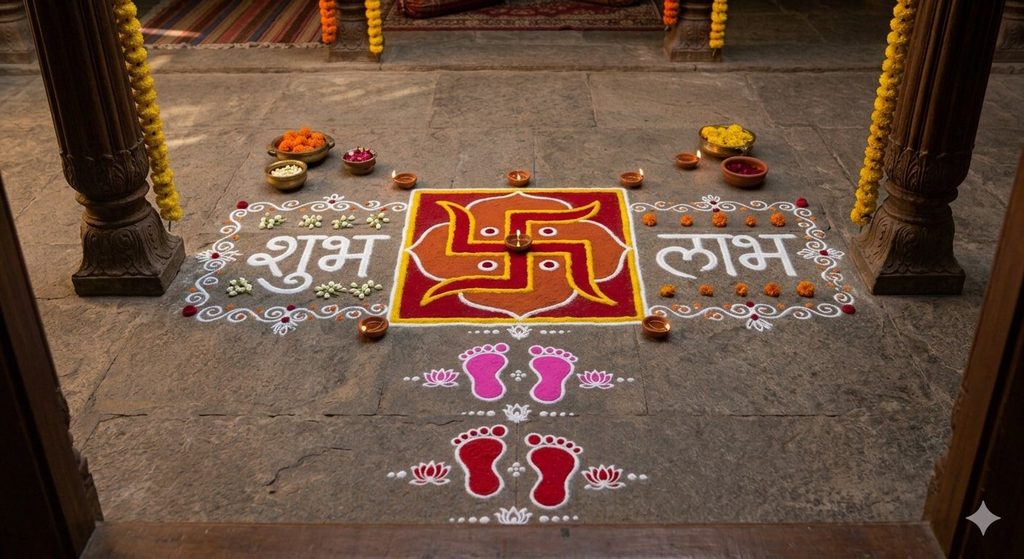
Tip: practise the lettering on paper first. Even handwriting makes the rangoli look neat and professional.
Pattern 7: Lakshmi Footprint Rangoli
Small footprints leading into the house are a popular Diwali rangoli tradition. They are meant to show Goddess Lakshmi’s steps as she enters the home.
How to make it:
- Use a stencil, or draw a pair of small footprints with a soft outline.
- Fill them with white rice flour paste or red and pink powder.
- Add tiny lotus flowers or dots around each footprint.
- Place the prints in a line, pointing inward, from the doorstep towards the prayer room.
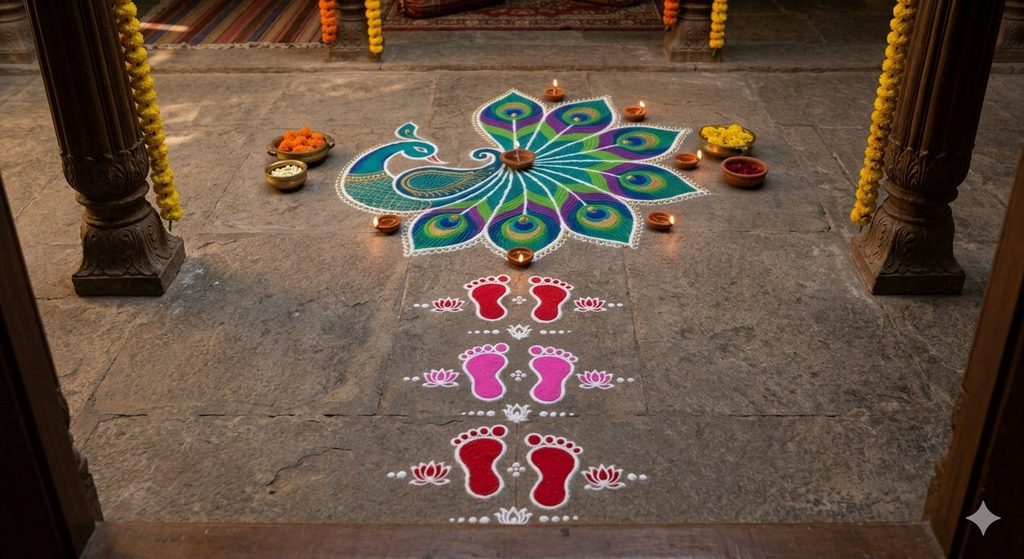
Tip: make the prints pointing in the direction of the entrance, since the idea is a welcome. Keep the line free of obstacles so that people can walk past without disturbing it.
Pattern 8: Floral Rangoli with a Floating Effect
Not every home has floor space for a large design. A floating Diwali rangoli in a wide brass bowl, called an urli, is easy, elegant, and very popular.
How to make it:
- Fill a wide, shallow urli with clean water.
- Float marigold heads, rose petals, and a few leaves in a circular pattern.
- Place two or three floating candles or a small diya in the centre.
- Add a few drops of rose water for fragrance, if you like.
Tip: keep the bowl away from curtains and draughts, and never leave lit candles unattended.
Rangoli Designs Worth Exploring for Your Next Celebration
Fresh Diwali rangoli ideas often mix tradition with small modern touches. If you like to follow what is current, here are some options that are popular for a Diwali rangoli latest design:
- Eco-friendly Diwali rangoli: flower petals, rice, coloured lentils, and leaves instead of chemical colours.
- Stencil and mould rangoli: ready-made shapes allow crisp results in minutes.
- Mixed-material designs: powder combined with petals, diyas, and small decorative stones for a layered look.
- Minimalist rangoli: a small, clean circle or mandala with just two or three colours.
- Mandala-inspired designs: detailed circular patterns with repeating shapes.
- Light-up rangoli: string lights or LED tea lights placed around a design to glow in the evening.
- Floating arrangements: water-based designs in urlis and bowls for balconies and tables.
Many families look for new Diwali rangoli ideas every year. The best approach is to take a traditional shape, such as a lotus or diya, and give it a personal twist with a new colour combination or a different border.
Colour Combinations That Look Stunning
Colour choice can lift a simple Diwali rangoli. Here are some combinations that rarely fail:
- Orange, yellow, and white: warm and festive, like flame and light.
- Pink, purple, and green: soft and modern, perfect for lotus and floral designs.
- Red, gold, and white: rich and traditional.
- Blue, green, and teal with gold accents: ideal for peacock patterns.
- A single colour plus white: an elegant minimalist look.
As a rule, place a light colour next to a dark one so that each shape stands out. A white outline works with nearly every combination.
A Rough Budget in Rupees
Rangoli does not have to be expensive. These are approximate festival-time prices, and they vary by city and shop, so treat them only as a guide:
- Rangoli colour pack (set of several colours): about ₹50 to ₹150
- Stencils or moulds: about ₹50 to ₹250 each
- Marigold flowers: about ₹60 to ₹200 per kilogram, and prices rise close to Diwali
- Clay diyas (a dozen): about ₹40 to ₹120
- Floating candles (a pack): about ₹100 to ₹300
- Brass urli: from about ₹300 to ₹1,500 depending on size and quality
A budget of ₹300 to ₹500 is enough for a lovely entrance Diwali rangoli at home. Buy colours and flowers a day early, but keep flowers in a cool place.
Colour Pairings to Give Your Rangoli a Fresh Look
- Pick the right spot. Choose a place where people will not walk through your Diwali rangoli. Entrances, corners, and next to the prayer area work well.
- Use a base layer. A thin layer of rice flour or chalk powder helps the colours stay sharp.
- Work in a calm area. Avoid strong wind and heavy foot traffic while you draw.
- Fix the colours lightly. A very light mist of water over powder helps it settle, but do not make the floor wet.
- Protect from pets and children. A small border of diyas or decorative stones can mark the edge.
- Make it in the evening. Cooler temperatures help petals last longer.
- Refresh daily. Touch up fading areas with a little colour or a few fresh flowers.
Safety and Common Mistakes to Avoid
A beautiful Diwali rangoli should also be safe. Keep these points in mind:
- Keep flames away from fabric and powder. Place diyas on solid holders, not directly on flammable materials.
- Do not leave lit lamps unattended, especially around children and pets.
- Avoid slippery floors. Wet petals or water on a smooth floor can cause falls.
- Use skin-friendly colours. Check the packaging, and wash your hands after handling powders.
- Do not block the entrance. Leave a clear path for guests.
Common mistakes:
- Drawing too large a design before you are ready, then running out of time.
- Using too many colours with no clear pattern.
- Skipping the outline, which makes the shapes look flat.
- Forgetting to plan the placement of diyas.
- Starting on a dusty or damp floor.
Conclusion
A Diwali rangoli is more than decoration. It is a welcome, a prayer in colour, and a way to bring the family together as the festival begins. From a dot-based design to a marigold circle, a lotus, a peacock, or a floating bowl of petals, every pattern in this guide can be made at home with simple materials and a little patience.
Pick one of these Diwali rangoli ideas that suits your skill, gather your materials a day early, and enjoy the process as much as the result. Remember the key points: start with a clean floor, sketch lightly, choose colours that contrast, and keep safety in mind around lamps. With these ideas, your Diwali rangoli will brighten your doorstep and make your home shine all through the festive days.
Happy Diwali!
Frequently Asked Questions (FAQs)
1. What is Diwali rangoli?
Diwali rangoli, also called Diwali ki rangoli in many homes, is a decorative pattern made on the floor, usually near the entrance, with coloured powder, rice flour, flower petals, or other materials. It is believed to welcome Goddess Lakshmi and bring good fortune.
2. Which are the simplest Diwali rangoli designs for beginners?
Dot-based patterns, simple flower shapes, and stencil designs are the easiest. They give neat results with very little drawing skill, and you can finish them quickly.
3. How can I make a Diwali rangoli flower design?
Divide a chalk circle into sections and fill each with petals of different colours, such as orange and yellow marigolds with white jasmine or rose petals. Add a diya in the centre and sprinkle a little water to keep the petals fresh.
4. What materials are used in Diwali rangoli?
Common materials include coloured powder, rice flour, flower petals, coloured pulses, rice, sand, and decorative stones. Eco-friendly options such as petals and rice are especially popular.
5. Where should I place Diwali rangoli at home?
The entrance is the traditional place, since it is meant to welcome guests and Goddess Lakshmi. You can also place small designs at the prayer corner, in the courtyard, or on a balcony or table.
6. How long does it take to make a Diwali rangoli?
A simple design can be done in 20 to 30 minutes. A detailed pattern, such as a peacock or a large mandala, can take one to three hours depending on your experience and the size.
7. How can I make Diwali rangoli last for several days?
Choose a low-traffic spot, use a base layer of rice flour, and avoid wind and direct sun. Mist petals lightly, protect the edges with diyas or stones, and refresh any faded areas each day.
8. What is the difference between rangoli, kolam and alpana?
They are regional names for similar art forms. Rangoli is the general term, kolam is used in Tamil Nadu and is traditionally made with rice flour, and alpana comes from West Bengal and is often drawn with rice paste.
9. Which colours are considered auspicious for Diwali?
Red, orange, yellow, pink, and gold are widely seen as festive and auspicious. Many families also use white and green to balance the bright shades.
10. Can children help make a Diwali rangoli?
Yes. Children enjoy filling colours, placing petals, and using stencils. Give them simple tasks and keep lit diyas out of reach until the design is finished.


