

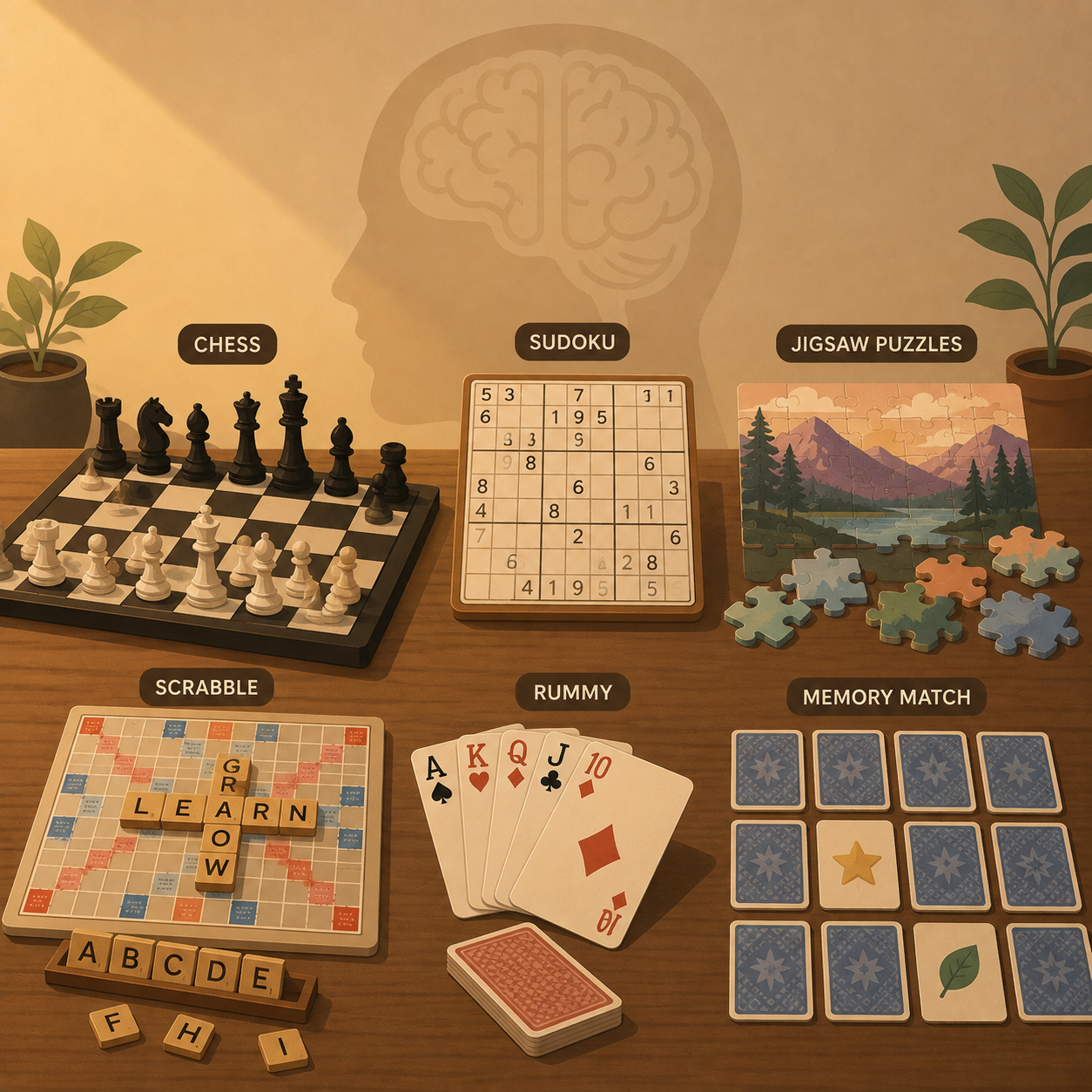
Indoor games are a simple and effective way to challenge your mind and enhance mental fitness without the need for a gym or any special equipment . All you need is a table, a group of family or friends, and a bit of your time. A lot of our time is spent in thinking about our physical health including steps to walk, calories to burn, exercise strategies, gym hours etc. But the mental health doesn’t often gets the equal recognition. Even the mental fitness somewhere gets stronger with the physical fitness path, but not by considering it as the main attention point.
Table of Contents
- Why our Brain needs a “Workout”
- The Science Behind Brain Games
- 6 Indoor Games that Double as Brain Workout
- Indoor Games for Different Age Groups
- How Often Should you Play
- Benefits Beyond the Brain
- Conclusion
Why our Brain needs a “Workout”
Like muscles, the brain benefits from challenges. When you crack a puzzle, map out a chess move, or memorize a set of cards, you engage specific cognitive functions such as memory, pattern recognition, decision-making in high-pressure moments. Practicing these activities continuously can help:
- Boost focus and attention span: Games that require continuous concentration exercise your brain to stay “in the zone” for a greater stretch.
- Enhances recall ability: Games that call for remembering positions, cards, or sequences give your short-term and working memory an active exercise.
- Build strategic thinking: Games with multiple viable moves force you to think multiple steps ahead, a skill that extends over into real-life decision-making.
- Reduce mental burnout from screens: Unlike scrolling or passive screen time, indoor games are immersive and active, giving your mind a different type of rest. The most rewarding part is that none of these comes across as “training.” It feels like fun-which is exactly why it works so well as a long-term practice.
The Science behind Brain Games
The idea that games can improve the mind is not just based on personal experience. It is backed up by a well-known concept in neuroscience called neuroplasticity, the brain’s ability to form new neural connections throughout life, not just in childhood. Every time you solve a riddle, plan a chess strategy, or remember a card sequence, you are strengthening pathways tied retention, attention, and problem-solving.
Researchers studying cognitive aging often point to “mentally engaging activities” including a group that consists of board games, puzzles, and strategy games as a habit linked to slower decline in memory and mental speed over time. You don’t need to be a scientist to advantage from this. Playing regular is enough to give your brain the kind of engagement it flourishes on.
6 Indoor Games That double as Brain Workout
1. Chess
Mental Payoff: Chess is one of the most studied indoor games for cognitive benefit. It builds calculated planning, pattern identification, and the ability to plan multiple moves forward while expecting your opponent’s response.
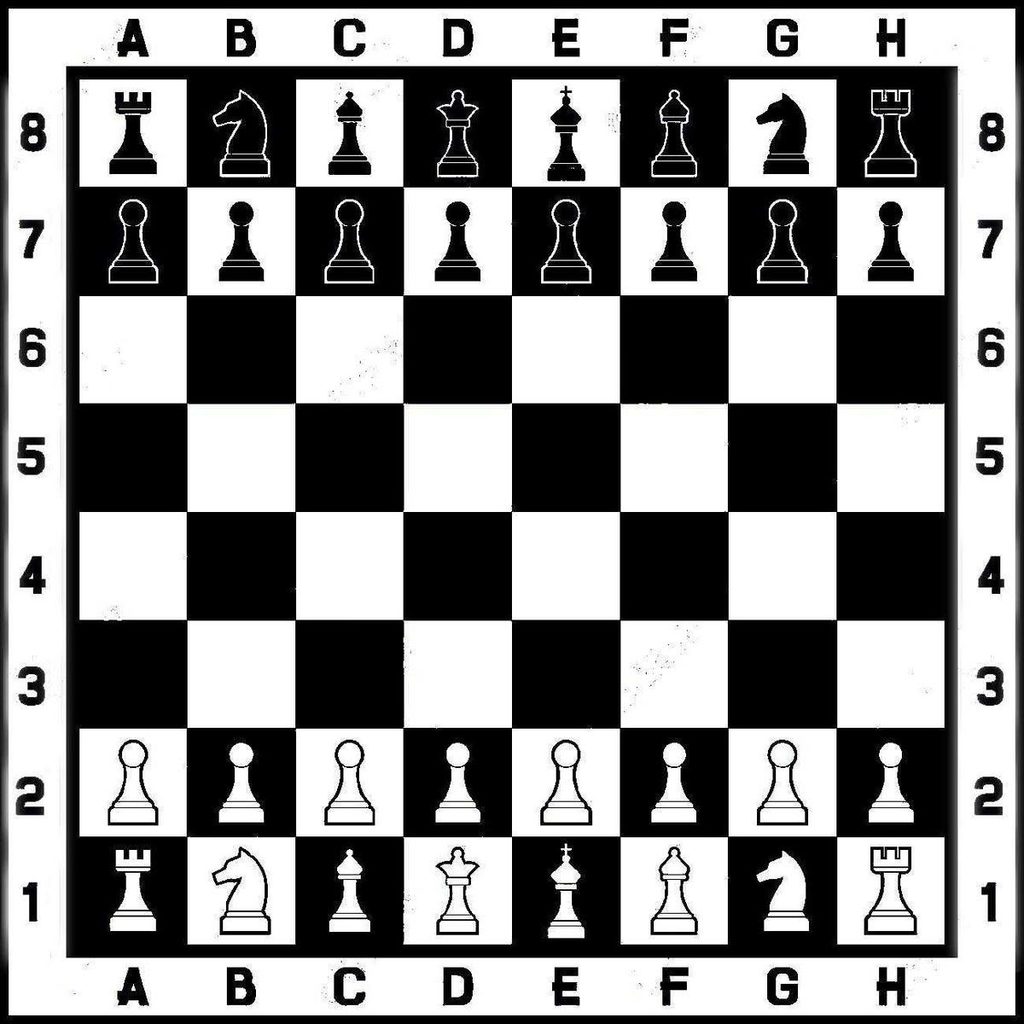
Steps to play: Two players have to turn moving pieces on a checkered 8×8 board, each with several movement conditions (pawns, knights, bishops, rooks, queen, and king). The objective is to corner the opponent’s king so completely that it has no safe square left to move to, this is called checkmate. Games can last anywhere from 10 minutes to a few hours, depending on player’s skill levels.
2. Sudoku
Mental payoff: Sudoku being the another major part of indoor games sharpens logical reasoning and immediate memory, since you regularly track which numbers are missing across rows, columns, and box.
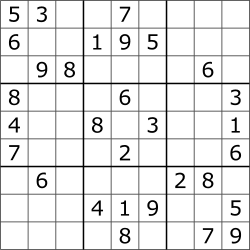
Steps to play: You’re given a 9×9 grid divided into nine 3×3 boxes with some numbers already filled in. The goal is to fill the leftover cells with the numbers 1-9 so that no number occurs again in any row, column, or box. No math is needed in this game, it’s pure reasoning.
3. Jigsaw Puzzles
Mental payoff: Jigsaw puzzles improve visual reasoning and patience, as your brain works to match shapes, colors, and structures to complete the bigger picture.

Steps to play: Begin with the border by sorting out the flat-edged pieces first, then connect them into a frame. Work section by section rather than randomly testing pieces, which is faster and less frustrating.
4. Scrabble
Mental payoff: Scrabble strengthens vocabulary, spelling, and the ability to spot patterns in letters quickly a skill closely linked to verbal fluency and memory remembering.
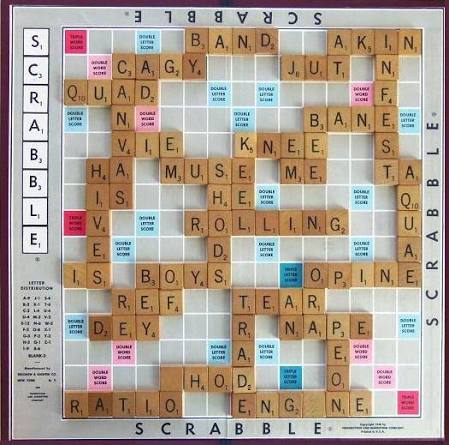
Steps to play: Players take turns placing lettered tiles on a board to from words, scoring points based on letter points and board rewards. Words must connect already placed tiles, similar to crossword. The player with the highest score at the last wins.
5. Rummy or Card-Matching Games
Mental payoff: Games like Rummy require you to regularly track with cards are in play, remember what’s been dropped, and plan combinations-a strong workout for working memory.
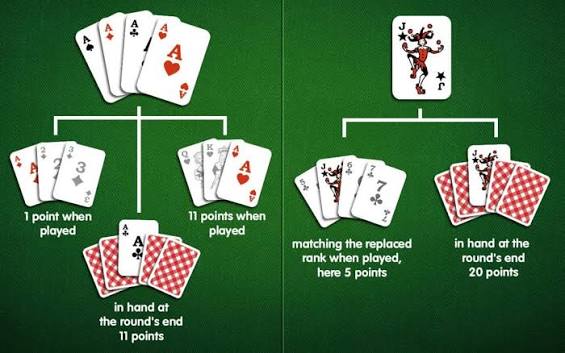
Steps to play: In Rummy, players dealt a hand of cards and take turns drawing and dropping, aiming to create valid sets (three or four of a kind) or sequences (consecutive cards of same suit). The first player to arrange their entire hand into valid sets wins the round.
6. Memory Match (Concentration)
Mental payoff: This game is almost purely a memory exercise you are training your brain to encode and recall spatial positions, which is especially useful for kids and for older adults looking to keep memory sharp.
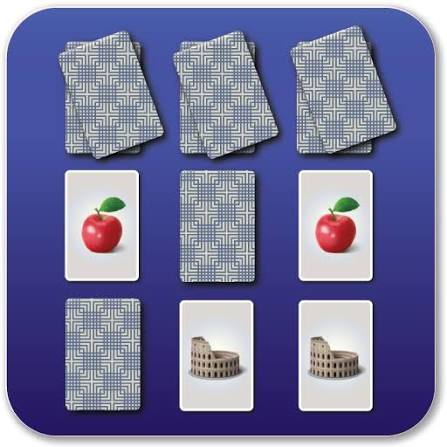
Steps to play: Cards are set reversed in a layout. Players take turns turning two cards at a time, trying to find matching pairs. When a match is found, that player collects the pair and continues their turn. If not, the cards are flipped back and it’s the next player’s chance.
Indoor Games for Different Age Groups
Not every game fits every age, and picking the right one makes a big impact in how much advantage and enjoyment you get out of it.
For Kids: Memory Match and simple card games build concentration and pattern recognition without feeling too intense. These games also introduce basic strategic thinking in a low-pressure way.
For Adults: Chess, Rummy, and Scrabble strike a good balance between mental challenge and time dedication, making them ideal for evenings after work or weekend gatherings.
For Seniors: Sudoku, crossword puzzles, and Carrom are especially valuable, as they blend gentle physical activity with logic and memory challenges-a mix known support the brain as we get older.
Playing across generations, mixing ages during a family game night works well too, since the difficulty naturally shifts to match whoever’s playing.
How often should you Play?
A daily marathon session is not necessary to notice results. Studies on cognitive activity generally shows that just 20-30 minutes, a couple of times a week, can lead to visible gains in memory over a few months. The key is variety mixing a memory-heavy game (like Memory-match) with a strategy-heavy one (like Chess) works different parts of your cognitive toolkit rather than repeating the same skill.
If you’re playing with family or friends, playing socially adds another dimension- you are simultaneously reading reactions, guessing moves, and coordinating strategy.
Benefits Beyond the Brain
While the cognitive gains are the main draw, indoor games comes with a few extra perks that often go unnoticed:
- Stress relief: Focusing on a game gives your mind a break from daily worries, acting almost like a form of active meditation.
- Social bonding: Games played with family or friends build connection and communication in a way that passive activities like watching TV rarely do.
- Better sleep: Replacing late-night screen time with a game session can reduce blue-light exposure before bed, which may support better sleep quality.
- A sense of accomplishment: Completing a puzzle or winning a round gives a small but real confidence boost, especially for kids and seniors.
- These benefits don’t just make indoor games good for your brain – they make them good for your overall wellbeing.
Conclusion
Indoor games prove that the best brain workout doesn’t need to feel like a chore. Whether it’s the quiet focus of Sudoku, the social energy of Rummy, or the deep strategy of Chess, each of these games trains a different part of your mind while keeping you entertained. So the next time you’re looking for a way to unwind indoors, put the phone down and reach for a deck of cards or set up the Chessboard instead.
FAQs
- Which Indoor game is best for improving memory? Memory Match (Concentration) is the most direct memory exercise, since it requires recalling the exact positions of the items. Rummy and Scrabble are also strong choices for building memory alongside vocabulary or planning skills.
- Can Indoor games really replace physical games? No, indoor games are a workout for the brain, not the body. They work best alongside physical activity, not as a replacement for it, though games like Carrom do add some light physical movement.
- Are indoor games good for kid’s brain development? Yes, Games like Memory Match and simple card games helps children build focus, pattern recognition, and early strategic thinking in a fun, low-pressure setting.
- How long should i play indoor games to see benefits? Around 20-30 minutes, a few times a week, is generally enough to notice improvements in focus and memory over a few months. Consistency matters more than long single sessions.
- Do indoor games helps reduce screen time? Yes, Replacing scrolling or passive screen time with an indoor game gives your mind an active, engaging break instead of a passive one, and can also help reduce blue-light exposure before bed.


