

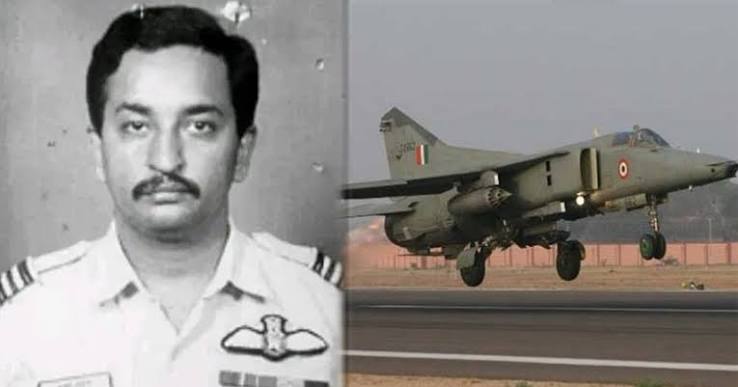
When people talk about the Kargil War today, the conversation usually turns to the infantry battles fought at 18,000 feet with Mig-21, or to Flight Lieutenant K. Nachiketa’s dramatic capture and release. Far fewer people know the story of the man who was flying nearby that same morning — a MiG-21 pilot who changed course mid-mission to search for a fallen comrade, and never made it back. This is the story of Squadron Leader Ajay Ahuja, and the aircraft that carried him into what would become one of the most defining, and most painful, chapters in the MiG-21’s 62-year history with the Indian Air Force.
Table of Contents
- Setting the Scene: Kargil, May 1999
- Who Was Ajay Ahuja?
- The Mission That Changed Evergything
- What Happened After He Was Shot Down
- The Controversy Around His Death
- The Vir chakra and a Nation’s Recognition
- The Mig-21’s Broader Role in Operation Safed Sagar
- Alka Ahuja: The Widow Who Refused to Bow
- Ahuja’s Story in Popular Culture
- Why This Story Still Matters
- Conclusion
- FAQs
Setting the Scene: Kargil, May 1999
By early May 1999, Indian Army patrols in the Kargil sector of Jammu and Kashmir had detected something alarming — armed intruders occupying high-altitude positions on the Indian side of the Line of Control. What began as isolated reports from local shepherds quickly escalated into confirmation of a large-scale infiltration by Pakistani troops, many drawn from the Northern Light Infantry. By mid-May, the Indian Army was mobilizing troops from across Kashmir to respond, and it became clear that ground forces alone would not be enough to dislodge the intruders from the peaks they had occupied.
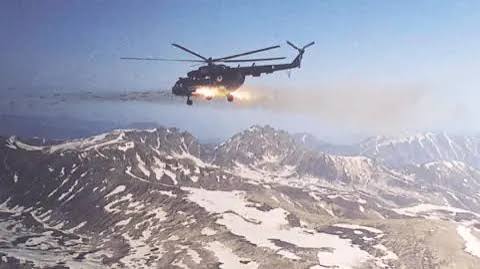
On May 26, 1999, the Indian Air Force launched Operation Safed Sagar — literally “White Sea” — marking the first large-scale use of air power in Jammu and Kashmir since the 1971 war with Pakistan. The first strike was launched at 6:30 AM, led by a combination of MiG-21, MiG-27ML, and MiG-23BN fighters, with MiG-29s flying combat air patrol overhead to provide protective cover. It was, by several accounts, the highest-altitude air war fought anywhere in the world up to that point, with aircraft operating in thin mountain air against targets dug into some of the most difficult terrain imaginable.
The operation did not go smoothly in its opening days. Within 48 hours, the IAF suffered its first losses — a MiG-27 and a MiG-21 were both shot down on May 27, and an Mi-17 helicopter was lost the following day. It was during this chaotic 48-hour window that Ajay Ahuja’s story unfolded.
Who Was Ajay Ahuja?
Ajay Ahuja was born on May 22, 1963, in Kota, Rajasthan. He attended Saint Paul’s Senior Secondary School in Kota before going on to the National Defence Academy, and was commissioned as a fighter pilot in the Indian Air Force on June 14, 1985. Over the following 14 years, Ahuja built a career flying MiG-21 variants and the MiG-23 fighter-bomber, accumulating over 1,000 hours of instructional flying experience training newer pilots alongside his operational duties.
By 1997, Ahuja had been posted to the Killi Bhisiana Airbase in Bhatinda, Punjab. Just as the Kargil conflict broke out in May 1999, he had recently taken over as Flight Commander of No. 17 Squadron, known as the “Golden Arrows” — a specialist photo-reconnaissance squadron that would play a critical role in mapping enemy positions during the war. He was married to Alka Ahuja, and the couple had a young son.
The Mission That Changed Everything
On the morning of May 27, 1999, Ahuja was tasked with leading a two-aircraft mission for photo-reconnaissance of enemy positions in the Batalik Sector, flying his MiG-21MF. Photo-reconnaissance missions like this one were essential to the broader war effort — without accurate intelligence on where infiltrators had dug in, the Indian Army couldn’t call in precision strikes or plan its ground assaults effectively.
As Ahuja was getting airborne, radio contact informed him that Flight Lieutenant K. Nachiketa’s MiG-27 had suffered an engine flame-out near Muntho Dhalo, forcing Nachiketa to eject. What happened next has come to define Ahuja’s legacy. Rather than continuing with his original reconnaissance mission, Ahuja immediately changed course, redirecting toward Muntho Dhalo to locate his downed colleague and help guide a rescue helicopter to the crash site.
This decision meant flying repeatedly over hostile, high-threat territory that Ahuja knew was defended by enemy missile positions. His commanding officer at the time, Group Captain (later Air Chief Marshal) B.S. Dhanoa, later recalled trying to call Ahuja back once it became clear how dangerous the search had become — but radio contact could not be established in time. Ahuja continued circling the area, searching for Nachiketa’s position, fully aware of the risk he was taking on.
What Happened After He Was Shot Down
Ahuja’s MiG-21 was struck by a Pakistani ground-fired missile over Batalik, along the Line of Control in what is now Ladakh. He was forced to eject, and his parachute carried him down into Pakistan-occupied territory on the other side of the LoC. On the ground, the fates of the two pilots who had been searching for each other diverged sharply. Nachiketa, who had ejected earlier near Muntho Dhalo, was captured by a Pakistani Army patrol, interrogated for eight days, and ultimately repatriated to India on June 3, 1999 — an outcome widely credited in part to Ahuja’s efforts to pinpoint and relay his location before being shot down himself.
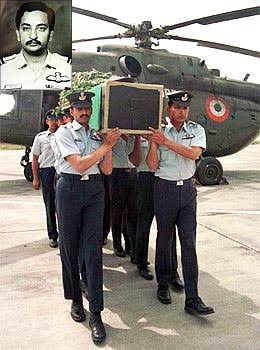
Ahuja’s fate was starkly different. He did not return. His body was handed back to India the day after he went down, making him the first Indian Air Force officer to lose his life during the Kargil War.
The Controversy Around His Death
What happened to Ahuja after he landed in Pakistani-held territory became one of the most disputed and emotionally charged episodes of the entire Kargil War. According to Indian officials, a post-mortem examination conducted after his body was returned found two bullet wounds and a fractured knee. Based on these findings, Indian authorities alleged that Ahuja had been captured alive and then shot at close range — a claim that, if accurate, would represent a clear violation of the Geneva Conventions governing the treatment of captured combatants.
Pakistan rejected this account, maintaining that Ahuja’s death resulted from the fighting itself rather than any deliberate execution after capture. The dispute was never conclusively resolved to the satisfaction of both sides, and it remains one of the more painful, unresolved chapters of the conflict — one that, according to accounts from the period, contributed to significant public anger in India at the time.
The Vir Chakra and a Nation’s Recognition
On August 15, 1999 — India’s 52nd Independence Day, and just weeks after the Kargil War officially ended — Squadron Leader Ajay Ahuja was posthumously awarded the Vir Chakra, India’s third-highest wartime gallantry award. His official citation credited him with exceptional courage in repeatedly flying over hostile, high-threat territory, fully aware of the risks involved, and for choosing to remain engaged in locating and assisting a fellow officer rather than withdrawing to safety. The citation described his actions as culminating in the “supreme sacrifice in the line of duty,” reflecting an unwavering commitment to both his mission and his fellow airman.
The award was received by his widow, Alka Ahuja, on his behalf — a moment that, for many, crystallized both the pride and the grief that defined the Kargil War’s aftermath for military families across the country.
The Mig-21’s Broader Role in Operation Safed Sagar
While Ahuja’s story is the most personally striking account connected to the MiG-21 during Kargil, the aircraft’s role in the broader operation extended well beyond that single mission. MiG-21s were among the very first fighters to strike enemy positions when Operation Safed Sagar opened on May 26, alongside MiG-27s and MiG-23s, targeting intruder camps, supply dumps, and infiltration routes around Dras, Kargil, and Batalik.
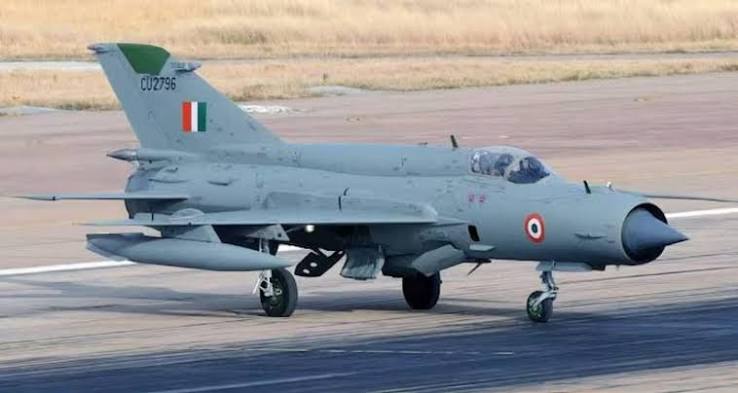
The aircraft’s role wasn’t limited to combat strikes alone. As demonstrated by Ahuja’s mission, MiG-21s were also central to photo-reconnaissance work — flying over contested, high-altitude terrain to map enemy positions with enough precision that ground forces and other strike aircraft could target infiltrators accurately. This reconnaissance role was arguably just as critical to the war’s outcome as the strikes themselves, since much of the Kargil conflict was fought over remote, difficult-to-observe mountain terrain where knowing exactly where the enemy had dug in made the difference between successful and wasted sorties.
In the years since, the IAF has continued to honor this chapter of the MiG-21’s history. On the 18th anniversary of Ahuja’s death, Air Chief Marshal B.S. Dhanoa — Ahuja’s former commanding officer during Kargil — personally led a MiG-21 “Missing Man” formation flypast over Air Force Station Bhisiana, a ceremonial tribute in which one aircraft’s position is deliberately left empty to honor a fallen pilot. Dhanoa laid a wreath at the squadron’s memorial afterward, a gesture that reflected just how deeply Ahuja’s sacrifice was felt within the IAF’s own ranks, even decades later.
Alka Ahuja: The Widow Who Refused to Bow
Ajay Ahuja’s story didn’t end with his death — his widow, Alka Ahuja, went on to become a quietly powerful voice in her own right. Months after losing her husband, in December 1999, Indian Airlines Flight IC-814 was hijacked and diverted to Kandahar, sparking a national crisis as families of the hostages pushed the Indian government to meet the hijackers’ demands.

Amid that pressure, Alka Ahuja traveled to the Prime Minister’s residence and spoke publicly, urging that the country not give in to the hijackers’ terms. Having already given “the most precious thing she had,” as one account later put it, her words carried a weight that few others in that moment could match.
Ahuja’s Story in Popular Culture
More than two decades after the Kargil War, Ajay Ahuja’s story has found a new audience through Netflix’s series Operation Safed Sagar: The Untold Story of the Kargil War, in which actor Siddharth portrays the decorated officer. The show, which also stars Jimmy Shergill and Abhay Verma, has drawn attention back to a story that, despite the Vir Chakra and the ceremonial tributes over the years, had remained comparatively under-told next to more widely publicized episodes of the war, such as Nachiketa’s capture and release, or the later 2019 Balakot strikes involving Wing Commander Abhinandan Varthaman’s own MiG-21 Bison.
Why This Story Still Matters
The MiG-21 was formally retired from Indian Air Force service on September 26, 2025, after 62 years of service spanning the 1965 and 1971 wars, the Kargil conflict, and the 2019 Balakot strikes. Much of the public conversation around the aircraft’s retirement has understandably focused on its safety record — the “Flying Coffin” reputation earned after roughly 400 of the 872 airframes inducted since 1963 were lost to accidents, killing over 200 pilots and dozens of civilians on the ground.
But Ahuja’s story is a reminder that the MiG-21’s legacy in Indian military history isn’t only about mechanical failure rates or procurement delays. It’s also about the pilots who flew it into genuinely dangerous situations by choice, not by accident — men like Ahuja, who had the option to complete a routine reconnaissance mission and return home safely, but instead chose to search for a colleague in hostile airspace, knowing exactly what that decision might cost him. That choice, more than any statistic about the aircraft’s safety record, is why his name remains attached to the MiG-21’s story even 26 years later.
The Mig-21’s Legacy Beyond Kargil
To fully appreciate what the MiG-21 meant to the Indian Air Force, it helps to look beyond Kargil to the aircraft’s broader service history. Inducted in 1963, the MiG-21 was India’s first supersonic fighter jet and the first Soviet-origin combat aircraft acquired by a non-Warsaw Pact nation, a decision that reshaped India’s defense relationships for decades to come. Of the 872 airframes eventually operated by the IAF, 840 were built domestically under license by Hindustan Aeronautics Limited, making the MiG-21 program a foundational chapter in India’s own aerospace manufacturing capabilities.
The aircraft saw action in the 1965 war against Pakistan, where it was still being inducted in limited numbers, and played a far more prominent role in the 1971 war, where MiG-21s achieved several confirmed air-to-air kills and helped establish air superiority during the conflict that led to the creation of Bangladesh. Decades later, the aircraft’s legacy resurfaced dramatically in February 2019, when Wing Commander Abhinandan Varthaman, flying a MiG-21 Bison, shot down a Pakistani F-16 during the aerial engagement that followed India’s Balakot airstrikes — a moment that briefly turned a decades-old airframe back into a symbol of national pride, even as debates about its safety record continued.
Seen against this backdrop, Kargil sits at a particular midpoint in the MiG-21’s story — no longer the newest fighter in the IAF’s inventory by 1999, but still very much a frontline aircraft trusted with some of the war’s most dangerous missions. Ahuja’s sacrifice, and the aircraft’s broader role in Operation Safed Sagar, are part of a continuous thread that runs from 1965 through Balakot and finally to the MiG-21’s formal retirement in September 2025.
Conclusion
Squadron Leader Ajay Ahuja’s mission on May 27, 1999, lasted only a matter of minutes before his aircraft was struck down over Batalik. But the decision he made in those minutes — to abandon his assigned mission and search for a fellow pilot in hostile territory — has outlasted him by decades. His sacrifice helped ensure Flight Lieutenant Nachiketa’s location was known and he could eventually be brought home, even as Ahuja himself paid the ultimate price. As the MiG-21 fades into history following its 2025 retirement, stories like Ahuja’s are what ensure the aircraft is remembered not just for its long service or its safety record, but for the individual acts of courage carried out in its cockpit.
FAQs
- Who was Squadron Leader Ajay Ahuja? Ajay Ahuja was an Indian Air Force fighter pilot and Flight Commander of No. 17 Squadron (Golden Arrows), who was killed in action during the Kargil War on May 27, 1999, while searching for a fellow downed pilot.
- What happened to Ajay Ahuja during the Kargil War? While flying a MiG-21MF on a photo-reconnaissance mission, Ahuja diverted to search for Flight Lieutenant K. Nachiketa, whose MiG-27 had been shot down. Ahuja’s own aircraft was then hit by a Pakistani missile, and he was killed after ejecting into Pakistani-held territory.
- Did Ajay Ahuja receive any awards for his actions? Yes, He was posthumously awarded the Vir Chakra, India’s third-highest wartime gallantry award, on August 15, 1999, for his courage in searching for a downed colleague despite the risks involved.
- What was Flight Lieutenant Nachiketa’s connection to Ajay Ahuja? Nachiketa’s MiG-27 was shot down shortly before Ahuja’s mission began. Ahuja changed course to locate and help rescue him, a decision that ultimately led to Ahuja’s own death, while Nachiketa was captured and later repatriated to India after eight days.
- What role did the Mig-21 play in the wider Kargil War? MiG-21s were among the first aircraft to strike enemy positions when Operation Safed Sagar began on May 26, 1999, and were also used extensively for photo-reconnaissance missions to help map enemy positions across the high-altitude Kargil terrain.
- Is Ajay Ahuja’s story depicted anywhere in film or television? Yes, His story is portrayed by actor Siddharth in the Netflix series “Operation Safed Sagar: The Untold Story of the Kargil War“.


[…] constantly prepared for official duties. These comments provide a different perspective on military service. The public often sees the uniform, ceremonies and prestigious positions, but officers may have to […]