

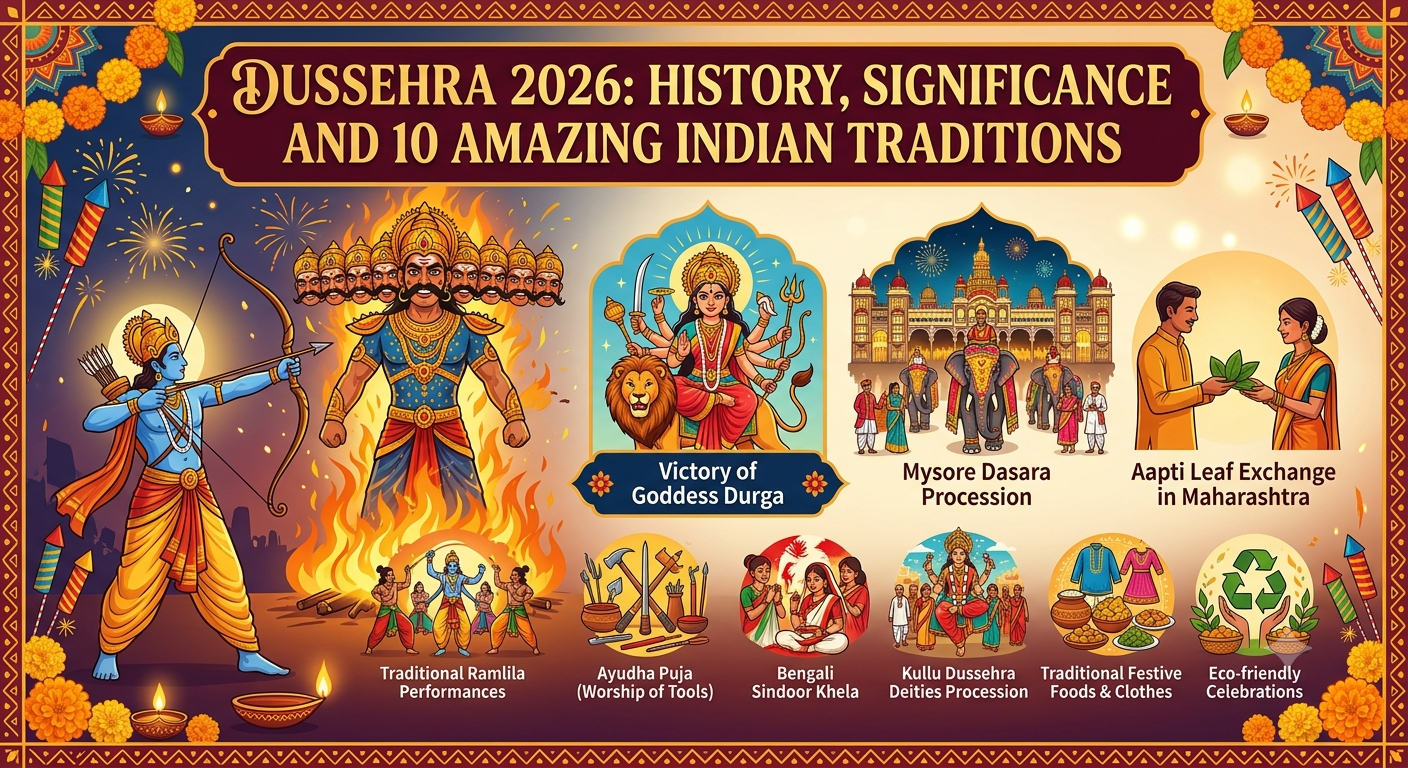
Dussehra 2026 will be celebrated on Tuesday, October 20, 2026. Also known as Vijayadashami, Dussehra 2026 is an important Hindu festival that symbolises the victory of good over evil. The festival celebrates Lord Rama’s victory over Ravana and, in many traditions, Goddess Durga’s victory over Mahishasura.
From the spectacular Mysore Dussehra 2026 celebrations to the traditional burning of Ravana’s effigy, this festival reflects India’s rich cultural diversity. It also reminds people of the importance of courage, honesty, humility, and righteousness.
But what makes Dussehra 2026 so special? Why do different regions celebrate it in unique ways, and what lessons can we learn from this ancient festival?
Let’s explore the history, significance, and 10 amazing Dussehra 2026 traditions that make this celebration meaningful for millions of people.
Table of Contents
What Is Dussehra? Understanding the Festival
It is also known as Vijayadashami or Dasara in different parts of India. The word Vijayadashami combines the ideas of victory and the tenth day. The festival is associated with important stories from Hindu mythology that represent the triumph of righteousness over wrongdoing. For many people, Dussehra 2026 commemorates Lord Rama’s victory over Ravana, the king of Lanka, in the epic Ramayana.
In other traditions, it marks Goddess Durga’s victory over the buffalo demon Mahishasura. Although the stories and rituals differ by region, the central message remains similar: evil and injustice should not prevail over goodness and truth.
Dussehra festival is also considered an auspicious occasion for beginning new activities, learning new skills, and seeking blessings for future success.
When Is Dussehra in 2026?
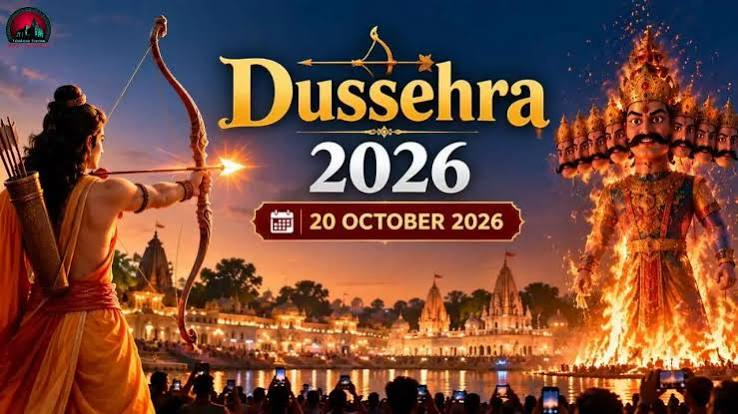
Dussehra 2026 will fall on Tuesday, October 20, 2026, in most parts of India. The festival marks Vijayadashami, the tenth day associated with the conclusion of Sharad Navratri.
Here are some quick facts about the festival:
- Festival name: Dussehra
- Also known as: Vijayadashami and Dasara
- Date in 2026: October 20
- Religious significance: The victory of good over evil
- Major celebrations: Ramlila, Ravana Dahan, prayers, cultural events, and regional rituals
The exact timing of religious observances can vary by location and local calendar traditions. People planning specific ceremonies should consult a reliable local panchang.
History and Mythological Significance of Dussehra
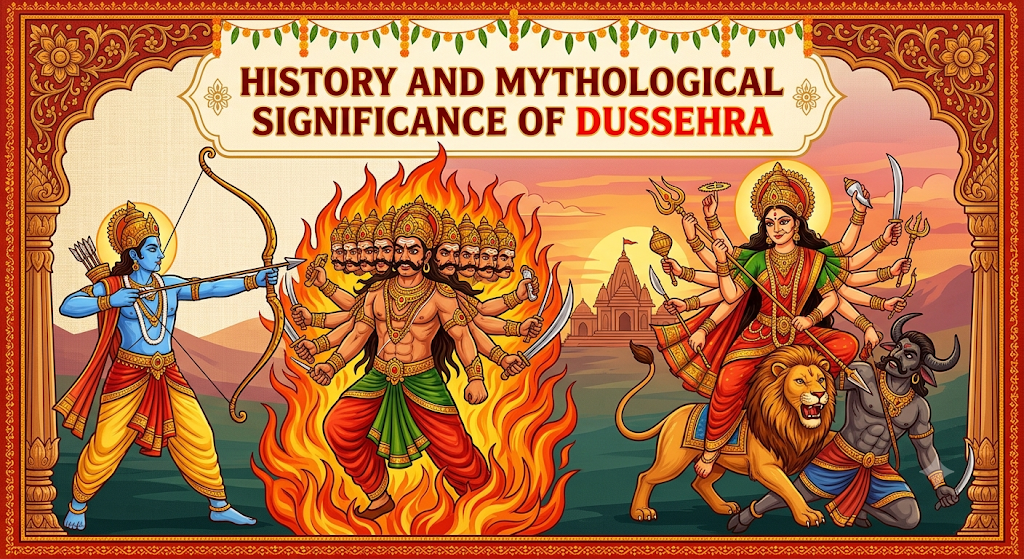
Dussehra 2026 has deep roots in Hindu religious traditions. Two important mythological stories explain why the festival is celebrated.
1. Lord Rama’s Victory Over Ravana
According to the Ramayana, Ravana abducted Sita, the wife of Lord Rama. Rama, with the help of Lakshmana, Hanuman, and an army of allies, travelled to Lanka to rescue her. A great battle followed between Rama’s forces and Ravana’s army. This victory is commemorated through Dussehra celebrations in many parts of India. Public performances of the Ramayana, known as Ramlila, often recreate important events from the story. On Dussehra, large effigies of Ravana are burned to symbolise the destruction of evil.
The story also encourages people to stand up against injustice and make ethical decisions, even when facing difficult challenges.
2. Goddess Durga’s Victory Over Mahishasura
Another important story associated with Dussehra 2026 concerns Goddess Durga and Mahishasura. According to Hindu mythology, Mahishasura gained immense power and threatened the gods. Goddess Durga fought him in a fierce battle and ultimately defeated him. This tradition is particularly significant in regions where Durga Puja is celebrated with great devotion. Vijayadashami marks the conclusion of the festival and includes rituals associated with the farewell of Goddess Durga. Together, these stories give Dussehra its powerful message of courage, justice, and hope.
10 Amazing Dussehra Traditions Celebrated Across India
One of the most fascinating aspects of Dussehra 2026 is the variety of ways people celebrate it. Each region adds its own customs, history, and cultural identity to the festival.
Here are 10 traditions that highlight the diversity of Dussehra 2026 celebrations.
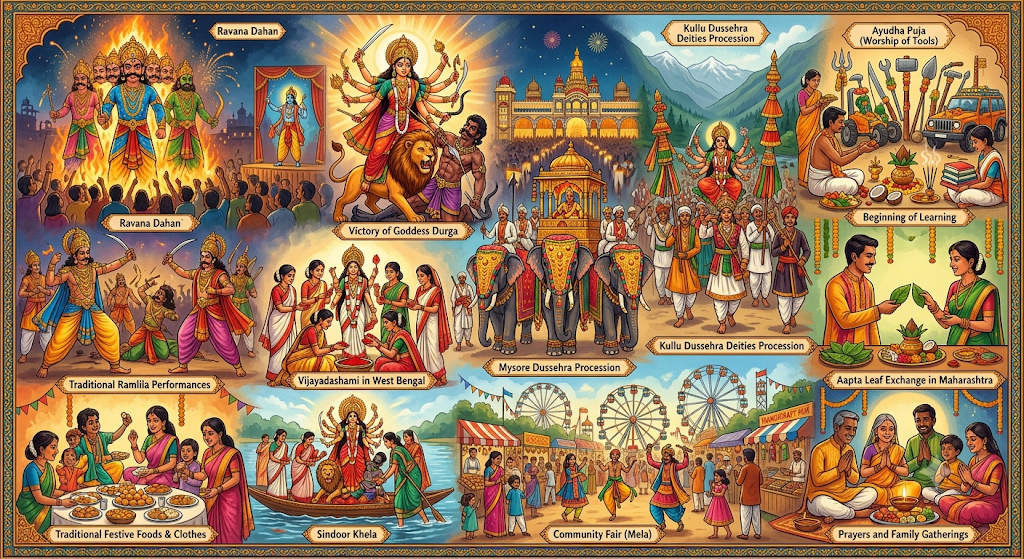
1. Ravana Dahan in North India
Ravana Dahan is one of the most recognizable Dussehra 2026 traditions in North India. Communities organize public events where large effigies of Ravana are burned. Some celebrations also include effigies of Meghnad and Kumbhakarna, characters associated with Ravana in the Ramayana.
Before the event, people often gather to watch Ramlila performances depicting the story of Lord Rama.
The burning of the effigies symbolizes the destruction of evil and the victory of righteousness. Families, children, and visitors attend these events to experience the festive atmosphere.
2. Mysore Dussehra’s Royal Celebrations
Mysore Dussehra 2026, celebrated in Karnataka, is famous for its royal heritage and grand cultural events.
The celebrations are associated with the historic Mysore royal family and include processions, decorated elephants, traditional music, and illuminated landmarks.
The city becomes especially vibrant during the festival, attracting visitors interested in history, architecture, and Indian traditions.
Mysore Dussehra 2026 demonstrates how a religious celebration can also preserve regional history and cultural heritage.
3. Kullu Dussehra in Himachal Pradesh
Kullu Dussehra 2026 is a distinctive celebration in Himachal Pradesh.
Unlike many Dussehra celebrations that conclude on Vijayadashami, Kullu’s festivities continue after the main festival day. The event brings together local communities and visiting devotees through processions, religious ceremonies, and cultural activities.
Local deities are brought together as part of traditional celebrations, creating a unique expression of the region’s religious heritage.
Kullu Dussehra is a wonderful example of how local customs can give a national festival a distinctive identity.
4. Vijayadashami in West Bengal
In West Bengal, Vijayadashami marks the conclusion of the grand Durga Puja celebrations.
After several days of worship, cultural programs, and community gatherings, devotees participate in farewell rituals for Goddess Durga. These may include sindoor khela, particularly among participating married women, and the immersion of Durga idols. Families and friends come together to celebrate, exchange greetings, and seek blessings. The occasion is both joyful and emotional because it marks the farewell of the goddess until the next year’s celebrations.
5. Apta Leaf Exchange in Maharashtra
In Maharashtra, exchanging apta leaves is a well-known Dussehra 2026 tradition. The leaves are popularly referred to as symbolic gold. People exchange them with family members, friends, neighbours, and elders while offering good wishes for prosperity and happiness.
Many families also perform prayers and visit relatives on the occasion.
This tradition emphasizes relationships, goodwill, and the sharing of blessings rather than the value of material gifts.
6. Worship of Tools and Learning in South India
In several South Indian traditions, the period surrounding Vijayadashami includes rituals associated with learning, work, and new beginnings. Ayudha Puja, observed in different regional forms and sometimes on a preceding day, involves showing respect to tools, instruments, vehicles, and equipment used in daily life.
Vijayadashami is also considered an auspicious day to begin learning activities in some communities. Children may be introduced to writing or formal education through traditional ceremonies. These customs express gratitude for the tools and knowledge that help people develop their skills and earn a living.
7. Traditional Ramlila Performances
Ramlila is a dramatic performance that presents stories from the Ramayana. Actors portray characters such as Lord Rama, Sita, Lakshmana, Hanuman, and Ravana. Performances may take place over several evenings, allowing audiences to follow the story leading up to Rama’s victory. Some communities organize elaborate productions with costumes, music, dialogue, and impressive stage settings.
Ramlila helps younger generations learn about traditional stories while bringing communities together through art and performance.
8. Prayers and Family Gatherings
For many families, Dussehra begins with prayers at home or visits to temples.
People offer flowers, sweets, and other traditional offerings according to their customs. They may also seek blessings for health, happiness, prosperity, and success. Family members gather to share festive meals, exchange greetings, and spend time together.
These simple traditions highlight the importance of family connections and gratitude during the festival.
9. Traditional Clothes and Festive Foods
Dussehra 2026 is also an occasion to enjoy traditional clothing and regional cuisine.
People may wear festive outfits when visiting temples, attending community events, or meeting relatives. Traditional foods and sweets differ by region and family custom.
Some households prepare special meals, while others share sweets with neighbours and friends.
Food and clothing help preserve cultural identity and make celebrations memorable for younger generations.
10. Community Fairs and Cultural Events
Many towns and cities organize fairs, known as melas, during the Dussehra 2026 season.
These events may feature food stalls, handicrafts, amusement rides, folk performances, and local products. Some celebrations include large processions and cultural programs.
The Kota Dussehra Fair in Rajasthan is one notable example. It combines religious themes with public festivities and cultural attractions. The 2026 fair is scheduled to run from October 20 to November 6.
Such gatherings create opportunities for local businesses, artisans, performers, and families to participate in the festive season.
Why Is Dussehra Celebrated?
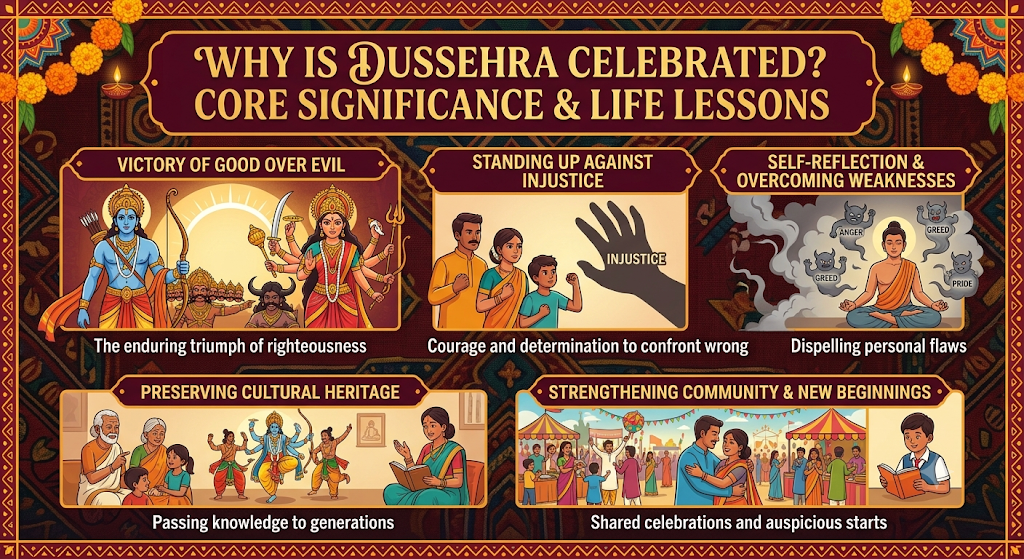
The central reason for celebrating Dussehra 2026 is to honour the victory of good over evil. However, its significance extends beyond the stories associated with the festival.
It Encourages People to Stand Up for What Is Right
The story of Lord Rama reminds people that courage and determination are important when confronting injustice.
It Promotes Self-Reflection
Dussehra 2026 offers an opportunity to reflect on personal habits such as anger, greed, dishonesty, and excessive pride.
It Preserves Cultural Heritage
Traditional performances, regional rituals, and family customs help pass cultural knowledge from one generation to another.
It Strengthens Community Relationships
Public celebrations, religious gatherings, and family visits create opportunities for people to connect with one another.
It Inspires New Beginnings
Many people view Vijayadashami as an auspicious occasion to begin learning, pursue goals, or start new activities.
These values make Dussehra relevant not only as a religious festival but also as a time for personal reflection and positive change.
5 Important Life Lessons We Can Learn From Dussehra 2026
Dussehra’s message can be applied to everyday life in practical ways.
1. Choose honesty over dishonesty.
Being truthful helps build trust in personal relationships and professional life.
2. Control anger and pride.
Strong emotions can influence decisions. Patience and humility help people respond thoughtfully.
3. Stand up against injustice.
Doing the right thing sometimes requires courage, especially when a situation is difficult.
4. Keep learning and improving.
Knowledge and self-awareness help people make better decisions and develop new abilities.
5. Treat others with respect.
Respect, kindness, and fairness can strengthen relationships and create a more supportive community.
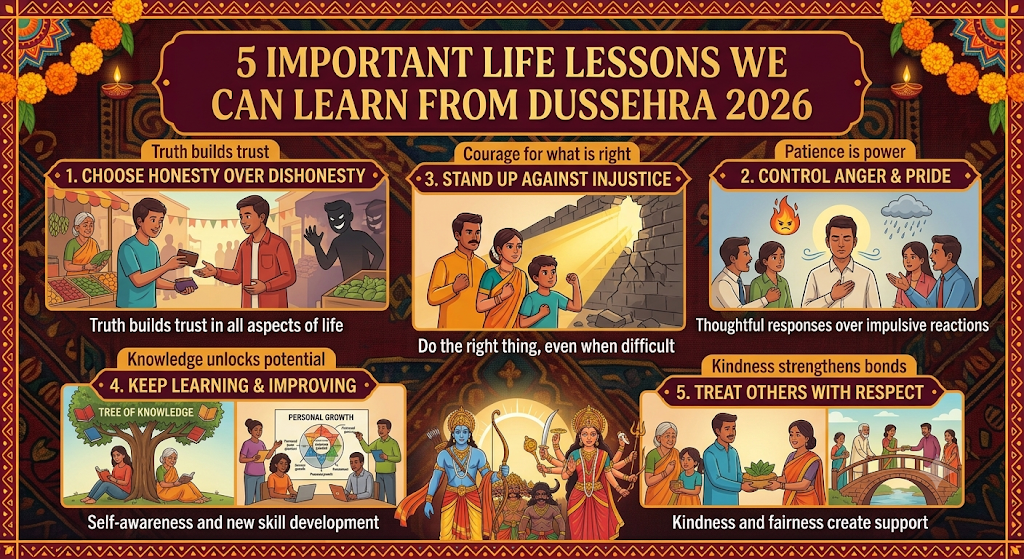
These lessons remind us that the true spirit of Dussehra can be reflected in our actions throughout the year.
How to Celebrate an Eco-Friendly Dussehra in 2026
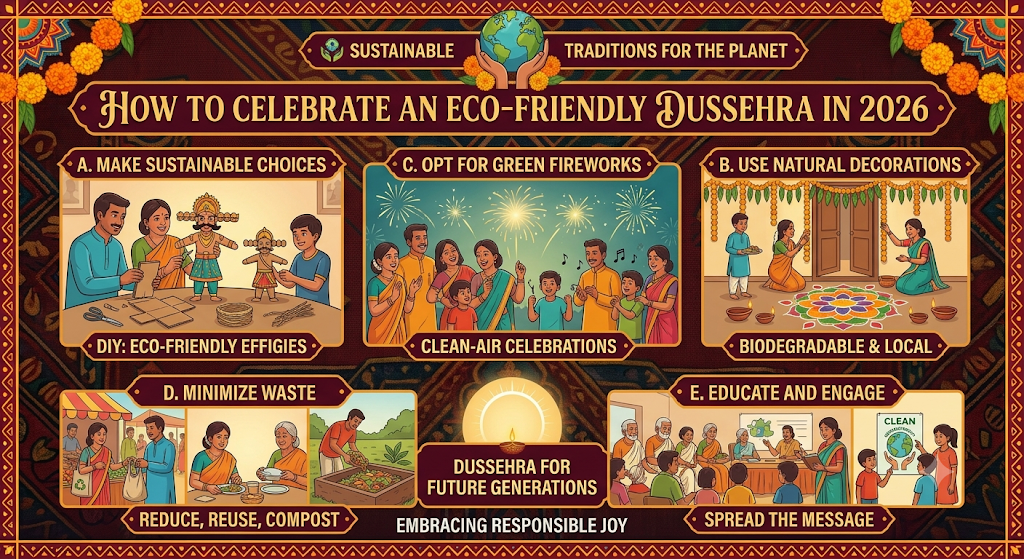
Festivals bring joy, but celebrations can also create waste and pollution. A few thoughtful choices can make Dussehra more environmentally responsible.
- Choose reusable decorations instead of single-use plastic.
- Avoid firecrackers or consider quieter, low-pollution celebrations.
- Support local artisans by purchasing handmade decorations.
- Dispose of waste responsibly after community events.
- Choose community celebrations that follow appropriate fire and crowd safety measures.
- Teach children about the festival’s cultural significance through stories and activities.
- Share festive meals while reducing food waste.
Eco-friendly celebrations allow families to enjoy the festival while showing consideration for the environment and other people.
Conclusion
Dussehra is more than a festival marked by processions, prayers, and the burning of Ravana’s effigy. It represents the enduring belief that goodness, courage, and righteousness can overcome wrongdoing. From Mysore’s royal celebrations to Maharashtra’s apta leaf exchange and West Bengal’s Vijayadashami rituals, the festival reflects the remarkable cultural diversity of India.
The stories associated with Dussehra also encourage us to examine our own actions, overcome negative habits, and treat others with kindness and respect.
As Dussehra 2026 approaches, take the opportunity to celebrate with family, learn about regional traditions, and reflect on the values that make this festival meaningful.
May this Dussehra bring happiness, peace, prosperity, and new beginnings to you and your family!
FAQs
1. When is Dussehra in 2026?
Dussehra will be celebrated on Tuesday, October 20, 2026, in most parts of India. Regional observances may differ.
2. Why is Dussehra celebrated?
Dussehra celebrates the victory of good over evil. It is associated with Lord Rama’s victory over Ravana and Goddess Durga’s victory over Mahishasura.
3. What is the difference between Dussehra and Vijayadashami?
The names are commonly used interchangeably for the festival observed on the tenth day of the bright lunar fortnight of Ashwin. Regional traditions determine how the occasion is observed.
4. Why is Ravana’s effigy burned on Dussehra?
Ravana Dahan symbolizes the destruction of evil and the triumph of righteousness. It is especially prominent in many North Indian celebrations.
5. How is Dussehra celebrated in Maharashtra?
Common traditions include prayers, family visits, and exchanging apta leaves as symbolic gold. Customs vary among families and communities.
6. Which Indian city is famous for royal Dussehra celebrations?
Mysore, now officially known as Mysuru, is famous for its grand Dasara celebrations, which feature cultural events and royal traditions.
7. What is the significance of Dussehra for children?
Dussehra introduces children to traditional stories and cultural practices. It also offers lessons about courage, honesty, humility, and responsible behaviour.
8. How can we celebrate Dussehra sustainably?
People can choose reusable decorations, reduce waste, support local artisans, and participate in safe, environmentally responsible community celebrations.
9. What Are the 10 Days of Dussehra Celebrations About?
The 10 days of Dussehra celebrations are associated with Navratri, which honours Goddess Durga in many traditions. The celebrations also include the story of Lord Rama’s battle against Ravana, culminating in his victory on Dussehra.
10. What Is the Best Way to Celebrate Dussehra with Family?
You can celebrate Dussehra with family by offering prayers, watching Ramlila, sharing traditional sweets, visiting community events, and teaching children about the festival’s message of the victory of good over evil.


