

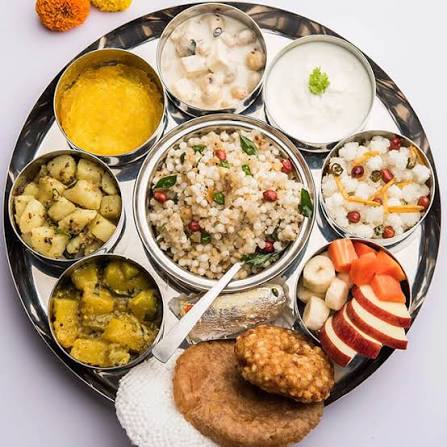
Navratri is a festival of devotion, music, colour, and discipline. For nine days, millions of people across India keep a vrat, or fast, to honour Goddess Durga. While the spirit of the festival is joyful, many people worry about one thing: how to stay energetic when they cannot eat their usual meals.
The good news is that traditional fasting food is not about starving. It is about eating simple, sattvic ingredients that are light, filling, and full of natural energy. From crispy kuttu puris to creamy sabudana khichdi, the list of fasting food options is long, tasty, and surprisingly nutritious.
In this guide, you will learn what counts as fasting food, which ingredients are allowed and which are not, and the 9 best dishes to keep you energetic all day. You will also find a sample meal plan, practical tips, common mistakes, and 10 FAQs. Whether you are fasting for the first time or the fortieth, this guide will help you celebrate with both faith and good health.
Table of Contents
What Is Fasting Food and Why Is It Eaten During Navratri?
Fasting food, often called vrat ka khana or falahari food, is the set of ingredients and dishes that people eat on days of religious fasting. During Navratri, the aim is to keep the body light and the mind calm. Fasting food is cooked without regular grains, pulses, onion, garlic, and ordinary table salt, because these are traditionally considered heavy or tamasic.
Instead, fasting food is built around ingredients such as tapioca pearls, buckwheat, water chestnut, barnyard millet, amaranth, fox nuts, fruits, potatoes, and dairy. Salt is replaced with rock salt, known as sendha namak.
There is a practical side to this tradition as well. Navratri falls when the season changes, and light fasting food is easier to digest while the body adjusts to cooler weather. Many families also see the fast as a time to reset eating habits, drink more water, and reduce processed foods.
Customs vary from region to region and family to family. Some people eat only fruit and milk, while others eat one full vrat meal a day. The ideas in this article follow the most common practice, but always follow the rules of your own family and tradition.
What You Can and Cannot Eat During Navratri
Before you start cooking, it helps to know the basic rules. This list shows what most families treat as acceptable fasting food and what they avoid.
Usually allowed:
- Sabudana (tapioca pearls)
- Kuttu atta (buckwheat flour)
- Singhare ka atta (water chestnut flour)
- Rajgira (amaranth) flour and seeds
- Samak ke chawal (barnyard millet, also called vrat rice)
- Makhana (fox nuts)
- Potatoes, sweet potatoes, pumpkin, bottle gourd, and raw banana
- All fresh fruits and dry fruits
- Milk, curd, paneer, ghee, and buttermilk
- Peanuts, coconut, and rock salt
- Green chillies, ginger, cumin, and black pepper in many households
Usually avoided:
- Wheat, rice, maida, and regular flour
- Pulses and lentils
- Onion and garlic
- Ordinary table salt
- Non-vegetarian food and alcohol
If you are unsure about any ingredient, ask an elder in the family. Packaged products can also contain hidden grains or regular salt, so always read the label.
Food 1: Sabudana Khichdi
If there is one dish that stands for vrat food, it is sabudana khichdi. Sabudana are small pearls made from tapioca starch, and they are rich in carbohydrates, which makes them a quick source of energy. That is exactly why this dish is such a favourite fasting food.
How it is made: the pearls are washed and soaked for several hours until soft, then tempered in ghee with cumin seeds, green chillies, boiled potato, and crushed roasted peanuts. A little rock salt and lemon juice finish the dish.
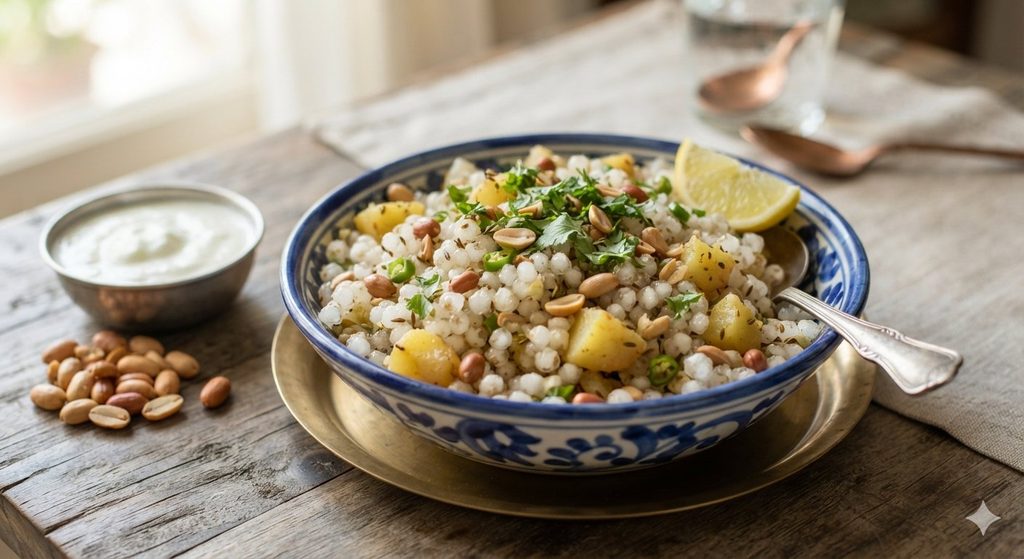
Why it works: the carbohydrates give a fast energy boost, the peanuts add protein and healthy fat, and the potato makes it filling.
Tip: do not over-soak the pearls, or the khichdi turns sticky. Each pearl should stay separate and slightly chewy. Since sabudana is mostly starch, pair it with curd or a handful of nuts so that your energy lasts longer.
Food 2: Kuttu Ki Puri With Aloo Sabzi
Kuttu, or buckwheat, is not actually a wheat grain, which is why this fasting food is accepted in most traditions. Kuttu atta is made into soft, slightly earthy puris that taste wonderful with a mild potato curry.
How it is made: kuttu flour is kneaded with boiled mashed potato, rock salt, and a little water to form a dough, and then rolled into small puris and deep-fried. The aloo sabzi is cooked with tomato, ginger, cumin, and green chilli, with no onion or garlic.
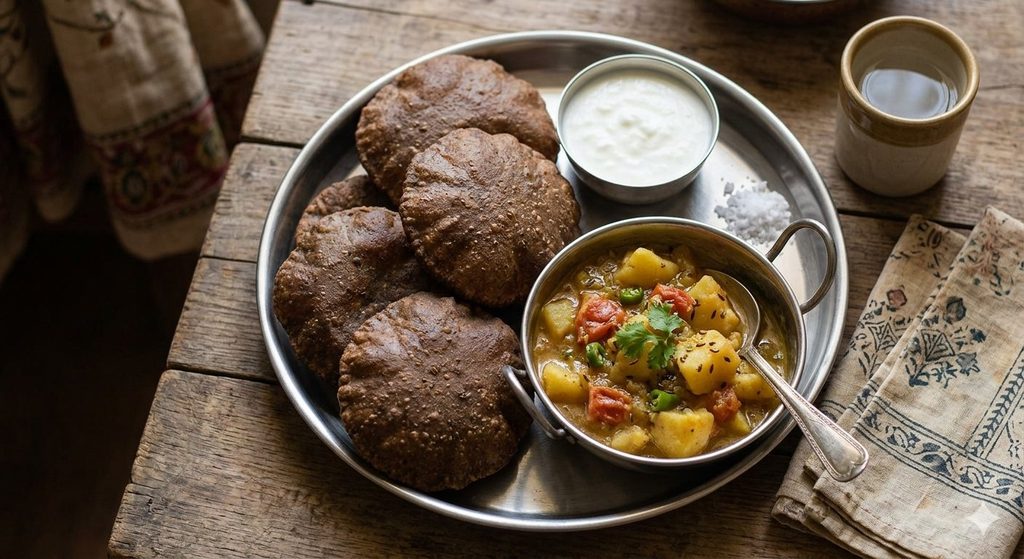
Why it works: buckwheat contains protein, fibre, and minerals such as magnesium, so it keeps you full for longer than a plain-starch snack.
Tip: kuttu atta spoils more quickly than ordinary flour, and spoiled flour has caused food poisoning in some past festival seasons. Buy it fresh from a trusted shop, check the packing date, store it in a cool dry place, and avoid using it if it smells sour or stale.
Food 3: Samak Ke Chawal Khichdi
Samak ke chawal, also known as barnyard millet, vrat rice, or sama rice, looks like tiny broken rice grains but is actually a millet. It cooks quickly and has a light texture, so it is easy on the stomach. Among all fasting food choices, it is one of the lightest.
How it is made: wash the grains, then cook them with potato, peanuts, cumin, green chilli, and rock salt until soft and fluffy. You can also make a simple pulao or even a kheer with milk and jaggery.
Why it works: millets are high in fibre and release their energy slowly. This makes the dish a better option than very sugary snacks if you want to avoid a sudden energy crash.
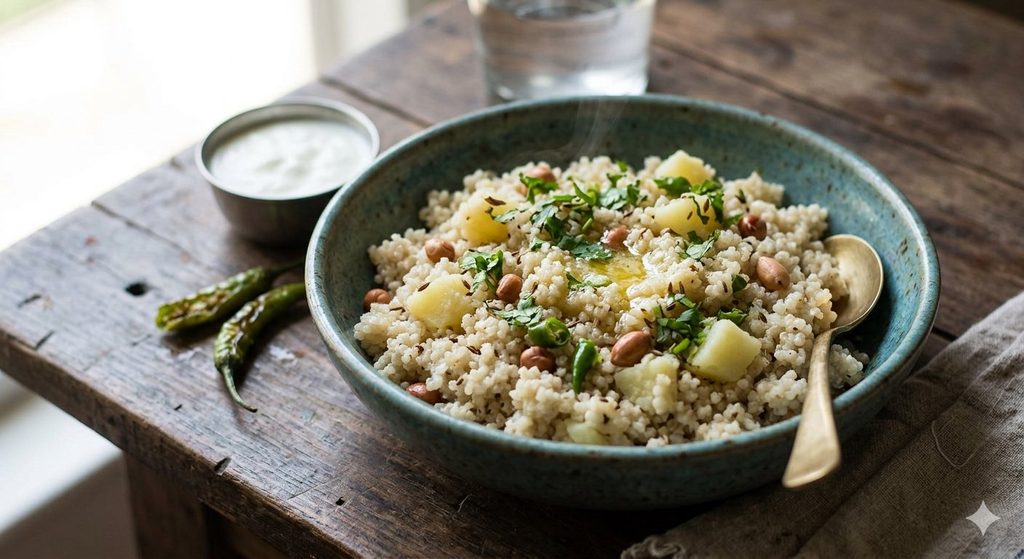
Tip: since the grains are tiny, cook them with slightly less water than ordinary rice, or they become mushy. A small spoon of ghee at the end improves taste and aroma.
Food 4: Makhana, Roasted or as Kheer
Makhana, or fox nuts, are the puffed seeds of the lotus plant. They are light, crunchy, and very versatile. For many people, a bowl of roasted makhana is the easiest snack on a busy fasting day.
Ways to eat it:
- Roasted makhana: dry roast in a little ghee with rock salt and black pepper for a crispy evening snack.
- Makhana kheer: simmer the nuts in milk with sugar or jaggery, cardamom, and a few chopped nuts for a creamy dessert.
- Makhana curry: cook with a mild yoghurt or tomato base for a sabzi.
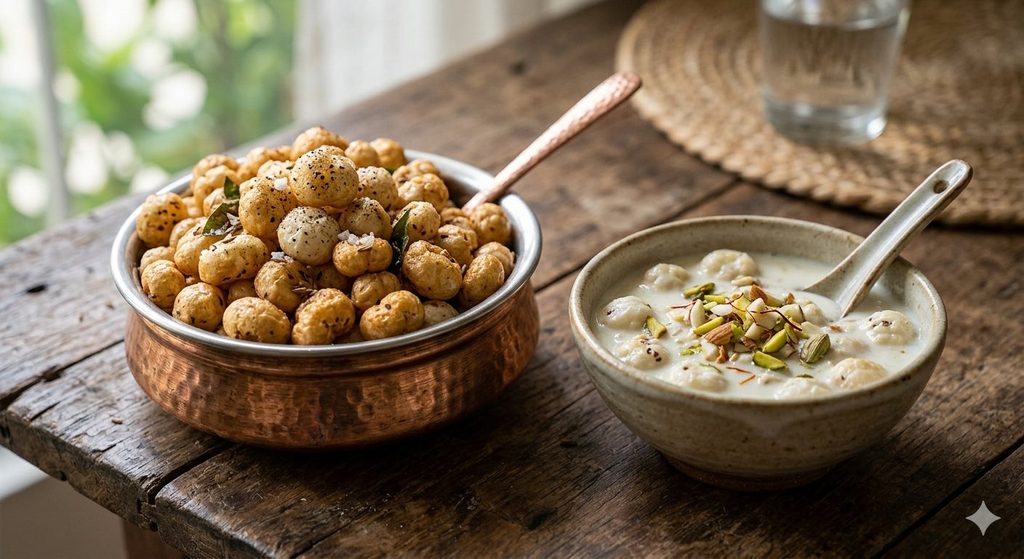
Why it works: makhana is a low-fat fasting food that contains protein and minerals such as calcium and magnesium, and is easy to carry to work or college.
Tip: roast the nuts until they snap easily. Soft makhana tastes stale and chewy. Store the cooked snack in an airtight container to keep it crisp.
Food 5: Singhare Ke Atta Chilla and Pakora
Singhare ka atta is made from water chestnuts, which are dried and ground into a fine flour. It has a slightly sweet flavour and works well in pancakes, pakoras, and parathas.
How it is made: mix the flour with water, rock salt, grated bottle gourd or potato, and chopped green chilli to make a thick batter. Cook it on a lightly greased pan as a chilla, or deep-fry spoonfuls as pakoras. Serve with mint-coriander chutney or curd.
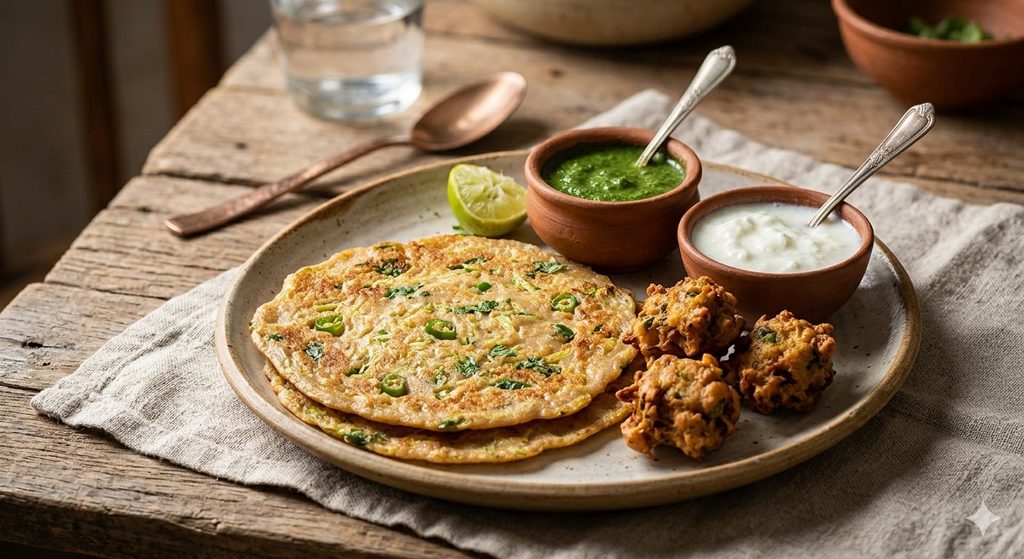
Why it works: this fasting food is gluten-free, light, and rich in potassium. A vegetable-filled chilla gives you fibre as well as energy.
Tip: like kuttu atta, singhare ka atta can go stale. Buy small quantities, check freshness, and shallow-fry instead of deep-frying when you want a lighter option.
Food 6: Rajgira Paratha and Ladoo
Rajgira, or amaranth, is an ancient grain-like seed that has been eaten in India for centuries. Because it is a seed rather than a true cereal, it is accepted in most vrat traditions.
Popular dishes:
- Rajgira paratha: rajgira flour kneaded with boiled potato and rock salt, rolled out and cooked on a pan with ghee.
- Rajgira ladoo: popped amaranth seeds bound with jaggery syrup, a traditional sweet that stores well.
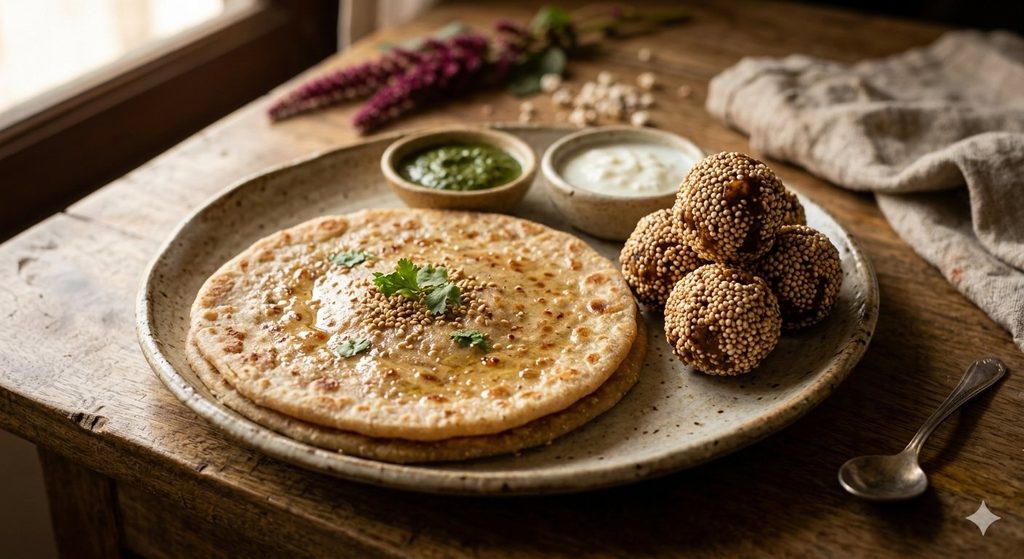
- Rajgira porridge: cooked in milk with cardamom for a warm, filling breakfast.
Why it works: amaranth is known for its protein, iron, and calcium content, which makes it one of the more nutrient-rich fasting food options. Rajgira ladoo is especially handy as an emergency snack in a bag.
Tip: rajgira dough is sticky, so roll it between two sheets of butter paper or plastic and dust with a little flour made from the same grain.
Food 7: Fresh Fruits and Fruit Chaat
Fruits are the simplest fasting food of all. They need no cooking, they supply natural sugars, vitamins, and water, and they suit almost every fasting rule.
Good fasting fruits: bananas, apples, papaya, pomegranate, pears, guavas, grapes, and seasonal citrus fruits.
Fruit chaat recipe idea for a quick fasting food snack: chop a mix of fruits, sprinkle with rock salt, black pepper, a little roasted cumin, and lemon juice, and serve chilled. A spoon of curd or a few soaked raisins can make it more filling.
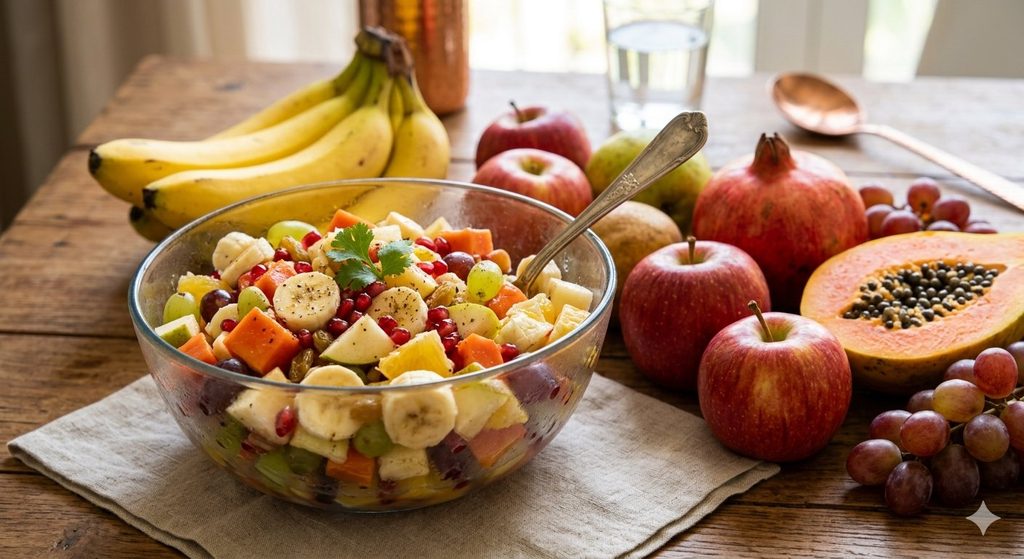
Why it works: fruits keep you hydrated, provide quick energy, and supply fibre. A banana or a handful of grapes can steady you when you feel weak between meals.
Tip: eat whole fruits instead of packaged fruit juice. Whole fruit keeps its fibre, which slows the rise in blood sugar and keeps you full for longer.
Food 8: Sweet Potato and Potato Dishes
Potatoes and sweet potatoes appear in many fasting food menus because they are filling, cheap, and easy to cook in different ways.
Ideas to try:
- Aloo jeera: boiled potatoes sautéed with cumin, green chilli, and rock salt.
- Sweet potato chaat: boiled or roasted cubes of sweet potato with lemon, rock salt, and a dash of black pepper.
- Baked or roasted potato wedges: a lighter alternative to deep-fried chips.
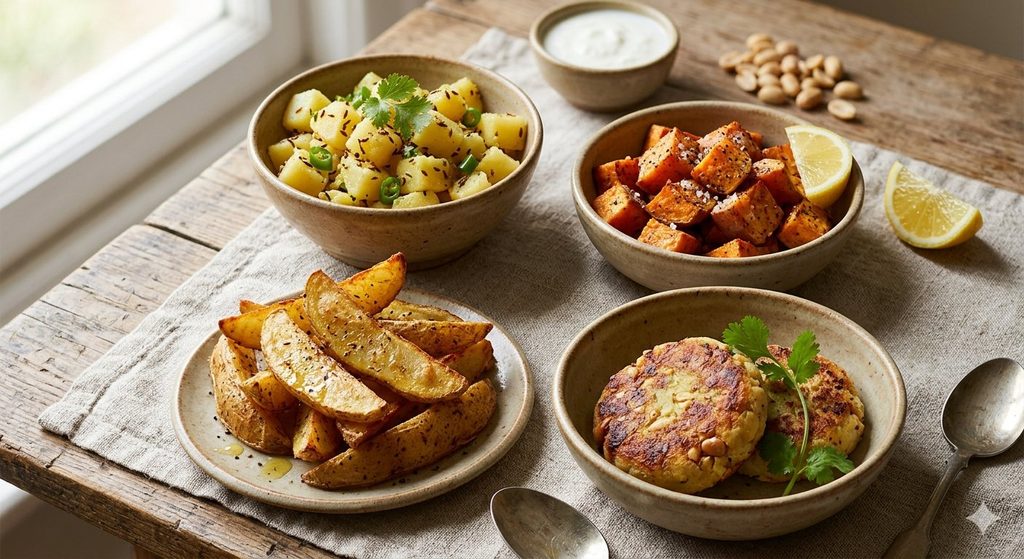
- Potato and peanut tikki: pan-fried patties made with boiled potato, crushed peanuts, and rock salt.
Why it works: both vegetables supply carbohydrates, and sweet potato also contains fibre and vitamin A. They make a satisfying meal when combined with curd or a handful of peanuts.
Tip: roasting or baking uses much less oil than frying. A tikki made on a non-stick pan with just a spoon of ghee tastes rich without being heavy.
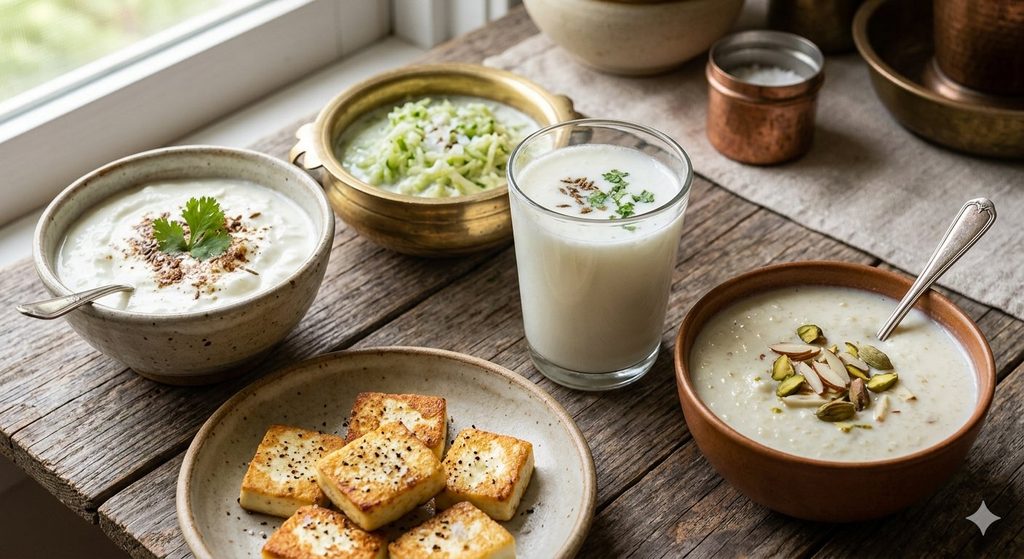
Food 9: Curd, Buttermilk, Milk and Paneer
Dairy is an important part of most fasting food traditions. It supplies protein, calcium, and hydration, and it balances the starchy dishes that dominate vrat menus.
Good options:
- Curd: serve it plain, with roasted cumin and rock salt, or as a raita with grated bottle gourd or cucumber.
- Buttermilk or lassi: refreshing, cooling, and easy to digest.
- Milk: drink it warm with nuts, or use it for kheer and porridge.
- Paneer: cube and shallow-fry with rock salt and pepper, or add to a potato sabzi for protein.
Why it works: many fasting dishes are mostly carbohydrates. Adding dairy gives your body protein, which helps you stay full and energetic for longer.
Tip: choose fresh dairy and keep it refrigerated. If milk-based sweets worry you, use only a small amount of sugar or jaggery and let the nuts and cardamom provide the flavour.
A Simple One-Day Meal Plan
Planning your meals the night before saves time and prevents you from reaching for fried snacks when you are hungry. Here is a balanced plan using the fasting food you have just read about:
- Early morning: a glass of warm water with lemon, or a cup of milk with a few soaked almonds.
- Breakfast: rajgira porridge cooked in milk, or a banana with a handful of nuts.
- Mid-morning: a bowl of fruit chaat or a glass of buttermilk.
- Lunch: kuttu ki puri with aloo sabzi and curd, or samak ke chawal khichdi with cucumber raita.
- Evening snack: roasted makhana with tea or a small bowl of sweet potato chaat.
- Dinner: sabudana khichdi with peanuts, or a singhare ke atta chilla with mint chutney.
Adjust the portions to your hunger and routine. If you work long hours or study hard, include more protein from dairy, peanuts, and nuts.
Smart Tips to Stay Energetic While Fasting
Choosing the right fasting food is only half the story. These habits will keep you active throughout the nine days:
- Drink plenty of water. Sip water, coconut water, buttermilk, or lemon water through the day. Dehydration causes headaches and tiredness that many people mistake for hunger.
- Eat small meals often. Instead of two large meals, have four or five light ones. This keeps your energy steady.
- Do not skip protein. Add peanuts, paneer, curd, and nuts to your meals.
- Go easy on fried food. Puris and pakoras are fine as an occasional treat, but a daily diet of fried snacks can cause acidity and bloating.
- Do not break your fast with a heavy meal. Start with fruit or a light dish before eating more.
- Rest enough. Sleep well and avoid overexertion, especially in the first three days when the body is adjusting.
If you have a medical condition such as diabetes, high blood pressure, or acidity, or if you are pregnant or taking regular medicines, talk to your doctor before fasting. Faith is important, but so is your health.
Common Fasting Mistakes to Avoid
Even well-meaning devotees make a few errors that spoil the fast and their health:
- Relying only on tea and coffee instead of real fasting food. Too much caffeine on an empty stomach causes acidity and dehydration.
- Eating only deep-fried food. Puris, pakoras, and chips taste good but can leave you heavy and sluggish.
- Overloading on sweets. Kheer, halwa, and ladoo are fine in small portions, but too much sugar causes an energy crash.
- Using stale flour. Always check kuttu atta and singhare ka atta for freshness, and buy from a reliable shop.
- Skipping water. Many people forget to drink enough because they are busy or because they eat less.
- Breaking the fast too suddenly. After a long gap, a very heavy meal can upset the stomach.
If you avoid these six mistakes, you will feel lighter, stronger, and more focused during the festival.
Rough Shopping Budget in Rupees
Fasting food does not need to be expensive. Here are approximate market prices in rupees for common ingredients. Prices change by city, brand, and season, so treat them only as a rough guide and check your local shop.
- Sabudana: about ₹80 to ₹120 per kilogram
- Kuttu atta: about ₹100 to ₹160 per kilogram
- Samak ke chawal: about ₹120 to ₹180 per kilogram
- Singhare ka atta: about ₹150 to ₹220 per kilogram
- Makhana: about ₹800 to ₹1,200 per kilogram, which is higher than most other items
- Rajgira atta: about ₹100 to ₹160 per kilogram
For a small household, ₹1,000 to ₹1,500 is a sensible starting budget for the main dry ingredients for the week. Fresh fruits, potatoes, and dairy will add to this, so plan according to your family size.
Conclusion
Navratri fasting does not have to mean weakness or boredom. With the right fasting food, you can enjoy nine days of tasty, light, and nourishing meals. Sabudana khichdi gives quick energy, kuttu puri and rajgira bring protein, makhana makes a crunchy snack, fruits keep you hydrated, and dairy balances the whole plate.
Remember the simple rules of fasting food: eat small meals, drink plenty of water, choose fresh ingredients, avoid too much fried food, and listen to your body. If you have any health condition, speak with your doctor first. With a little planning, your fast can be both spiritually satisfying and good for your health.
Wishing you and your family a joyful and energetic Navratri.
Frequently Asked Questions (FAQs)
1. What is fasting food?
Fasting food, also called vrat food or falahari food, is the set of ingredients and dishes eaten on religious fasting days. During Navratri it includes items such as sabudana, kuttu atta, samak ke chawal, makhana, fruits, potatoes, and dairy, cooked with rock salt and without onion, garlic, or regular grains.
2. Which fasting food gives the most energy?
Sabudana khichdi, potato dishes, bananas, and rajgira ladoo give quick energy because they are rich in carbohydrates. For lasting energy, combine them with protein from curd, peanuts, paneer, or nuts.
3. Can I eat rice and wheat during Navratri fasting?
Most families avoid regular rice, wheat, and pulses during Navratri. Instead, they use fasting food alternatives such as samak ke chawal, kuttu atta, singhare ka atta, and rajgira. Traditions differ, so follow your family’s rules.
4. Why is rock salt used in fasting food?
Rock salt, or sendha namak, is considered purer and less processed than ordinary table salt, so it is preferred on fasting days. It is used in nearly every vrat dish.
5. Is sabudana healthy during fasting?
Sabudana is rich in starch and gives fast energy, but it has little protein or fibre on its own. It is healthier when cooked with peanuts and vegetables and served with curd. People with diabetes should check with a doctor, as it can raise blood sugar quickly.
6. Can I drink tea and coffee while fasting?
Many people do, but too much can cause acidity and dehydration. It is better to limit yourself to one or two cups and also drink water, buttermilk, coconut water, or lemon water.
7. Why does kuttu atta sometimes cause food poisoning?
Buckwheat flour spoils faster than ordinary flour, especially when it is stored in damp or warm places or kept for a long time. Always buy fresh flour from a trusted source, check the packing date, and avoid using flour that smells sour or looks discoloured.
8. What are healthy snacks for Navratri?
Roasted makhana, fruit chaat, sweet potato chaat, roasted peanuts, buttermilk, and a handful of nuts are all light and healthy fasting food snacks that are easy to carry.
9. How can I avoid weakness and acidity while fasting?
Eat small meals every few hours, drink plenty of water, include protein from dairy or nuts, and avoid too much fried food or caffeine. If you still feel dizzy or unwell, break your fast and consult a doctor.
10. Who should avoid strict fasting?
People with conditions such as diabetes, high blood pressure, or digestive problems, as well as pregnant or breastfeeding women, older adults, and those taking regular medicines, should consult a doctor before fasting. A modified fast with regular small meals is often safer.


