

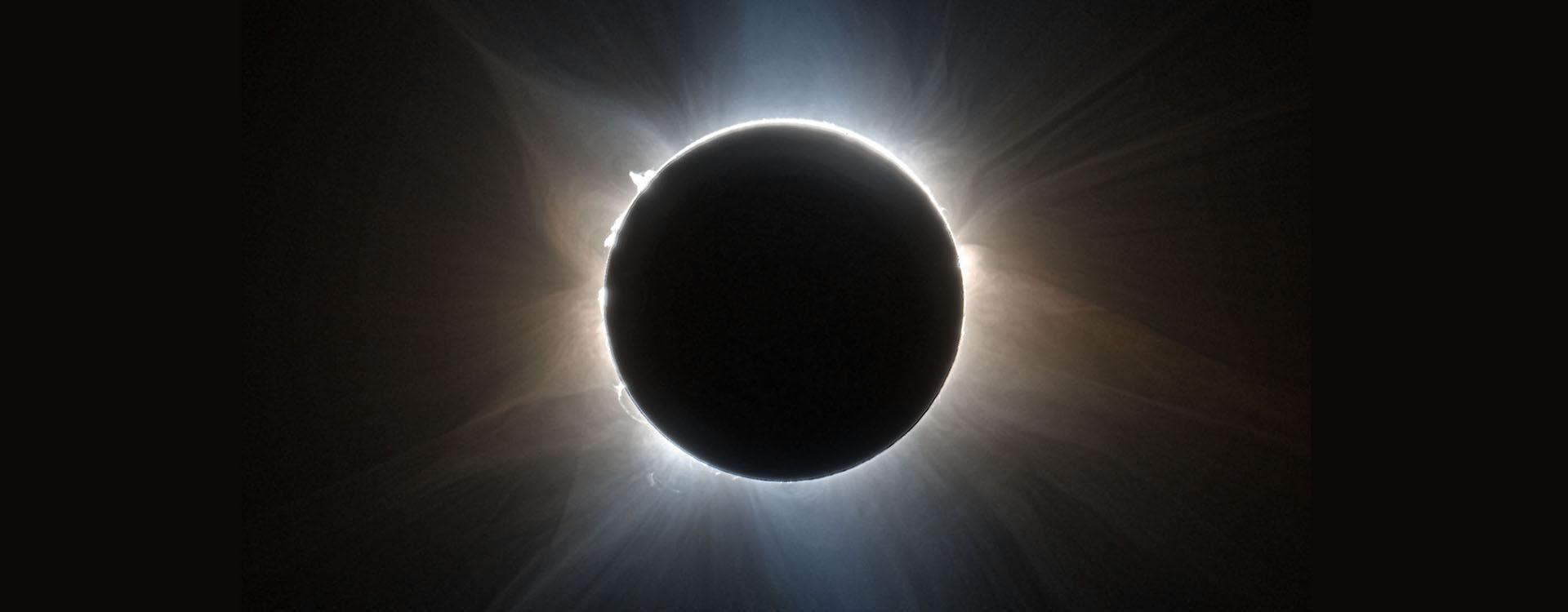
2026 is a landmark year for stargazing. We’ve already had one solar eclipse, the annular “Ring of Fire” on February 17, but the bigger event is still ahead: a total solar eclipse on August 12. This upcoming August eclipse will be the first total solar eclipse visible from mainland Europe since 1999, crossing Russia’s Arctic, Greenland, Iceland, and Spain in a dramatic path. Neither event is directly visible from India, but that doesn’t mean we can’t be part of this experience.
Table of Contents
Two Eclipses in One Year
I’ll be honest, when I first looked at the astronomy calendar for 2026, I didn’t expect it to be this exciting. Two solar eclipses in a single year? That’s not something you witness so easily.
The year 2026 has four eclipses in total: two solar and two lunar. The first solar eclipse, an annular one, already happened back in February, and people across southern Africa and South America got to see it. Now we’re building towards a total solar eclipse on August 12 that has astronomers and people booking flights months in advance.
The Annular Solar Eclipse of February 17, 2026
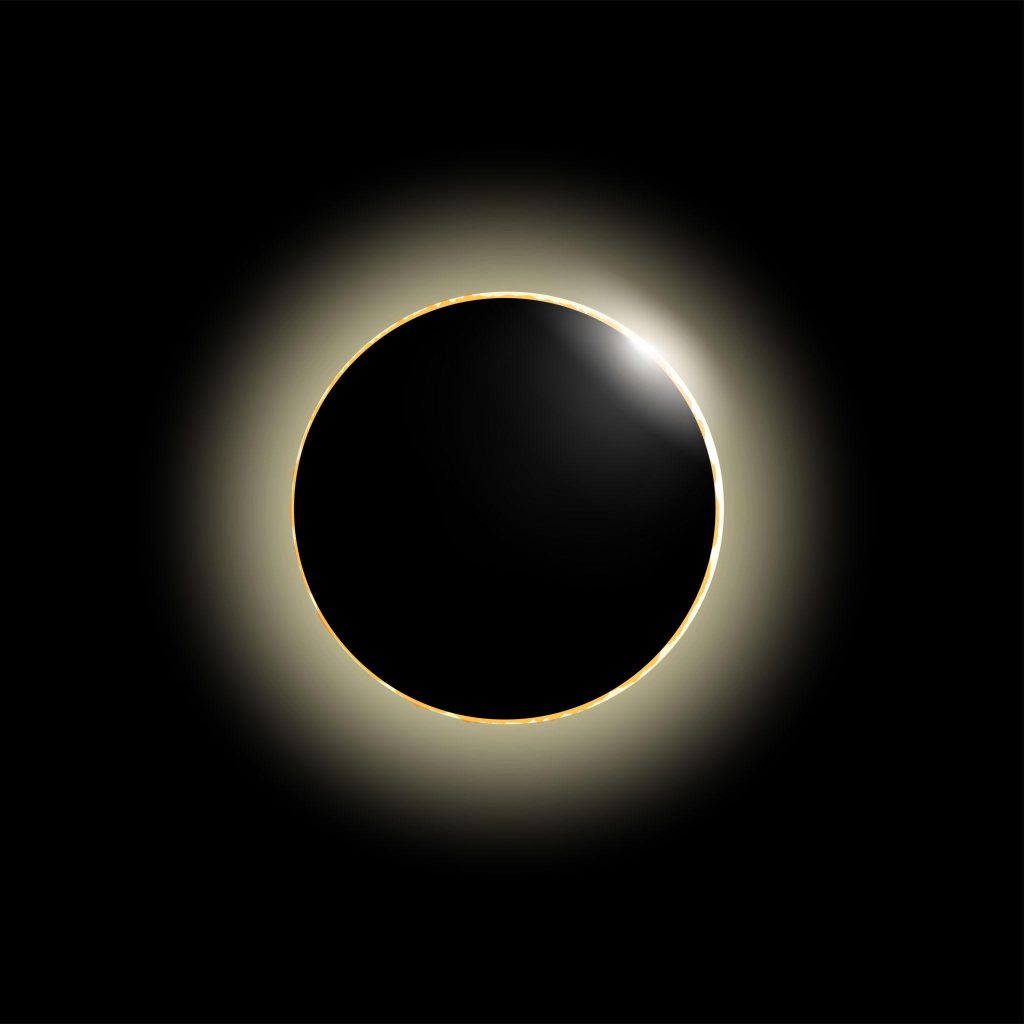
Earlier this year, on February 17, 2026, we got the first taste of what this eclipse year had to offer. An annular solar eclipse, the famous “Ring of Fire,” swept across parts of southern Africa, Antarctica, and southern South America, and by all accounts, it delivered.
An annular eclipse happens when the Moon is near apogee (its farthest point from Earth), making it appear slightly smaller than the Sun. So instead of blocking the entire disc, it leaves a blazing, unbroken ring of sunlight visible around its edges. During the February eclipse, the Moon covered nearly 96% of the Sun’s surface at peak, and that remaining 4% was what created the iconic fiery halo that flooded social media with stunning photographs.
For observers along the central path, such as parts of Zimbabwe, Namibia, Zambia, Tanzania, Mozambique, Botswana, Mauritius, Chile, and Argentina, the ring of annularity lasted about 2 minutes and 20 seconds. If you caught it, it would have been a once-in-a-lifetime experience. If you didn’t, don’t worry, the August total eclipse is still ahead of us.
The Total Solar Eclipse on August 12, 2026
Now here’s where things get genuinely spectacular. The August 12, 2026, total solar eclipse is the one that’s driving all the excitement.
It’s a total solar eclipse with a magnitude of 1.0386. That number matters because anything above 1.0 means the Moon is large enough to completely cover the Sun, and on this day, the Moon will be roughly 2.2 days past perigee, meaning it’ll appear larger than average. What does it mean for you? You will get a spectacular solar eclipse to watch.
The path of totality will stretch for 293 kilometres (182 miles) wide and sweep across the globe in just 96 minutes, moving from sunrise in Arctic Russia all the way to the Mediterranean coast of Spain. Here’s how the eclipse path unfolds:
- Taymyr Peninsula, Russia: Totality begins at sunrise. In a twist that sounds straight out of a science documentary, there’s even a chance that the aurora borealis could be visible simultaneously with the eclipsed Sun, depending on geomagnetic activity.
- Arctic Ocean: The shadow races over open ocean, passing close to the North Pole.
- Greenland: Dramatic fjords, icebergs, and 1 minute 46 seconds of totality at Scoresby Sund.
- Iceland: Reykjavik gets 1 minute and 1 second of totality from 5:48 PM local time. The entire country will see at least a partial eclipse.
- Northern Spain & Portugal: The grand finale. Cities like A Coruña, Bilbao, Zaragoza, Valencia, and Palma will experience full totality. Madrid and Barcelona will come agonisingly close to a 99% partial eclipse.
Key timings for August 12, 2026 (UTC):
- Partial phase begins: 15:34
- Totality begins: 16:58
- Maximum eclipse: 17:46
- Totality ends: 18:34
- Eclipse concludes: 19:57
The greatest point of totality, the longest, most centred moment of darkness, will occur approximately 45 km off the western coast of Iceland, near coordinates 65°10.3′ N, 25°12.3′ W.
The Path of Totality: Where You Need to Be
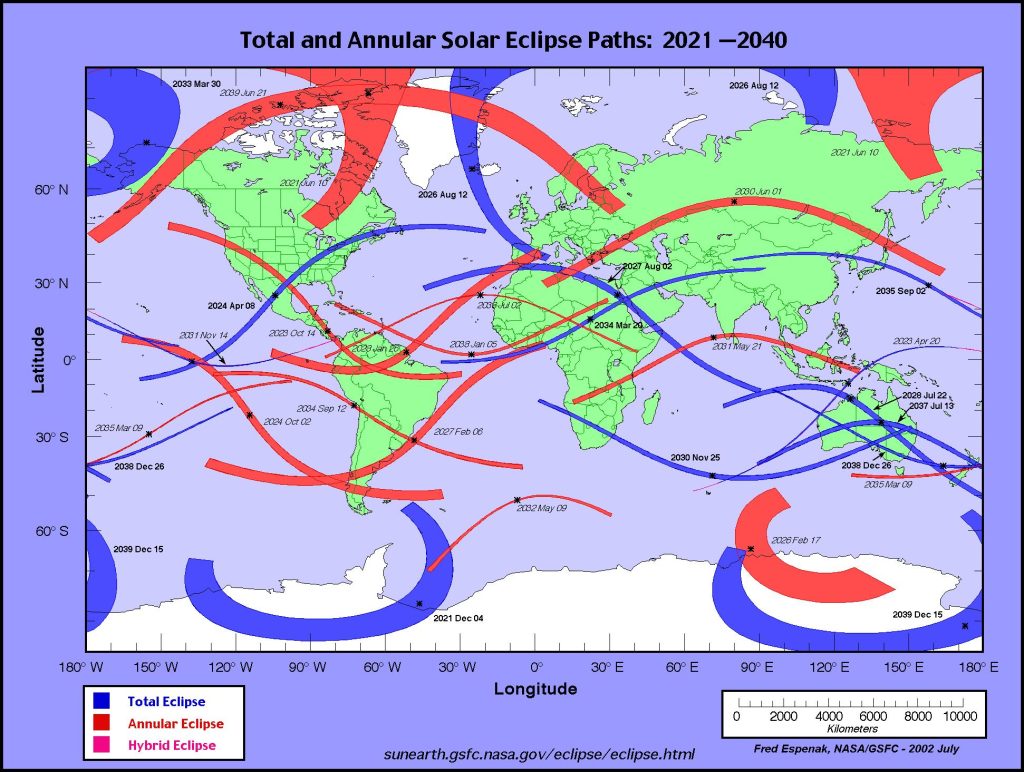
If you’re planning to travel for the eclipse in 2026, choosing your location wisely makes all the difference. The gap between being inside and outside the path of totality is, as astronomers put it, “the difference between night and day.”
Here are some of the best viewing options:
For the Most Unique Experience

Scoresby Sund, Greenland: One of the world’s largest fjord systems. Totality here lasts 1 minute 46 seconds. Expedition cruise ships are already planning routes, and places are booking up fast.
For the Arctic Adventure
Longyearbyen, Svalbard: Not in the path of totality, but will experience 90.7% coverage for nearly 2 hours. An accessible Arctic destination with spectacular skies.
For the Best Weather Odds
Spain (Zaragoza, Huesca, Logroño, Soria): Meteorologists predict these inland Spanish cities have the best chance of clear skies. August sunshine statistics put the odds of cloud-free skies at around 67–73% in this region. Spain is also the most tourist-friendly option if you want to experience totality without extreme expedition travel.
For the Photographers
Spain’s Mediterranean coast: Because the eclipse happens at sunset, viewers along the coast could witness totality merging with a setting Sun and the diamond ring effect appearing right at the horizon. That’s a once-in-a-lifetime photograph.
Pro tip: Book accommodation early. Eclipse destinations historically sell out 6–12 months in advance, and 2026 is already generating serious interest.
What You’ll Actually See During Totality
This is the part people don’t talk about enough. Seeing a solar eclipse on a screen and standing in the path of totality are two completely different things. People who’ve experienced totality often struggle to put it into words, and I think that’s because words genuinely fall short.
Here’s what unfolds, stage by stage:
Before totality (the partial phase):
The Moon slowly takes a bite out of the Sun. Light starts to feel off. not quite like sunset, but wrong in a way that’s hard to place. Animals get confused. Temperature drops noticeably. The world goes quiet.
The diamond ring:
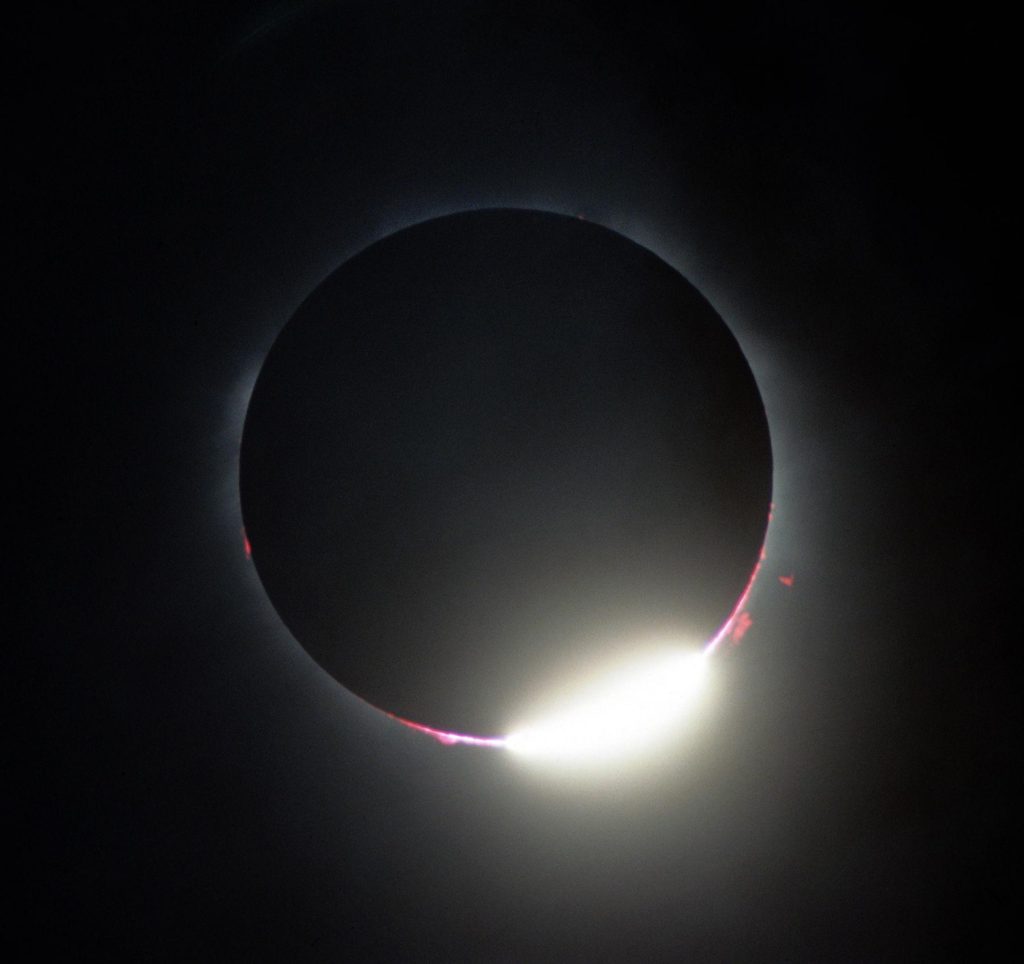
Just before the Sun is fully covered, sunlight squeezes through the valleys and mountains on the Moon’s jagged edge, creating bright beads of light which are called Baily’s Beads, named after astronomer Francis Baily, who first described them in 1836. The last remaining bead, set against the glowing ring of the Sun’s corona, creates what everyone calls the diamond ring effect. It’s breathtaking, and it lasts only seconds.
Totality:
Day becomes night. Stars appear. The Sun’s corona, its outer atmosphere, normally invisible to us because the Sun’s surface is too bright, blazes around the Moon like a halo of white plasma extending millions of kilometres into space. Pink loops called solar prominences may appear at the Sun’s edges.
The return:
The diamond ring appears again on the opposite side of the Moon as totality ends. Put your eclipse glasses back on immediately. The spectacle is over, but you’ll be talking about it for years.
Solar Eclipse 2026 India: Can We See It?
Here’s the straightforward answer for solar eclipse 2026 India watchers: neither eclipse in 2026 is visible from India.
The February 17 annular solar eclipse tracked entirely across the Southern Hemisphere. India fell completely outside its visibility zone, and the same is true for August.
The August 12 total solar eclipse stays in the Northern Hemisphere but hugs the Arctic and Atlantic corridor, which includes Russia, Greenland, Iceland, and Spain. India won’t be in any part of the visible path, not even for a partial eclipse.
What this means practically:
For those who follow traditional eclipse observances, religious texts clarify that Sutak Kaal (the sensitive period before an eclipse) is only applicable in regions where the eclipse is actually visible. Since the February eclipse wasn’t visible from India, those restrictions didn’t apply then, and the same will hold true for August.
So how do we experience it?
Honestly? The internet has made this easier than ever. Several organisations, including the Exploratorium in San Francisco, plan to live-stream the August eclipse from multiple telescope feeds. You can watch it in real time, on your phone or laptop, with far more detail than the naked eye would give you anyway.
It’s not the same as standing in Spain as the sky goes dark. But for those of us watching from India, it’s still genuinely thrilling to follow in real time.
How to Watch Safely

Whether you’re travelling to Spain or watching from home, safety around solar eclipses isn’t optional. Here’s what you need to know:
During the partial phase (before and after totality):
- Always use certified solar eclipse glasses with standard ISO 12312-2 filters
- Regular sunglasses, no matter how dark, are not safe
- Homemade filters aren’t safe either
- Don’t look through cameras, binoculars, or telescopes without proper solar filters
During totality only:
- This is the only time it’s safe to remove eclipse glasses and look directly at the Sun
- Totality in Spain will last approximately 2 minutes. You must know your exact local timing
- Put the glasses back on the moment you see the diamond ring returning
For photographers:
- Attach solar filters to your lens during partial phases
- Remove the filter only during totality
- Set up and align your gear in advance for beautiful shots of the solar eclipse
Alternative viewing methods:
- A colander or any object with small holes held up to sunlight will project dozens of crescent Suns onto the ground during the partial phase
- A pinhole projector made from cardboard works brilliantly
- Tree leaves naturally create tiny crescent projections — look at shadows on the ground, and you’ll see it happening all around you.
Why This Eclipse Feels So Special
We’ve had eclipses before, obviously. But the Solar Eclipse 2026 carries a few qualities that make it genuinely stand out.
For Europe, it’s been a long wait. The last total solar eclipse visible from mainland Europe was in 1999, over a quarter of a century ago. For Spain specifically, the last total eclipse was in 1905. A generation of Europeans hasn’t experienced anything like this in their lifetime.
There’s also the sheer variety of landscapes in the 2026 path. We’re talking Arctic permafrost in Russia, Greenland’s fjords, Iceland’s volcanic coastlines, and the warm, Mediterranean shores of Spain, all in a single eclipse track. It’s a route that almost feels deliberately designed to show off the planet.
And then there’s the science. During totality, researchers get a rare window to study the Sun’s corona, its outer atmosphere, without the blinding interference of the Sun’s surface. Some of our most important discoveries about the Sun, and even Einstein’s theory of general relativity (confirmed by Arthur Eddington during the 1919 eclipse), have come from precisely these narrow windows of darkness.
Every total solar eclipse is a reminder of something easy to forget: the universe is not a backdrop. It’s something we live inside, and occasionally, it puts on a show that makes that impossible to ignore.
Mark August 12, 2026, on your calendar. Whether you’re flying to Europe or watching a livestream from your living room in Bengaluru, don’t miss it.
Conclusion
2026 has been a monumental year for Solar Eclipses. It gave us a Ring of Fire eclipse on February 17, and one more is headed our way. The August 12 total solar eclipse is the real deal, and whether you’re chasing totality in Spain or streaming it from your couch in India, it’s not the one to miss.
Frequently Asked Questions
Q. When is the Solar Eclipse 2026?
A. Two solar eclipses are happening in 2026. The annular eclipse already occurred on February 17. The total solar eclipse is coming up on August 12, 2026.
Q. What is the difference between an annular and a total solar eclipse?
A. In an annular eclipse, the Moon appears smaller than the Sun, leaving a glowing “Ring of Fire” around it. In a total eclipse, the Moon fully covers the Sun, turning day into night and revealing the corona.
Q. Where will the Solar Eclipse 2026 be visible?
A. The August 12 total eclipse will be visible along a path through Arctic Russia, Greenland, Iceland, and northern Spain and Portugal. Much of Europe and parts of North America will see a partial eclipse.
Q. Is the Solar Eclipse 2026 visible in India?
A. No, neither the February nor the August eclipse is visible from India. Indian skywatchers can follow the August 12 event through official livestreams from organisations like the Exploratorium.
Q. How long will totality last during the August 12 eclipse?
A. Totality will last roughly 2 minutes across most of the path. Spanish cities like Zaragoza and Valencia are among the best land-based spots to experience the full duration.
Q. Which cities are best for watching the 2026 total solar eclipse?
A. Zaragoza, Huesca, Logroño, and Soria in Spain offer the best combination of totality and clear sky odds. Reykjavik, Iceland is another accessible option for those who don’t mind the Arctic.
Q. Is it safe to look at the solar eclipse directly?
A. Only during totality is it safe to look without protection. For all other phases — including partial eclipses — you must wear certified solar eclipse glasses (ISO 12312-2). Regular sunglasses are not safe.
Q. Can I watch the Solar Eclipse 2026 online?
A. Yes. Organisations like the Exploratorium plan to livestream the August 12 eclipse from multiple telescope feeds along the path. It’s a great way to experience it in real time from anywhere in the world.
Q. When is the next total solar eclipse after 2026?
A. The next one is on August 2, 2027, and it’s a long one — Luxor, Egypt will experience nearly 6 minutes and 30 seconds of totality, making it one of the longest of the century.


Goood