


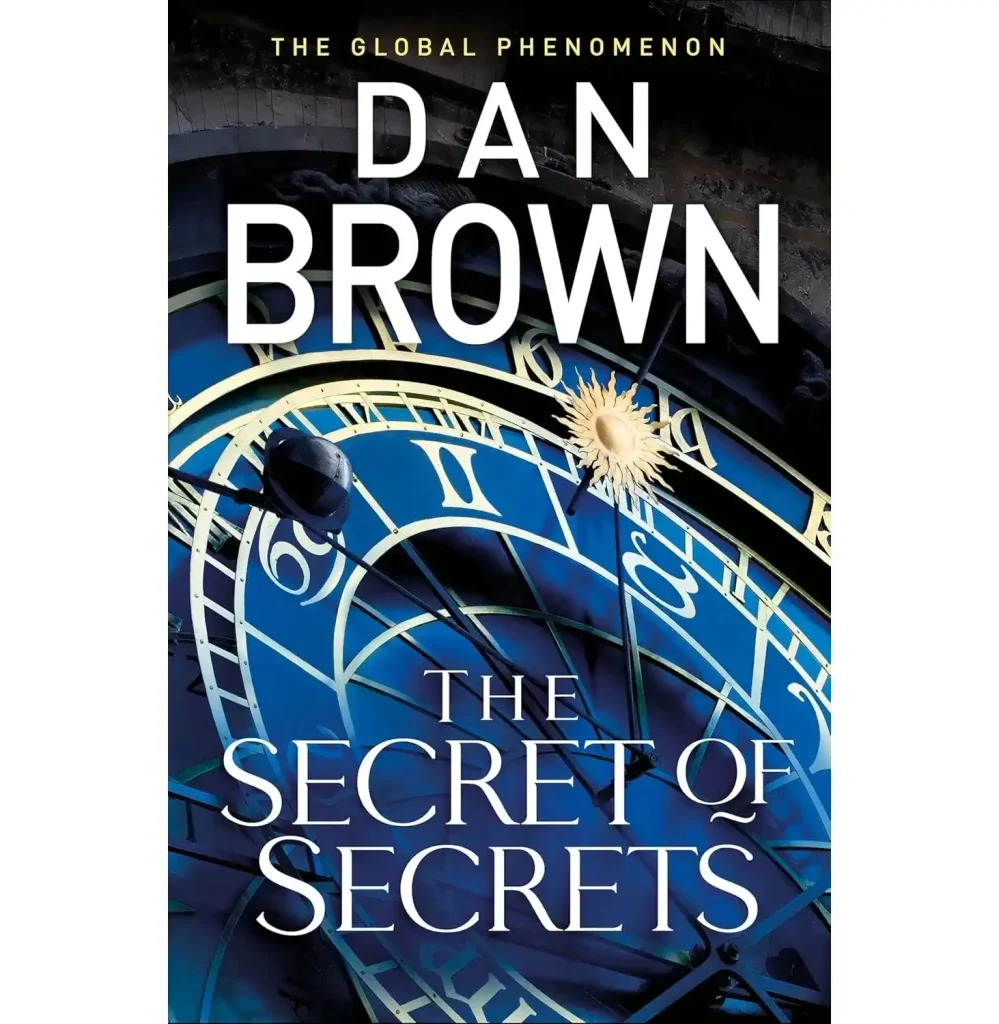
Few contemporary authors command the same blend of mass appeal and intellectual curiosity as Dan Brown. With The Secret of Secrets, published in 2025, Brown returns to the literary stage after a long hiatus, once again guiding readers through a landscape where art, religion, history, and human ambition intertwine. This The Secret of Secrets book review examines how the author rekindles the familiar pulse of symbology, cryptography, and existential mystery while introducing more reflective tones about truth in the age of artificial intelligence and misinformation.
The Context of Anticipation
When Dan Brown announced The Secret of Secrets, readers anticipated another intellectual rollercoaster featuring his celebrated protagonist, Harvard symbologist Robert Langdon. After Origin (2017), Brown’s audience had waited nearly a decade for the professor’s return. The new novel promised a deeper confrontation between science and faith, yet through a lens of modern digital ethics and ancient mysticism. Early reviews hinted at a story that stretches from Vatican archives to cyber-security laboratories in Switzerland. As this The Secret of Secrets book reveals, the narrative indeed spans centuries of ideas while staying grounded in Brown’s trademark rhythm of chase and revelation.
Plot Overview: Secrets Within Secrets
The story begins in Rome, where Professor Langdon is summoned by an old friend—Dr. Elena Ricci, a linguist working on a recently unearthed manuscript known as Codex Veritas. The codex allegedly contains an encrypted message pointing to “The Secret of Secrets,” a phrase whispered through medieval alchemical traditions and guarded by a clandestine order called Custodes Veritatis. Before Ricci can reveal her discovery, she vanishes under mysterious circumstances, leaving Langdon with fragments of coded verses, a murdered Vatican archivist, and a trail leading across Europe.
From the catacombs beneath St. Peter’s Basilica to the quantum computing corridors of Zurich, Brown constructs a parallel narrative between the quest for ultimate truth and the digital age’s erosion of authenticity. Langdon, aided by Dr. Maya Stein—a neuroscientist turned ethical hacker—must decipher whether the Codex Veritas points to a physical object, a forgotten teaching, or a metaphor that could reshape humanity’s understanding of faith and knowledge. This The Secret of Secrets book review finds that Brown succeeds in blending historical intrigue with timely ethical questions about what truth means in an age of deepfakes and algorithmic manipulation.
Themes: The Burden of Knowing
At its core, The Secret of Secrets grapples with the question that has haunted humanity since the dawn of civilization: Should every truth be revealed? Through Langdon’s moral dilemmas and Maya Stein’s technological skepticism, Brown explores the thin line between enlightenment and chaos. The narrative weaves philosophical reflections drawn from Gnostic scriptures, Hermetic philosophy, and quantum theory to ask whether absolute knowledge could become the world’s undoing.
This The Secret of Secrets book review observes that the novel is more contemplative than its predecessors. While earlier Langdon adventures often celebrated revelation as triumph, here Brown introduces restraint. The final chapters suggest that some secrets preserve balance—that ignorance, in selective measure, might sustain faith and civilization alike.
Brown also touches on the ethics of artificial intelligence, introducing a self-learning algorithm nicknamed “Sophia,” programmed to decode encrypted texts. As Sophia begins generating interpretations that outpace human comprehension, the book edges toward philosophical science fiction, inviting readers to ponder whether machines can truly comprehend divinity or merely imitate belief.
Character Study: Langdon’s Evolution
In this The Secret of Secrets book review, it is impossible to ignore how Brown reimagines Robert Langdon. Gone is the eternally composed academic from earlier novels; in his place stands a man aging, disillusioned, yet unwilling to surrender his faith in reason. Langdon’s internal conflict—between the comfort of logic and the lure of transcendence—mirrors humanity’s broader struggle with modern uncertainty.
Maya Stein, his companion, is among Brown’s strongest female characters. Intelligent, skeptical, and deeply human, she represents the collision of neuroscience and ethics, science and conscience. Together, they form a partnership that is less romantic and more dialectical—a dialogue between intellects attempting to translate the ineffable.
Brown’s Signature Style and Structural Precision
Brown’s prose remains unmistakably his own—short, cinematic chapters, each ending on a note that propels the reader into the next revelation. His control over pacing ensures that the book’s 500-plus pages glide by effortlessly. However, this The Secret of Secrets book review must note that at times the formulaic rhythm—alternating between chase scenes and historical flashbacks—feels predictable. Yet it is precisely this predictability that provides comfort to his global readership.
Brown’s attention to symbolism and art history continues to shine. References to Leonardo da Vinci, Hermes Trismegistus, and the frescoes of Raphael intertwine seamlessly with discussions of data encryption, philosophical paradoxes, and neuro-ethics. The fusion of old and new knowledge—an artistic metaphor rendered through architecture and code—forms the novel’s most striking layer.
Symbolism and the “Secret” Itself
Every Dan Brown novel contains a central metaphor, and The Secret of Secrets is no exception. The “Secret” refers not merely to an artifact or doctrine but to the human compulsion to seek ultimate certainty. Brown employs recurring imagery of mirrors, light prisms, and recursive codes to symbolize how every search for truth ultimately reflects the seeker’s own mind.
In one memorable passage, Langdon deciphers a mural in a Florentine monastery depicting an angel holding two keys—one golden, one blackened. The symbolism echoes throughout the novel: knowledge can illuminate or destroy, depending on who holds it. This The Secret of Secrets book review finds Brown at his philosophical best in these moments, where historical narrative yields to metaphysical meditation.
Setting and Atmosphere
No The Secret of Secrets book review would be complete without acknowledging Brown’s mastery of setting. Each location is rendered with cinematic precision—the echoing corridors of the Vatican Library, the mist-filled alleys of Zurich, the monastic silence of Mount Athos, and the high-tech isolation of Geneva’s quantum labs. Brown uses geography as language: sacred and secular spaces collide, mirroring the book’s central conflict between belief and empiricism.
The travel sequences, though familiar to long-time readers, serve a deeper purpose here. Rather than mere spectacle, they become cartographies of human yearning—a visual manifestation of the inner journey toward meaning.
Philosophical Depth and Modern Relevance
In The Secret of Secrets, Dan Brown modernizes the eternal tension between science and spirituality by situating it within today’s digital epistemology. The narrative questions how humanity discerns authenticity when machines can fabricate reality with frightening precision. Through characters who manipulate truth for ideology or profit, Brown addresses the sociopolitical climate of the 2020s: misinformation, surveillance, and the commodification of faith.
This The Secret of Secrets book review highlights Brown’s restraint in moralizing. Instead, he lets his characters embody debates. The villain, an enigmatic tech-prophet known as The Archivist, is not driven by greed or revenge but by a utopian conviction that perfect transparency will redeem humankind. Brown’s refusal to cast him as purely evil enriches the novel’s moral ambiguity.
Language, Tone, and Narrative Technique
Brown’s language in The Secret of Secrets demonstrates noticeable refinement. The once-rigid expository passages yield to smoother transitions and emotional resonance. His descriptions of ancient manuscripts and neural networks alike convey reverence for both mysticism and mathematics.
In this The Secret of Secrets book review, it’s worth noting that Brown occasionally ventures into lyrical prose—an unusual move for him. Passages reflecting on Langdon’s memories or Maya Stein’s ethical doubts evoke a quiet melancholy. The tone oscillates between academic precision and spiritual wonder, suggesting an author more introspective than sensationalist.
Comparisons and Evolution of the Langdon Series
Readers familiar with The Da Vinci Code, Angels and Demons, and Origin will recognize many narrative hallmarks: encrypted clues, shadowy organizations, moral dilemmas. Yet The Secret of Secrets feels less like repetition and more like synthesis—a culmination of themes Brown has spent decades refining.
This The Secret of Secrets book review perceives the novel as an evolution rather than an echo. Where The Da Vinci Code questioned institutional religion, The Secret of Secrets questions institutional truth itself. The intellectual scaffolding is sturdier; the moral stakes are higher. Brown seems aware that the real labyrinth now lies not in cathedrals but in the digital networks that shape collective belief.
Critiques and Shortcomings
No review is complete without balance. Some readers may find The Secret of Secrets weighed down by exposition—particularly in its middle sections, where theological dialogues slow the momentum. Others might argue that Brown’s fascination with codes occasionally overshadows emotional depth.
Yet, as this The Secret of Secrets book review contends, the novel’s occasional verbosity stems from ambition rather than indulgence. Brown is not merely telling a story but staging a conversation about epistemology in a post-truth era. The final revelation—handled with elegance and restraint—offers resolution without reducing mystery, a difficult feat for any thriller.
Reception and Cultural Impact
Within weeks of its release, The Secret of Secrets topped bestseller lists across continents. Critics noted its philosophical tilt and relevance to current debates about technology and ethics. Book clubs and academic circles alike embraced its blend of accessibility and depth.
For this The Secret of Secrets book review, the novel’s impact lies not only in its commercial success but in its capacity to reawaken curiosity about the dialogue between belief systems and digital realities. Brown’s return feels timely: at a moment when society struggles to discern truth from illusion, he offers both caution and wonder.
The Verdict
The Secret of Secrets is not merely another Dan Brown puzzle; it is an inquiry into the moral cost of enlightenment. While retaining the pace and spectacle that made his earlier works global phenomena, Brown ventures further into metaphysical territory, urging readers to reflect rather than merely decode.
This The Secret of Secrets book review concludes that the novel stands as one of Brown’s most mature efforts—a narrative where intellectual thrill and emotional gravity converge. It may not surpass The Da Vinci Code in cultural shock value, but it surpasses it in wisdom.
About the Author: Dan Brown
Dan Brown, born in 1964 in Exeter, New Hampshire, is one of the world’s most read contemporary authors. With works translated into over 50 languages and sales exceeding 200 million copies, Brown has redefined the intellectual thriller. His novels often explore the intersections of science, religion, and art through the eyes of Robert Langdon, a character now emblematic of literary symbology.
In preparing this The Secret of Secrets book review, one recognizes that Brown’s enduring appeal lies not in mystery alone but in his ability to transform complex historical and philosophical questions into accessible narratives. The Secret of Secrets reinforces his reputation as a storyteller who marries erudition with entertainment, inviting readers to decode the world around them as much as the worlds within.

FAQs on The Secret of Secrets
1. What is The Secret of Secrets about?
The Secret of Secrets book reveals that Dan Brown’s 2025 novel revolves around Robert Langdon’s pursuit of an ancient manuscript that may contain the world’s ultimate truth. The story blends faith, science, and mystery in the author’s signature thriller style.
2. Who is the main character in The Secret of Secrets?
As highlighted in The Secret of Secrets book review, the central figure is Professor Robert Langdon, the Harvard symbologist known for decoding historical and religious puzzles. He returns in this book with renewed philosophical depth.
3. Is The Secret of Secrets part of the Robert Langdon series?
Yes. The Secret of Secrets book confirms that the novel continues the Robert Langdon series, following Origin (2017). It connects older religious mysteries with modern scientific dilemmas
4. What are the main themes in The Secret of Secrets?
According to The Secret of Secrets book, the key themes include the search for truth, the clash between technology and faith, the limits of human knowledge, and the moral cost of enlightenment.
5. Is The Secret of Secrets similar to The Da Vinci Code?
The Secret of Secrets book suggests that while both novels involve codes, art, and secret societies, this latest work is more introspective, focusing on philosophical and ethical questions of the digital age.
6. How does Dan Brown blend science and religion in this book?
In The Secret of Secrets, Brown’s signature lies in merging ancient theology with modern science—this time through quantum computing, AI, and historical manuscripts that challenge our definition of truth.
7. Where is The Secret of Secrets set?
The Secret of Secrets book notes that the novel travels through iconic European cities including Rome, Zurich, and Florence, each representing a layer of mystery and knowledge.
8. What makes The Secret of Secrets different from Brown’s earlier novels?
Based on The Secret of Secrets book review, this book goes beyond puzzles—it delves into emotional and existential themes. It portrays an older, wiser Langdon reflecting on the consequences of revelation itself.
9. Is The Secret of Secrets worth reading?
Yes, The Secret of Secrets emphasizes that it is among Brown’s most thoughtful and engaging works. It combines the thrill of discovery with deep moral reflection, making it both entertaining and intellectually rewarding.
10. Who should read The Secret of Secrets?
According to The Secret of Secrets book review, this book is ideal for readers who love mysteries that combine philosophy, science, and religion. Fans of The Da Vinci Code and Origin will find it especially compelling.


