

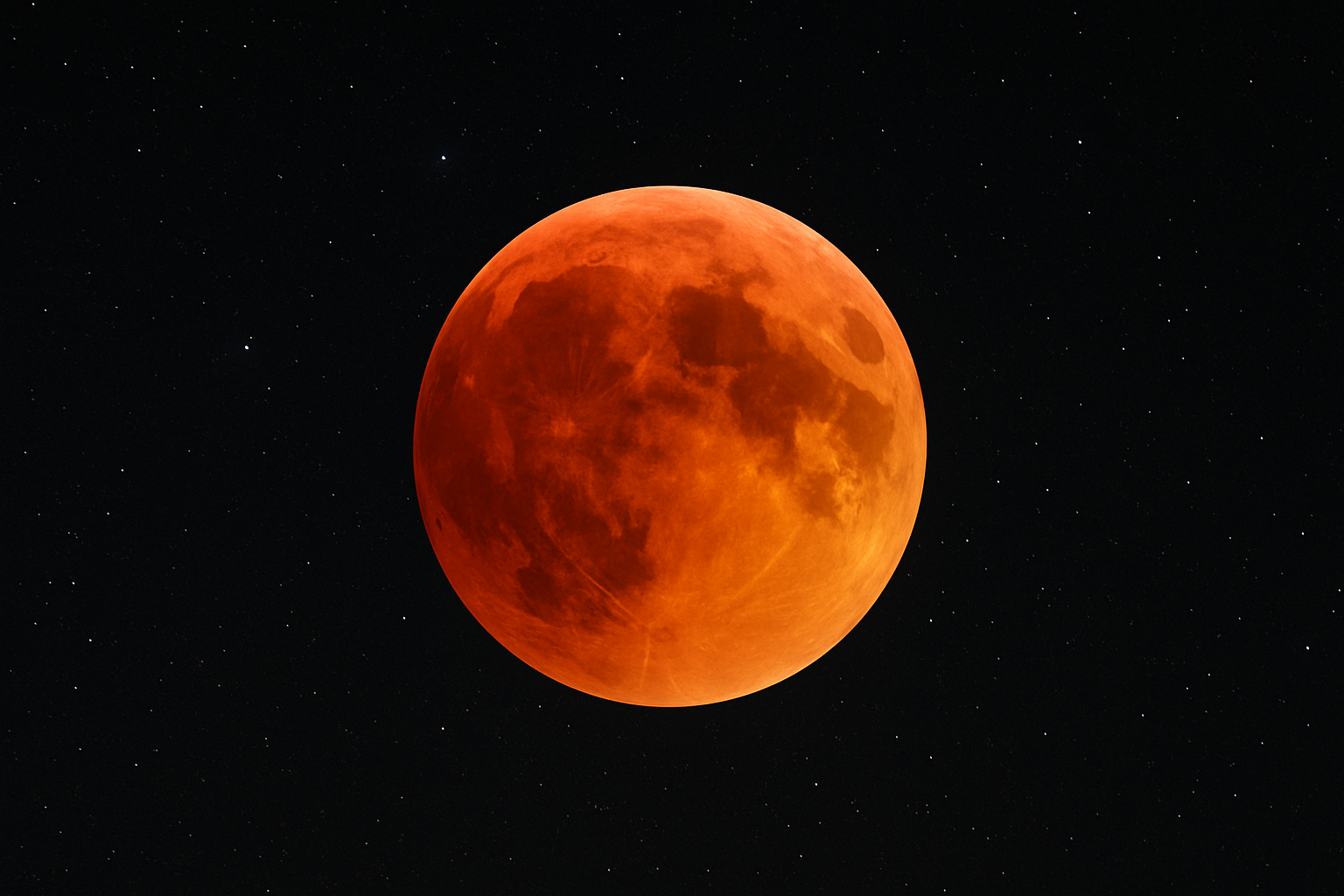
Eclipse Nights: Nature’s Celestial Show
A night to remember for witnessing a stage for nature’s celestial show that takes the hero of the Earth with a beautiful night view, one of the most fascinating shows. As we know, Earth has other fascinating eclipses, like a solar eclipse, which can only be seen in a specific region, but a Lunar eclipse can be seen everywhere by anyone on the night side of the Earth.
A total eclipse is one of nature’s most fascinating celestial events, occurring when the Earth moves between the Sun and the Moon, casting its shadow on the Moon. Unlike a solar eclipse, which can only be seen from specific places on Earth, a lunar eclipse is visible from anywhere on the night side of the planet, making it far more accessible and widely admired. Today they remain an admiring way of people who are connected with the universe.
A Story about the Lunar Eclipse
One night, the sun, the earth, and the moon decide to dance in the night sky. Everyone danced happily until the sun shone brightly, which upset the moon because the moon only loves to glow at night. They began arguing, and to calm things down, the earth stepped in between them. As the Earth moved between the Sun and the moon, the moon slowly hid behind the Earth’s shadow. In that magical moment, the moon glows a shade of red, and that’s how a lunar eclipse is born.
A beginner’s guide to a lunar eclipse
A lunar eclipse happens when the Sun, the Moon, and the Earth are aligned so that the Earth comes between the Sun and the Moon, casting its shadow on the Moon. The moon doesn’t make its own light; it only glows on the surface of the night sky, but the sunlight reflects, which makes the earth’s shadow fall on the moon darker. Sometimes it makes the moon even glow in a copper red, which is why people often call it a “blood moon”.
The scientific reason for the reddish glow is a phenomenon called Rayleigh scattering. As we know, the sun scatters the rays in seven colours. In this phenomenon, the rays hit the surface of the Earth because blue colour has a shorter wavelength, most of the colours are scattered, only red colour remains, that why it shows the red colour in the moon, when a total eclipse occurs.
Celestial siblings
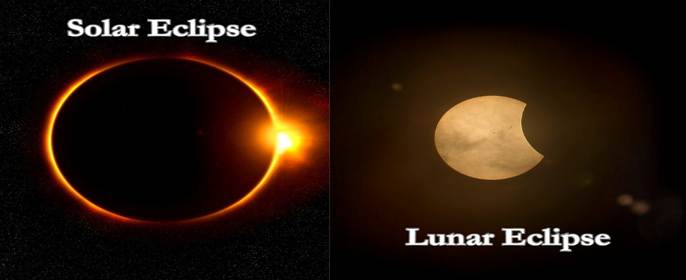
The sky often surprises us with beautiful events, and eclipses are the most fascinating, while the lunar eclipse belongs on the night, its sibling, the solar eclipse, shines during the day. These two natural events are like mirror images of each other, showing the delicate balance of the Sun, Earth, and Moon.
A total eclipse happens when the Earth comes directly between the Sun and the Moon. Earth’s shadow then falls on the Moon, making it appear darker or even glowing red, which people call a Blood Moon.
A solar eclipse takes place when the Moon moves between the Sun and Earth. This blocks sunlight and casts a shadow on Earth.
Together, lunar and solar eclipses remind us of the perfect timing of our universe. The Sun, Earth, and Moon move in harmony, creating moments that connect people everywhere with the wonders of space.
Types of Lunar Eclipse
- Penumbral Eclipse
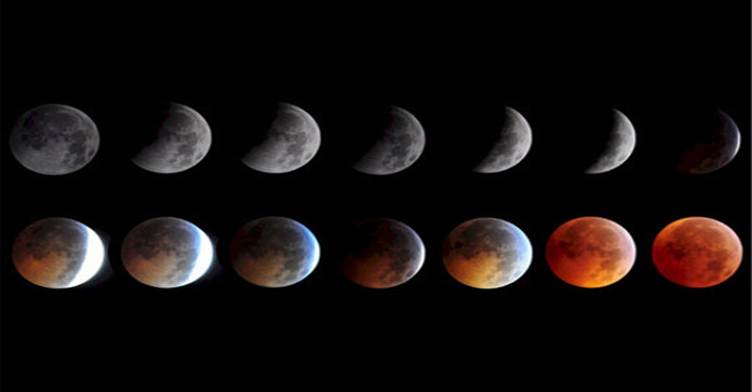
When a penumbral eclipse occurs, the moon passes through Earth’s outer shadow, which is the penumbra. This effect looks slightly dull, dim, and it is difficult to notice. A penumbral eclipse can last for several hours, it looks like a faint shadow on the moon and occurs more frequently than total eclipses.
- Partial Eclipse
A partial eclipse occurs, and the part of the moon is covered by the Earth’s darker shadow, which makes the moon appear like a crescent shape. The shape of the moon is visible to the naked eye, but the exact time when it enters the umbra cannot be determined.
- Full Lunar Eclipse
A Total Eclipse is also known as a blood moon, due to the copper-red colour that reflects. during this stage, the entire moon is inside Earth’s umbra; instead of disappearing, the moon glows in the shade of red, copper or orange. The eclipse can last an hour, witnessing the astronomical moment.
The Rhythm of Eclipses
A lunar eclipse often happens when the sun, the moon, and the Earth are line up in a straight line. Lunar eclipses are more common than solar eclipses; no eclipse occurs most of the month, the moon‘s orbit is slightly tilted, which leads to passes above or below Earth’s shadow. The moon orbits Earth every 27 days because the moon’s path is tilted compared to Earth’s orbit around the sun.
On average, there are at least two eclipses every year, but it also three to five eclipse of penumbral, partial, and total eclipses. it feels rhythmic because eclipses repeat the patterns, astronomical cycles like the saros cycle, like 18 years, 11 days to forecast them. This lunar makes eclipses part in a rhythmic, fading, appearing, and returning into its time
Conclusion
Lunar eclipses are not just astronomical events but also reminders of our place in the universe. Whether it is a faint shadow, a dark bite, or a glowing Blood Moon, every eclipse connects us with the rhythm. the rhythm of eclipses is a vastness of the space; it has a cosmic heartbeat that connects us to the universe. This combination of rare, beautiful, and predictable makes lunar eclipses one of the most astronomical events for both scientists and skywatchers.
FAQ
1. What is a lunar eclipse?
A lunar eclipse, when Earth moves between the Sun and the Moon, casting a shadow on the Moon.
2. How many types of lunar eclipses are there?
There are three types such as penumbral, partial, and total lunar eclipses.
3. Why does the Moon turn red during a total eclipse?
Because sunlight bends through Earth’s atmosphere. Shorter wavelengths (blue) scatter, while longer wavelengths (red/orange) reach the Moon, giving it a reddish glow.
4. How often do lunar eclipses happen?
On average, 2 to 5 times a year, but not all are visible everywhere.
5. Can we see an eclipse with the naked eye?
Yes! A solar eclipse, lunar eclipses are safe to watch without glasses or equipment.
6. What’s the difference between a solar and a lunar eclipse?
Lunar Eclipse: Earth’s shadow falls on the Moon.
Solar Eclipse: The Moon’s shadow falls on Earth.
7. How long can a lunar last?
A total lunar eclipse can last up to 3 hours and 40 minutes, with the total lasting is about 1 hour.
8. Are eclipses rare?
No, total eclipses are less frequent than partial.
Follow for more InkonTrend


